
Arup at COP30
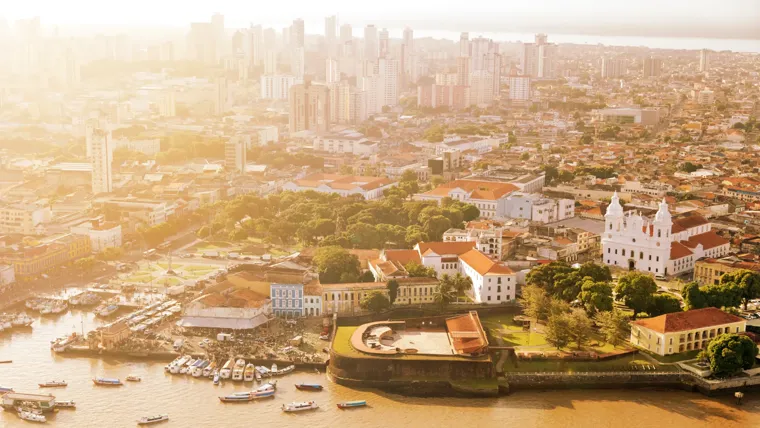
Our experts will be engaged in events during COP30, taking place 10 November to 21 November 2025, in Belém, Brazil. You don’t have to be in Belém to engage with conversations exploring climate action and resilience – many of the events are accessible online.
Location
Belém, Brazil
Date
10 Nov 2025 — 21 Nov 2025
What are we doing at COP30?
Location: Online
Arup speaker: Stephen Hill, Associate Director
This session of the COP30 Buildings and Cooling Pavilion webinar series will brief on key expectations for Market Transformation at COP30. The World Business Council for Sustainable Development will present a stock take of the Market Transformation Action Agenda for the Built Environment and how it supports and aligns with the Buildings Breakthrough and other global initiatives.
Location: Online
Arup speaker: Jordan Woodson, Associate
The global movement of decarbonization in buildings is growing. Yet the industry is characterized by a multitude of standards and diverse BIM and carbon accounting processes used for assessing embodied carbon.
Under the guidance of the World Business Council for Sustainable Development, Autodesk and AECOM, Arcadis, Arup, Foster + Partners, Ramboll, and SOM collaborated to demonstrate these discrepancies on a case study that revealed a 34% variation in the firms' approaches to embodied carbon assessment using the same BIM Revit model. Join our panel discussion to unpack the reasons behind this disparity, explore the complexities of translating BIM data into carbon insights, and hear guidelines to consider when undertaking an embodied carbon assessment. This technical discourse will identify step-by-step opportunities for alignment and transparency within the industry, promoting actionable carbon assessments driven by BIM to support decarbonization efforts.
Location: Australian pavilion, Blue Zone
Arup speaker: Joan Ko, Global Climate and Sustainability Services Leader
Australia’s industry is responding to global decarbonisation trends with growing clarity
through the Future Made in Australia agenda. This panel explores how policy alignment is unlocking investment in technology, innovation pilots, and partnerships to decarbonise heavy industry.
Location: Water for Climate pavilion, Blue Zone
Arup speaker: Mark Fletcher, Global Water Leader; Ellie McBurney, Water Strategy Consultant
Cities are on the frontline of climate-driven water challenges: from floods and droughts to water quality and access. This session explores how Nature-Based Solutions can address these issues while delivering broader benefits for biodiversity, public health, and community resilience.
Location: Singapore pavilion, Blue Zone
Arup speaker: Jo da Silva, Chief Sustainability Officer
Regenerative design and development have recently emerged as a promising approach for cities to adapt to a climate-changed world. How can regenerative strategies be enabled to achieve net-positive liveability, resilience and resource outcomes for people and environment? How can we better assess the co-benefits of regenerative strategies?
Jo da Silva will be speaking during this panel discussion hosted by the Centre for Liveable Cities, Singapore.
Location: Buildings and Cooling pavilion, Blue Zone
Arup speaker: Caroline Ray, Director for East Africa
This session will focus on the urgent need to electrify buildings and accelerate decarbonisation of the global property sector. We will hear from the governments of Japan, Germany and the UK about the value of using whole life carbon as a framework, and the need to focus on operational emission reduction to achieve rapid change.
Speakers and panellists from the Government of Japan, the UK Government’s Climate Change Committee, Germany’s energy agency Dena, and the International Energy Agency as well as leading heating and cooling technology manufacturer Daikin, and global building engineering firm Arup will explore the contribution that electrified heating and cooling can make to accelerating property sector emission reduction.
Location: Water for climate pavilion, Blue Zone
Arup speaker: Martin Shouler, Urban Water Resilience Leader
The event aims to show how national climate goals can translate into measurable local water resilience outcomes using the Water Resilience Tracker and City Water Resilience Approach. The session includes topics such as aligning local and national water actions, multi-level governance and a look ahead to UN Water 2026.
Location: Global Renewables Hub, Blue Zone
Arup speaker: Alan Thomson, Global Energy Leader
This panel will offer a platform for business leaders to share how they are leaning into the energy transition - creating jobs, enhancing energy security, and driving economic growth - while highlighting the government policies needed to accelerate progress.
Location: Global Renewables Hub, Blue Zone
Arup speaker: Alan Thomson, Global Energy Leader
The event will explore how the electrotech revolution is transforming the global energy landscape economically, geopolitically, and technologically. This transformation is not driven by climate policy alone, but by technological disruption, where electrotech now outcompetes fossil fuels on physics, economics, and geopolitics.
Location: Resilience Hub, Blue Zone
Arup speaker: Mark Fletcher, Global Water Leader
Global average temperatures continue to rise, exposing nearly 600 million people to coastal flooding due to sea level rise, while the rest of the world faces escalating threats from cyclones, salinity intrusion, droughts, heat stress, wildfires, and other severe climate impacts. These impacts are increasing risk across the built environment sector and the need for integrated resilience strategies has never been more urgent. This session will showcase integrated design and construction solutions that address both adaptation and mitigation, present new methodologies for linking science-based risk assessment to resilient finance, and explore policy and community pathways for scaling innovations in resilient buildings and infrastructure. The session blends real-world case studies, lightning talks, and interactive discussions to generate actionable pathways for mainstreaming resilience into both local and urban planning, along with investment practices.
Location: DRI pavilion, Blue Zone
Arup speaker: Joan Ko, Global Climate and Sustainability Services Leader
As climate risks escalate, resilient infrastructure is vital for safeguarding lives and services. AI-driven solutions can strengthen planning, response, and recovery, saving up to US$110 billion annually by 2050. This COP30 panel explores AI’s role in resilience, energy, and sustainability, prioritising adaptation and mitigation for the Global South.
Location: We Mean Business pavilion, Blue Zone
Arup speaker: Alan Thomson, Global Energy Leader
Global average temperatures continue to rise, exposing nearly 600 million people to coastal flooding due to sea level rise, while the rest of the world faces escalating threats from cyclones, salinity intrusion, droughts, heat stress, wildfires, and other severe climate impacts. These impacts are increasing risk across the built environment sector and the need for integrated resilience strategies has never been more urgent. This session will showcase integrated design and construction solutions that address both adaptation and mitigation, present new methodologies for linking science-based risk assessment to resilient finance, and explore policy and community pathways for scaling innovations in resilient buildings and infrastructure. The session blends real-world case studies, lightning talks, and interactive discussions to generate actionable pathways for mainstreaming resilience into both local and urban planning, along with investment practices.
Location: CDR pavilion, Blue Zone
Arup speaker: Joan Ko, Global Climate and Sustainability Services Leader
This event will look at the municipal powers and tools that can be leveraged to scale urban carbon dioxide removal and accelerate climate change mitigation today, balance residual emissions on the path to net-zero, and go net-negative thereafter. It will have a particular focus on the different roles cities can take in relation to the stakeholder ecosystem, the opportunities to leverage non-climate related instruments and how to realize policy synergies.
Location: UK pavilion, Blue Zone
Arup speaker: Alan Thomson, Global Energy Leader
Demand connections, particularly data centres, can be built at a far quicker rate than network infrastructure – with significant volumes looking to connect to the electricity system in the coming years. A different approach must be taken to connect these at pace. This roundtable will bring together tech companies, energy companies, policymakers and other experts to discuss how, by working collaboratively, infrastructure can be delivered differently to unlock economic growth.
Location: Disaster Resilient Infrastructure pavilion, Blue Zone
Arup speaker: Bruce Chong, Climate and Sustainability Services Director
Urban coastal populations face escalating risks from sea-level rise, extreme heat and intensifying natural hazards. Vital infrastructure systems and economic stability come under continual threat, demonstrating the urgency of integration of climate science, engineering and finance in realising risk strategies. This session introduces the three-pillar climate risk assessment model, combining localised climate projections, multi-scenario analyses and quantified financial outcomes. Through diverse perspectives of how climate risks can be incorporated into infrastructure design, this session hopes to inspire cross-sector practitioners, helping them plan, operate, and manage their assets under uncertainty.
Location: Singapore pavilion, Blue Zone
Arup speaker: Erin Gill, Global Corporate Affairs and Partnerships Leader; Bruce Chong, Climate and Sustainability Services Director
Cities worldwide are grappling with intensifying heat stress, which threatens public health, liveability, and economic productivity. This event will discuss urban heat resilience strategies and innovative cooling solutions.
Location: Disaster Resilient Infrastructure pavilion, Blue Zone
Arup speaker: Bruce Chong, Climate and Sustainability Services Director
This session will present global priorities for disaster-resilient infrastructure, drawing on insights from the Global Infrastructure Resilience Survey. Representatives from government, private sector engineering, and civil society will discuss key priorities emerging from GIRS across areas such as governance and institutions, finance, risk assessments, regulations and standards, nature-based solutions, and advanced technologies. The discussion will identify practical actions to enhance institutional and technical capacities for infrastructure resilience and foster cross-sector collaboration to advance these actions.
Our experts at COP30:
Dame Jo da Silva, Global Sustainable Development Director
Dr Mark Fletcher, Global Water Leader
Alan Thomson, Global Energy Leader
Joan Ko, Global Climate and Sustainability Services Leader
Dr Erin Gill, Global Corporate Affairs and Partnerships Leader
Dr Bruce Chong, Climate and Sustainability Services Director
Caroline Ray, Director for East Africa
Martin Shouler, Urban Water Resilience Leader
Julia Brown, Marketing and Communications Business Partner for IMEA
Ellie McBurney, Water Strategy Consultant
Get in touch with our team
Insights
Explore more climate & sustainability insights
Circular thinking for data centers
Sustainable Forces Special Episode Momentus 2025: How can Asia Pacific lead the net zero transition?
Sustainable forces S3 E4: How are island nations pioneering climate solutions?

Road to resilience: practical insights to enable more resilient and adaptable road networks

Projects
Explore more climate & sustainability projects

Shaping a sustainable, inclusive and thriving future for Agadir, Morocco
Agadir Green City Action Plan, Morocco

Improving water security and sanitation for millions in urban India
Australia-India Water Security Initiative (AIWASI), India

Promoting climate resilient flood defence and development through nature-based solutions
Lower Darent Riverside Strategy, United Kingdom

Wetland habitat restoration at a landscape scale
Great North Fen – Restoring the Durham Carrs, United Kingdom