
How do we plan and deliver the growth corridors the UK needs?
Major transport projects should be framed as drivers of growth and regeneration, with improved connectivity seen as a tool to boost economic development.
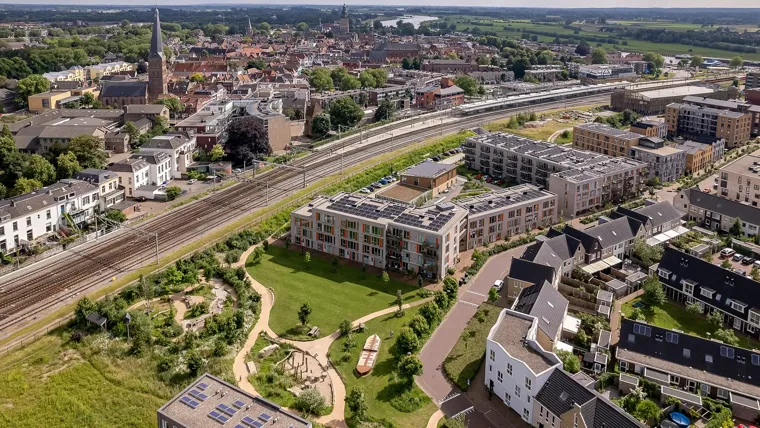


For thousands of years, investment in connectivity has been seen as a fundamental catalyst for driving growth and prosperity. The ancient Romans built more than 120,000km of roads across Europe, North Africa, and the Middle East, many of which are still in use today. The Erie Canal and St Lawrence Seaway transformed the early economies of Canada and the United States. The development of railway networks in the UK and US in the mid-1800s was primarily built around a business model of opening up new land for development.
We’ve arguably lost sight of this in recent years however, driven by a planning and decision-making framework which values abstract concepts like ‘generalised journey times’. This focus overlooks the real goals we are trying to achieve with these projects – the growth mission, the transformation of areas, the new employment opportunities, all of which were so obvious and intuitive to previous generations.
Major transport schemes should be positioned as growth and regeneration projects, where enhanced connectivity is part of a wider strategy to boost economic development, inward investment, housing and commercial development, jobs, skills and employment.
As in many other countries, the UK Government is seeking ways – in the context of constrained public finances - to boost productivity and competitiveness and get the UK’s many different regional economies firing on all cylinders. This will only happen if we maximise and realise the transformational impact of some of the major capital investments in transport that have been announced. This won’t happen by adopting an “if we build it, they will come” approach; we need specific plans that respond to local realities and latent potential. Growth corridor plans are the best way to define and deliver this much needed economic development.
The theory – connection, density, opportunity
In the modern economy there is an important link between economic growth, agglomeration and connectivity. Major transport improvements enable firms to access a wide pool of skilled workers, and connect people to a wide range of good jobs. They support higher densities of economic activity in major centres and innovation hubs, facilitating the transfer of knowledge within these locations and across a wider area. This creates a virtuous cycle, where high densities of firms (and other knowledge-producing institutions) lead to high productivity, attracting in turn more firms to the area, increasing wages and job opportunities which in turn become pull factors for highly skilled workers, residential and commercial development, leading to further productivity gains. Transport can also boost economic competitiveness by providing access to major international gateways of ports and airports, and by supporting industrial and energy supply chains through the movement of freight.
What makes a successful growth corridor plan?
Based on our experience we propose five pointers towards impactful growth corridor plans.
1. Articulate a clear economic vision
There should be a coherent strategy for how transport can help boost economic competitiveness and growth for the corridor. This could set out the role of enhanced connectivity in strengthening the economic roles of main concentrations of business, innovation and employment, connecting people to jobs, supporting supply chains through better freight and logistics, growing priority sectors, and driving inward investment in line with the industrial strategy and local growth plans. By taking a whole corridor approach, a framework can be developed for realising benefits of capacity release on existing routes, and using local transport to connect people into the main hubs and spread the benefits.
2. Unlock transport-focused development and regeneration
A proactive approach is needed to planning for housing and commercial development and good quality place-shaping around main hubs. By setting out clear spatial frameworks, and embedding these in planning policy, places can send clear and consistent signals to the market and investors, and help coordinate wider public and private investment to accelerate the building of new homes and business space. This could include new settlements and urban extensions, as well as town and city centre intensification. Densification around transport hubs will strengthen demand for new rail, mass transit and bus services, and will enhance agglomeration.
London has shown the way with its opportunity area frameworks, linked to the London Plan. The reintroduction of cross-boundary strategic planning will enable similar approaches elsewhere in England through the new spatial development frameworks. Identifying the right delivery vehicles – which could include development corporations, will build confidence around implementation.
3. Develop skills and raise aspirations
To win hearts and minds, and to lock-in benefits, growth corridor plans should set out how places will prepare local people to make the most of the new job opportunities that will be stimulated by major transport schemes. Significant employment can be created through the planning, design, construction and operation phases, and more widely many good jobs will be brought within reach of people. Because these are long term, transformational projects they can provide a lens through which to consider the future economy and job markets, and a framework for inspiring people about future career opportunities, and aligning investment in education, training and careers advice.
4. Put skin in the game: funding and finance
Growth corridor plans can provide a framework for places to consider and articulate how innovative funding and finance mechanisms could be brought forward. These could include the potential to borrow against increased fare box revenues, local tax increment financing based on mechanisms such as roof-taxes or business rates supplements, as well as direct development of public sector land at or near transport hubs.
5. Develop robust business cases and evaluation
The HM Treasury Green Book is being reviewed to enhance the importance of outcome-focused, integrated, place-based business cases for major projects. Growth Corridor Plans will provide a helpful framework for considering the case for change, the costs and benefits across the different transport, regeneration and economic development interventions, and for evaluations of impact. They can articulate how the benefits can be maximised by taking a comprehensive approach to investment across different policy areas and organisations, as well as helping avoid issues of double-counting.
Tracking the impact of urban heating
Arup analysis is helping cities to identify rising temperatures
New York, USA
By the 2050s, New York anticipates up to eight heatwaves per year in parts of the state. In our survey of a heatwave on the 9th of August 2022, the greatest urban heat island (UHI) hot spot was found in Washington Heights. This area has dense development with a high proportion of hard surface (over 90%, with only 3% vegetation) and a high volume of built-up areas, blocking heat from rising into the sky. There are clear demographic implications too: in the area studied there were 15,000 elderly residents (65 years and above) and 9,000 children (below 15 years old), representing the most heat-vulnerable age groups, all living in areas experiencing a UHI of 4 C or more.

Cairo, Egypt
The World Bank estimates that climate change will increase temperatures in Egypt by between 1.5-3°C by 2050, with an average of 40 additional extremely hot days per year projected. In our survey of a heatwave in June 2022 the greatest urban heat island (UHI) hot spot was found in a very built up and dense area at Bulaq Ad Daqrur which experienced a UHI effect of 5°C. The coolest area of the city was 6°C lower, on the Nile, near Giza – an area that benefits from nearly 60% of its surface being covered by natural features (28% vegetation and 30% water).

Mumbai, India
In 2022, India experienced a devastating heatwave, where parts of the country reached more than 49°C – with the country seeing its hottest March on record. Our survey focused on the peak of a heatwave on the 16th of March 2022. The greatest urban heat island (UHI) hot spot was located at Ghatkopar East, North Mumbai, reaching 7°C hotter than its rural surroundings. The area lies far inland with 60% hard impermeable surface cover. The high population density and tightly packed tall buildings contributed to the area’s elevated temperature.

Sustained economic growth is achieved when we connect ideas, people, resources and infrastructure in the most thoughtful, effective and locally grounded ways. This is why major transport investments should be planned, designed and implemented as growth and regeneration projects, not just connectivity schemes. Growth corridor plans have an important role to play in articulating the wider case for these schemes, and in providing a framework for how policy and investment can be coordinated to get our towns and cities ready, our people ready, and our local economies ready to produce greater growth.
Explore
Discover more of our expertise:
Insights
Explore more cities insights
Designing for the night: why 12-hour cities can’t sustain a 24-hour economy

Drones, deliveries, public transit – how should countries approach the emerging ‘low altitude economy’?

AI for Future Cities: Energy

Plan for the fans: how to magnify the audience and impact of sporting events
