Successful delivery requires insight and experience
Hosting a major event is not simply a matter of location and venues. It requires systems of institutions that can work together under pressure, with governments capable of coordinating decision-making and volunteers, operators, emergency services, transportation agencies, and sports organizations that understand what large-scale delivery entails. Knowledge, experience, and trust matter. These strengths rarely appear in financial analyses, yet they often determine whether a major event succeeds or struggles.
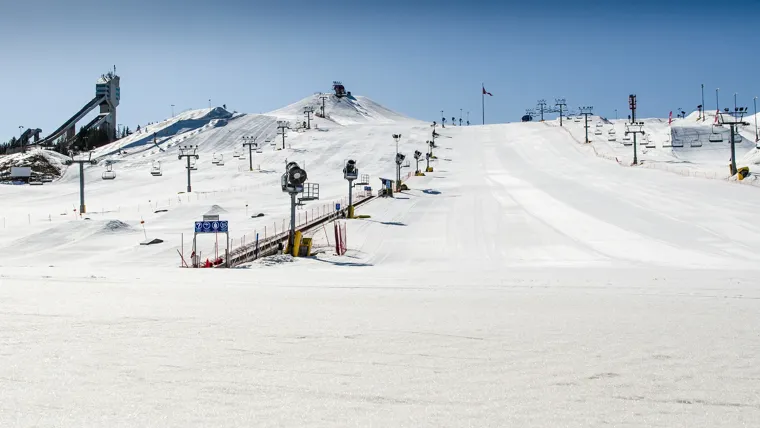
The original 1988 Games revealed something that now appears remarkably modern: the event was never confined to a single city. Long before regional hosting became a model, as we saw with the Milan-Cortina Winter Games earlier this year, Calgary had already done it. It functioned across a broader regional system connecting Calgary, Canmore, Nakiska, Kananaskis, and the mountain communities beyond. Today, as the Olympic movement searches for more sustainable hosting models, that approach feels less like history and more like a blueprint.
A future Games would not be about Calgary alone, but about an entire province. It would connect Calgary's urban capacity with the mountain communities that have shaped Canada's winter identity for generations. It would showcase how cities, towns, transportation networks, recreation assets, tourism economies, and natural landscapes can function together as a single system.
Canada has been developing this capability over decades, through Vancouver 2010 and countless world championships in between. In many ways, Alberta already operates as the kind of regional platform the Olympic movement is increasingly seeking.
Let’s reframe the question
Of course, none of this means Alberta should automatically pursue another bid. Public concerns deserve to be taken seriously. Questions about costs, priorities, housing, transportation, and long-term value are legitimate, and any future proposal would need to demonstrate clear public benefit long after the closing ceremony.
The Winter Games are entering a period of profound change. Climate pressures are narrowing the list of viable hosts, public expectations are rising, and the era of building entire Olympic landscapes from scratch is drawing to a close.
Perhaps the larger issue is not whether Alberta needs the Olympics, but the fact that the Olympics might need places like Alberta. Only a small number of regions possess the mountains, the climate, the infrastructure, and the institutional capacity required to host this kind of event responsibly. Alberta is one of them. Here, opportunity is more significant. The province has the potential to demonstrate how the next generation of Winter Games can work: regional rather than centralized, practical rather than extravagant, and built sustainably upon existing strengths rather than temporary ambitions.
Alberta is poised to redefine how successful Winter Olympics and Paralympics are delivered in the decades ahead. Now, that would be a conversation worth having.