
Arup recognised with multiple prestigious awards at the HKILA Awards 2025
The industry accolades reflect our ability to bring digital innovation to life while translating global insights into location‑specific, sustainable projects.
Last updated: 15th April 2026
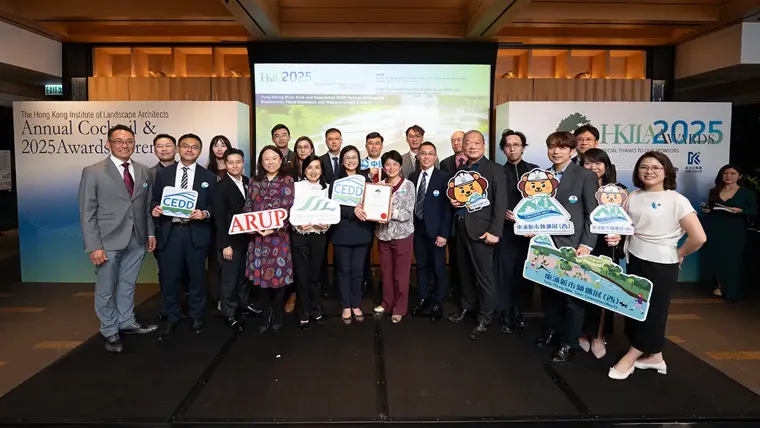
Building on our success in 2024, we are honoured to have earned four prestigious awards at the Hong Kong Institute of Landscape Architects (HKILA) Awards 2025, including 2 Gold Awards and 2 Silver Awards.
Our achievements were celebrated at the awards ceremony held in Hong Kong on 10 April, where industry leaders flew in and gathered to recognise the most forward-thinking firms and teams across the landscape sector.
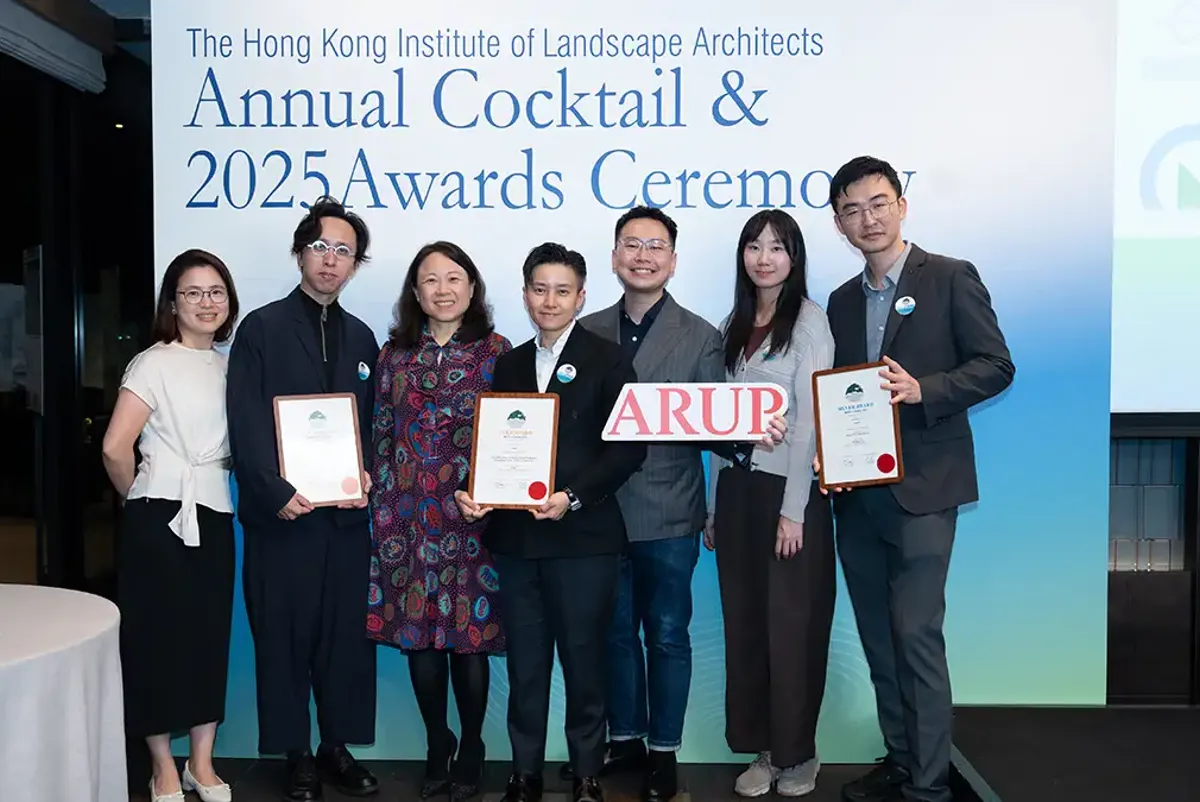
Arup recognised with four awards at the HKILA Awards 2025
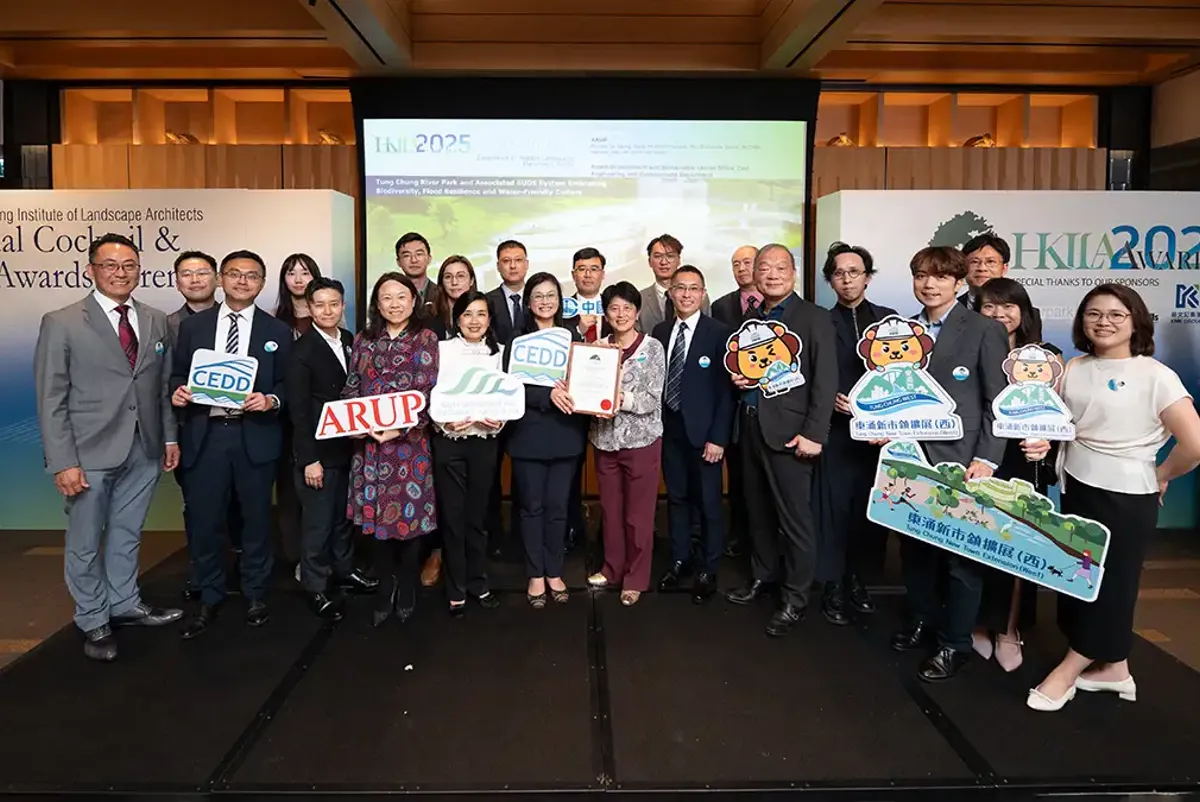
Feasibility study on nature positive design for water bodies in Northern Metropolis
Gold Award in Excellence in Landscape transformation category
This pilot project revitalised 60 hectares of ecologically important wetlands, enhancing biodiversity, strengthening ecological resilience, and improving carbon performance through evidence-based and sustainable interventions.
Drawing on our digital carbon platform, the project transformed key water bodies into data-driven environmental assets. A comprehensive carbon assessment established baseline emissions and natural sequestration, enabling the targeted deployment of Nature‑based Solutions (NbS). These interventions included expanding tree canopy cover, constructing floating wetlands, restoring native meadows, and integrating sustainable agricultural zones, all designed to increase carbon sequestration, enrich biodiversity, and build long-term ecological resilience. People‑nature‑friendly spaces were also introduced to strengthen community connection with local ecological area.
To uphold the highest standards, the project undertook a formal self‑assessment using the IUCN Global Standard for NbS, rigorously evaluating biodiversity, ecosystem health, and the well-being of communities across eight criteria.
The study’s findings provide an evidence‑based roadmap to further amplify ecological value, align with global best practices, and establish the project as a pioneering model of nature‑positive infrastructure.
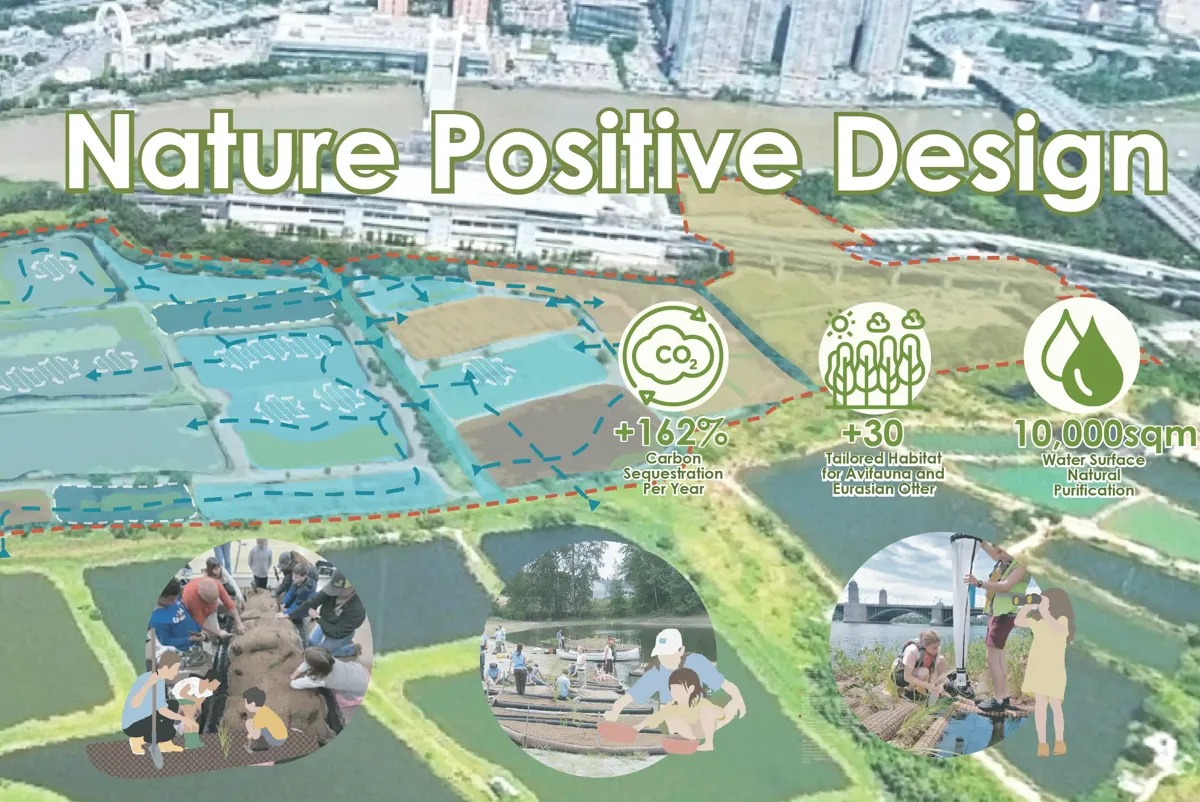
Feasibility study on nature positive design for water bodies in Northern Metropolis
La Trobe University city masterplan
Gold Award in Excellence in International planning and research
The masterplan supports La Trobe University’s ambition to transform its 255‑hectare Melbourne (Bundoora) campus into a thriving university city that brings together living, learning and working in a sustainable environment designed for the future.
At the heart of the plan, the expanded Nangak Tamboree Wildlife Sanctuary becomes the campus’s ecological spine. This restored corridor supports threatened species, strengthens regional biodiversity networks, and honours the deep history and cultural knowledge of the Wurundjeri Woi Wurrung through thoughtful design and stewardship.
The master plan combines the 20-minute neighbourhood concept in the development of a place-based, spatial strategy, supported by a clear hierarchy of landscapes, from regional ecological corridors to local parks and plazas. It sets ambitious environmental targets, including a more extensive green network for living, learning and innovation, as well as a net gain in biodiversity. There will be over 1 million square metres of regenerative, climate-resilient open spaces.
By consolidating parking, introducing mixed‑use development, and activating campus edges, the plan prepares for future public transport connections, improving accessibility and strengthening regional integration. Underpinned by La Trobe’s Net Zero by 2029 commitment, this future‑ready university city places landscape and ecology at the center of a thriving, inclusive, and sustainable community.
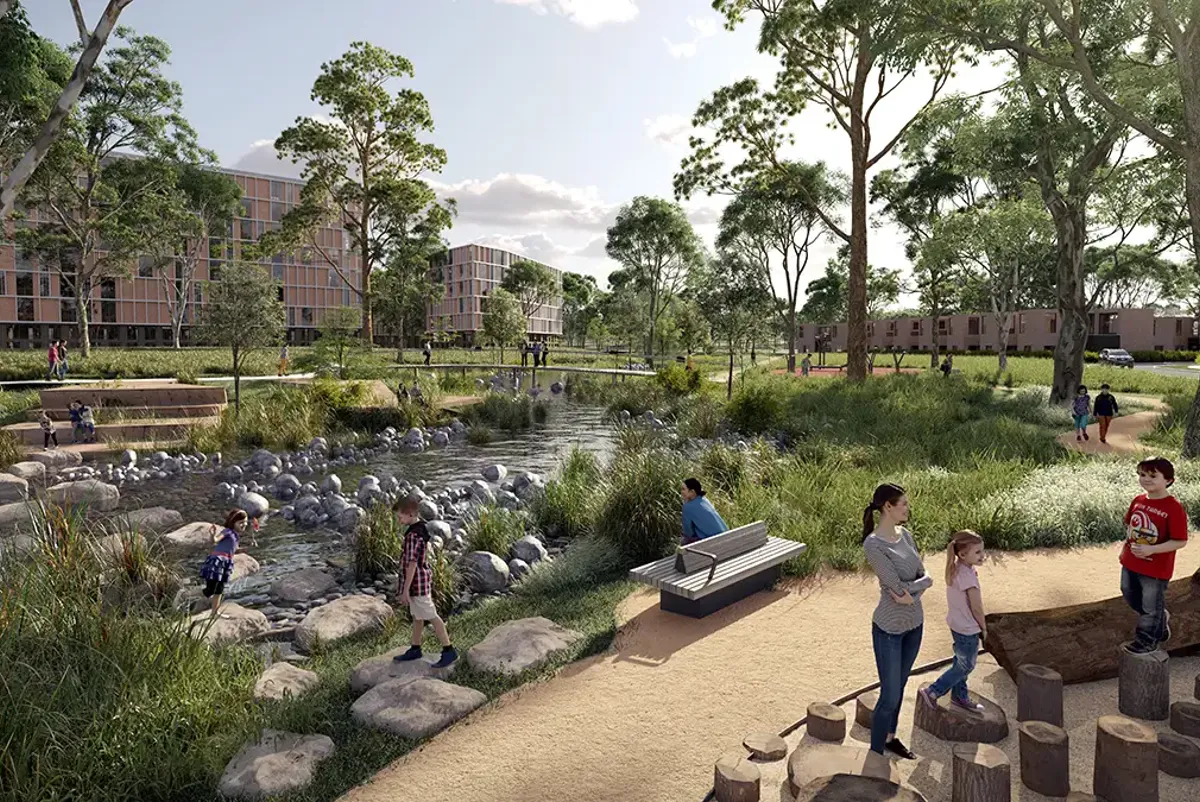
La Trobe University city masterplan
Tung Chung Stream revitalisation – Hong Kong’s first river park promoting water friendly culture
Silver Award in Excellence in Master landscape planning category
This pioneering project is transforming a 600‑metre concrete channel of Tung Chung Stream into Hong Kong’s first River Park promoting water friendly culture, creating a welcoming public destination while restoring a once‑degraded waterway. By reconnecting the stream to its upstream reaches, the revitalisation re-establishes crucial habitats for rare and endangered species and strengthens the ecological health of the entire catchment.
Instead of relying on conventional flood‑control structures, our team introduce climate‑adaptive, nature‑based solutions. Rip‑rap streambeds and lush native vegetation recreate natural river conditions, while flood resilience is significantly enhanced, from a 50‑year to a 200‑year protection level, through real‑time flood‑warning systems, intentionally floodable park edges, an underground relief culvert, and a protective polder embankment.
Sponge‑city design is integrated through a Sustainable Urban Drainage System (SUDS). Features such as bioswales and constructed wetlands naturally filter stormwater, reduce flood risk, recharge groundwater, cool the surrounding area, and support wildlife. Carefully selected native plants attract birds and butterflies while acting as living biofilters that improve water quality.
Tung Chung River Park offers a new model for blue‑green infrastructure, enhancing climate resilience, restoring biodiversity, and giving the community an immersive, educational public space that celebrates a water‑friendly culture.
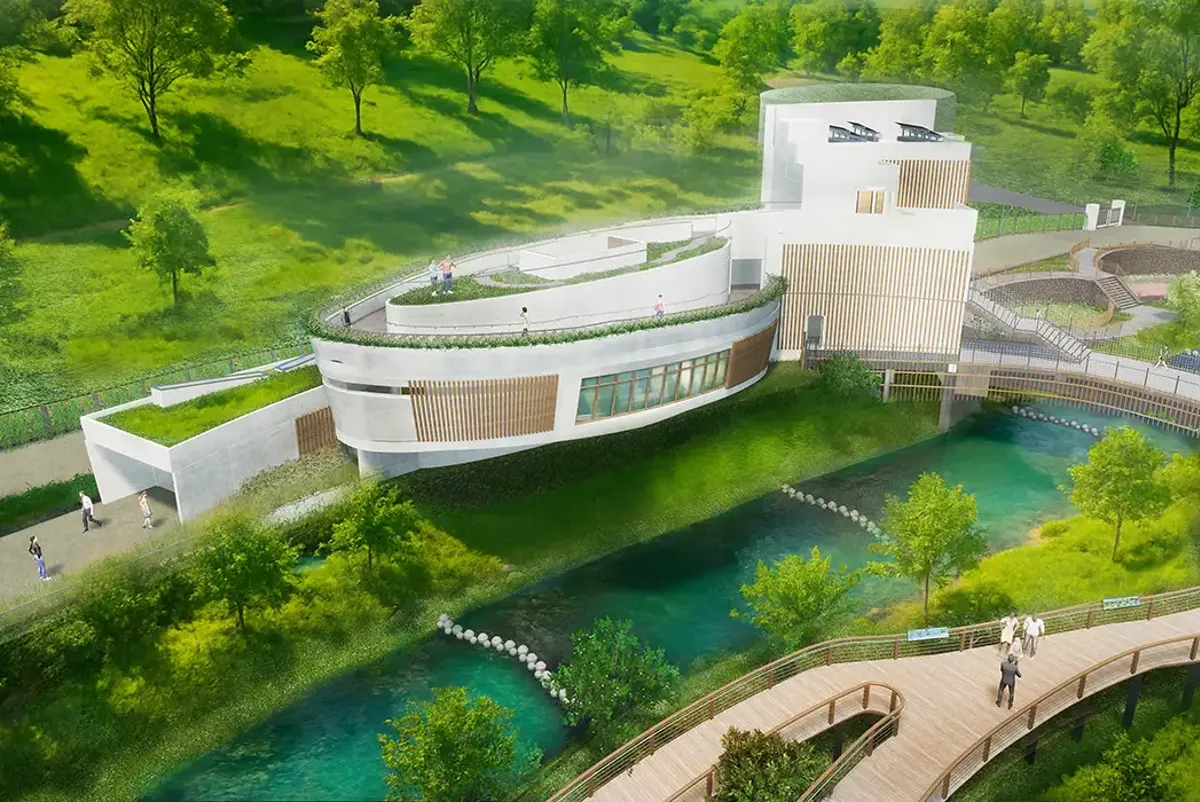
Tung Chung Stream revitalisation - Hong Kong’s first river park promoting water friendly culture
Masdar Net Zero Mosque
Silver Award in Excellence in International project category
The Masdar Net Zero Energy Mosque landscape establishes a new regional benchmark for resilient public spaces, bringing together sustainability, cultural identity, and innovation in a cohesive design. Targeting LEED Platinum and Estidama 4 Pearl certifications, the project weaves high environmental performance into the spiritual and social role of the mosque.
The landscape is structured around three distinct zones: the Entrance, the Park, and the Courtyard, each balancing user experience with sustainability. The ceremonial Entrance is defined by shaded walkways and native planting; the Park offers a comfortable microclimate through drought‑tolerant species and shaded seating; and the Courtyard reinterprets traditional mosque spatial typologies, creating a calm, contemplative space shaped by natural ventilation and daylight.
Environmental stewardship drives every design decision. Native and adaptive plants reduce irrigation demand, greywater recycling from ablution facilities enhances water efficiency, and locally sourced materials help lower embodied carbon. Passive cooling strategies further minimise energy use, reflecting Masdar’s long‑term commitment to ecological leadership.
Beyond performance, the design celebrates Emirati heritage through contemporary expression, providing inclusive spaces for gathering, learning, and reflection, and reinforcing the mosque’s role as a community anchor. By thoughtfully integrating nature, technology, and tradition, our team demonstrates how landscape architecture can create meaningful, sustainable environments for generations to come.
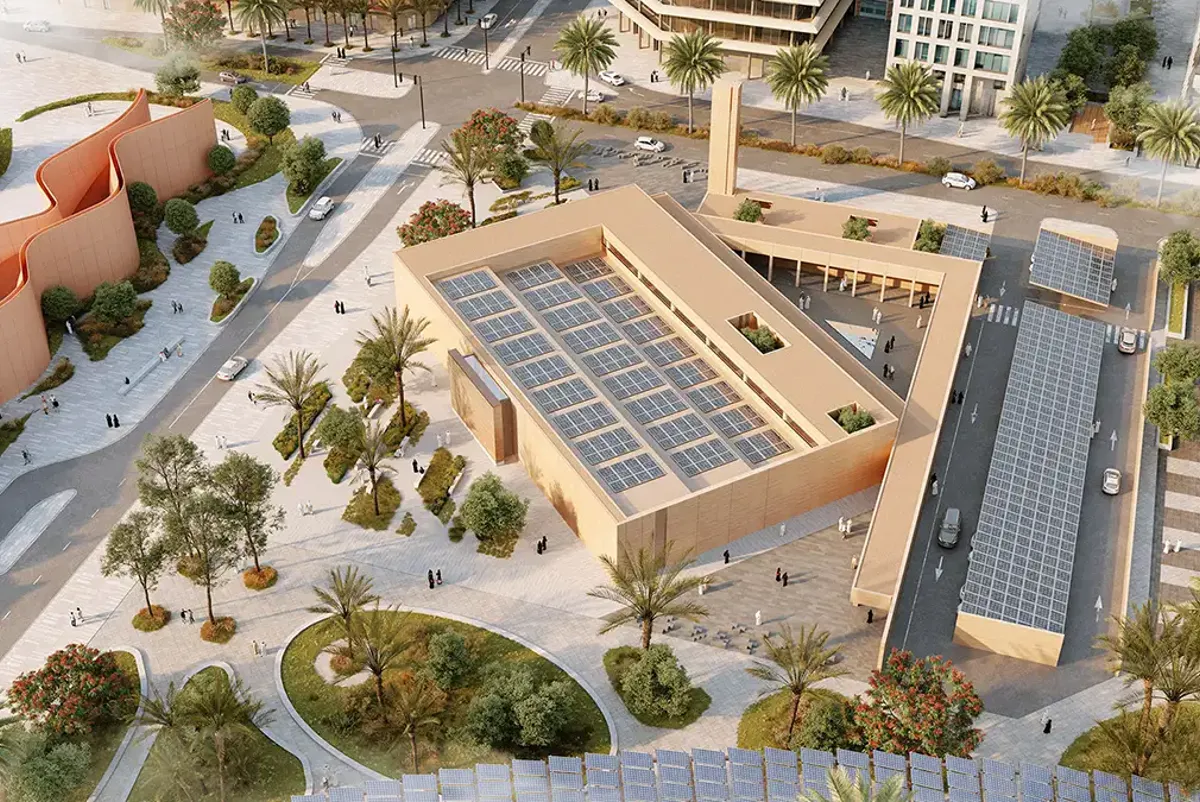
Masdar Net Zero Mosque
The HKILA Awards seeks to promote excellence in landscape planning, design and management in both public and private landscape projects, to recognise outstanding achievements by landscape architects, landscape designers, students in landscape architecture and to bring the valuable works of local landscape architects, landscape designers and students to the public’s attention.
News
Explore more Asia Pacific news
Arup leads decarbonization of inter-island ferries in the Philippines
13th July 2025

Harnessing digital twin technology to address plastic waste in Philippines Pasig River
24th June 2025

Arup and Autodesk team up to accelerate industry-wide collaboration
17th June 2025

Arup experts share trends shaping the future of rail at Asia Pacific Rail
11th June 2025

Learn more about Arup
A global consultancy shaping infrastructure, buildings, energy and sustainability for the built environment.
