
Pushing boundaries with innovative sustainable materials
Blue Ocean Dome Pavilion at Expo 2025 Osaka
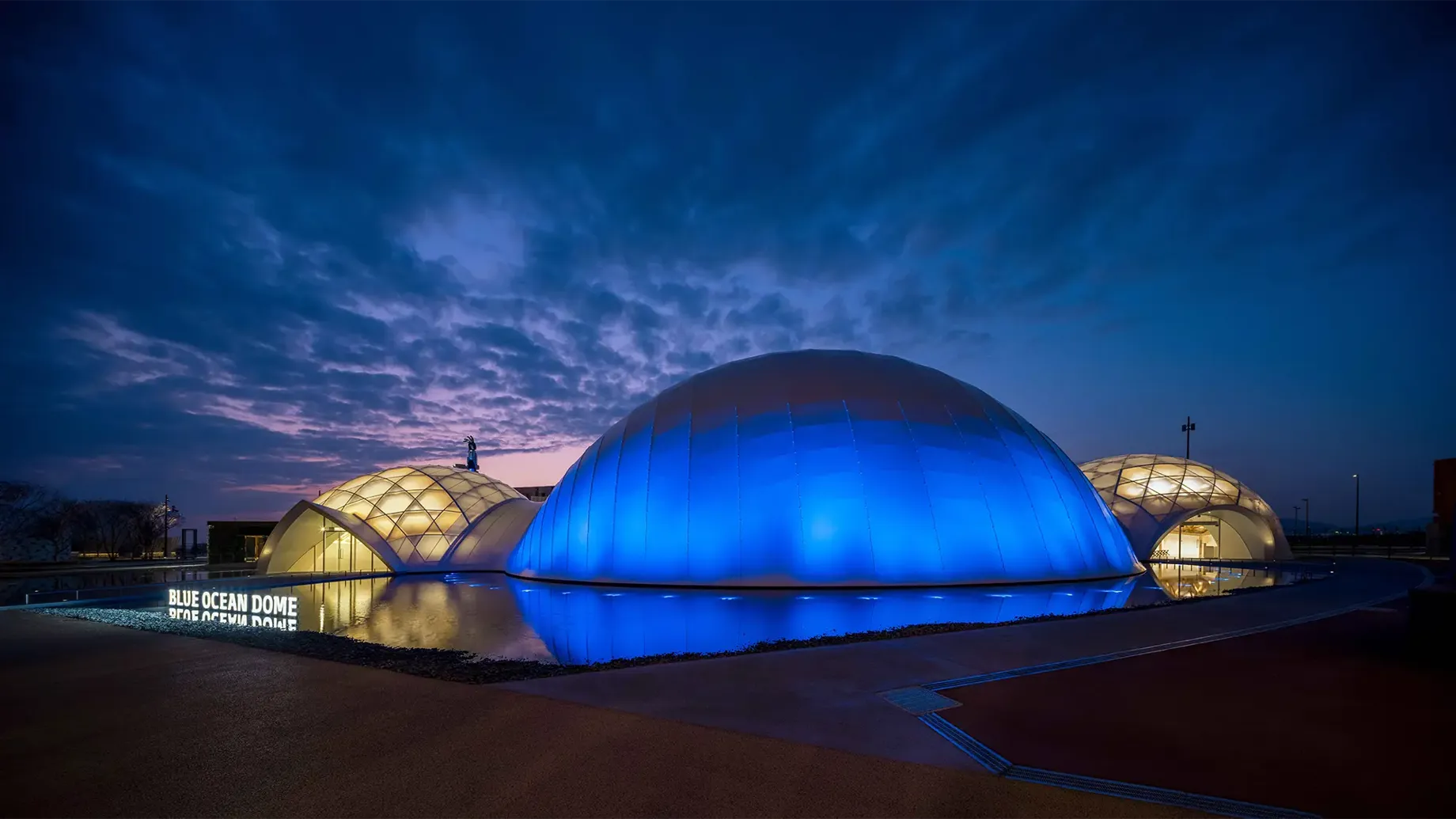
At Expo 2025 in Osaka, the ‘Blue Ocean Dome’ stands as a striking symbol of innovation and sustainability. Conceived by Zero Emission Research and Initiative in Japan (ZERI JAPAN), a non-profit organisation dedicated to promoting recycling and zero waste, the pavilion revives the Expo’s architectural traditions while exploring ideas, structures and materials for future buildings.
Collaborating with Shigeru Ban Architects Architects, Arup provided structural and MEP engineering services to bring this dome-shaped pavilion to life using pioneering materials and design strategies that drive sustainability, easy disassembly and reuse after the Expo.
The significance of this new endeavour lies in its pioneering use of unconventional materials, challenging traditional norms. By successfully integrating paper tubes, carbon fibre reinforced plastics (CFRP) and laminated bamboo, this project not only pushes the boundaries of design but also sets a precedent for sustainable and innovative building practices.
The rigorous testing and thoughtful design considerations pave the way for future advancements in structural engineering and environmentally conscious construction methods.
Designing for lightweight, sustainable construction
Due to site constraints limiting excavation to 2.5m in depth, the three domes of the pavilion, with spans of 20m and 40m, had to be built without the use of driven piles. This made lightweight construction essential.
To meet these challenges, Arup and the project team used three novel materials for the structural framing of the domes: paper tubes, CFRP and laminated bamboo, enabling the creation of large-span structures with minimal foundation requirements.
The design also accounted for dismantling, component reuse, and relocation, as the pavilion is scheduled to be relocated to the Maldives after the Expo concludes.
While focusing on reducing dome weight, strategies were devised to prevent structural instability without the use of driven piles. Simplified foundation and joint designs were crucial, considering future relocation plans.
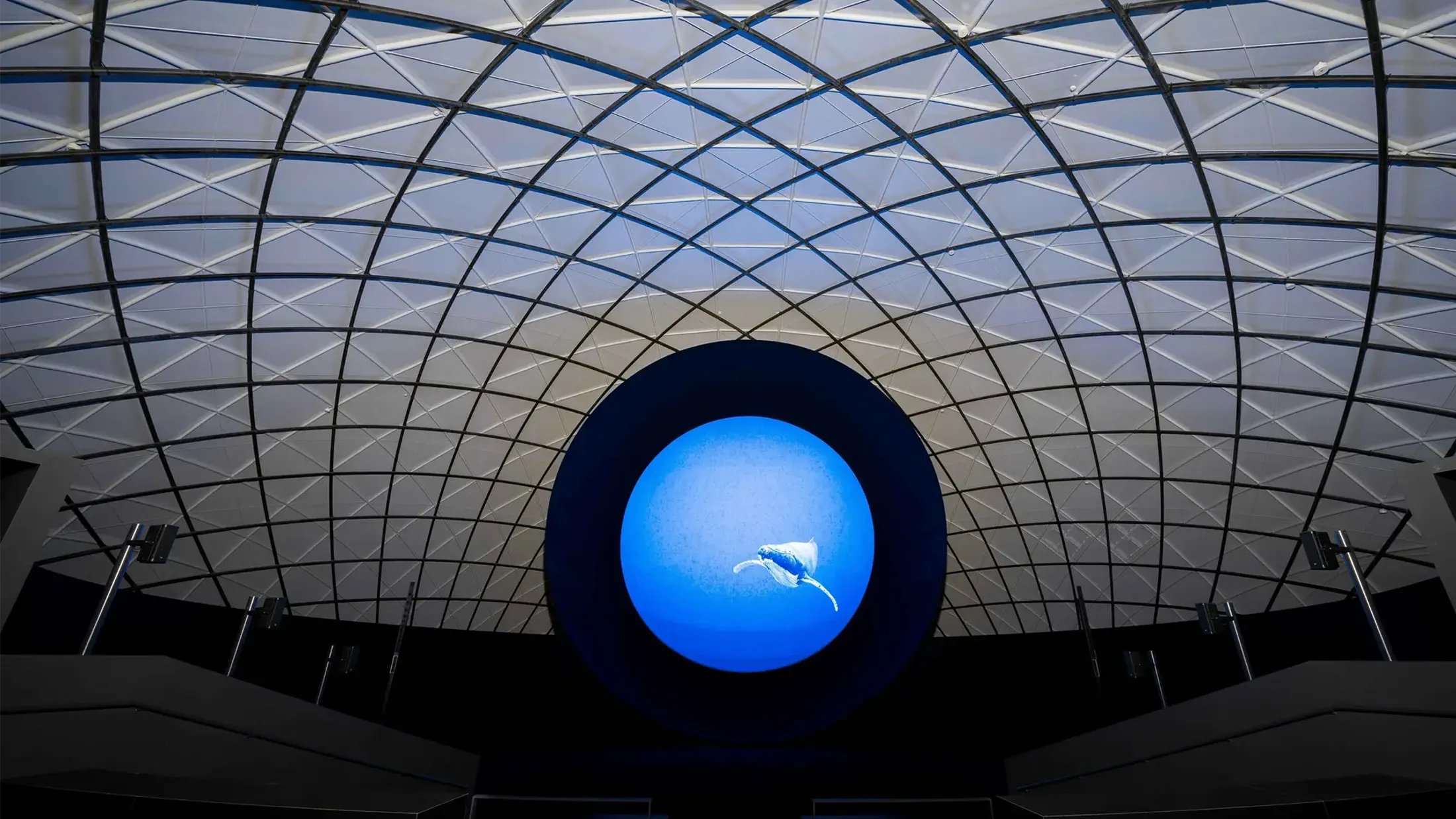
CFRP dome, Blue Ocean Dome Pavilion at Expo 2025 Osaka ©Hiroyuki Hirai
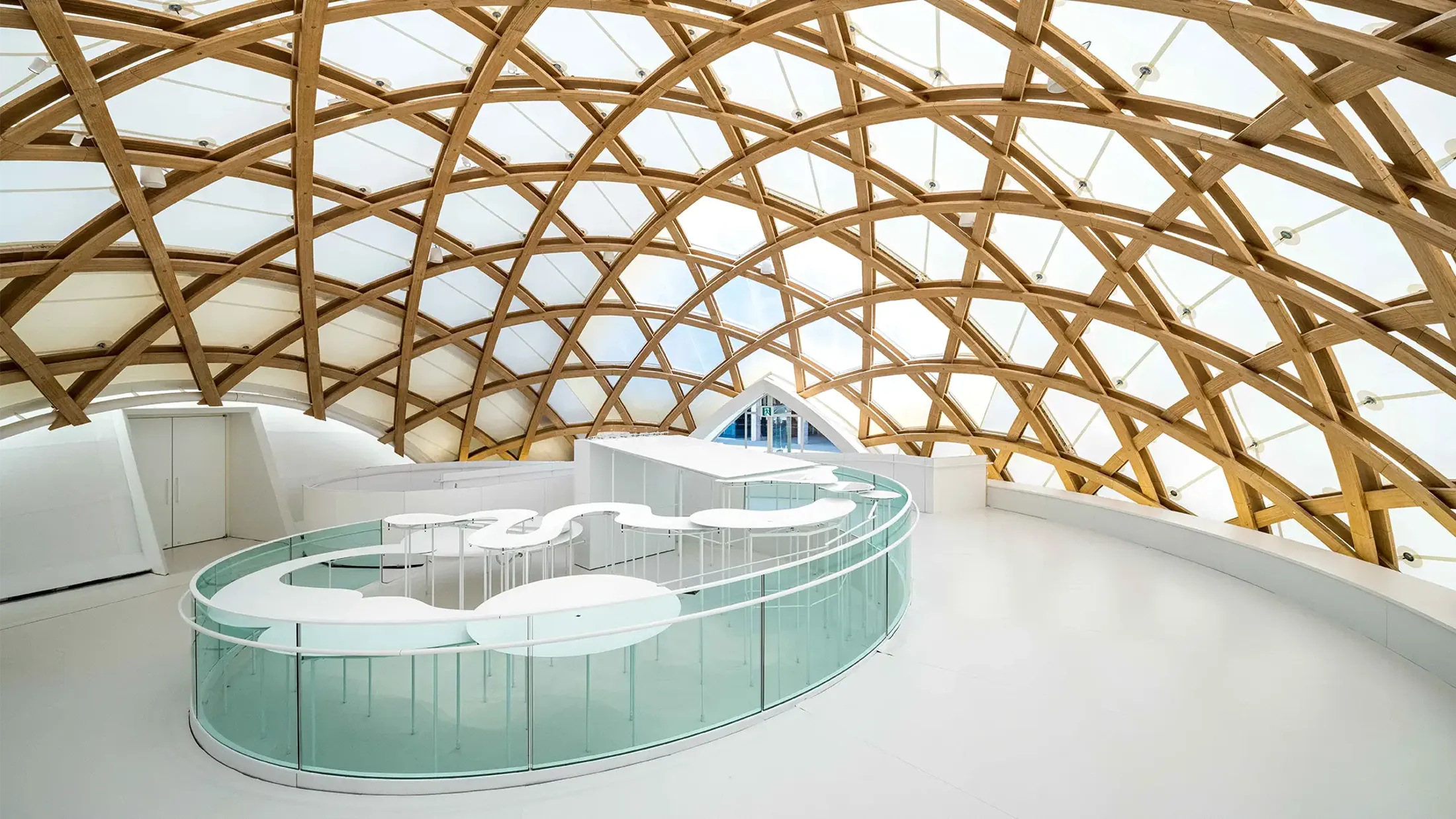
Laminated bamboo dome, Blue Ocean Dome Pavilion at Expo 2025 Osaka ©Hiroyuki Hirai
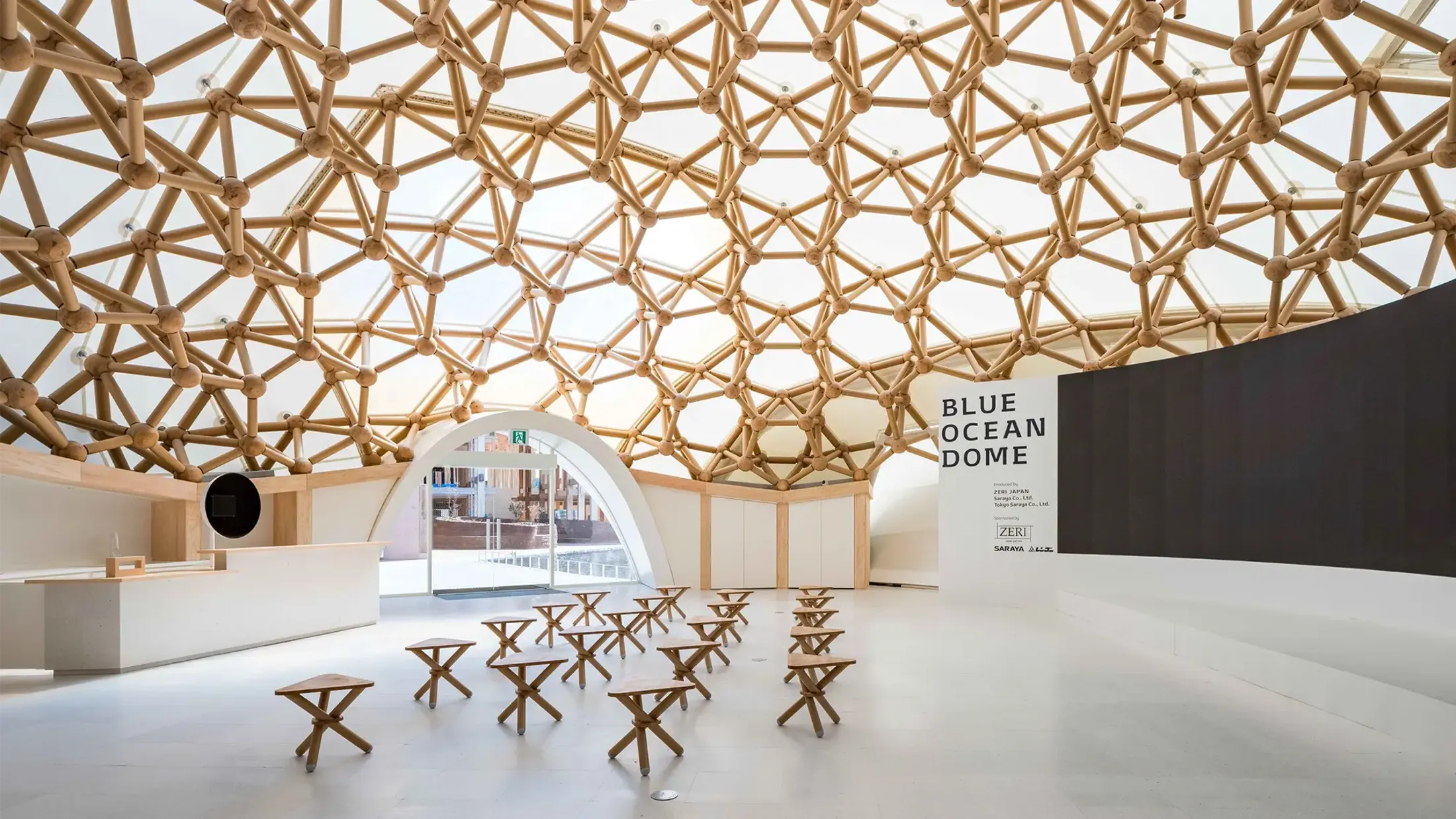
Paper tube dome, Blue Ocean Dome Pavilion at Expo 2025 Osaka ©Hiroyuki Hirai
CFRP dome
The CFPR dome consists of three layers, marking the first use of CFRP as an earthquake-resistant structure in Japan.
CFRP, a plastic reinforced with carbon fibres, boasts exceptional lightweight properties, with a specific gravity roughly one-fifth that of steel, while maintaining comparable strength. This enabled the realisation of a 40m-span dome on a shallow foundation, significantly reducing the weight per unit area.
However, as CFRP is sensitive to temperature changes, thermal simulations were carried out to verify its load-bearing capacity in the high-heat, high-humidity conditions expected after the pavilion’s relocation to the Maldives.
A steel frame was integrated into the outer layer supporting the membrane structure, with CFRP pipes used in the second and third layers. Designed with relocation and reuse in mind, the pavilion not only prioritises safety but also emphasises environmental sustainability, exceeding decarbonisation benchmarks.
Laminated bamboo dome
The 20m diameter dome is constructed with six layers of curved laminated bamboo. Bamboo offers the benefit of rapid growth and efficient CO₂ absorption compared to timber. However, due to variations in thickness, size and surface uniformity, laminated bamboo is used to enhance its strength and stability.
To ensure structural safety, material tests were conducted over a year in collaboration with laminated bamboo suppliers and universities.
Paper tube dome
The paper tube dome is constructed using 100% recycled paper tubes and cross-laminated timber (CLT) joints. This hybrid structure combines the bending rigidity strength of paper tubes with the compression and tension-resistant properties of steel. The steel joints incorporate CLT nodal-type joints, demonstrating that trusses with wooden joints represent a promising next-generation truss design.
Testing, certification and future impact
Extensive testing and rigorous evaluations confirmed that three new materials, with limited prior use in construction, can be effectively adopted as building materials.
To secure certifications, comprehensive experiments were carried out to ascertain their properties and load-bearing capacities. These experiments included long-term verification of material and joint strength criteria, encompassing compression, bending and buckling tests.
The Blue Ocean Dome Pavilion is more than a temporary structure – it’s a proof of concept for the future of sustainable building design. By combining cutting-edge materials, thoughtful engineering, and a focus on circular design, this project redefines what’s possible in environmentally conscious architecture.
Top image: ©Hiroyuki Hirai
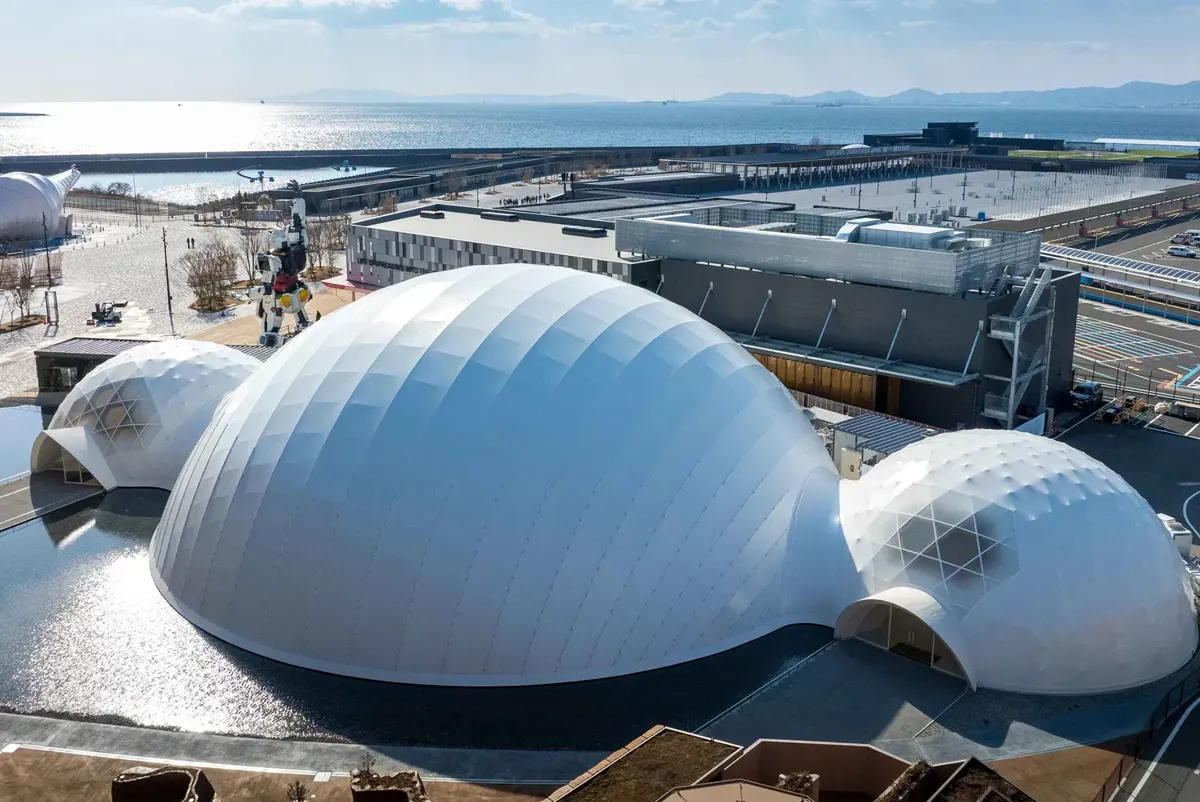
The trio of structures was designed to be lightweight, ensure ease of disassembly after the event, and minimise waste ©Hiroyuki Hirai
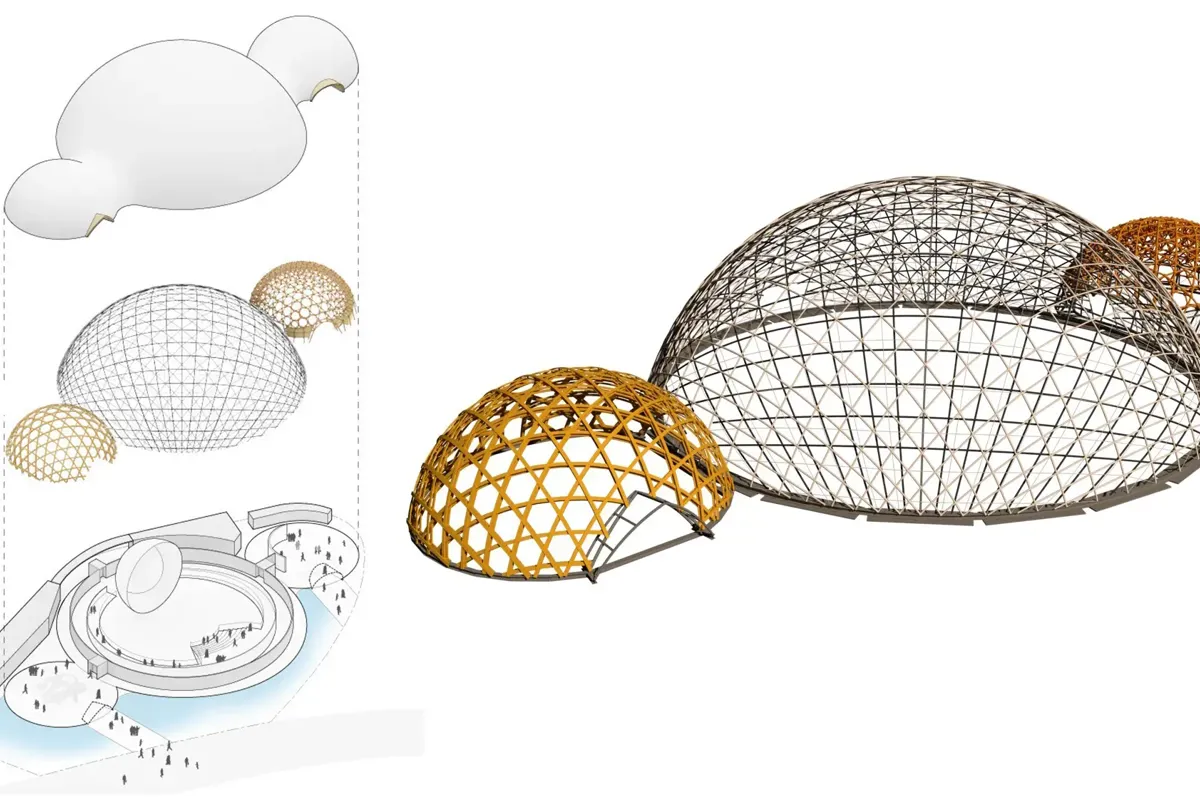
Structure design of the Blue Ocean Dome, Expo 2025 Osaka © Shigeru Ban Architects
Project owner: ZERI JAPAN
Projects
Explore more arts and culture projects

Creating a new paradigm in live entertainment
Sphere, USA

Delivering El Paso’s first purpose-built children’s museum
La Nube STEAM Discovery Center, USA

Enhancing an iconic New York City institution on the Museum Mile
The Frick Collection, USA
Supporting the enduring legacy and regeneration of a valued art center
Storm King Art Center Capital Project, USA
Get in touch with us
If you'd like to speak to one of our arts and culture experts then please get in touch by completing the form.
