
Critical asset maintenance to repair a busy flyover
Boston Manor Viaduct life extension
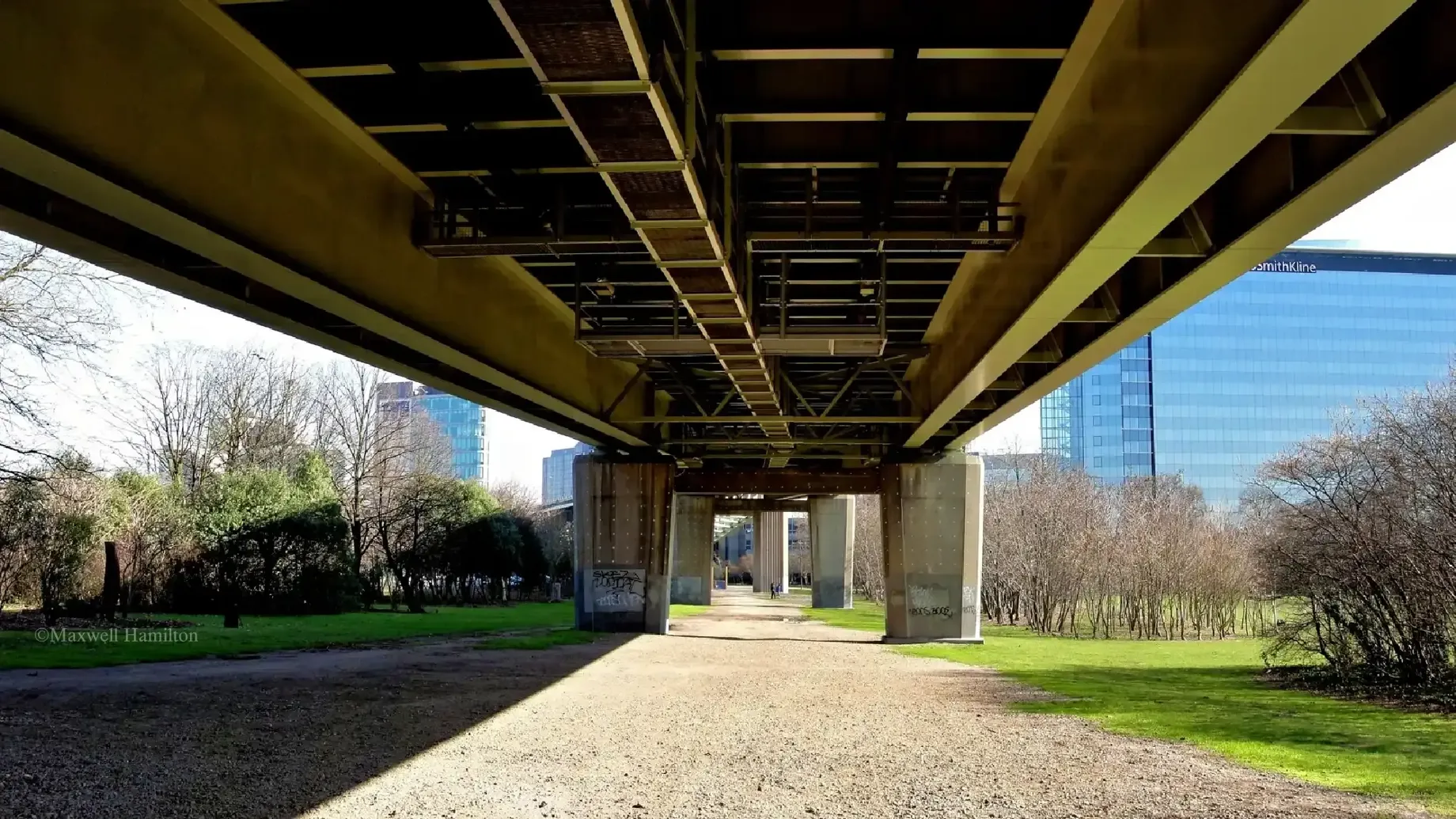
Operated by Connect Plus on behalf of National Highways, Boston Manor Viaduct carries the M4 motorway between central London and Heathrow Airport. This critical transport artery was designed and built in the 1960s, before fatigue in steel structures was fully understood and measures to account for fatigue in design codes were adopted.
Three months before the start of the London 2012 Olympic Games, hairline cracks were discovered in Electroslag (ESW) welds connecting some of the viaduct’s steel I-beams. This indicated that the steel was potentially experiencing fatigue and needed urgent repairs, forcing temporary closure of this vital link. Arup’s experts worked around the clock under pressure and public scrutiny to repair the damage, enabling the road to fully re-open in time for the Games.
The following year, an inspection revealed defects in the bearings in another part of the same viaduct. We used new digital techniques to devise an innovative method for resolving the problem, designing and developing a bespoke temporary jacking pillar and beam that sped up the repair works and reduced disruption for road users. As well as reducing the cost and duration of the maintenance work, this extended the life of the structure.
Asset integrity management under pressure
As soon as the cracks were discovered in April 2012, National Highways quickly brought in a 7.5 tonne vehicle weight limit to reduce the risk of further damage or even a collapse. Leading the emergency structural remedial design, we drew on the technical expertise we had honed on similar projects, including the Rijkswaterstaat bridge in the Netherlands and collaboration between our in-house metallurgists and fracture mechanics experts, with support for testing and validation from TWI Ltd. (formerly The Welding Institute).
Our engineers assessed, designed and implemented a solution, using finite element analysis – a numerical technique that simulates reactions to real-world forces. Repair work on site began simultaneously as the project team strived to get all the welds repaired as quickly as possible.
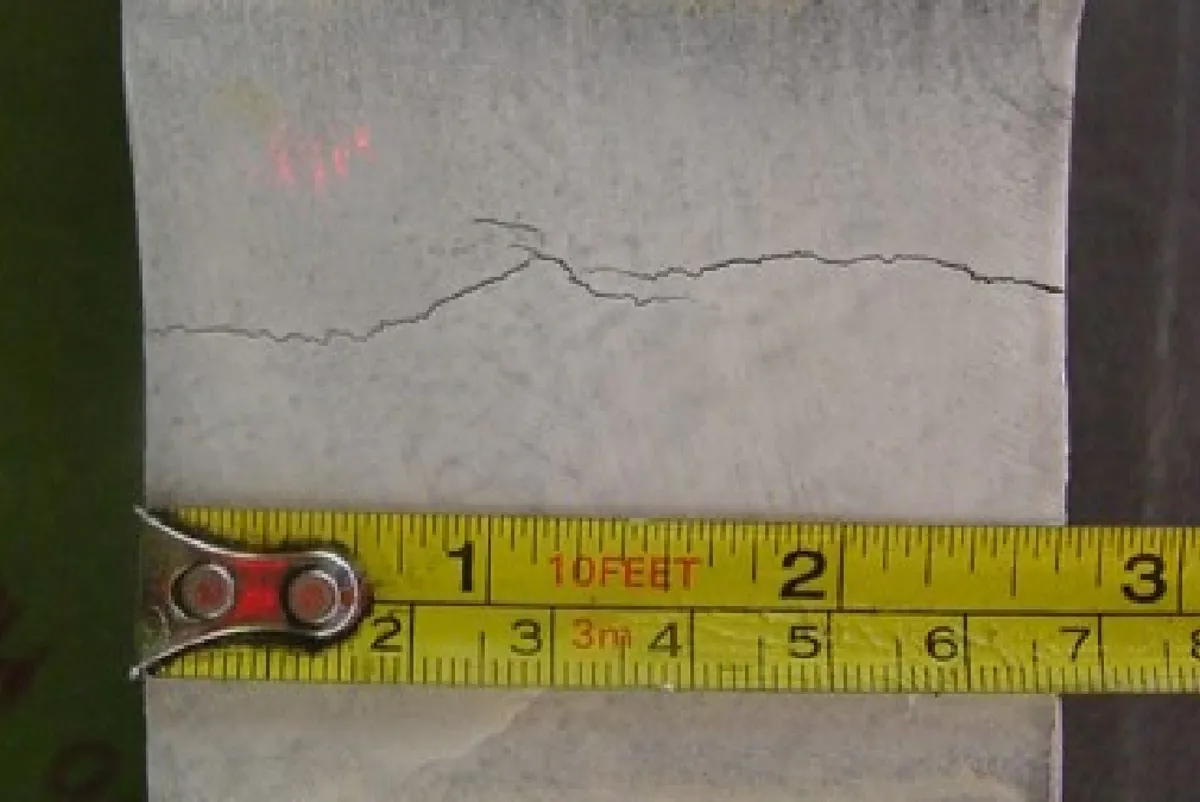
Three months before the start of the London 2012 Olympic Games, hairline cracks were identified in Electroslag (ESW) welds connecting some of the viaduct’s steel I-beams.
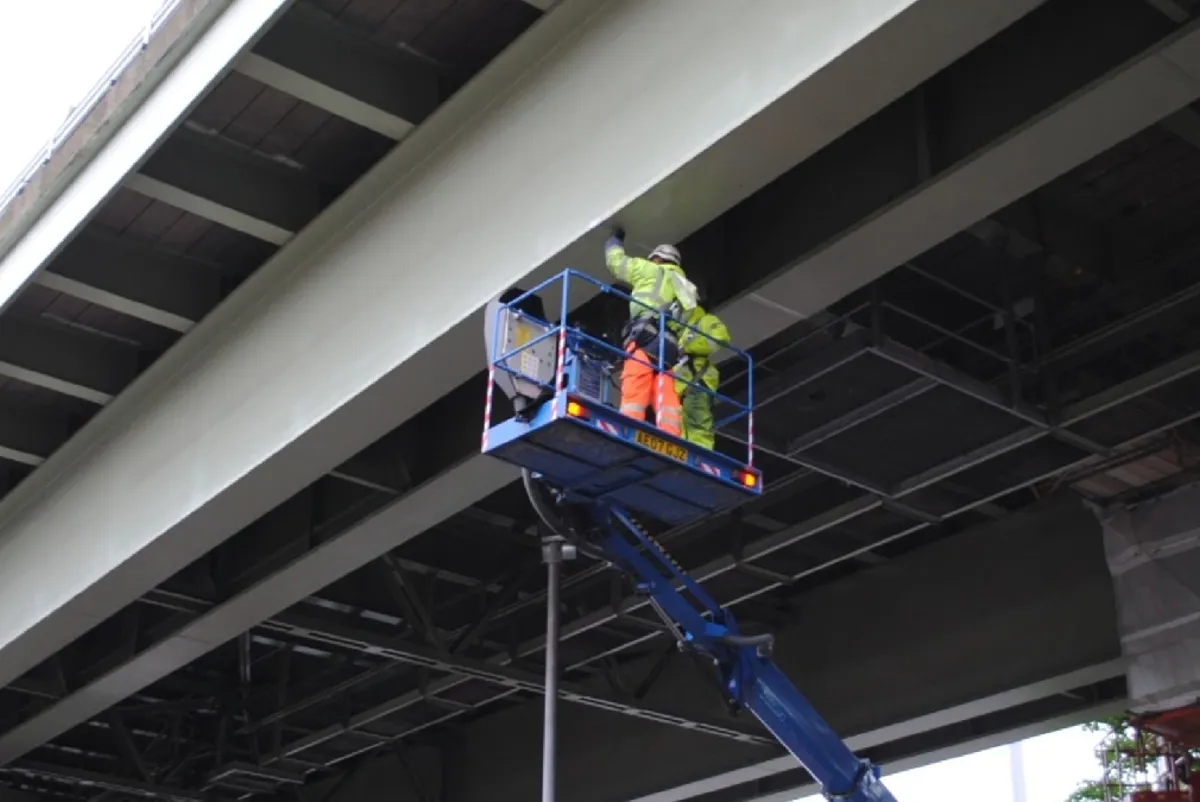
Inspecting the bridge for further cracks.
But, on 6 July 2012, the team working on the viaduct found a significant crack in a critical location. We had no option but to recommend that the entire flyover should be closed to all traffic. With only 21 days remaining until the Olympic opening ceremony, all eyes – including those of government ministers, the Mayor of London and the International Olympic Committee – were on us. Could we repair this key route for competitors, officials and spectators before the Games?
To ensure there was an expert on hand 24/7 to supervise site works and address feedback, Arup team members worked around the clock in shifts. We also met daily with the rest of the project team as everyone pulled together to meet the deadline. Just six days later, the viaduct was structurally sound and could be re-opened to traffic in time for the Olympic visitors’ arrival.
You showed real determination to get the job done in time, working through the night to do so.
A smart solution for asset maintenance that reduced disruption
In 2013, a follow-up special inspection at Boston Manor uncovered problems with the roller bearings. The viaduct’s 17 spans use a steel plate girder construction with a concrete deck, and the three central spans have a steel truss with a concrete deck. The roller bearings support key beams and transmit forces safely through the supporting piers and into the foundations.
We used 3D scanning to examine the bearings and surrounding structure. This revealed that the bearings were at the end of their life and needed to be replaced immediately. But there was a problem: the standard method – using jacking points to raise the deck off the bearings – was not an option because the bridge girders did not have jacking points built in.
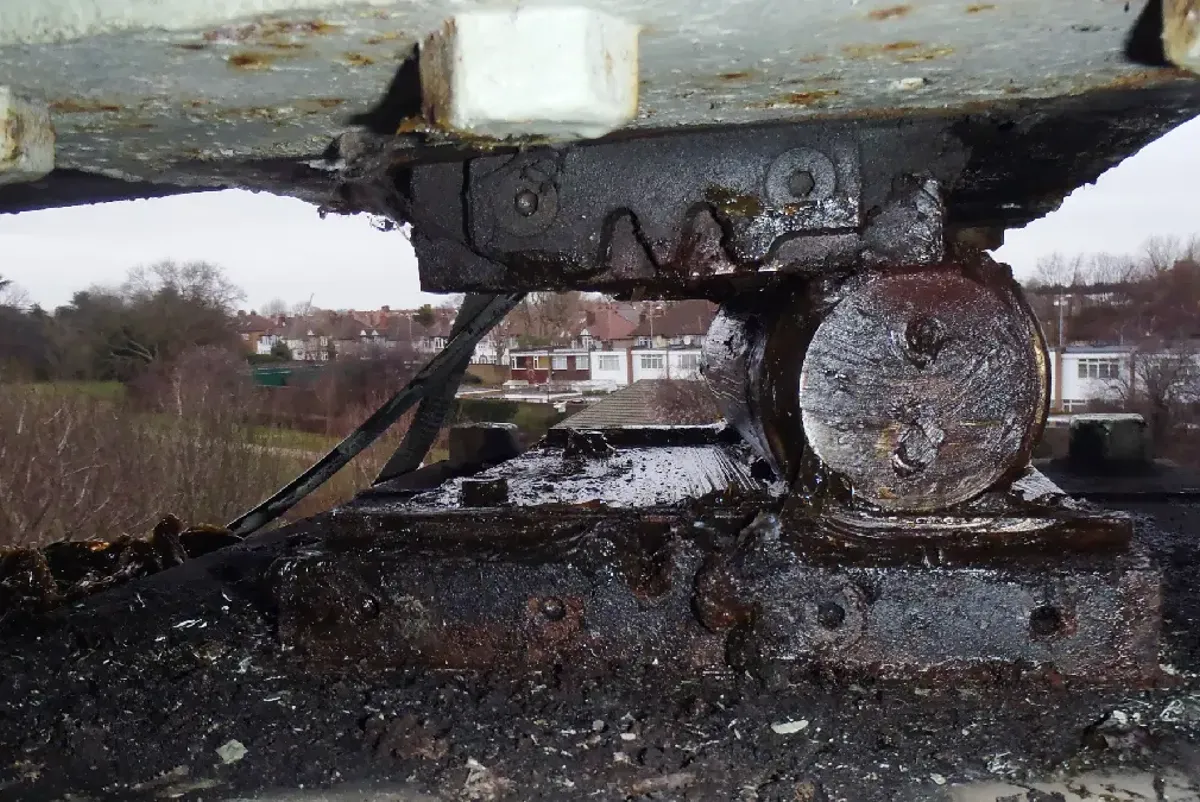
Our 3D scanning in 2013 revealed that the bearings were at the end of their life and needed to be replaced immediately.
To solve this, Arup developed a bespoke temporary works system that could be easily installed between the beams. The jacking pillar and beam we designed could cope with potential movement and function under static and in-service live loading, just in case. Working with bearing supplier Ekspan, we conducted an off-site test to check everything fitted together precisely.
Our experts planned the asset maintenance programme thoroughly before work began on site, scheduling the works in 15-minute blocks. We tested for compatibility and checked for clashes with the aid of a virtual reality room. This reduced the programme by around six months. All work took place overnight to limit the impact of road closures, and the flyover re-opened each day to minimise disruption.
Across four overnight closures, each of the defective bearings was successfully replaced, stabilising the viaduct and ensuring that the motorway remained safe for all vehicles.
Extending the life of ageing assets
Ultimately, the successful repair and maintenance of the Boston Manor Viaduct exemplifies our expertise in solving complex engineering challenges under pressure. Together, these two sets of repairs have rectified problems that were unwittingly designed into Boston Manor Viaduct in the 1960s.
Our work has extended the lifespan of the welds and bearings for a further sixty years, matching the intended design life of the structure. And by leveraging advanced digital techniques and bespoke engineering solutions, we minimised disruption for road users and extended the lifecycle of the viaduct.
My extreme thanks goes to all those who have solved all the many technical problems.
Specialist: The Welding Institute / Contractor: Geoffrey Osborne / HE Consultant: Mouchel
Projects
Explore more bridge engineering projects

California’s first long-span cable-stayed bridge
Long Beach International Gateway Bridge, USA

Designing Australia’s first extradosed bridge
Swan River Crossings Fremantle Traffic Bridge, Australia

Strengthening Suurhoff bridge with innovations in bridge renovation
Suurhoff bridge, Netherlands

A bridge to grow Brisbane’s active transport network
Kangaroo Point Bridge, Australia
Get in touch with us
If you'd like to speak to one of our transport experts about any of the issues raised on this page or a potential collaboration then please get in touch by completing the form.
