
Transforming Bowen’s coastline with inclusive, community-led jetty design
Bowen Wharf Project Concept Design
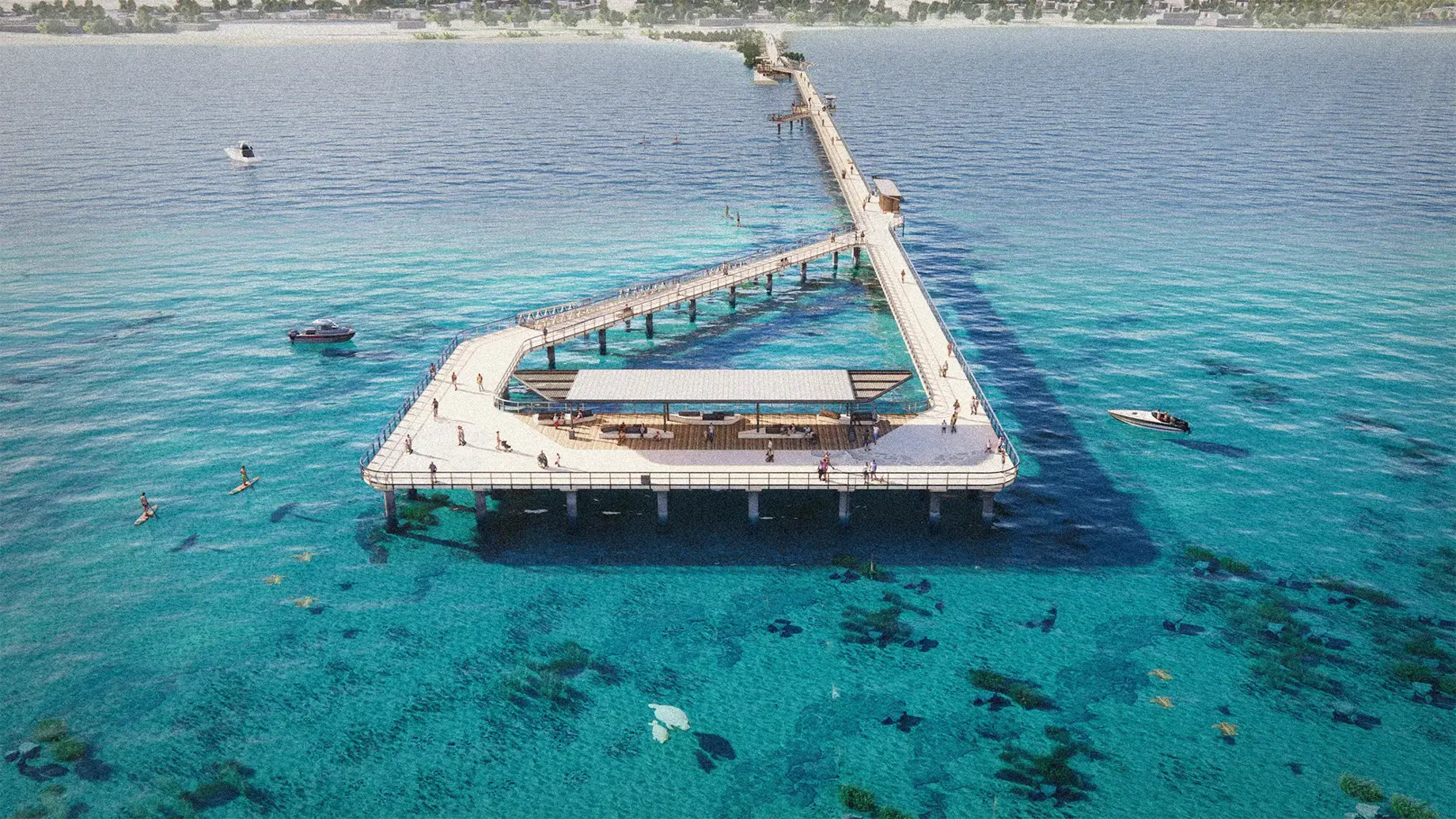
Bowen Wharf, located in North Queensland, has a rich history of serving the community for over 150 years. In 2023, the Queensland Government allocated $50 million to upgrade the wharf with a modern jetty providing vibrant and valued public space for the community. Port owners, North Queensland Bulk Ports Corporation (NQBP), wanted to take a community-led design approach creating a shared vision for a sustainable and inclusive community.
NQBP chose our team to develop concept design options, undertake stakeholder and community consultation and deliver a finalised concept design. Working alongside NQBP, our team engaged with the community to honour local heritage and foster a resilient environment. The final concept design reflects community needs, including better accessibility for all types of users, ample shade and seating, toilets, historical and cultural education, fishing facilities and integration of Juru people artwork.
The Bowen Wharf project is set to redefine the coastline and waterfront experience by creating a landmark and legacy for Bowen. The project is underpinned by a shared commitment to the community, ensuring that the new jetty not only meets functional needs but also embraces the identity of Bowen while enhancing the public facilities for generations to come. Guided by local needs and priorities, we have set a new standard for inclusive and sustainable infrastructure.
Diverse community voices shape jetty design
From the outset, engaging the Bowen community on the future of their jetty was a top priority. In collaboration with North Queensland Bulk Ports (NQBP), we initiated enquire-by-design workshops, drop-in sessions, interactive school sessions and design competitions that invited diverse voices and ideas, ensuring that the new jetty would reflect broad community values. The enquire by design process empowered community members to actively shape their environment, fostering a sense of ownership that will resonate for generations.
We invited the community to offer their opinions on two concept options narrowing the design to the one final concept design. By placing community engagement at the forefront of the design process, the new jetty will serve as a gathering place that celebrates local culture and fosters connection among residents and visitors alike.
Designing an inclusive and accessible jetty experience
We adopted a design philosophy centred on user experience and inclusive design from the outset. We were committed to creating a jetty that welcomes everyone, featuring elements such as accessible access, generous shaded areas, regular comfortable seating and drinking fountains, accessible fishing areas and accessible restrooms. These features are not just functional; they contribute to enhancing community well-being by providing a space where both individuals and families can come together, enjoy nature and participate in social activities.
The Bowen community highlighted the importance of promoting wellness and social interaction. The new jetty will be a space for social activation, where events can take place, and residents can engage with their surroundings. By designing with inclusivity in mind, the jetty will be a vibrant hub that reflects the values and needs of the Bowen community.
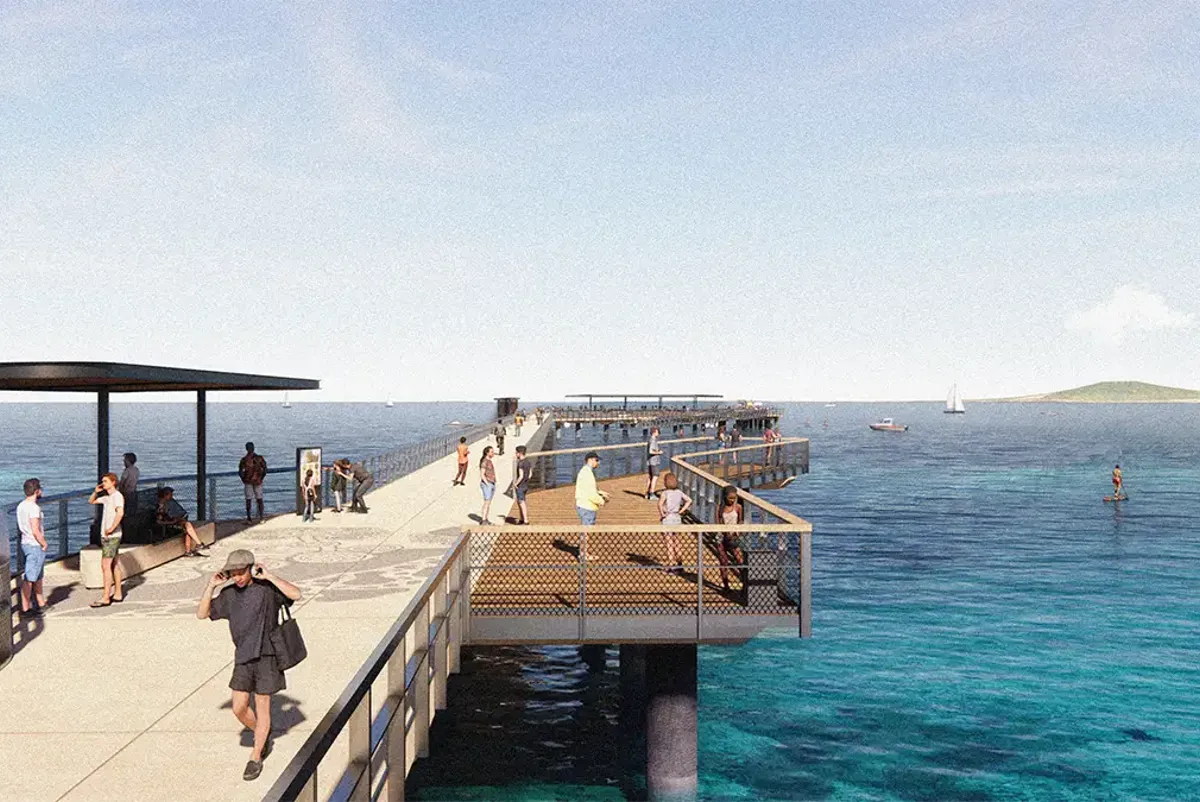
Illustration of viewing platforms
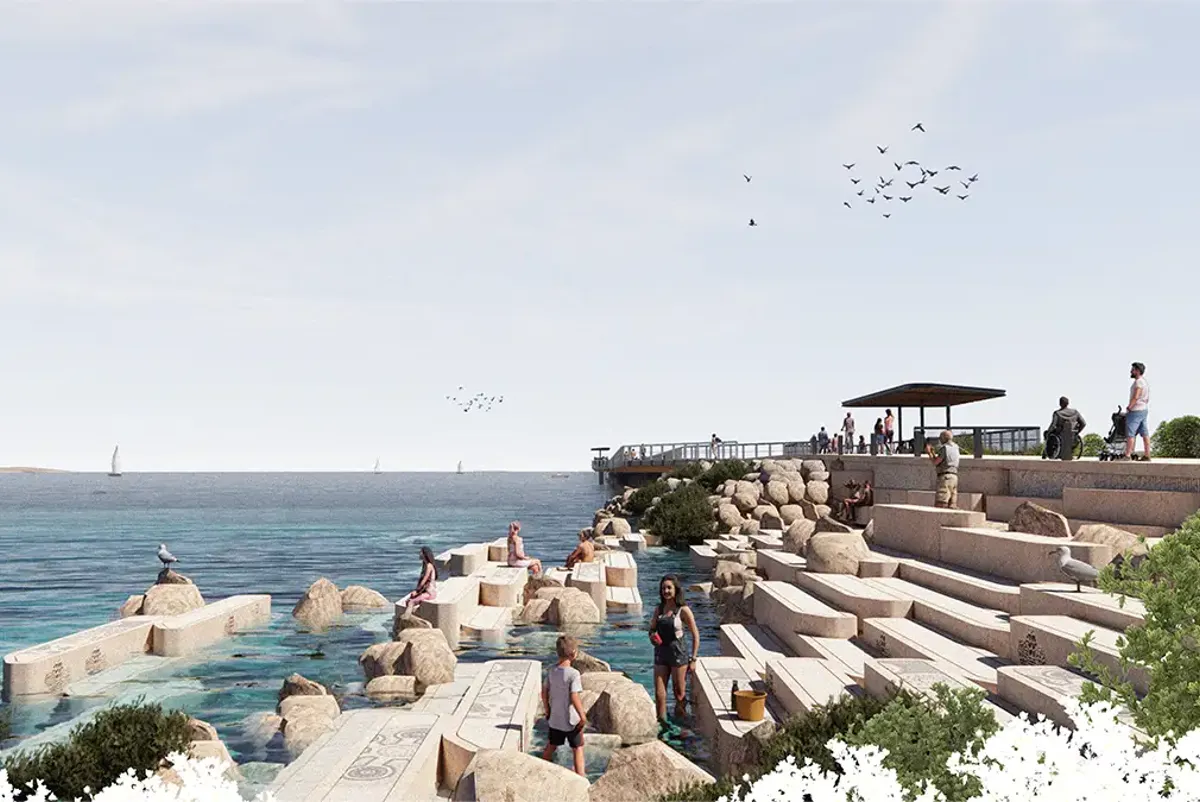
Illustration of large steps and seating blocks
We faced tough decisions, and Arup provided the right approach and people, helping the community shift from initial uncertainty to strong project support.
Embedding climate resilience and heritage into design
Preserving the region’s ecological, cultural, and historical heritage was a priority for the community. Through educational panels and reusing timber, we aimed to honour the jetty’s history while building for the future. This sustainable approach not only reduces waste but also ensures that the new structure reflects Bowen’s historical identity.
We engaged with the Juru People about their strong knowledge and understanding of the Land and Sea Country as part of the jetty design development. The Juru People’s contribution to the land management practices in and around the jetty and nearby port is considered key to protecting the environmental values for future generations.
Considering climate change and rising sea levels risks, we designed the proposed deck level one metre above the existing jetty level. By prioritising circular economy principles and design in response to local microclimate and climate risks, we aim to create a structure that meets today’s needs and serves as a resilient and sustainable infrastructure for years to come.
AHS (Heritage Specialist) | RLB (Quantity Surveyor)
Projects
Explore more maritime projects

Designing resilient and outcome-focused infrastructure for Betio Port
Betio Port Masterplan Study, Kiribati

Designing resilient, low-carbon ferry infrastructure for Perth
Ferry Service Expansion, Australia

Shaping Western Australia’s future container port and supply chain
Westport Program Stage 2 and 3, Australia

Realising the ambitions of Europe's busiest ferry terminal
Port of Dover 2050 Masterplan Framework, United Kingdom
Get in touch with us
If you'd like to speak to one of our maritime experts about any of the issues raised on this page or a potential collaboration then please get in touch by completing the form.
