
Brisbane Metro: a new era of accessibility and connectivity in Brisbane
Brisbane Metro
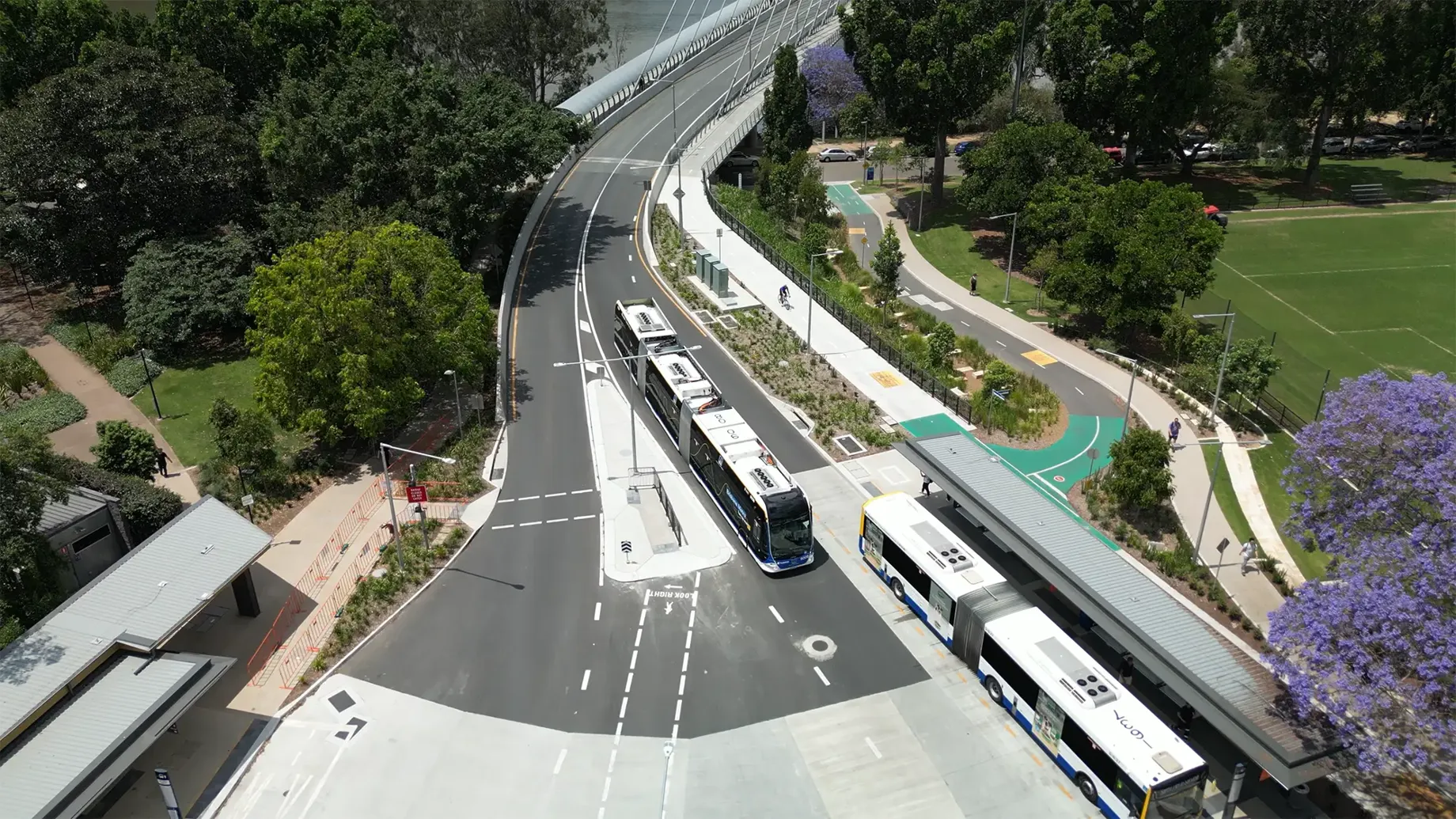
Brisbane’s growing population means the city needs faster, more efficient public transport to connect precincts, reduce traffic and create more public space. Brisbane City Council introduced the electric, high-capacity Brisbane Metro – a 21km, turn-up-and-go transport system operating on existing busways. To support this project, they sought a trusted partner to design and deliver infrastructure, ensuring the metro welcomed people of all ages and abilities while enhancing the city’s connectivity.
Brisbane City Council appointed our team, as part of the Brisbane Move consortium alongside ACCIONA, to design and deliver the major infrastructure works for the Brisbane Metro. Our multidisciplinary team worked on Brisbane Metro major infrastructure, including a new tunnel and upgrades to Adelaide Street, strengthening and upgrading Victoria Bridge, upgrading bus stations, integrating charging facilities and revitalising the Queensland Cultural Centre precinct.
The Brisbane Metro project has transformed the city’s transport system, delivering faster, more connected, and user-friendly services. Prioritising safety and accessibility, the project offers seamless travel for community convenience, as well as reclaiming space and enhancing shaded areas. Designed for future growth, Brisbane Metro’s scalable infrastructure is ready to meet increasing demand and adapt to future developments. Our efforts are unlocking Brisbane’s full potential as we prepare for the Brisbane 2032 Olympic and Paralympic Games.
Realising Australia’s first zero-tailpipe emission transport
The Brisbane Metro vehicle is Australia’s first zero-tailpipe emission transport solution. We integrated an end-to-end transport charging system into existing busway infrastructure, integrating Brisbane Metro with the existing busway network.
Many charging points faced power supply challenges and space limitations for new installations. Collaborating with Brisbane’s high-voltage power authorities, we designed new infrastructure within these constraints and created layover and maintenance areas for drivers and Brisbane Metro maintenance teams.
For example, for UQ Lakes station at The University of Queensland, we needed to expand capacity and provide fast charging for the electric metro fleet at the end of the route. Due to the leafy surroundings, large infrastructure was not feasible, so we collaborated with our landscape and urban design team to discreetly integrate the necessary components into the park setting.
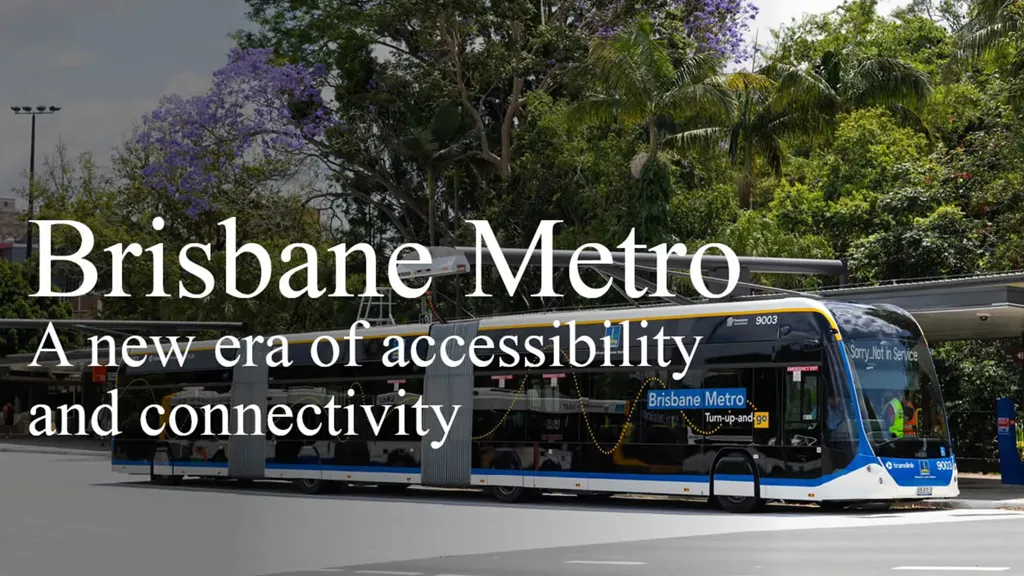
Award-winning Australian-first strengthening solution for Victoria Bridge
Victoria Bridge has been a critical connection point between Brisbane’s CBD and the city’s arts precinct, linking people for over 55 years. Planned as a corridor prioritising public and active transport between the CBD and South Brisbane, the bridge was initially unable to support the new metro vehicles and associated infrastructure.
We developed a strengthening solution to retain and improve the bridge. This included reconfiguring the deck layout from two to three bus lanes and reinforcing key structural elements to accommodate future loads. In close collaboration with Brisbane City Council, we designed the strengthening works by modifying key parameters such as load factors and assessment methodologies. This approach allowed the retention of an existing asset, delivered significant material savings and reduced the extent of strengthening works required.
In an Australian-first, we employed external post-tensioning using Ultra-High-Performance Fibre-Reinforced Concrete (UHPC) blisters, which preserved the bridge’s aesthetic and improved constructability. These works were recognised by the Concrete Institute of Australia’s National Award for Excellence in Repair, Restoration and Retrofitting, and the Austroads Bridge Award for Excellence in Sustainability.
Our work has enhanced connectivity with Brisbane’s broader active transport network. Victoria Bridge now features three dedicated lanes for metro and bus services, along with a bi-directional cycleway and e-mobility route linking the CBD to South Brisbane. New traffic barriers separate the roadway from pedestrian paths, providing greater safety.
Tunnel design keeps people moving above ground during construction
We designed a 225-metre tunnel beneath Adelaide Street from North Quay connecting into the existing King George Square station. The two-lane tunnel provides a dedicated underground connection for Brisbane Metro vehicles.
A traditional cut-and-cover tunnel design would have required a complete closure of Adelaide Street – a bustling urban environment vital to businesses, the community, and daily commuters – and the removal of mature trees that are significant to the city. Instead, we opted for a trinocular mined tunnelling method, involving excavation of the soft ground using canopy tubes and three different headings, to minimise settlement and negate damage to sensitive buildings, such as the iconic City Hall.
The tunnel is shallow, with its roof lying just three to six metres beneath Adelaide Street, where live traffic is constantly present, making it a highly sensitive operation. Leveraging our digital expertise prior to construction, we modelled the system in 3D along with surrounding buildings, ground conditions, and utility services such as sewer, stormwater, and electricity – critical services for the city’s CBD. The tunnel construction method proved to have minimal impact on the city.
This collaborative partnership with Arup and Acciona as part of the Brisbane Move consortium has culminated in the delivery of improved and major new infrastructure, to enable metros to operate in our river city and help keep Brisbane moving.
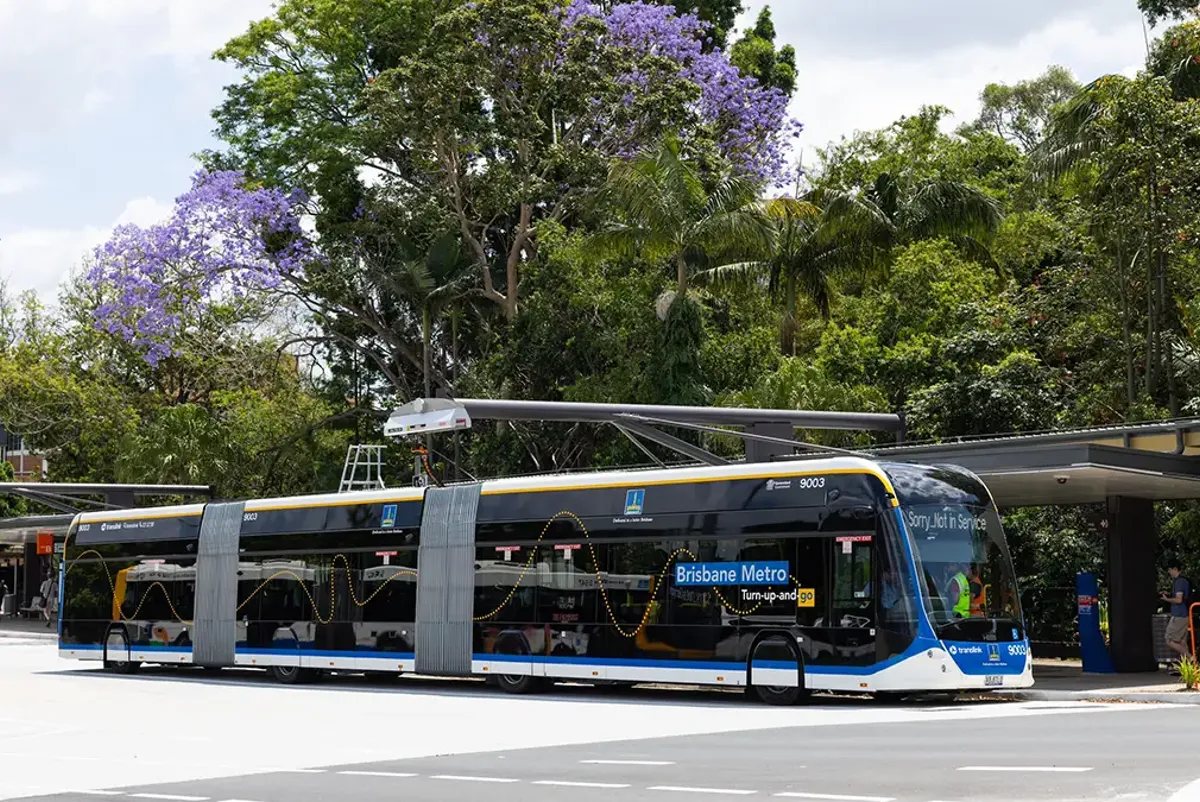
Brisbane Metro charging station
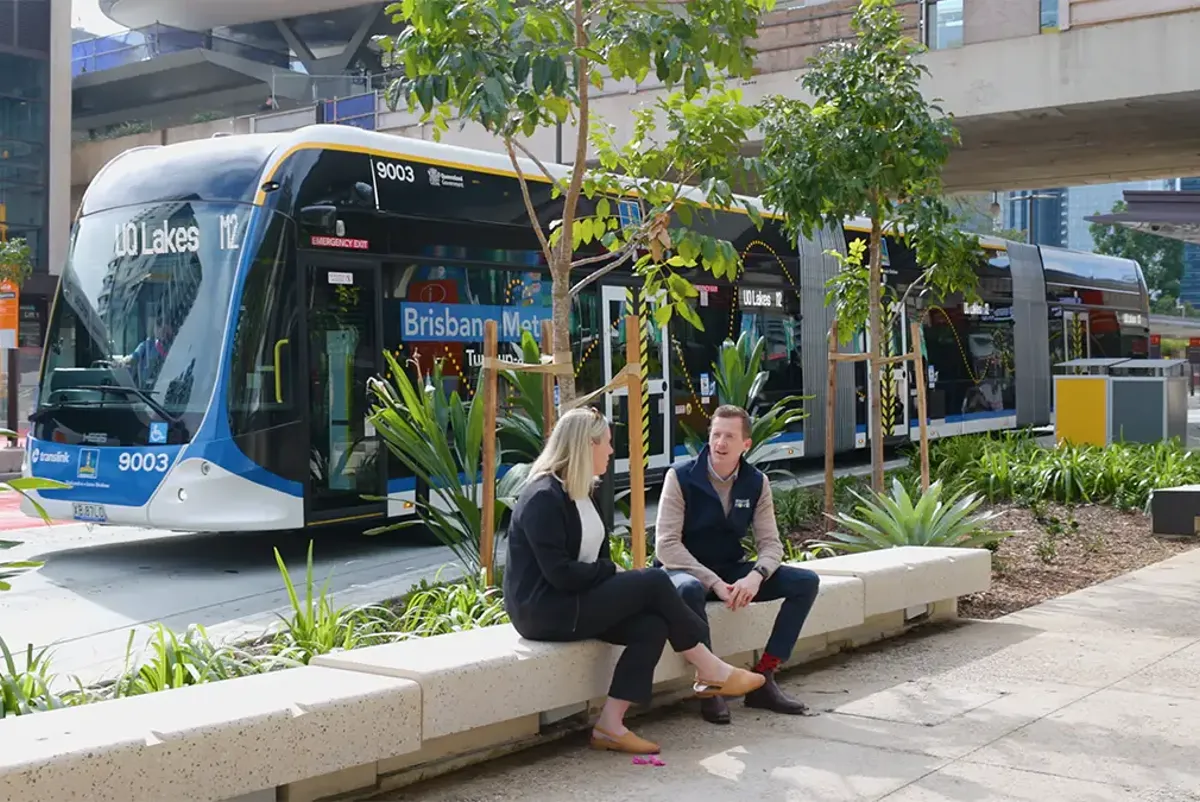
Brisbane Metro integrates with existing infrastructure
Designing connected and accessible stations and public spaces
Rather than creating new infrastructure, our aim was to retrofit Brisbane’s existing bus station infrastructure to allow for metros, overcoming above and below ground site constraints. Our urban design and landscape architecture teams reconnected the city, seamlessly integrating the metro with bus, ferry, and train services. Equally important, we created more public spaces and active transport routes, ensuring accessibility for everyone.
We applied a universal design approach to create environments accessible to all. Regular engagement with Brisbane City Council’s urban realm group and Brisbane Metro’s Accessibility Working Group allowed us to present designs, gather feedback from various stakeholders, and adopt an iterative approach, ensuring the designs met diverse needs.
Brisbane Move Consortium
Projects
Explore more transport projects

County-wide adaptation strategy to protect a critical Bay Area transportation corridor from sea level rise
Marin County Sea Level Rise Adaptation Study, USA

Designing a safe, sustainable tramway for Colombia's second largest city
80th Avenue Medellín Tramway, Colombia

Shaping a resilient rail future for Singapore
Singapore Rail Test Center, Singapore

Designing resilient and outcome-focused infrastructure for Betio Port
Betio Port Masterplan Study, Kiribati
Get in touch with us
If you'd like to speak to one of our transport experts about any of the issues raised on this page or a potential collaboration then please get in touch by completing the form.
