
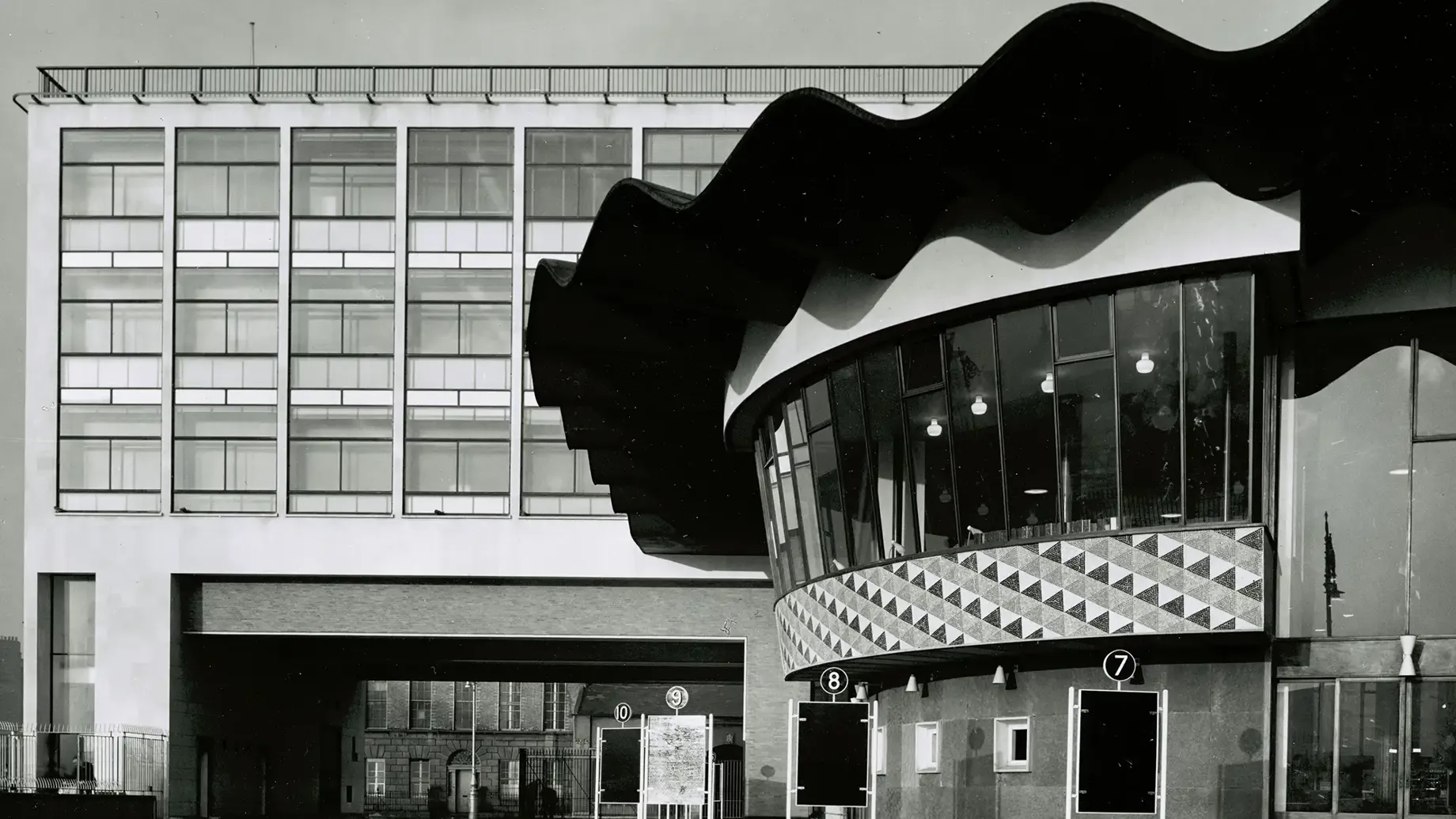
Busáras, or Áras Mhic Dhiarmada, designed by Michael Scott and his team of young architects and engineers, is one of Ireland’s most important modernist buildings. It is the central bus station in Dublin and also includes the headquarters of the Department of Social Protection.
In October 1945, Scott visited Ove Arup in London to ask him to be the consulting engineer on the project. Ove Arup agreed and established our office in Dublin in 1946. As the consulting engineers, Arup’s team was responsible for the structural design, which needed to accommodate both the bus station and an office building.
Busáras was a significant project, both in its scale and in the sophistication of its design. The building consists of a large L-shaped office block sitting atop a two-story bus station. It faced public opposition due to its appearance, function, and cost of over £1,000,000. Design work began in 1943. Construction of the L-shaped block proceeded irregularly and was completed in 1953. Upon completion, the building received international acclaim.
Structural engineering: showcasing the creative possibilities of concrete
The building is very much a product of its time. It has a reinforced concrete frame and is clad externally with Portland stone, brick, faience, and bronze-framed curtain walling. Concrete was growing in popularity at the time, partly due to steel shortages following World War II. Additionally, Hardy Cross had published his moment distribution method in 1930, which allowed statically indeterminate structures—such as reinforced concrete frames—to be analyzed with a high degree of accuracy, enabling safe and efficient design. Shell construction was very much in vogue at this time, when labor was relatively inexpensive and materials costly. Cast-in-place concrete shells were considered state-of-the-art structural design.
The structure is supported on a reinforced concrete raft. The area is subject to tidal water pressure, and the raft thickness varies from 18 to 36 inches to suit, depending on the beneficial gravity force applied in the relevant area. The construction below ground is waterproofed with asphalt applied to the outer faces of the structural concrete. The basement drains, encased in concrete, are contained within the asphalt tank. The structural arrangement was designed to simplify the asphalting process as much as possible.
Unique design features combine form and function
The undulating bus station canopy is a technically efficient yet elegant way to enclose space while minimizing the number of columns required. Ove Arup conceived the design, and it remains one of the building’s most distinctive features. It cantilevers about 20 feet and is only 3 inches thick. Arup also suggested the articulation at the junction of the two blocks—both for structural reasons and to enhance the building’s visual appeal.
The straight lines of Busáras’ white blocks could have appeared stark, but they were softened with a playful use of textures and splashes of color. Mosaic was used as a finish in several parts of the building, such as around columns and beneath upper-floor pavilion canopies. Mosaic was chosen not only for its aesthetic value but also for its durability and ease of maintenance. The original mosaic remains in good condition today.
The design team gave considerable thought to the building’s performance. It was double-glazed and equipped with air conditioning. The office area was open-plan to allow for future flexibility, which supported the transition in use from CIÉ. The building is still in use today without any structural changes.
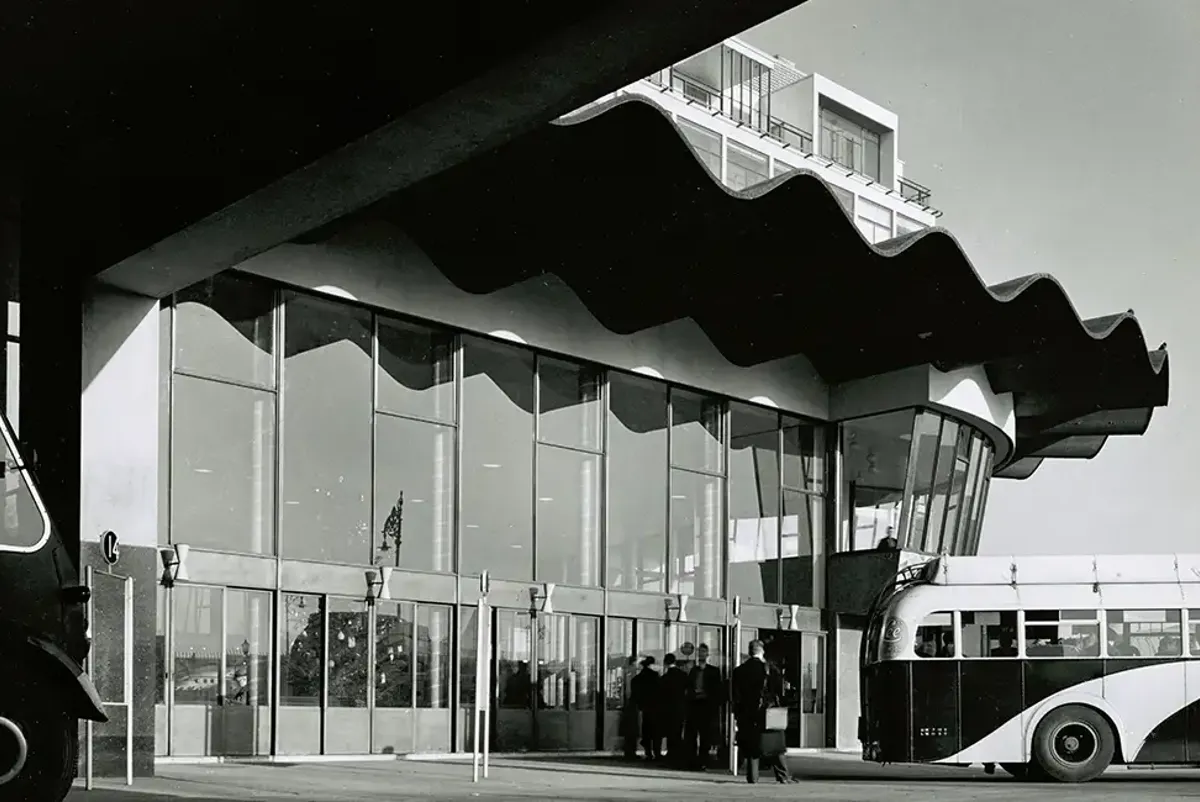
‘Architectural Design’ declared Busáras one of the masterpieces of modern architecture. The building won the Royal Institute of the Architects of Ireland (RIAI) Triennial Gold medal in 1955. © De Burgh Galwey, Architectural Review
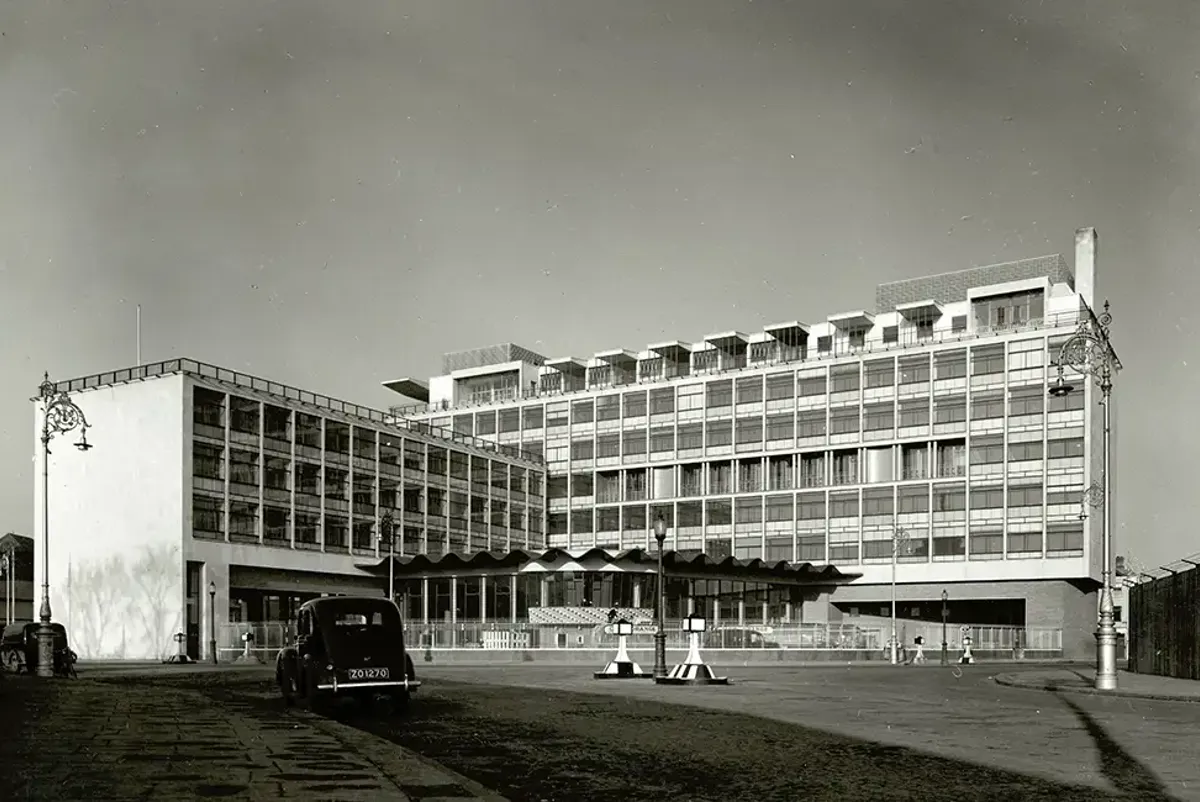
Busáras stands as one of Dublin’s most interesting and accomplished buildings. It is a worthy neighbour to Gandon’s Custom House and a snapshot of the creative possibilities of concrete. © De Burgh Galwey, Architectural Review
Scott Tallon Walker Architects
Projects
Explore more transport projects

County-wide adaptation strategy to protect a critical Bay Area transportation corridor from sea level rise
Marin County Sea Level Rise Adaptation Study, USA

Designing a safe, sustainable tramway for Colombia's second largest city
80th Avenue Medellín Tramway, Colombia

Shaping a resilient rail future for Singapore
Singapore Rail Test Center, Singapore

Designing resilient and outcome-focused infrastructure for Betio Port
Betio Port Masterplan Study, Kiribati
Get in touch with us
If you'd like to speak to one of our transport experts about any of the issues raised on this page or a potential collaboration then please get in touch by completing the form.
