
Refurbishing a landmark campus to support net zero goals
Castle Meadow Campus, University of Nottingham
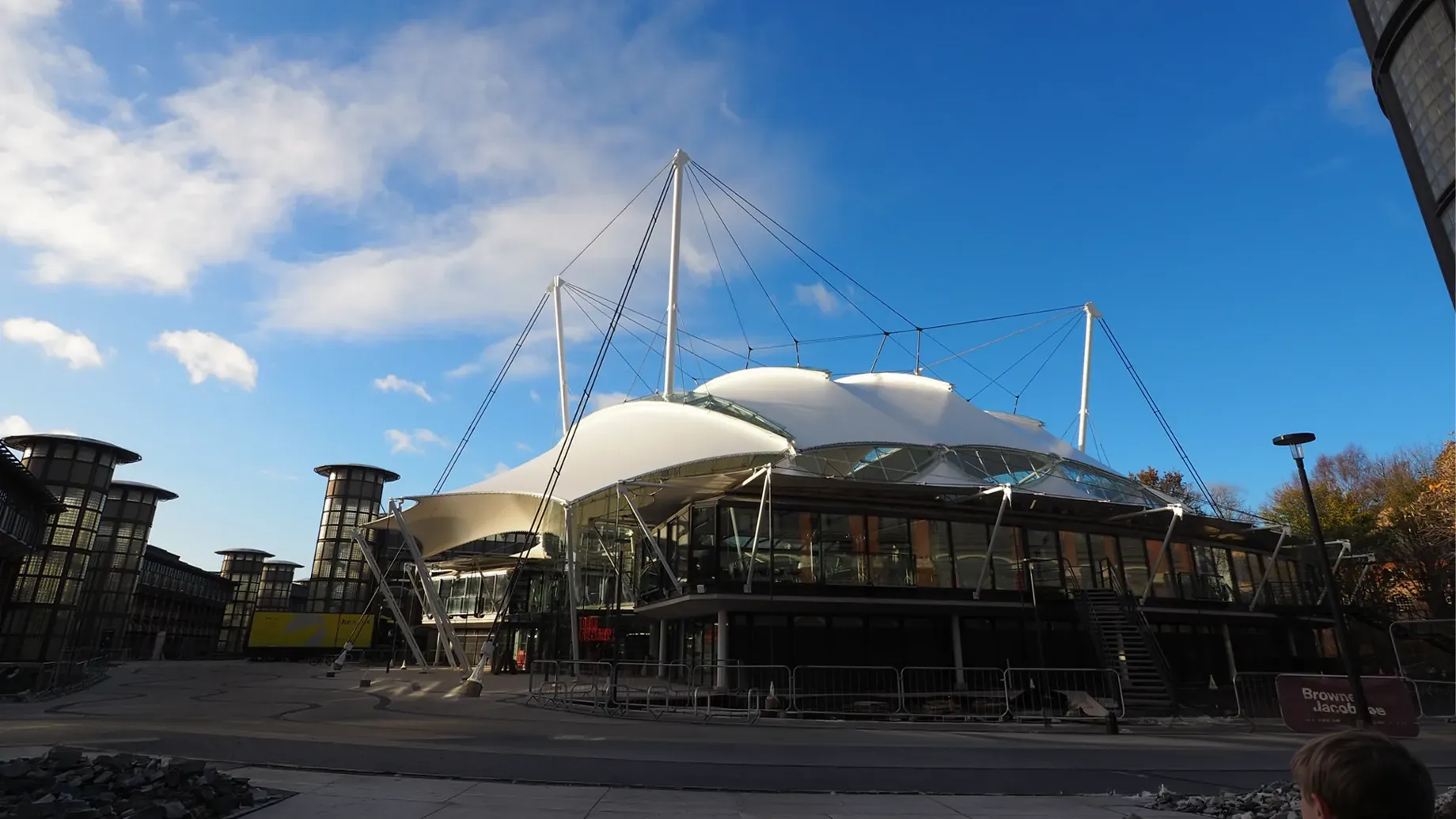
The University of Nottingham looked to transform its Castle Meadow Campus into a hub for enterprise, bringing together business, research, academia and innovation. This required a refurbishment led approach that preserved the site’s architectural heritage while supporting the university’s ambition to become carbon neutral by 2040.
Arup supported the University of Nottingham with their purchase of the Castle Meadow Campus by providing engineering advice on the existing buildings. We reviewed the structures, building services and façades to prioritise refurbishment over new build, helping to preserve the site's architectural heritage. Working with Hopkins Architects and Bond Bryan Architects, we developed engineering solutions, used digital design tools, and created a decarbonisation plan and sustainability framework to guide future projects.
This project shows how existing campus buildings can be carefully adapted to support new uses while responding to climate goals. By prioritising refurbishment and collaborative digital working, the Castle Meadow Campus sets a benchmark for low-carbon, resilient design, supporting Nottingham’s wider carbon ambitions. It also provides flexible spaces that enable closer collaboration between the University and its partners, including the Business School, Digital Nottingham and the Innovation Park.
Building retrofit beyond the campus
Not only does the University of Nottingham have ambitious net zero goals, but the city of Nottingham itself has made a commitment to become the first carbon neutral city in the country by 2028. The Castle Meadow Campus, a campus of seven Grade-II listed buildings, is a landmark of 1990s modernism. Originally designed by Arup and Hopkins Architects, it was purpose built for the Inland Revenue.
To support a refurbishment-led approach, we assessed each building to improve performance while preserving its architectural character. Our work included energy modelling, fabric upgrades, ventilation improvements, building controls and fire strategy to support net zero and resilience goals.
We developed a decarbonisation plan for the campus, aligned with the university’s net zero targets for scope 1 and 2 emissions. This included site visits, analysis of metering and as-built data, and dynamic energy models to test potential interventions. Key measures included retaining the district heating system, upgrading lighting and building fabric, and implementing heat-recovery ventilation. We also assessed the building’s resilience to climate change, and proposed measures to reduce future overheating risk.
Adapting the sports hall
One aim of the development was to transform an unheated sports hall at the centre of the campus into a year-round events venue, while retaining the original 1990s fabric roof and surrounding glazed spaces. Our structural design minimised the use of new materials by re-analysing the existing structure and load paths, allowing a new internal floor to be introduced without new foundations or structure.
Lightweight steel and timber construction, combined with close coordination with the architect and the University of Nottingham, kept loads within the capacity of existing foundations.
Changes to the new internal layout and usage of the building required modernising of the space heating and ventilation systems to deliver sufficient fresh air and temperature control for a comfortable, high-quality environment. Subsequent modifications to the original point-supported glass walls, had detailed input from Arup’s façade specialists.
The project also included replacement of the fabric roof, while retaining the existing glass walls and supporting steel and tension structures, requiring bespoke structural engineering and planning.
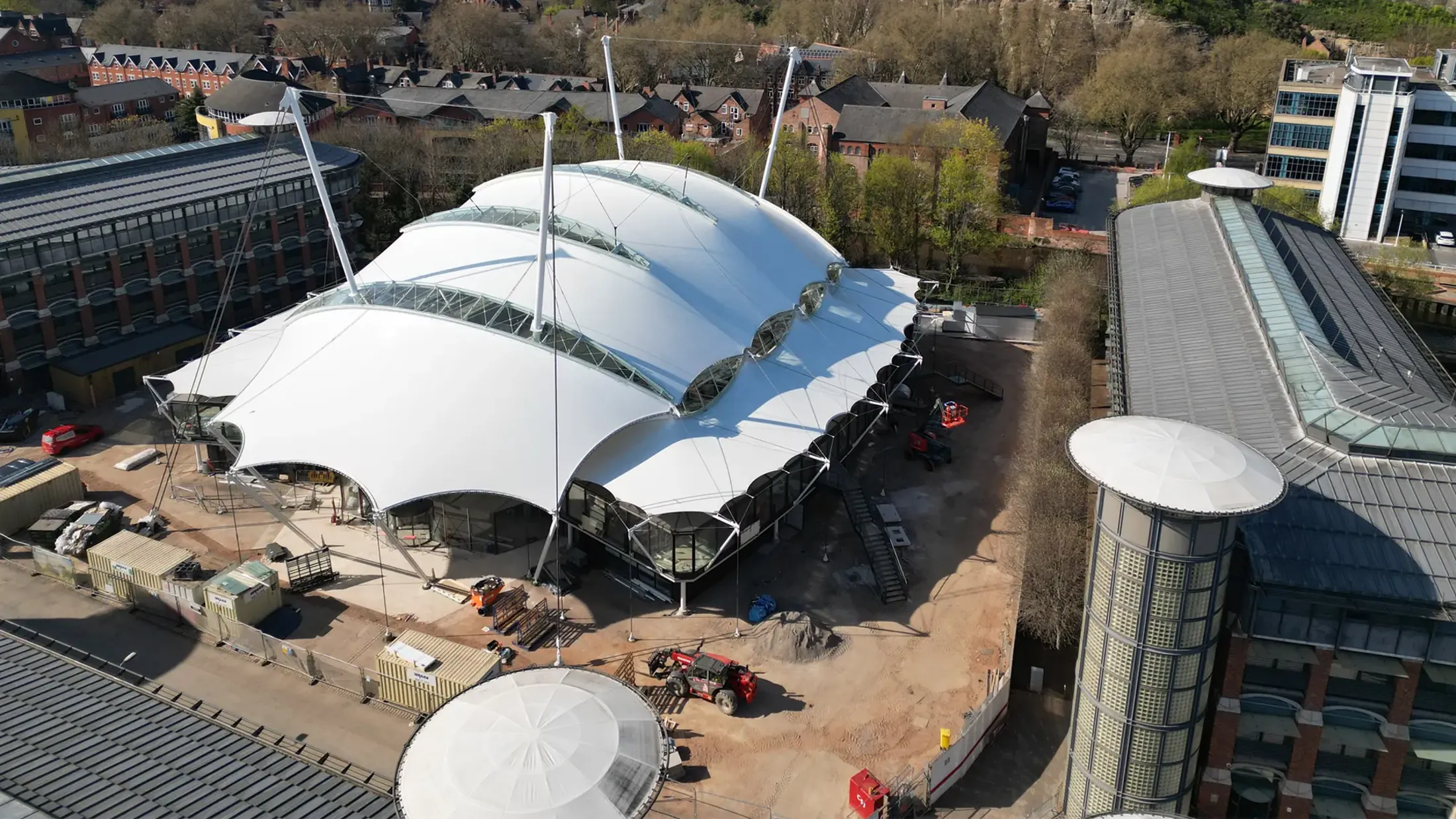
Aerial view of the iconic tensile roof structure, contributing to the University of Nottingham’s estate decarbonisation ambitions.
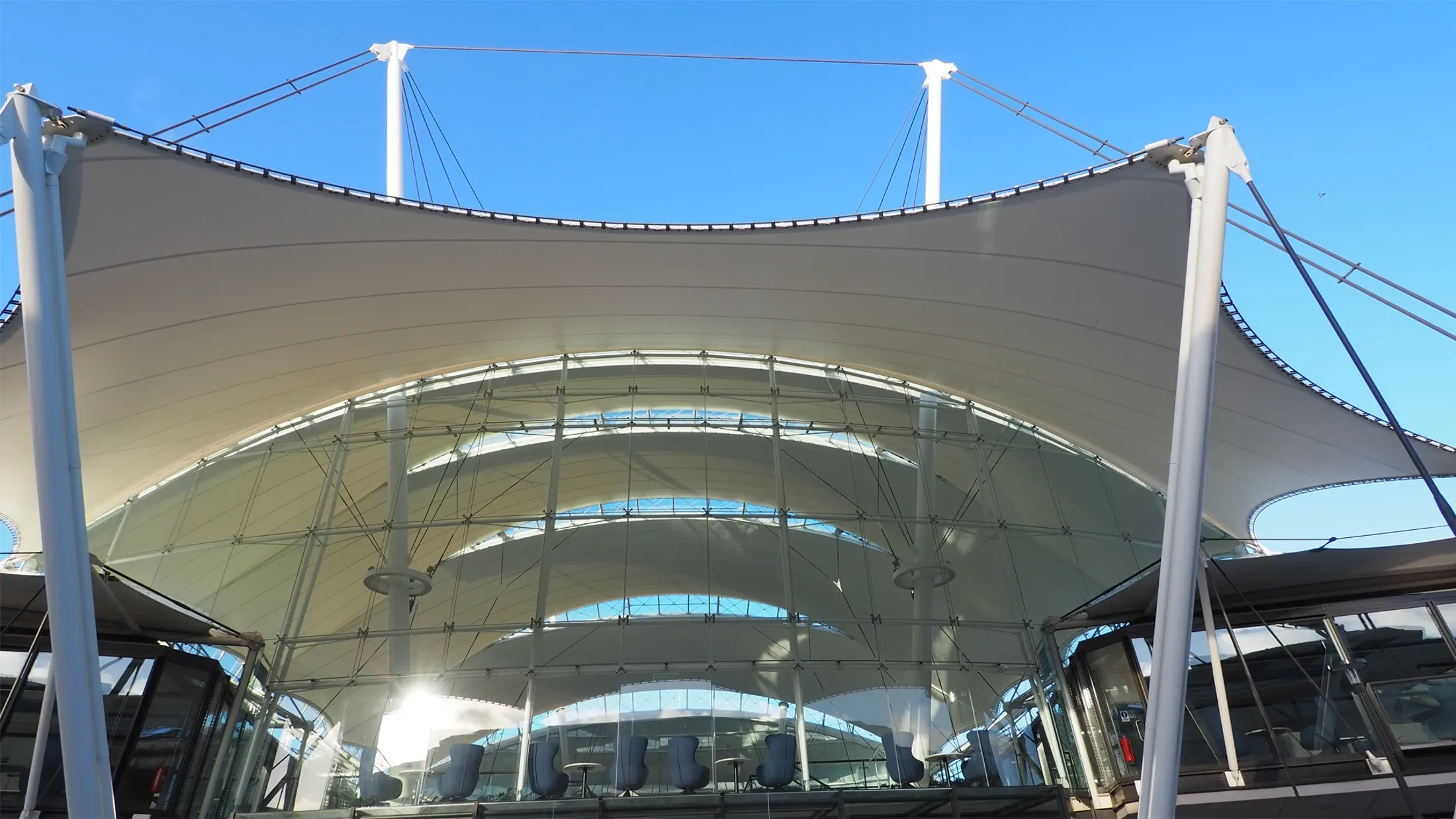
Daylight filters through the refurbished structure, improving comfort and legibility at ground level.
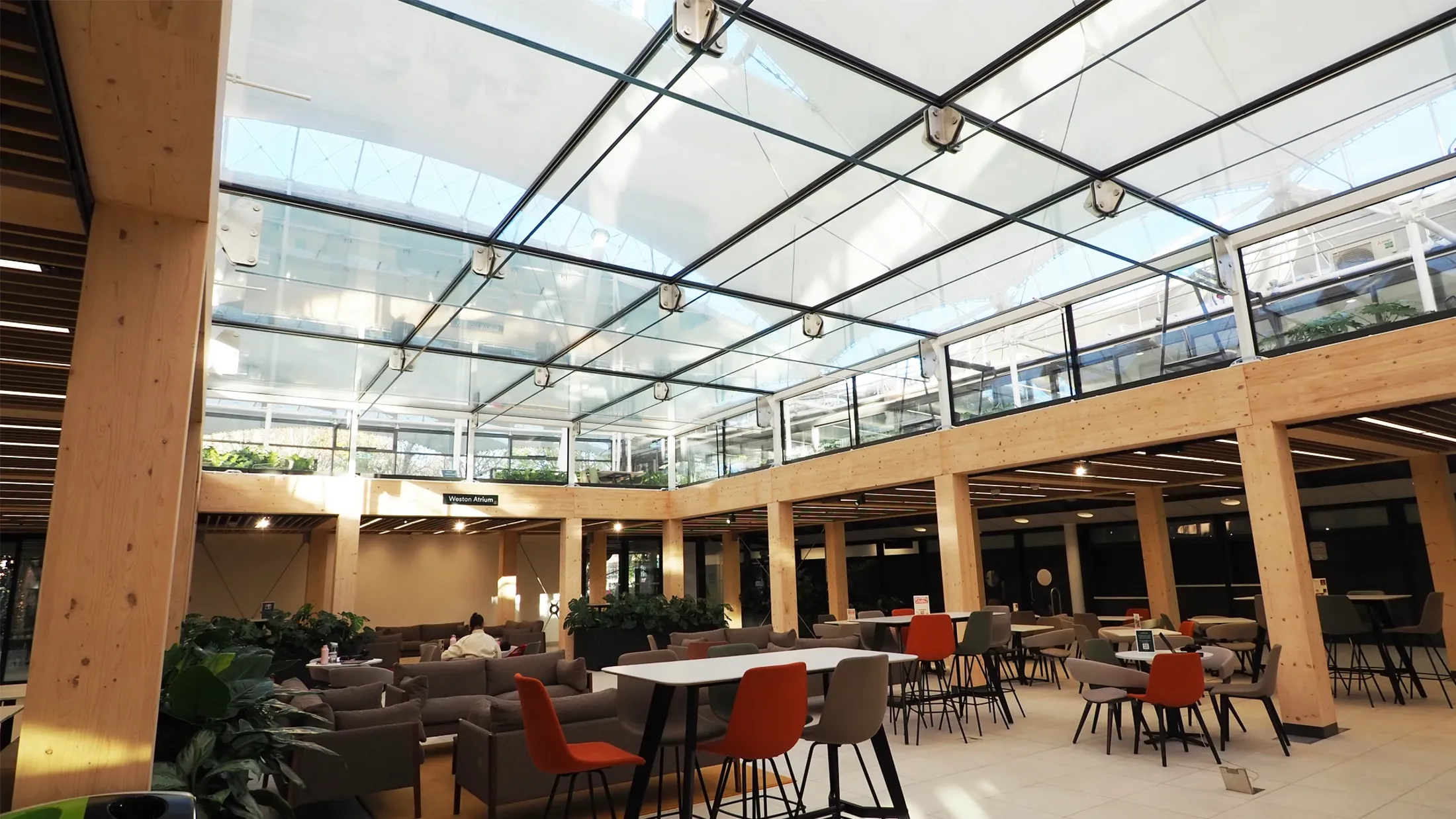
Refurbished internal spaces provide flexible areas for study, collaboration and social interaction.
Embedding a bespoke sustainability framework
Transforming existing spaces without new build required a thoughtful and coordinated approach. These efforts were guided by a bespoke sustainability framework, helping to balance heritage, performance and long-term value.
Based on BREEAM and LETI principles, we developed a custom framework to track key design decisions and focus on genuine performance improvements. The framework can be used as a blueprint for future developments, supporting consistent and measurable sustainability outcomes.
Using digital tools to enhance coordination
We used digital technology to support efficient design delivery and coordination, allowing virtual site visits and high-quality collaboration between engineers.
We created 3D models of the spaces and buildings, which were used by the wider team to reduce the need travel and the associated carbon. Photogrammetry models were also produced and processed (stitching photographs to create a 3D model), allowing efficient coordination and communication between the various specialists and designers.
A major design challenge was that the tensile fabric roof had reached the end of its useful life and needed to be replaced. The roof membrane was integral to the building structure, and its removal required careful planning to manage structural risk. Considering each construction stage, an analytical model was created to review the roof’s performance during its replacement. Being able to reconstruct the building from the scan data was invaluable in replicating the complex building geometry.
Arup played a key part in the Castle Meadow Campus redevelopment from providing high level technical advice to help the university with the purchase, the retrofit masterplanning of the development, and the multidisciplinary design through to completion. Arup’s input has been vital to help transform these iconic buildings and make them fit for the future.
Multidisciplinary technical services
Arup’s multidisciplinary team delivered fire safety engineering, façade upgrades, lighting design and geotechnical services across the campus. Fire engineering focused on understanding the existing building layouts and identifying opportunities for modernisation while respecting architectural heritage. Façade improvements enhanced energy performance while retaining the character of the buildings.
The lighting strategy supported flexible and efficient use of space, while geotechnical expertise enabled foundation solutions that minimised new materials. Together, these services contributed to a resilient, adaptable and sustainable campus transformation.
The project illustrates how digital tools, conservation measures and close coordination can support reducing carbon footprint while extending the life of campus facilities. Its outcomes contribute to the long‑term resilience and adaptability of the Castle Meadow Campus, supporting the university’s sustainability ambitions, as well as those of the wider city.
Projects
Explore more building retrofit projects

Securing the future of a 15th century building in the heart of Yorkshire
York Guildhall, United Kingdom

Employing adaptive reuse to support Seattle’s growing life sciences industry
Unison Elliott Bay, USA

Repurposing an old school building into a space for 21st century science
Sir William Henry Bragg Building, University of Leeds, United Kingdom

Transforming a 19th century concert hall into a modern performance venue
Bristol Beacon refurbishment, United Kingdom
Get in touch with us
If you'd like to speak to one of our property experts about any of the issues raised on this page or a potential collaboration then please get in touch by completing the form.
