
Designing an advanced medical device manufacturing facility for health monitoring
Dexcom Trinity
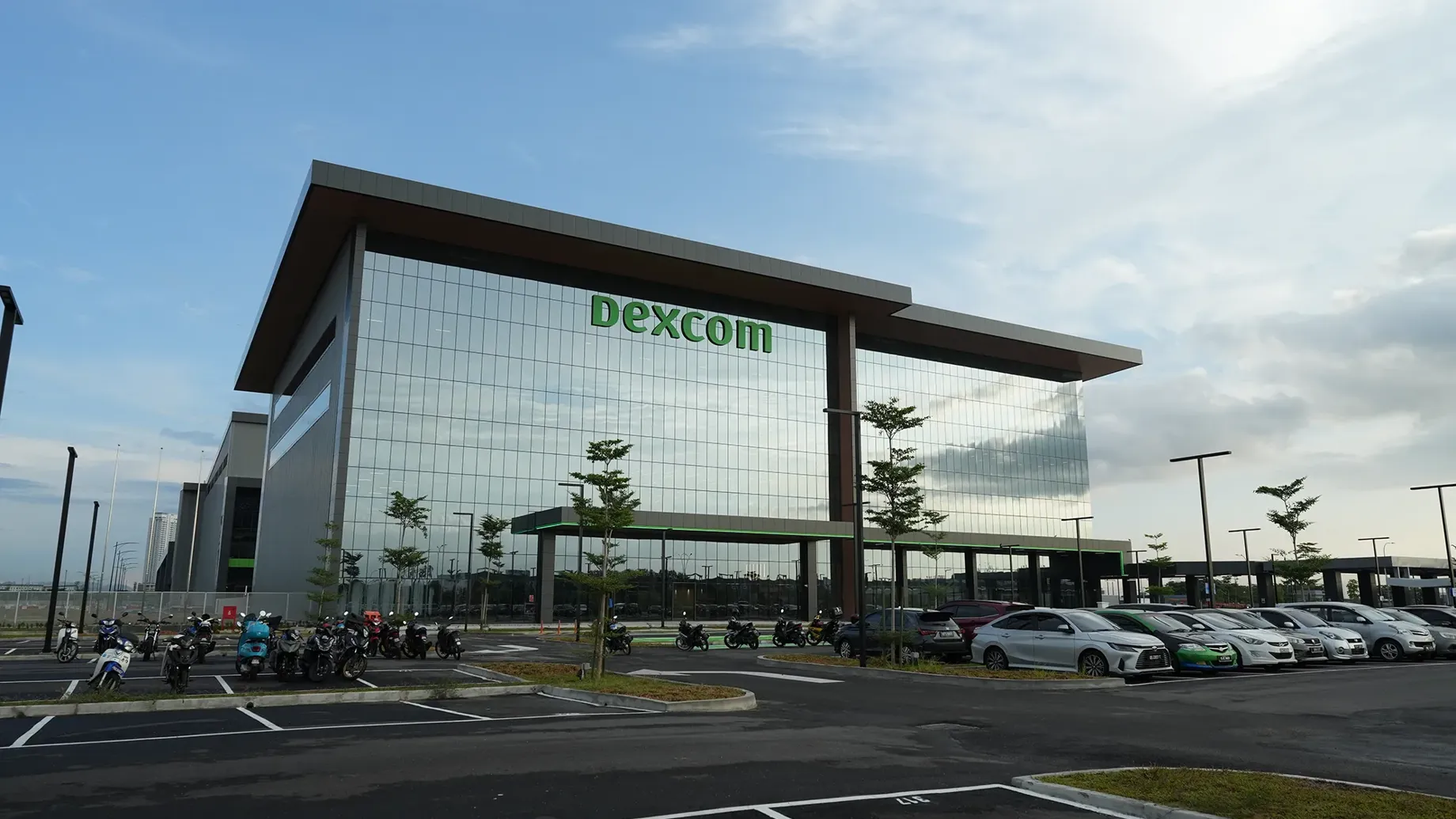
Dexcom, a developer, manufacturer, and distributor of glucose biosensing systems for diabetes and metabolic health management headquartered in California, established its newest and largest production facility in Penang, Malaysia. As the industrial city has strong manufacturing capabilities, Dexcom chose the location to support their growth given the popularity of its glucose biosensing systems. In addition to realizing an optimized manufacturing site, Dexcom also needed to ensure its new campus was designed to attract and retain staff given its location in the competitive Penang market.
Given the production facility in Penang was set to be their biggest yet — and a site that Dexcom was interested in building from scratch — they enlisted Arup due to our global expertise in the planning and design of campuses as well as large manufacturing sites. As part of the project team, Arup worked closely with Dexcom to serve as a key delivery partner on their new facilities, ensuring everything was ideated and executed in the most efficient manner.
Dexcom empowers people to take control of health through innovative biosensing technology. Dexcom has pioneered and set the standard in glucose biosensing for more than 25 years. Its technology has transformed how people manage diabetes and track their glucose, helping them feel more in control and live more confidently. The major manufacturing facility will produce life-changing glucose biosensing systems while providing a high level of amenities to support its staff.
Utilizing a vertical approach to optimize operations
The scale of the proposed facility posed significant challenges, notably the distances required to move goods and employees around the site.
Arup guided Dexcom into implementing a layered, vertical design approach to optimize its daily operations. In the new facility, raw material and manufactured products are located on the first floor, people operations and assembly are sited on the second floor, and MEP systems have been installed on the third floor, allowing for an increased density and shorter distribution paths. Due to limited square footage on the campus, this layered approach optimizes Dexcom’s operations, helping them achieve their business goals in the most efficient manner and allows them increased potential of the site.
The layered approach allowed for more straightforward distribution of goods and people and reduced routing of services resulting is easier construction and maintenance. By keeping product and people operations distinct, the chance of potential delays or issues are significantly reduced.
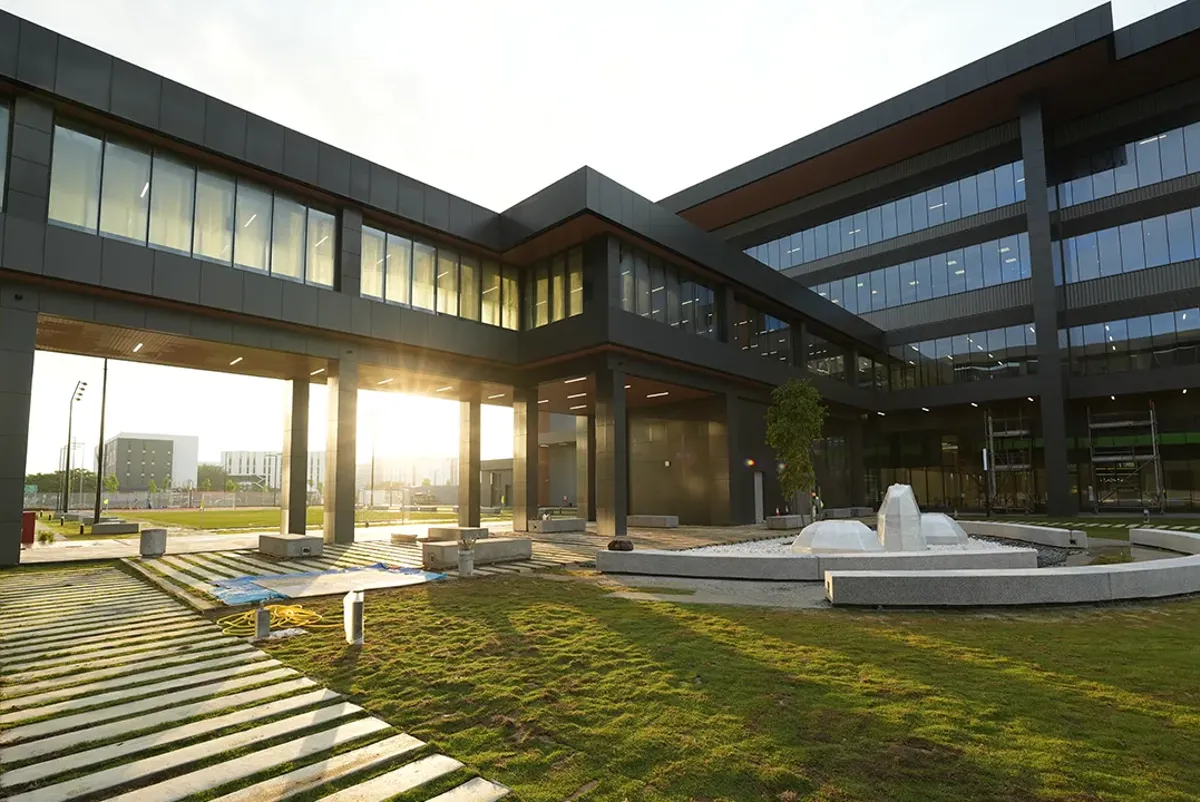
To ensure seamless product production, Arup masterplanned the site to be thoughtfully designed for both employee productivity and comfort © Dexcom
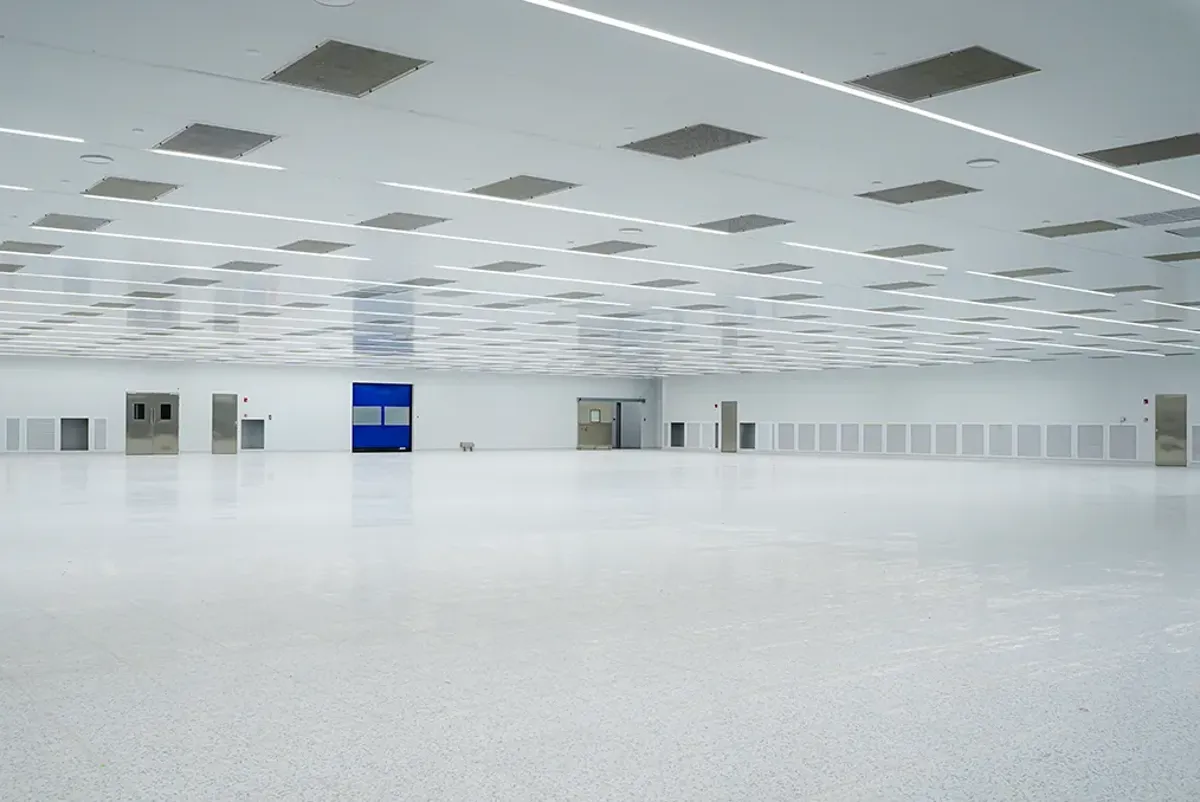
Arup guided Dexcom into implementing a layered, vertical design approach to optimize its daily operations © Dexcom
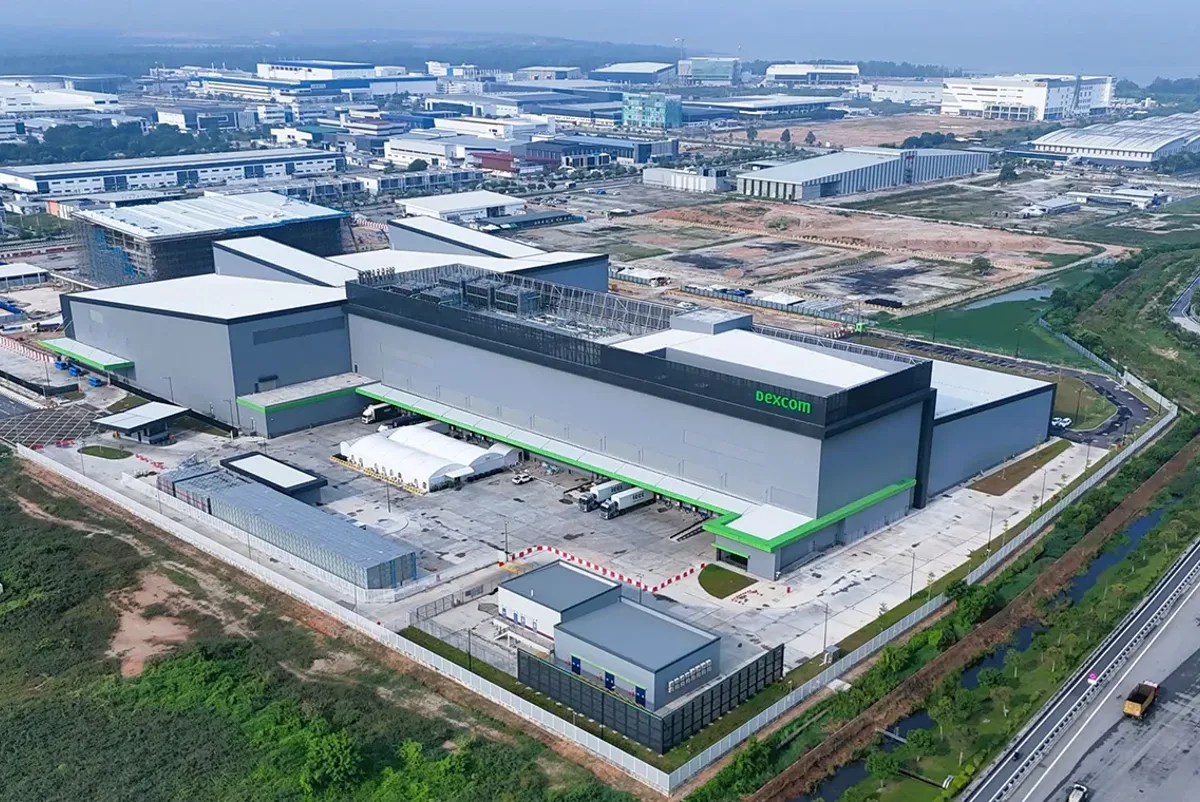
Arup defined material flows from the point of receiving to outbound distribution, ensuring adequate adjacencies between buildings © Dexcom
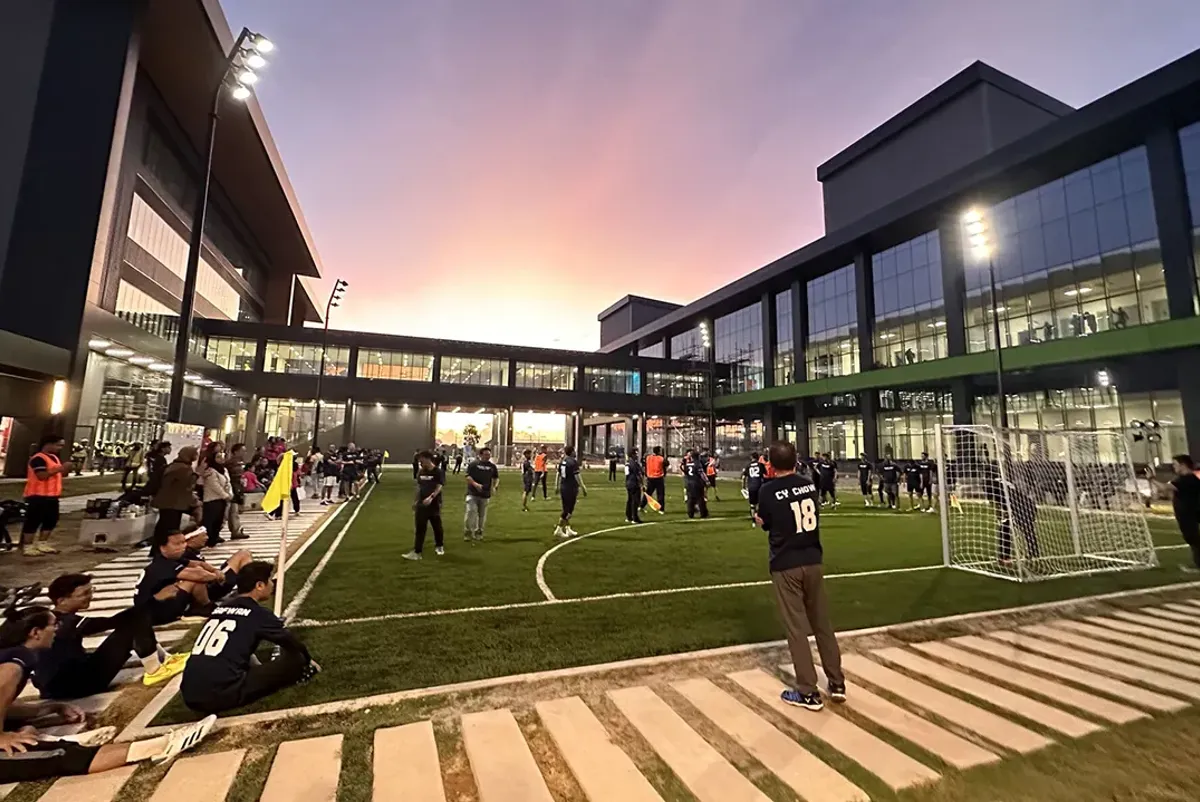
Dexcom strove to convey its commitment to its employees through the design of its new facility, which prioritizes convenient access to people-centric amenities © Dexcom
Masterplanning the site to ensure coordination across its entirety
To ensure seamless product production, Arup masterplanned the site to be thoughtfully designed for both employee productivity and comfort. Factory sites require frequent transportation of goods — raw materials need to be delivered, stored, called up, fabricated into a finished product, packaged, and moved off-site once again via truck. Given this level of goods movement, it is ideal to keep human operations separate to avoid potential hazards.
Arup defined material flows from the point of receiving to outbound distribution, ensuring adequate adjacencies between buildings such as the loading dock, warehouse, and manufacturing areas. We also reviewed roadway design feasibility and security operations to guarantee safe and efficient manoeuvring of all vehicles. As part of this masterplanning effort, Arup’s multidisciplinary team worked closely to coordinate and design all aspects of site access holistically. This process involved identifying risks, potential bottlenecks, and design gaps to be addressed before construction and launch, with a primary focus on site entry and security operations, delivery management, loading dock design, warehouse design and operations, and material flows. With a commitment to optimization, Arup’s approach ensures that all aspects of the factory site are seamlessly coordinated and integrated, promoting both safety and efficiency throughout the entire production process.
Our new facility in Penang represents Dexcom’s most significant investment to date & is a major supply hub serving our users around the world. The site now employs more than 2,000 people & we’re enormously proud of our new world class manufacturing facility.
Prioritizing people-centric amenities
Dexcom strove to convey its commitment to its employees through the design of its new facility, which prioritizes convenient access to people-centric amenities. Understanding that attracting and retaining staff was critical in the Penang market, the project team worked with Dexcom to incorporate services supporting employee well-being. This includes a gym with changing rooms, outdoor recreation spaces such as a futsal court and running track, along with efficient public transit access via a large bus terminal and company-specific routes.
Additionally, the facility's layered design ensures these amenities are easily accessible. The facility’s continuous food service and dedicated canteen floor are located close to the fabrication center, allowing employees to make the most of their break times. By integrating these features, including fitness, recreation, commuting, and dining, the design supported Dexcom’s investment in its workforce, creating a functional environment that supports its employees and allows for optimized manufacturing of its products.
Delivering excellence through integrated multidisciplinary design
As the multidisciplinary lead design consultant for the project, Arup brought together global expertise to deliver a seamless and fully integrated suite of engineering and design services.
Our collaborative approach spanned architecture, civil and structural engineering, MEP, geotechnics, design management, logistics planning, technology, and transport consulting. This holistic coordination helped eliminate design conflicts and ensured that all disciplines worked in unison from concept to implementation, enabling us to optimize performance and efficiency, meeting bespoke local needs, and enhancing user experience across the entire facility.
Projects
Explore more industry and manufacturing projects

Ensuring worker safety in Pakistan’s textile sector
Pakistan Accord on Health and Safety in the Textile and Garment Industry, Pakistan

Strategic project and program management for Tetra Pak’s global real estate
Tetra Pak project management partnership

Delivering integrated design for PepsiCo’s Green thermal energy transition
PepsiCo Volt, Netherlands

Innovation consulting for circular business models
Terca facing bricks from wienerberger, Germany
Get in touch with us
If you'd like to speak to one of our industry and manufacturing experts about any of the issues raised on this page or a potential collaboration then please get in touch by completing the form.
