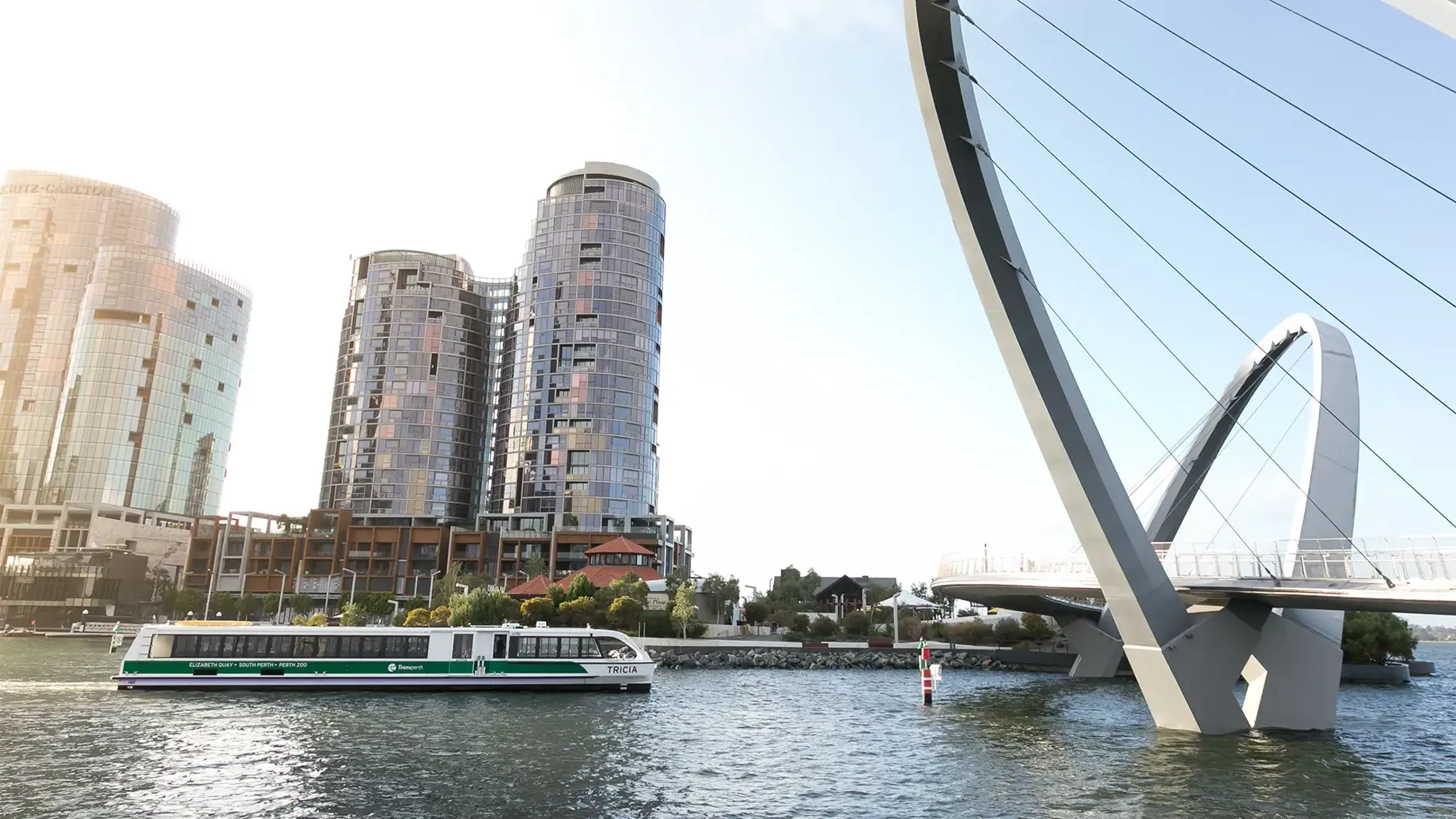
Maritime structures design prioritizes resilience and user experience
Expanding Perth’s ferry network requires the delivery of new terminals at Applecross and the University of Western Australia and upgrading the existing terminal at Elizabeth Quay. The design needs to enhance the passenger experience, provide inclusive access for all users, and ensure long-term resilience to climate impacts such as sea level rise and extreme weather events.
Our team worked with data from state government agencies to assess projections of sea level rise and fluvial flooding over the coming decades. These projections informed design choices that ensure the terminals will remain accessible and functional well into the future. Key considerations included maintaining access for people using wheelchairs over the lifetime of the structures.
In parallel, we prioritized minimizing environmental impacts on the Swan River. By minimizing the required number of new support piles in the river, the design helps protect the riverbed’s ecological health and minimize impact to a culturally significant area. The result is a resilient and thoughtful design that balances climate preparedness, accessibility, and user experience.
Ferry charging infrastructure drives transportation decarbonization
The introduction of electric ferries on Perth’s Swan River will mark a major step toward cleaner public transportation, complementing PTA’s planned introduction of an electric bus network. It also comes with the challenge of delivering reliable, high-capacity charging infrastructure that can perform in a demanding maritime environment. The system needs to handle constant exposure to water, weather, and the physical realities of the river, all while ensuring safe and efficient charging.
Our team explored the design of four strategically located charging sites, each with capacity tailored to local needs. The University of Western Australia location will feature megawatt-scale chargers, among the most powerful planned for Perth’s transportation network, enabling fast and efficient recharging of the electric ferries during operation. The remaining locations feature new low-voltage overnight charging facilities to maintain operational readiness throughout the ferry network. The design carefully integrates electrical systems with maritime structures to keep chargers protected from weather conditions and other environmental risks, ensuring safety and longevity.
This integrated solution supports the transition to low-emission transportation while standing up to the realities of the river. By combining technical performance with environmental resilience, the new infrastructure plays a vital role in helping Perth meet its public transportation decarbonization and net zero targets.
Image © Public Transport Authority