
Sustainable transformation in the rail sector
Guidelines for the sustainable planning of station buildings
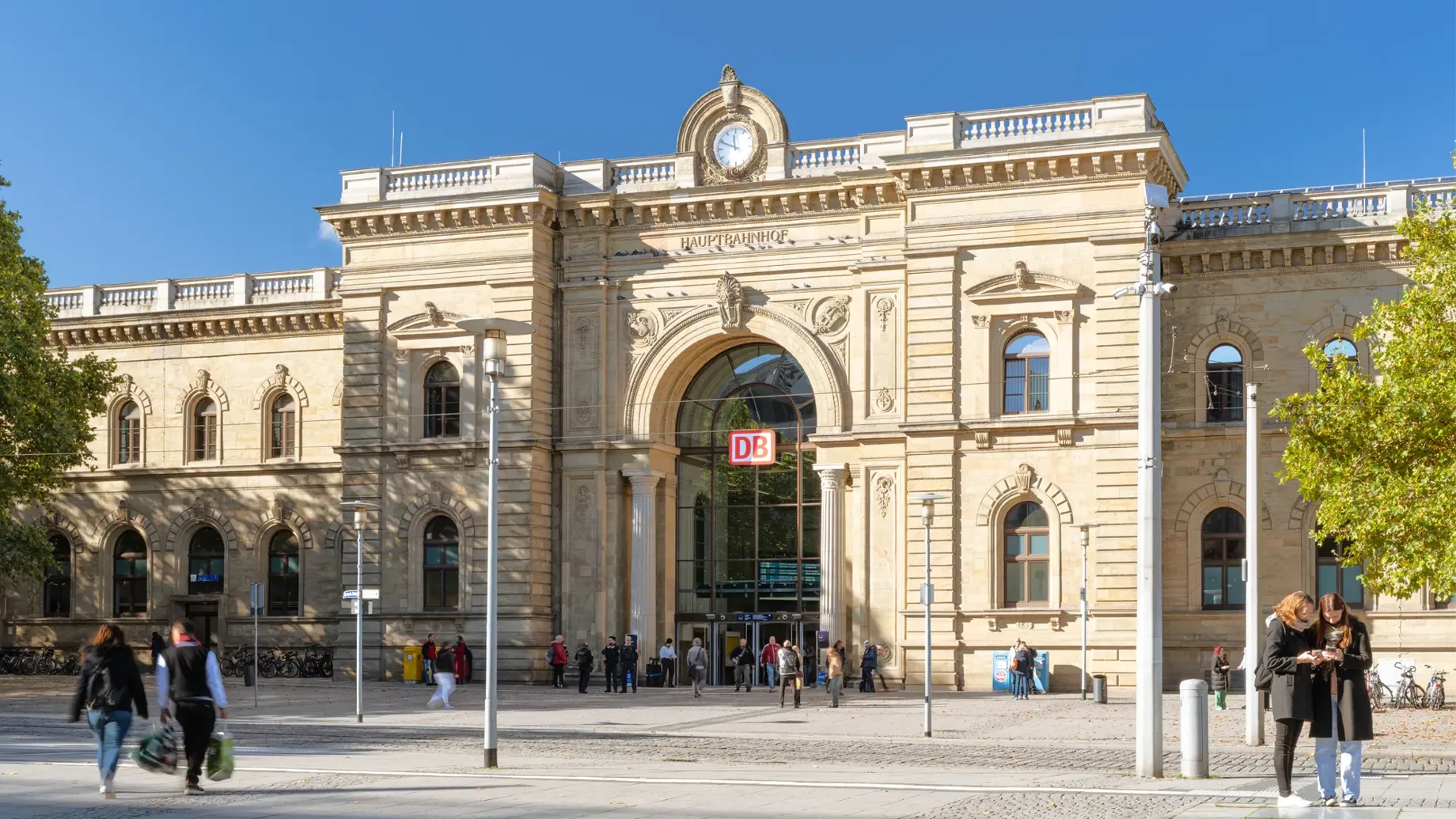
As part of the sustainable transformation of the German rail sector, Arup and DB InfraGO AG have developed guidelines for the planning and renovation of station buildings at passenger stations.
As Europe's largest station operator with over 500 existing station buildings, around 75% of which are heritage listed buildings, DB InfraGO plays a key role in DB Group’s ambitions to become climate neutral by 2040 and establish a fully circular economy. Around a fifth of the station buildings within the client’s portfolio were built before 1900, and another fifth before 1950; given their age, the majority of these existing station buildings are already in need of renovation, or will be in the coming years.
This comprehensive portfolio offers great potential for creating synergies between conversion and renovation work, as well as for implementing measures efficiently and according to a clear methodology and structured process. Integrating sustainability as a basis for quality plays a central role in this.
Anchoring sustainability early on
The guide supports the integration of sustainability in the early stages of a project, right through to preliminary planning (service phase 2). This lays the foundation for the integration of sustainability throughout the entire course of the project at an early stage.
Developed in a co-creative process between Arup and DB InfraGO, the guide is divided into five key areas of action that cover sustainability issues holistically, from CO₂ to resources, climate, and social issues.
1. Circular construction
Preservation and reuse of existing buildings and components. Planning focuses on durable, flexible, and recyclable structures and materials, as well as sustainable demolition, in order to conserve resources and avoid waste.
2. Indirect emissions
The reduction of greenhouse gas emissions and embodied (grey) energy, covering manufacturing, construction, use, and maintenance across the full life cycle, is a central objective. Life cycle assessments (LCAs) are used as a key tool for evaluation and optimisation.
3. Energy efficiency
Decreasing energy consumption through passive measures, an optimised building envelope, automation, efficient plant technology, and the use of renewable energies to ultimately reduce the carbon footprint of the works.
4. Climate and biodiversity
With regard to climate and biodiversity, the planning incorporates climate resilience measures, protection against extreme weather, sustainable water management, heat-reduction strategies, and the integration of green spaces to enhance biodiversity and improve the local microclimate.
5. Social sustainability
To promote social sustainability, the planning encourages inclusive, safe, and healthy spaces that support a high quality of life. Accessibility, social interaction, architectural heritage, and the needs of users and the local community are all taken into account.
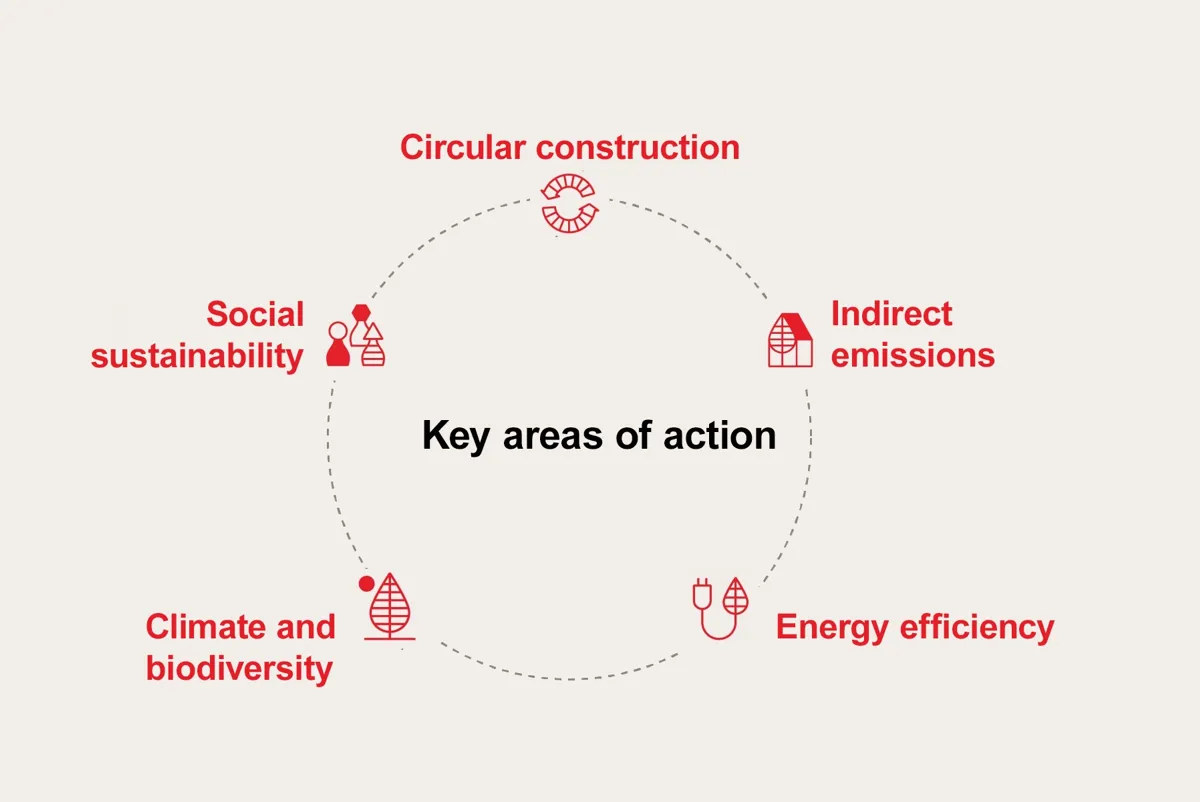
Focusing on the early project phases, the guide provides an overview of five key areas of action for the sustainable planning and renovation of existing station buildings. Image: © Arup
Practical guidance for practical implementation
The guide accompanies planners and decision-makers in the analysis of the current state of a project, through the basic determination to preliminary planning, and enables project-specific prioritisation and evaluation. It contains concrete measures, practice-oriented solutions, guiding questions and evidence as a checklist, as well as information on laws and ordinances. Best practice examples from Germany and across Europe demonstrate how sustainable station projects can be successfully implemented. In this way, the guide supports all stakeholders in anchoring sustainability in the planning, renovation and operation of station buildings.
The methods and guidelines developed are not only applicable to the rail sector. Since sustainable planning and renovation are cross-industry requirements, guidelines tailored to the industry, such as the guidelines created DB InfraGO AG, can also serve as orientation and impetus for sustainable transformation in other areas.
For further information (in German), please follow this link: Nachhaltige Planung von Empfangsgebäuden
Top image © Allianz pro Schiene - Richard Schött
Projects
Explore more station and depot projects

Creating two iconic stations as part of a major line extension
Toronto-York Spadina Subway Extension, Canada

Shaping a resilient rail future for Singapore
Singapore Rail Test Center, Singapore

Realising a low-emission, efficient public transit vision for the Danish capital
Copenhagen Metro, Denmark

An ambitious station modernization program for New York’s subway system
MTA Enhanced Station Initiative, USA
Get in touch with us
If you'd like to speak to one of our rail experts about any of the issues raised on this page or a potential collaboration then please get in touch by completing the form.
