
Working with countries to build resilient and secure water systems
Just Transitions for Water Security Programme
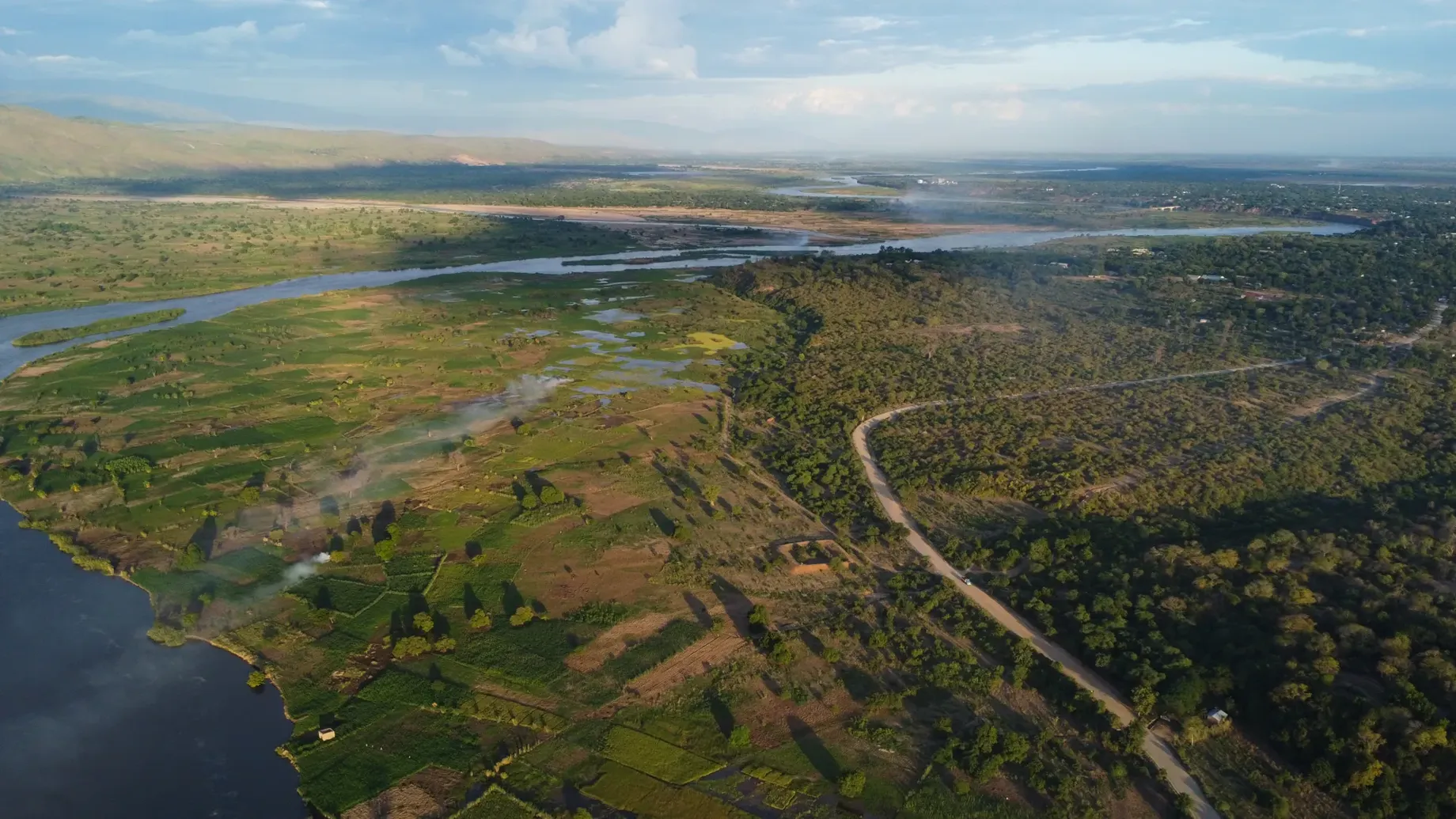
The Just Transitions for Water Security (JTWS) programme is a five-year, £39m initiative led by the UK Foreign, Commonwealth and Development Office (FCDO). It aims to transform the way water is managed by addressing systemic barriers to water security in up to ten lower-income countries.
The JTWS programme combines three initiatives: The Water Resilience Tracker, Fair Water Footprints and the Resilience Water Accelerator. Arup is a partner in the Water Resilience Tracker (WRT), alongside NGOs and research institutes.
The WRT enables governments to identify strengths, weaknesses, opportunities, and areas for investment in their national climate and water plans. Our teams support these plans, enabling basin-scale activities that improve resilience and sustainability.
With climate change amplifying droughts, flooding and pollution – hitting the world’s poorest people hardest – JTWS provides a way to strengthen governance and unlock investment. This opens a practical pathway for lower-income countries to improve water security and meet their global climate commitments.
Our work will help create climate-resilient economies that benefit people, nature and the environment, where water security underpins inclusive and sustainable growth.
Delivering the Water Resilience Tracker
Water underpins every aspect of our lives: from agriculture and manufacturing to energy systems and our health. But climate change is disrupting water cycles worldwide. Countries and sub-national regions urgently need to assess where their water systems are vulnerable to future weather patterns, rising sea levels, increased flooding and changing demand for water.
Arup is working with the Alliance for Global Water Adaptation (AGWA), Deltares and the International Water Management Institute (IWMI) on the WRT. By encompassing the synergies and trade-offs within water systems, even those that cross international borders, the tool provides a clear picture of overall resilience.
Policymakers can use the framework and guidance to identify strengths, weaknesses, and opportunities for improvement. The WRT uses a structured approach that connects global climate goals – such as Nationally Determined Contributions (NDCs) and National Adaptation Plans (NAPs) – with practical actions on the ground.
The WRT works collaboratively with government, key stakeholders and experts to strengthen water resilience in practice. It supports the development of policies and tools that improve how water systems are planned and managed, helps unlock investment by building capacity in climate finance, and supports the implementation and review of existing programmes.
Working with our partners, Arup has helped create a framework - the Water Resilience Tracker - that empowers countries to identify water vulnerabilities and prioritise investments that deliver meaningful and climate-resilient outcomes.
Supporting resilient water systems
To develop the WRT, alongside our partners, we drew on our work developing the City Water Resilience Approach, and our global skills and expertise in assessing resilience and in systems thinking. Owing to this expertise, the WRT is having an impact around the world.
In Malawi, the WRT has been applied to eight key climate documents, including the country’s 2021 NDCs. A review of the water sector highlighted that Malawi’s tea crop is particularly vulnerable to water scarcity and climate shocks. As the tea industry supports around 50,000 farmers, safeguarding water resources in key tea-growing regions is now a shared priority for government, industry and local communities. Our team is helping decision-makers to identify and implement practical, basin-scale actions that will achieve this.
In Brazil, Egypt, Nepal and Morocco, policymakers have applied the tracker at a national level, and at a basin level. In Egypt, where water scarcity is a major concern, we are articulating different resilience indicators. Our team is supporting the implementation of a cross-sectoral body that will enable different sectors to plan water resources collaboratively. We are working to embed an understanding of resilience in the planning objectives.
Across continents, the tracker is advancing water resilience planning, tackling issues such as flooding. It is helping shape strategies to achieve NDCs, as well as national strategies for climate resilience. Ultimately, this will strengthen countries’ climate change adaptation, enable coordination between sectors, and help secure investment in water infrastructure.
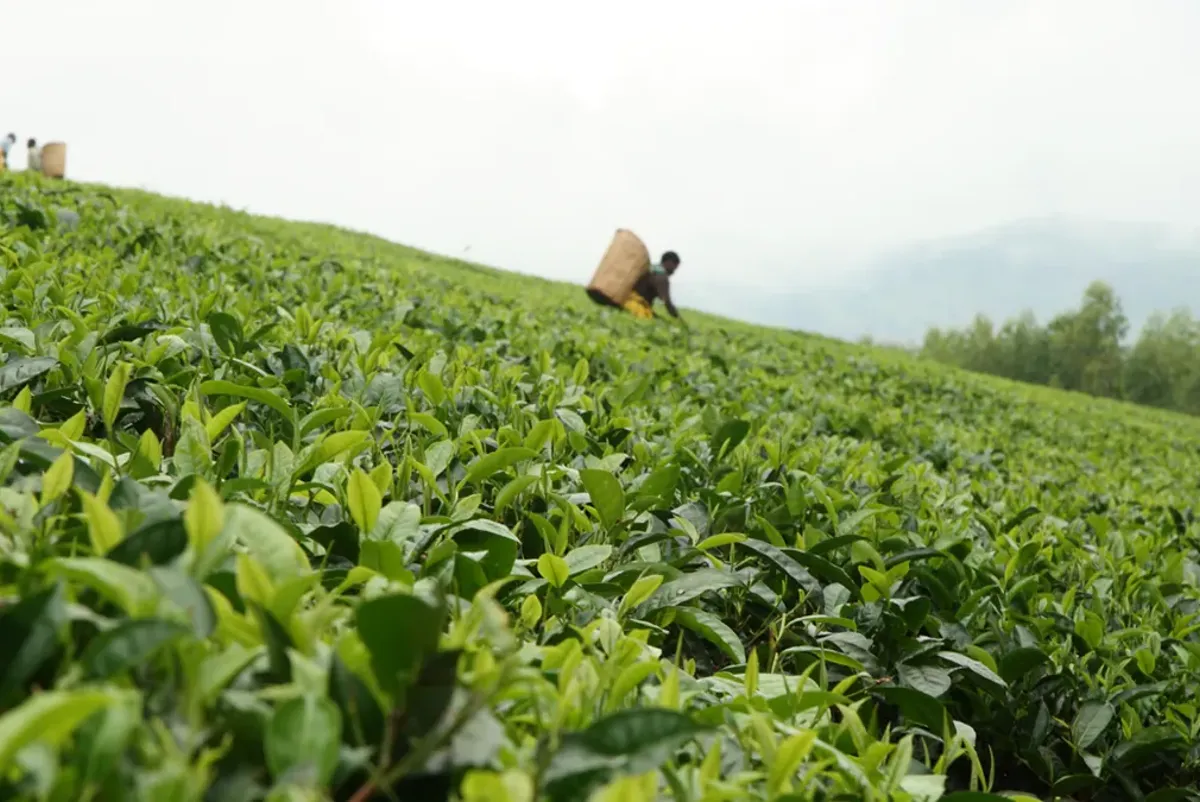
Safeguarding water for tea growing in key regions will be a priority for Malawi’s government, the industry and local communities.
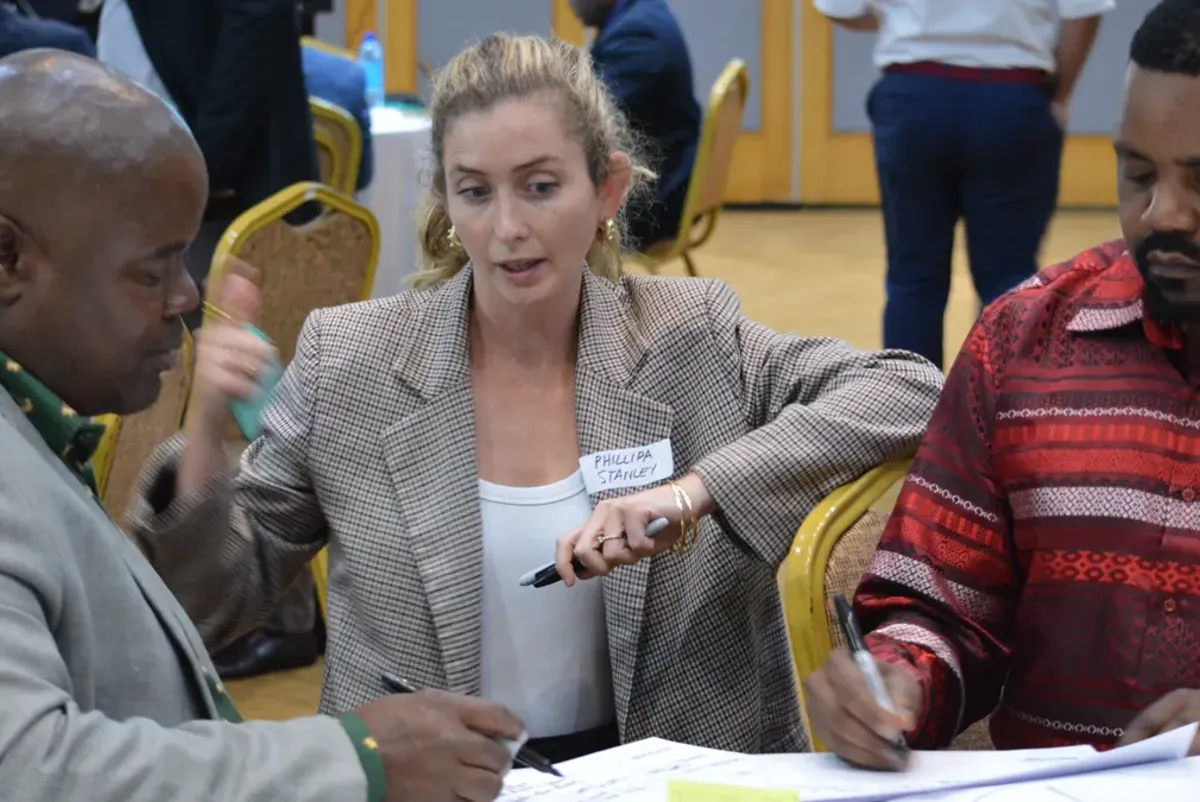
JTWS workshop in Malawi, bringing governments and experts together to strengthen water resilience and unlock climate finance.
Informing further action on water systems security
The additional two components of the JTWS programme will take forward actions highlighted by the WRT. Fair Water Footprint is stimulating action on water and climate risks across international supply chains and trading relationships. And the Resilient Water Accelerator is working with cities, supply chains and watersheds to secure private and commercial investments that will generate water security and climate resilience benefits.
Backed by training, knowledge transfer, and support for implementing water resilience measures on the ground, the JTWS provides data, stability and clear returns. This enables investors and donors such as the African Development Bank and the World Bank to feel confident financing larger projects.
Through the JTWS programme, we are helping countries to place water at the centre of their climate change adaptation and mitigation strategies. Our work will help them create their own path to inclusive, resilient and sustainable growth.
Alliance for Global Water Adaptation / Deltares / International Water Management Institute
Projects
Explore more water resource projects

Improving water security and sanitation for millions in urban India
Australia-India Water Security Initiative (AIWASI), India

Safeguarding the future of Toddbrook Reservoir
Toddbrook Reservoir, United Kingdom

Delivering an integral link into Adelaide's existing water supply network
Adelaide Desalination Plant Transfer Pipeline System, Australia

A decade of sustainable water supply for Melbourne Cricket Ground and wider Yarra Park
Yarra Park Water Recycling Facility, Australia
Get in touch with us
If you'd like to speak to one of our water experts about any of the issues raised on this page or a potential collaboration then please get in touch by completing the form.
