
Creating safer and more efficient transport for Melbourne’s road and rail networks
Level Crossing Removal Project Western Program Alliance
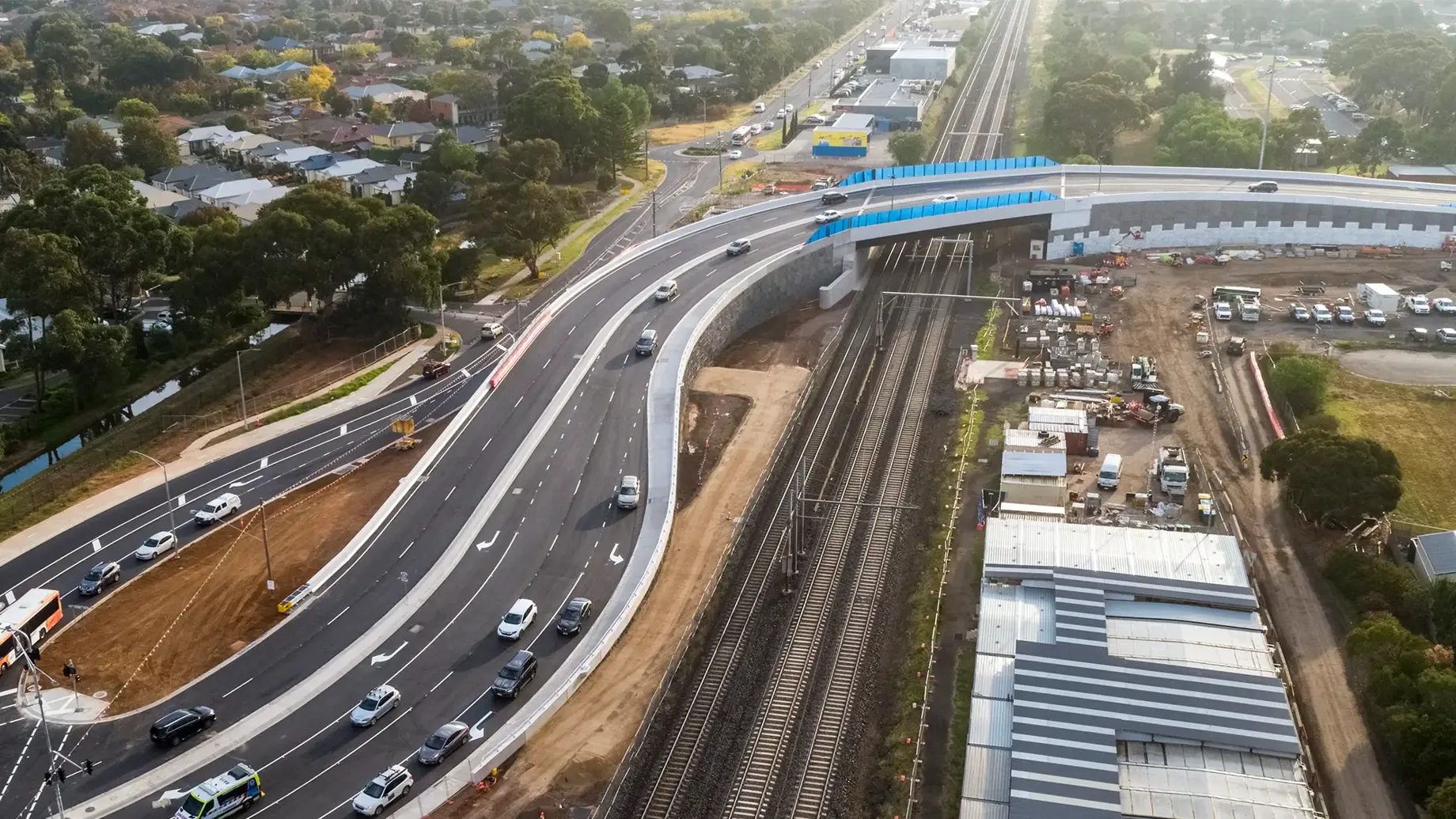
The Victorian Government’s Level Crossing Removal Project is overseeing the largest rail infrastructure programme of works in the state’s history – the removal of 110 of Melbourne’s most dangerous and congested level crossings by 2030. Removing the level crossings will reduce risk for pedestrians, cyclists and motorists and enhance the reliability of rail operations.
We are part of the Western Program Alliance (WPA) removing level crossings throughout Melbourne. WPA has removed 12 level crossings, delivered multiple integrated station precincts and built three new train stations. Our team provided multidisciplinary engineering design and planning and environmental services, with a priority to adopt sustainable practices, including developing a more sustainable concrete material for train station roofs.
Removing level crossings improves safety for road users and pedestrians by separating vehicles and trains, and allows for more efficient journeys for all modes of transport. This makes commuting easier for those using public transport, mobility devices, walking, cycling or driving. Upgrading train lines and stations will accommodate increased rail capacity and provide a more comfortable passenger experience.
A collaborative Alliance transforming Melbourne’s rail network
The WPA team comprises Arup, McConnell Dowell, Mott MacDonald, Metro Trains Melbourne (MTM), V/Line, and Victorian Infrastructure Delivery Authority’s Level Crossing Removal Project.
Our multidisciplinary engineering expertise has been integral to safely removing 12 level crossings within unique urban, industrial, and freight environments. Working collaboratively with our Alliance partners, we have tackled diverse challenges including major rail track duplications and station construction in constrained sites. Each level crossing removal required environmental, social, and economic considerations to provide the best community and project outcomes.
Completed level crossing removals include:
- Kororoit Creek Road, Williamstown North: a rail-over-road bridge and duplication of 800 metres of track.
- Abbotts Road, Dandenong South: a rail-over-road bridge in an industrial zone.
- Aviation Road, Laverton: a road-over-rail bridge within a busy shopping precinct.
- Werribee Street, Werribee: a rail-over-road bridge, including a main freight line.
- Cherry Street, Werribee: a road-over-rail bridge adjacent to a busy shopping centre.
- Ferguson Street: Williamstown: a lowering of the rail under a busy arterial road and construction of a new station.
- Old Geelong Road, Hoppers Crossing: a new road-over-rail bridge and new station facilities including a pedestrian overpass.
- Greens Road, Dandenong South: a new rail-over-road bridge as part of the Cranbourne Line Upgrade.
- Mt Derrimut Road, Deer Park: a new rail-over-road bridge and construction of a new station.
- Webb Street, Narre Warren: a new rail-over-road bridge and construction of a new station.
- Old Calder Highway, Diggers Rest: a road-over-rail bridge.
- Watsons Road, Diggers Rest: a road-over-rail bridge.
Sustainable design for rail infrastructure
WPA has actively sought the adoption of sustainable practices, including advancing the reuse of recycled materials in concrete infrastructure.
The level crossing removal at Mt Derrimut Road, Deer Park, celebrated a Victorian industry first, with the use of recycled soft plastics mixed with concrete to form the new train station’s roof. The recycled soft plastics replaced a portion of the concrete aggregate. We undertook extensive lab testing of these mixes to ensure no negative impacts on the strength and long-term durability of the concrete.
The concrete mix used for the station roof contains a half tonne of recycled plastic diverted from landfill and oceans. Additionally, the use of supplementary cementitious material significantly reduced the embodied carbon of the concrete by up to 40 per cent when compared to typical ordinary cement concrete.
The Diggers Rest level crossing removal was the first to trial and use calcined clay as a substitute for cement in concrete in the rail industry in Australia.
Driving innovation and efficiency through digital design
Digital innovations were adopted early by the WPA, using parametric and building information modelling (BIM) tools to improve efficiency, collaboration and precision throughout the programme.
The detailed design for removing the Aviation Road level crossing carefully considered ground conditions, land use, traffic volumes, and potential disruptions to road and rail. By using parametric modelling, the team could easily adapt to design changes and iterations, which saved time on modelling and documentation compared to traditional methods.
The solution for the Kororoit Creek Road level crossing removal was a rail-over-road bridge in a tightly constrained corridor with adjacent industrial and commercial zones. The design incorporated an innovative U-trough that formed the rail bridge. Prefabricated concrete beams enabled much of the construction work to be completed offsite, reducing onsite installation time and minimising disruption to road users. The U-trough design also provided a lower profile and more aesthetically pleasing elevated structure, improving the urban realm and creating more space for pedestrian and cycling connections.
The team incorporated 3D BIM from all design disciplines to create a 3D model for internal, stakeholder and client reviews. The construction team used this model to produce a 4D timeline model that linked to the construction programme, which assisted in clash detection and avoiding the underground services of adjacent petroleum facilities.
Advanced digital tools and processes were applied to design to deliver the Eumemmerring Creek bridge on the Cranbourne line and the pedestrian overpass at Hoppers Crossing Station.
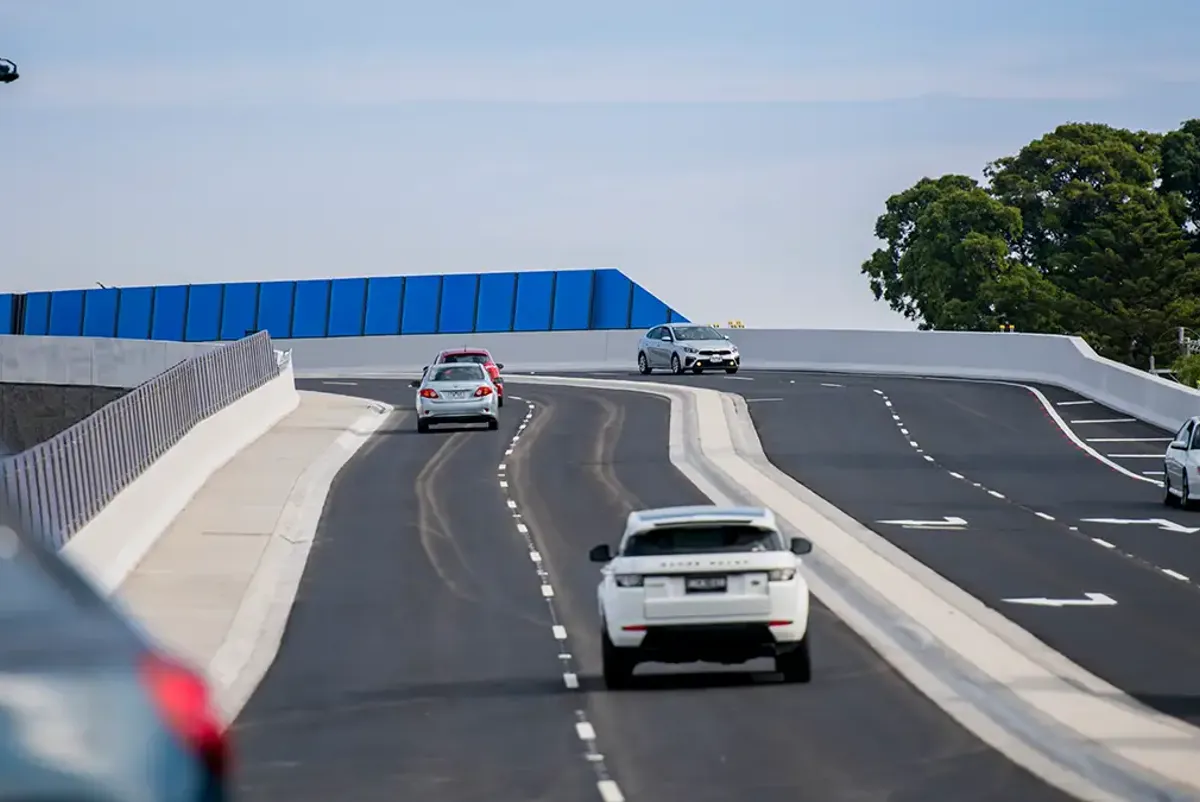
New road-over-rail bridge at Cherry Street
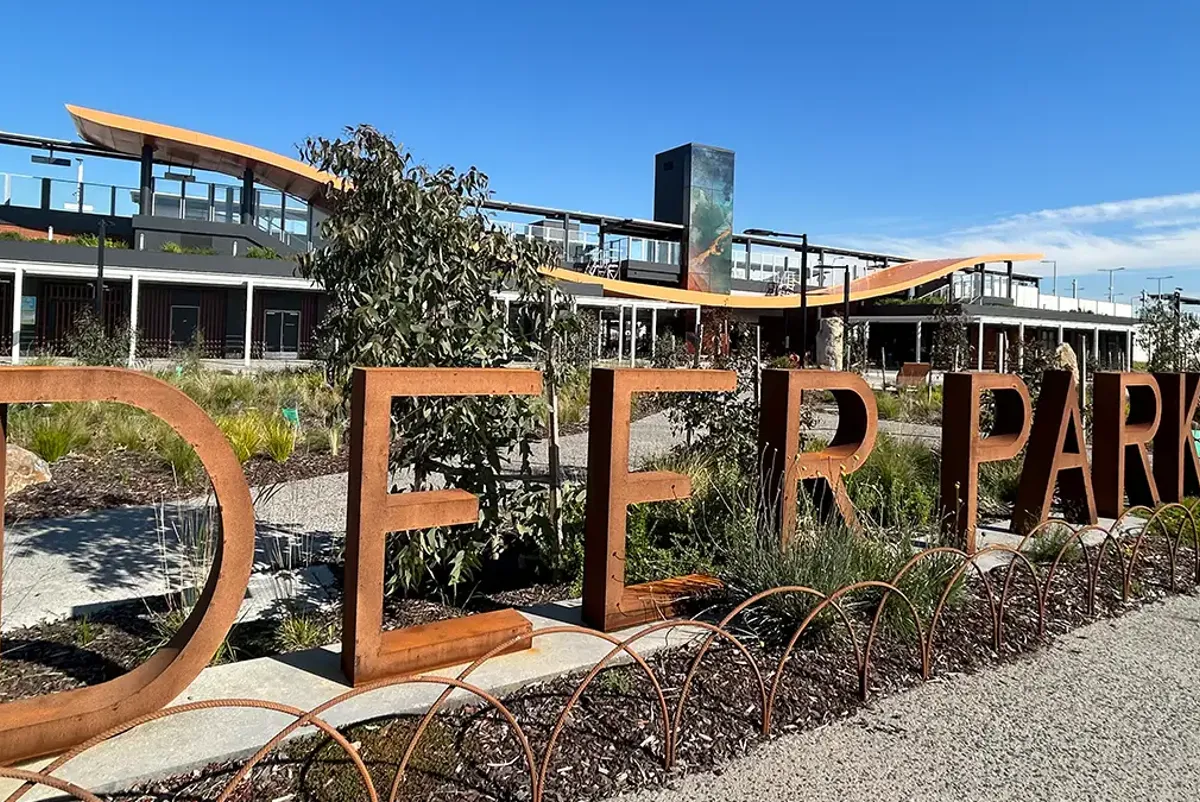
New Deer Park Station
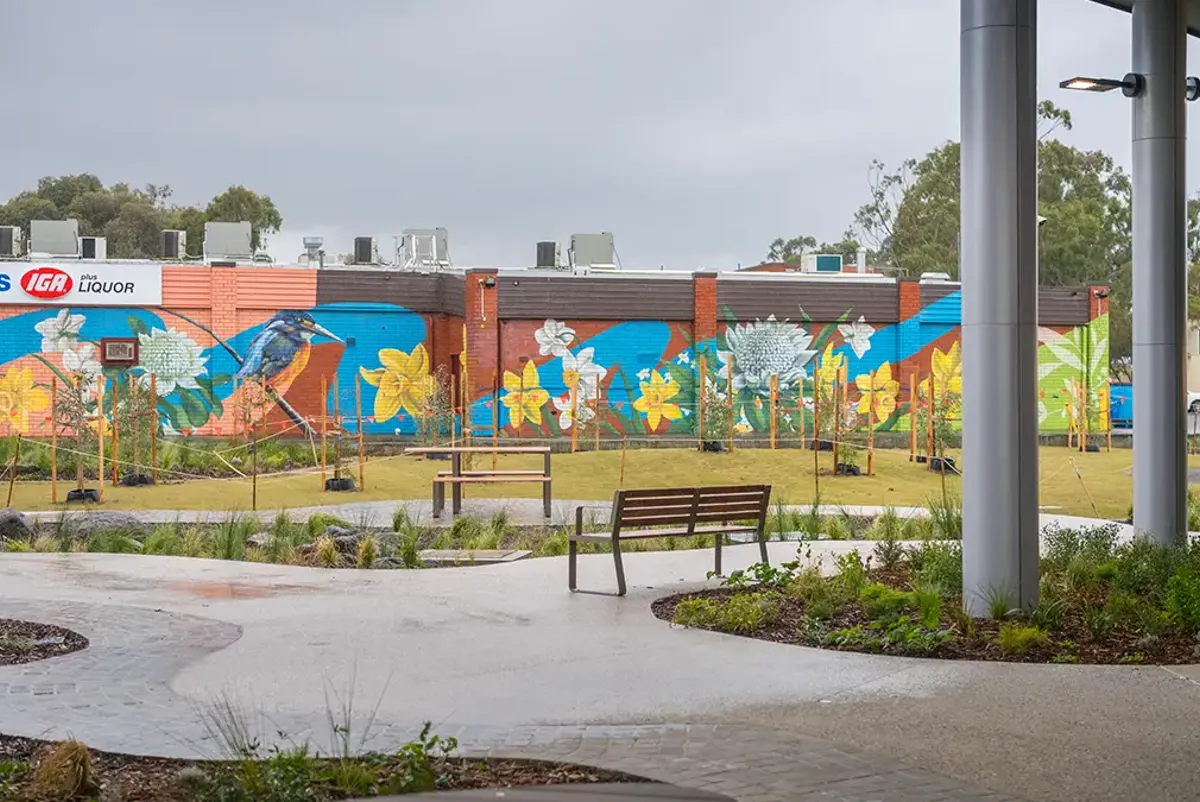
Open spaces for recreation
Embedding a culture of continuous improvement
WPA’s collaborative alliance model has fostered a culture of continuous improvement across all aspects of project delivery, from sustainability initiatives to the adoption of digital tools and creative design approaches. This integrated model empowered teams to challenge standard practices and drive better outcomes for communities and operators.
The Alliance’s approach to lighting design exemplifies this approach. Drawing on our research into night-time safety and inclusive lighting in rail precincts, the team prioritised user experience for people of all abilities and addressed perceptions of safety. Lighting placement was carefully considered to eliminate dark spots and achieve uniformed distribution of light. By selecting warm, inviting tones and thoughtfully illuminating public spaces, the design enhances both comfort and safety, creating environments where everyone feels welcome.
Images courtesy of Level Crossing Removal Project.
Awards
-
Australian Rail Associations Rail Industry Awards 2024
Sustainability Excellence Award (Mt Derrimut Road Level Crossing Removal)
Projects
Explore more rail projects:

Enabling historic investment to achieve a more modern, reliable, and connected Northeast Corridor rail network
CONNECT NEC Program, USA

A state-of-the-art 19km tramway network that will serve as the backbone of mobility in the Québec region
TramCité, Canada

Owner’s Engineer for Canada’s transformational Alto high-speed rail network
Alto High-Speed Rail, Canada

Creating two iconic stations as part of a major line extension
Toronto-York Spadina Subway Extension, Canada
Get in touch with us
If you'd like to speak to one of our rail experts about any of the issues raised on this page or a potential collaboration then please get in touch by completing the form.
