
A nature-inspired stay designed in harmony with the environment
Mandai Rainforest Resort by Banyan Tree
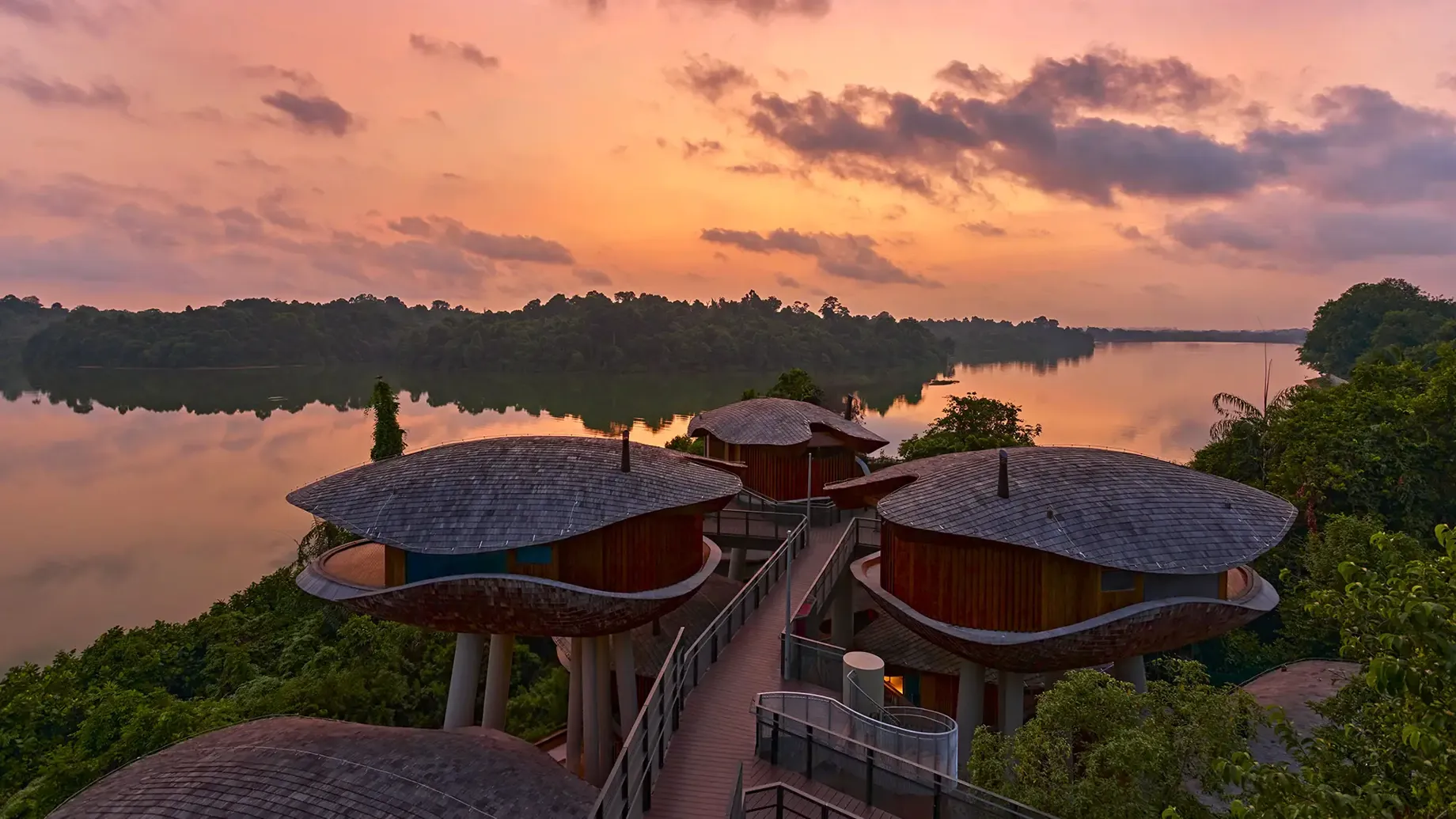
Mandai Wildlife Group’s vision for the resort is rooted in a deep commitment to biophilia, which is reflected in its architecture, operations, programming and amenities. The project site, which once housed back-of-house facilities, has been thoughtfully transformed into a nature-inspired retreat. The design vision was to build in harmony with the environment while weaving in sustainable best practices.
We were appointed to provide comprehensive mechanical, electrical and plumbing (MEP) consultancy services to help bring this vision to life. Working closely with Mandai Wildlife Group and the appointed architect, we translated the design vision into practical solutions. We refined the building’s shape and form to mitigate heat gain, enhance thermal comfort, and minimise energy consumption. Our scope included designing integrated systems for water, energy and cooling, all engineered for efficiency and to maintain optimal guest comfort.
As the first resort to be certified the Green Mark Super Low Energy certification by Singapore’s Building and Construction Authority (BCA), Mandai Rainforest Resort sets the benchmark in sustainable and energy-efficient design. The 338-room resort is a key addition to the Mandai Wildlife Reserve, Singapore’s wildlife and nature destination, offering convenient stayover opportunities at the doorstep of renowned zoological parks, including Singapore Zoo, Night Safari, and River Wonders.
Mixed-mode cooling optimises energy efficiency and guest comfort
At the start of our design process, we asked a fundamental question: ‘What makes a sustainable resort?’ To address this, we developed a three-mode room cooling system tailored to the resort’s rainforest setting: natural ventilation, eco-air-conditioning and air-conditioning.
Rooms are designed to encourage guests to use the natural ventilation options, which offer ambient temperatures that reflect the cool climate of tropical rainforests. This is supported by ceiling fans and windows that can be fully opened to enhance airflow.
For guests who prefer air-conditioning, the eco-aircon mode maintains an energy-efficient temperature with thermal comfort supported by ceiling fans. While the room is being cooled, the temperature setting can be designed to stay within an energy-saving range. We also introduced passive displacement ventilation (PDV) in the treehouse rooms – a first for any hotel or resort in Singapore. PDV uses a chilled-water cooling coil to generate airflow through natural convection, rather than relying on mechanical fans. Cool air is supplied at floor level; as it warms and becomes less dense, the warm air rises naturally and is extracted at ceiling height. This system is quiet and delivers comfort with significantly lower energy use compared to traditional air conditioning.
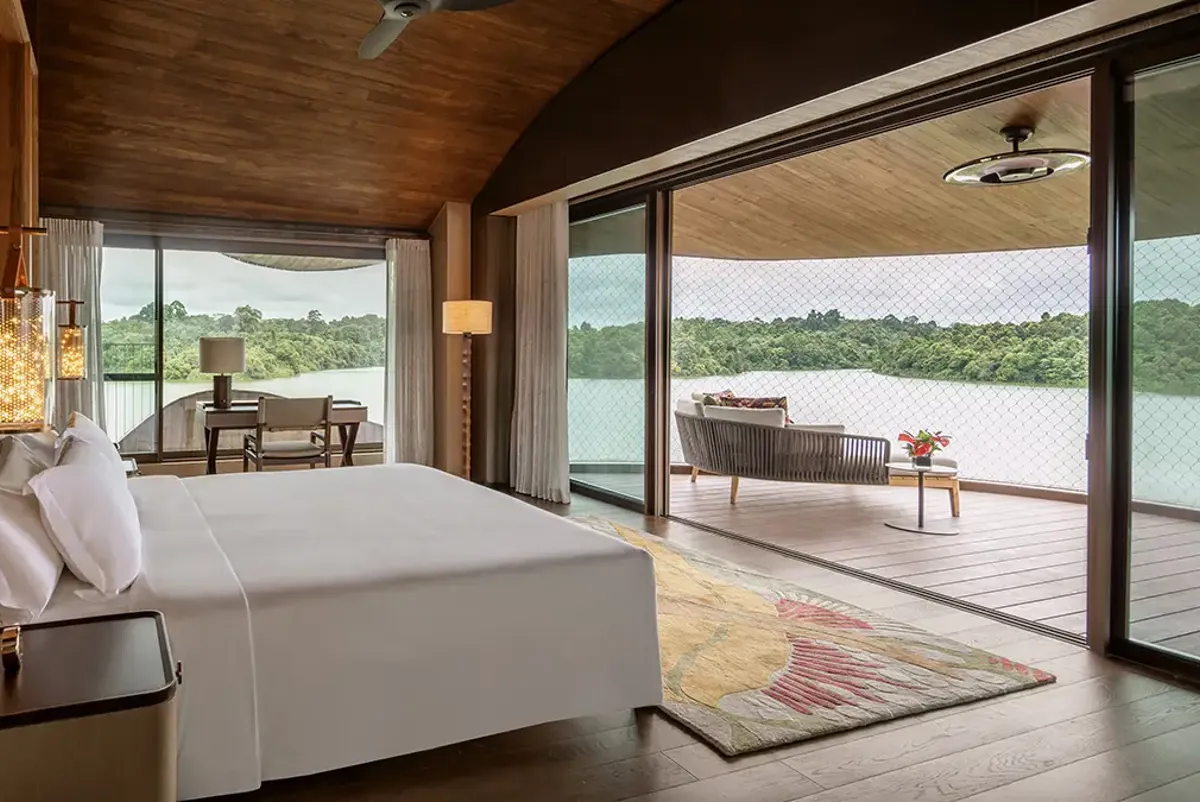
A room with custom designed eco-cooling options including natural ventilation © Mandai Rainforest Resort by Banyan Tree
Efficient water heating design and water conservation
Our design approach minimises water wastage, including the water lost while guests wait for the shower water to reach their preferred temperature.
We designed a hot water system using heat pumps, which recovers heat from the chiller plant to warm the water. We also integrated a reverse calorifier to ensure that heat lost from water is minimised throughout the distribution process. This enhances energy efficiency and reliability of hot water distribution.
Through careful attention to detail, we balanced and optimised the hot water recirculation system to deliver hot water quickly, helping to significantly reduce unnecessary water wastage during guests’ shower times.
Rainwater is captured from in-room flushing systems and plant irrigation, then reused across the resort. This reduces reliance on potable water, supports circular water use and contributes to the resort’s overall sustainability.
Technology supports sustainable guest experiences
We designed a room control system designed to optimise energy use by responding intelligently to room occupancy. Each room features an interactive display panel showing real-time data on energy consumption for air-conditioning, lighting and water consumption. Guests receive immediate feedback on usage, and gentle nudges when consumption exceeds recommended levels.
Strategically placed occupancy sensors – including motion and heat detectors – detect whether the room is occupied. When unoccupied, the system raises the temperature and switches off all the lights. The system restores a comfortable temperature and sets the lighting to welcome mode when it senses that the guest has returned to the room.
Projects
Explore more hotel and leisure projects

Enhancing relaxation through light and sound
Alba Thermal Springs and Spa, Australia

Sustainability and inclusion drive Samarkand traveller resort design
Samarkand Silk Road Touristic Centre, Uzbekistan

Digging deep: Claridge’s five-star basement extension
Claridge’s basement extension, United Kingdom

Merdeka 118: one of the world’s tallest buildings
Merdeka 118, Malaysia
Get in touch with us
If you'd like to speak to one of our property experts about any of the issues raised on this page or a potential collaboration then please get in touch by completing the form.
