
Delivering one of Wales' leading flood defence schemes
Newport Stephenson Street Flood Scheme
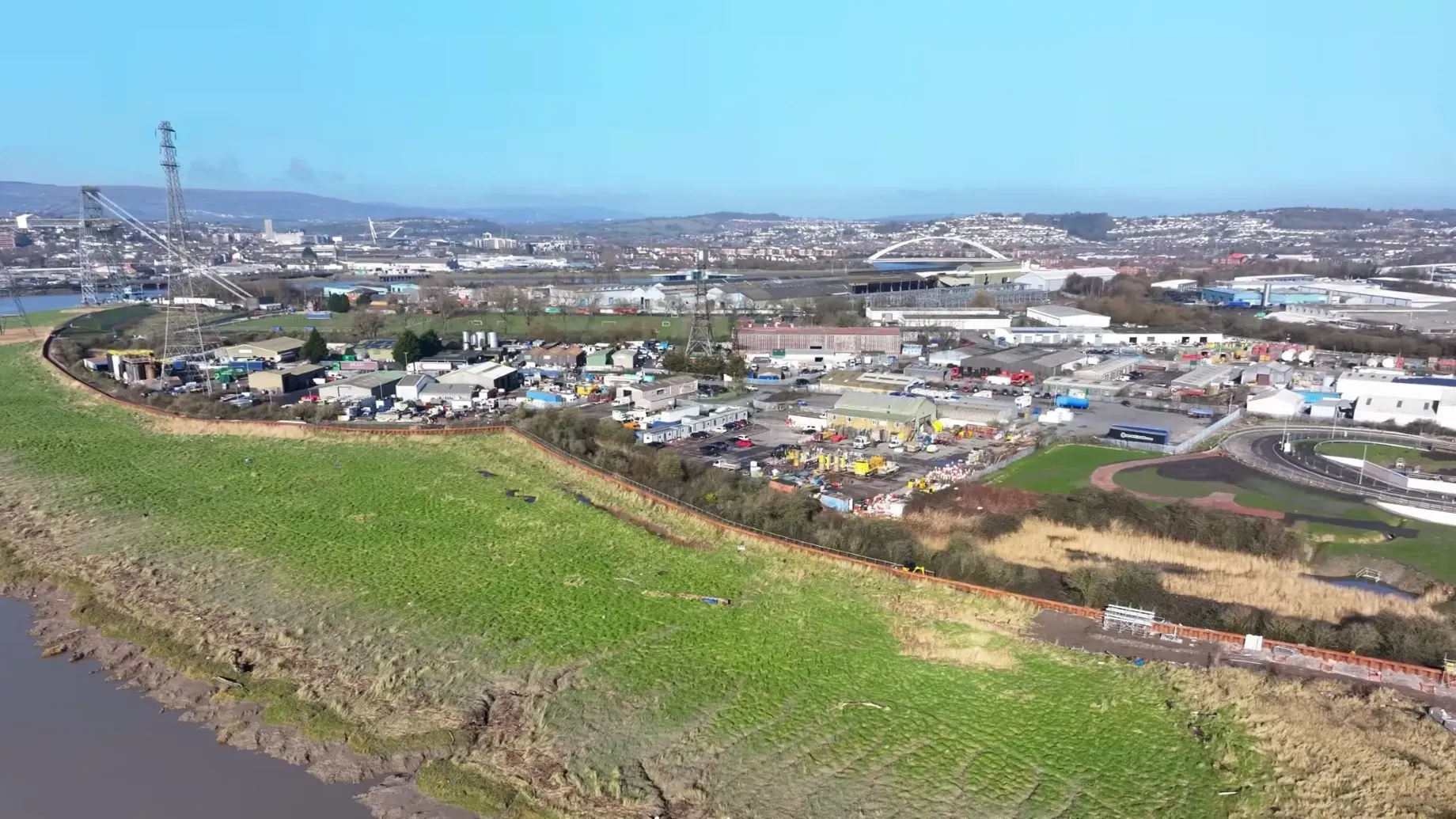
An ageing flood embankment left the Lliswerry area of Newport, South Wales vulnerable to a growing risk of tidal breach and flooding. On a technically challenging site, Natural Resources Wales (NRW) needed a scheme to better protect homes, businesses and critical transport infrastructure – while minimising cost and carbon emissions, and maximising wider benefits for both people and nature.
Our team used a deep understanding of NRW’s wider ambitions, alongside feedback from the local authority, residents and businesses, to develop a clear vision and masterplan for the area. Working with NRW over ten years, we took the project from outline business case through to consenting, detailed design and delivery.
The final scheme integrates over 2km of raised defences into improved parkland and accessible paths along the Wales Coast Path. The scheme is situated alongside businesses, utilities and internationally significant, ecologically sensitive saltmarshes. The defences incorporate low-carbon technologies and were constructed on time and within budget – despite the challenges of the complex urban setting.
Stephenson Street is NRW’s largest and most complex flood scheme to date. Now complete, it provides better protection against tidal flooding for more than 1,100 homes and 1,000 other properties. By creating accessible green space, improved walking routes, new planting and habitats – as well as better connections to local attractions – our masterplan integrates NRW’s sustainable management of natural resources principles. It also supports NWR’s wellbeing objectives. The scheme offers value for money, with every £1 spent returning more than £8 in national benefit over its lifetime.
Adopting a sustainable approach to flood-risk management
The sustainable management of natural resources (SMNR) is a long-term goal for all of Wales. NRW has defined four aims to achieve this goal: safeguarding and enhancing natural resources, creating resilient ecosystems, supporting healthy places for people, and developing a regenerative economy.
We took a proactive approach to incorporating SMNR principles into the scheme – capitalising on its location along the River Usk and the Wales Coast Path to develop designs that maximise benefits for people, nature and the local economy.
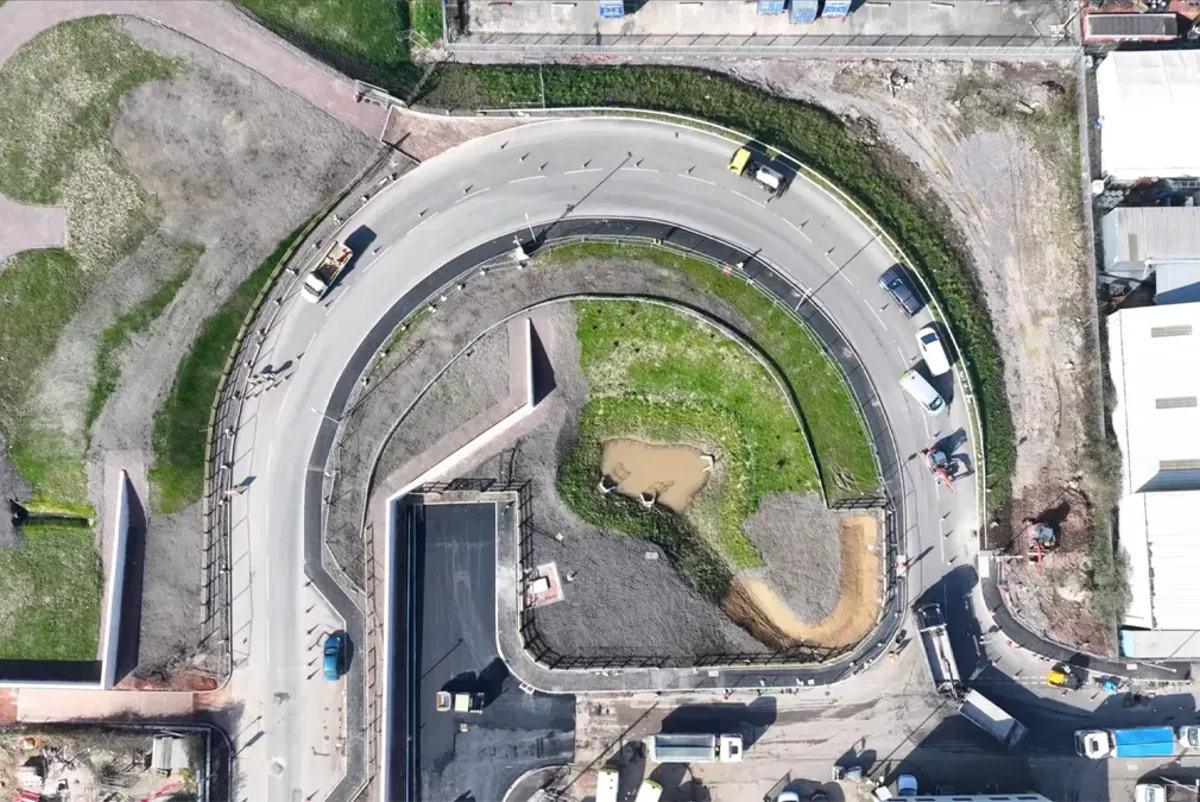
‘The Carousel’: A new circular road retains access to businesses when the flood gate is in use.
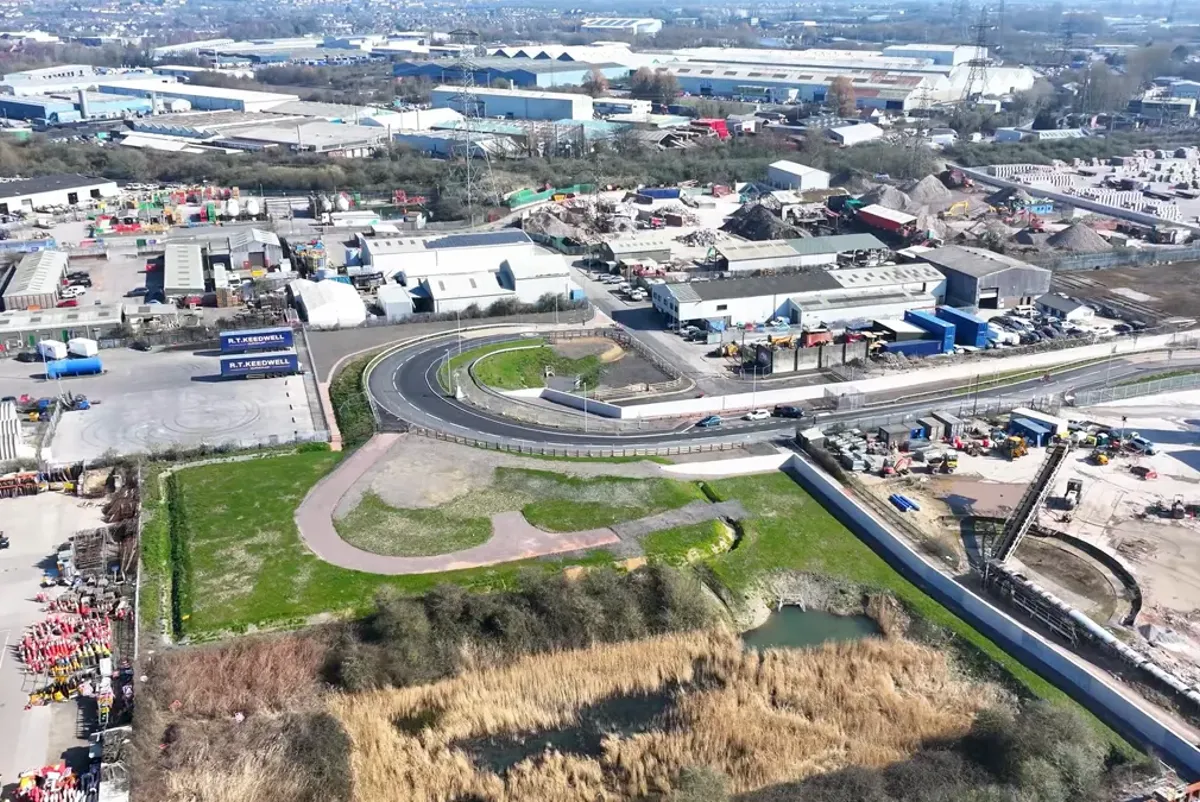
The scheme reduces the risk of tidal flooding from the River Usk, integrating over 2km of raised defences into improved parkland and accessible paths along the Wales Coast Path.
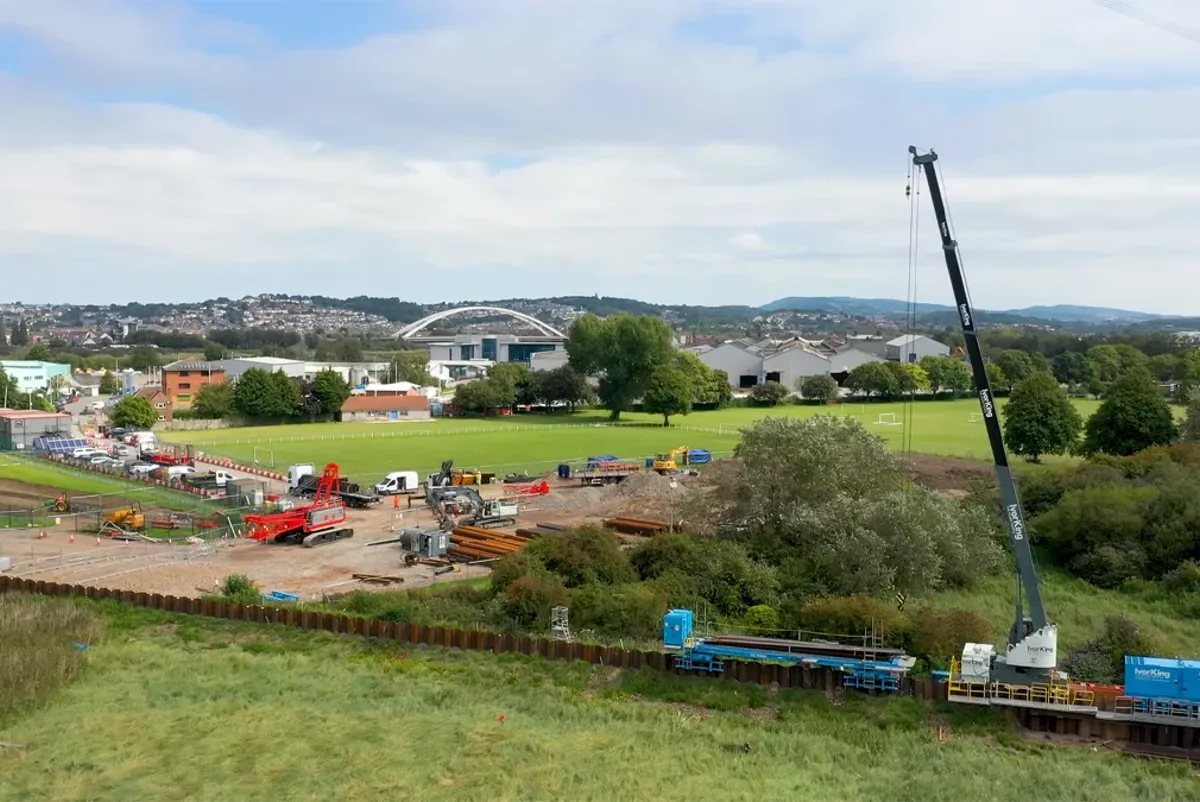
The low-vibration piling system reduced impact on wildlife and local businesses.
Masterplanning flood defences to create a visitor destination
At an early stage in the project, our landscape team completed masterplanning to provide design enhancements that supported Newport City Council’s ambitions to develop the area as a visitor destination.
We adapted the form of the flood embankment to widen the Wales Coast Path along its crest. By combining this with accessible footpaths, gentle gradients and regular resting and seating areas, we ensured safe access for all visitors. The new paths were also designed to offer views across the River Usk and improve connectivity with the nearby historic Newport Transporter Bridge via a circular route.
Following stakeholder engagement sessions, the team revised designs to better promote a sense of place. Overgrown areas were cut back to reduce the feeling of enclosure, and resting areas were designed with open views to deter antisocial behaviour. Mobility kissing gates were installed to prevent access by dirt bikes while retaining access for all other users.
Managing the environmental impacts of flood defence construction
Early contractor involvement and collaboration between engineers, landscape architects and environmental specialists were key to reducing the scheme’s carbon footprint and environmental impact – while also minimising disruption to local transport links and businesses.
Our pre-construction embodied carbon assessment highlighted areas for potential savings. Concrete specifications promoted the use of cement-replacement materials in place of ordinary Portland cement, and the team selected ‘eco’ sheet piles – produced using recycled steel and 100% renewable energy – which achieved a 40% reduction in sheet-pile embodied carbon.
The design team and contractor worked closely at an early stage to appraise available piling systems. The chosen system reduced vibration by pressing piles into the ground, rather than driving them in. It also avoided the need for an access track, which would have encroached onto neighbouring environmentally designated sites.
As well as protecting local habitats, specifying this method at an early stage helped to streamline the project’s consenting process and avoid compensation liability by minimising impact on third parties.
The overall service has been typical of Arup’s high standards of professionalism and technical know-how.
Overcoming the technical challenges of construction on soft ground
In addition to constructing over 2km of raised flood defences, the project team designed a 9m-wide flood gate and a new circular section of highway to maintain access to local businesses when the gate was closed. All structures had to be built on the site’s soft, muddy ground, which posed a challenge for managing ground settlement.
The site’s ground is made up of very soft tidal flat deposits extending to a depth of 14 metres. This makes it susceptible to creep settlement – where the ground continues to shift and settle under load for a long time after construction is completed. If this was not addressed in the designs, the completed defences could fall below their designed height, and new infrastructure could be damaged.
To tackle this issue, our team designed a ground treatment solution that added load to the ground and used vertical soil drains to drive out the predicted 0.9m settlement within the construction period, rather than over decades. This approach protects the infrastructure from excessive post-construction settlement. It also saves significant cost and carbon when compared with traditional piled methods.
-
ICE Wales Cymru Awards, 2025
Bill Ward Sustainability Award
Newport Council / Griffiths Ltd
Projects
Explore more flooding and stormwater projects

Creating cool and green streets with spatial data
Strategic Prioritisation Map for Water Sensitive Urban Design, Australia

Promoting climate resilient flood defence and development through nature-based solutions
Lower Darent Riverside Strategy, United Kingdom

Strengthening flood resilience for communities
Douglas and Togher Flood Relief Scheme, Ireland

Keeping Victoria’s waterways healthy with optimised stormwater management
Feasibility of stormwater flow regulation, Australia
Get in touch with us
If you'd like to speak to one of our water experts about any of the issues raised on this page or a potential collaboration then please get in touch by completing the form.
