
Early front end engineering study for the monopile foundations at a UK offshore wind farm
Rampion 2 offshore wind farm
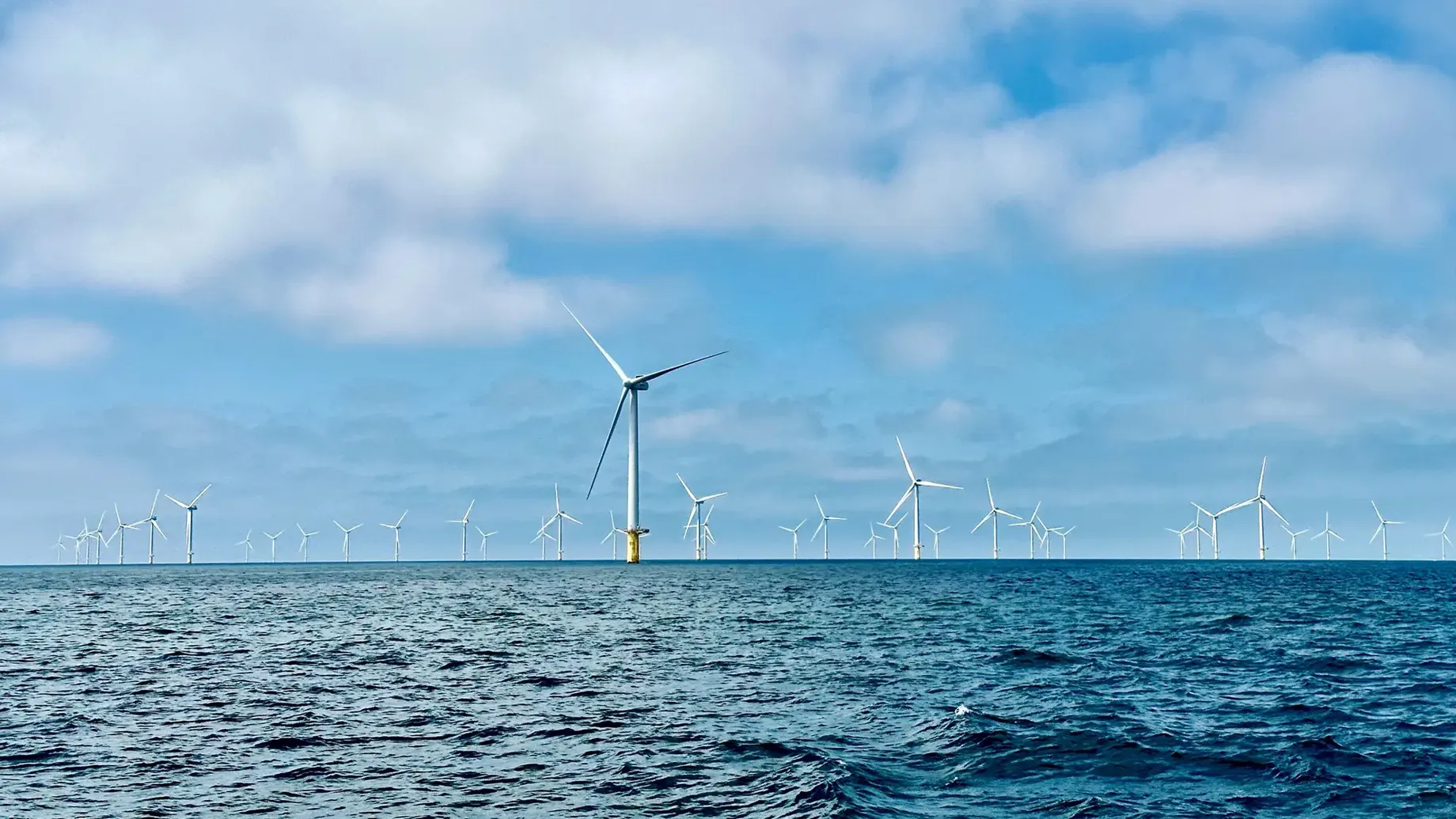
RWE’s Rampion 2 project is a proposed 90-turbine extension to the existing Rampion wind farm, located approximately 13km off the UK’s Sussex coast
Once operational, it is expected to generate enough renewable electricity to power over one million UK homes, contributing significantly to the country’s clean energy transition. Building on our involvement at the project feasibility stage, Arup completed an early Front End Engineering Design (FEED) study for the monopile wind turbine foundations.
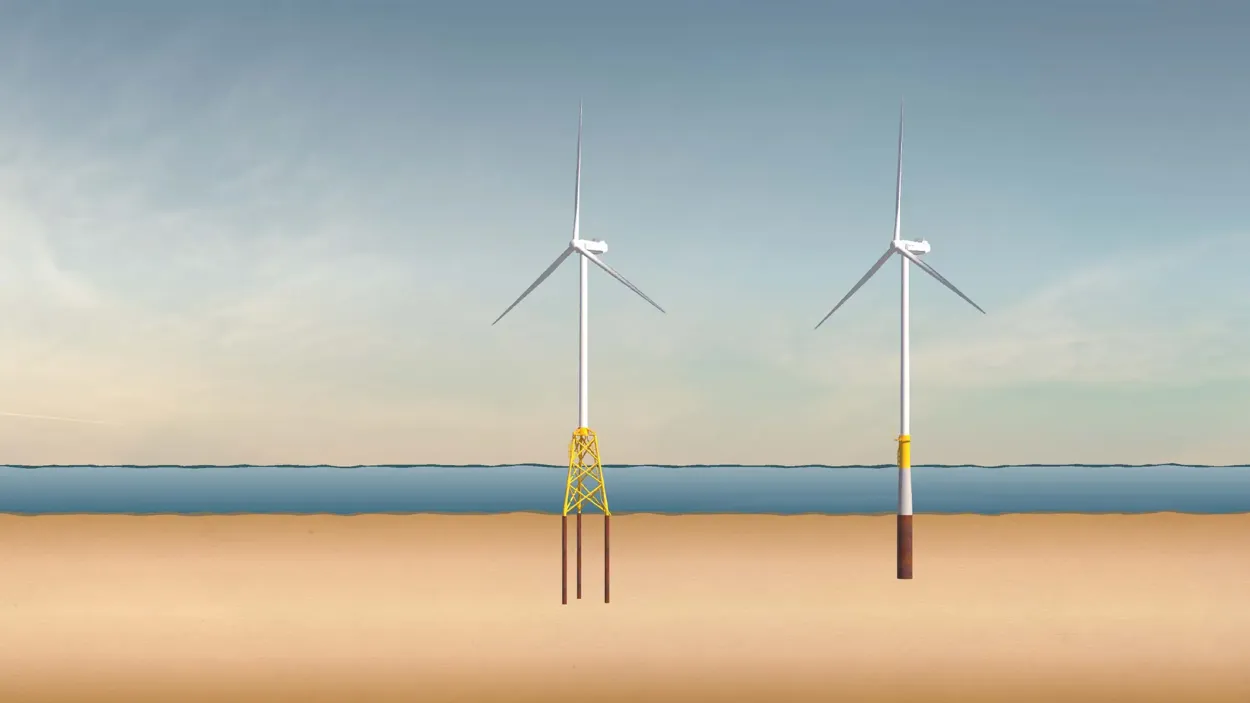
The designs were developed using OPTIF Arup’s proprietary foundation design tool. Arup’s experts used OPTIF’s rapid load analysis capabilities and optimisation algorithms to deliver robust and optimised foundation designs in short timescales, with flexibility to accommodate input from RWE during the design development. The analysis considered the complex geotechnical and metocean conditions at the site, and optimisation balanced primary steel mass and supply-chain considerations to holistically assess the most appropriate and cost effective foundation design for the site. OPTIF was used to evaluate many thousands of design configurations to assess the site-wide implications of varying key design inputs and enable data-driven decision making in close collaboration with the client.
Arup’s advanced integrated load analysis (ILA) capability provided particular value for this project, including development of a bespoke aeroelastic model of the wind turbine generator tuned to project-specific requirement. This improved the accuracy of design load estimates and significantly reduced uncertainty and risk ahead of engagement of a turbine supplier. The ILA also enabled sensitivity studies to be performed considering varying wind turbine tower design configurations, allowing for integrated assessment and optimisation of the full support structure and further reduction in uncertainty in the resulting foundation designs.
The early FEED study provided an accurate and advanced substructure assessment, enabling RWE to progress development decisions at a higher confidence level as the project moves forward.
Arup completed the design work efficiently and within the agreed timelines. The Arup team discussed with us constructively our considerations on different aspects of the design, and they were able to accommodate changes in the design assumptions.
OPTIF
Projects
Explore more offshore wind projects

Generating momentum for Colombia’s offshore wind industry
Vientos Alisios offshore wind feasibility study, Colombia

Powering Scotland's future: how offshore wind farms will accelerate renewable energy
Caledonia Offshore Wind Farm, United Kingdom

Accelerating the development of global offshore wind infrastructure s
Offshore wind farms

Arup applies advanced site characterisation approaches to Dutch Nederwiek Site I
Nederwiek Wind Park Site I, Netherlands
Get in touch with us
If you'd like to speak to one of our energy experts about any of the issues raised on this page or a potential collaboration then please get in touch by completing the form.
