
Data-led bridge repair delivers cost, time and quality gains
Sharnbrook Viaduct strengthening and repair
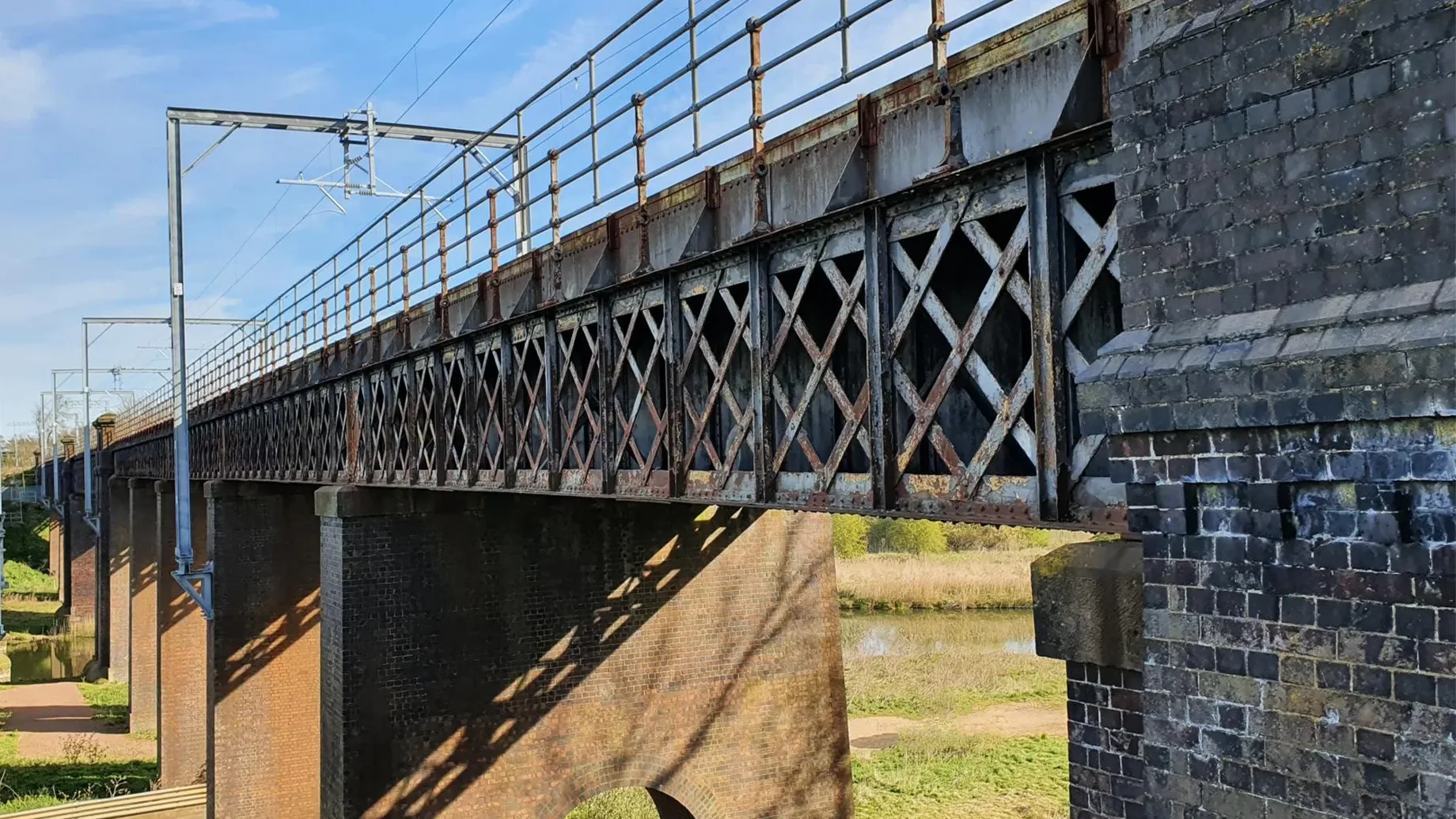
Sharnbrook Viaduct, a 176m rail bridge spanning the River Great Ouse, is a critical asset on the Midland Main Line, linking London with the north of England. The age and high usage of the Victorian bridge demanded a smart, efficient repair strategy to ensure the longevity of this key asset.
Faced with budget constraints and limited site access, Network Rail and the main contractor BAM partnered with Arup to deliver a targeted, data-led approach to repairing the viaduct. The main goal of the project was to reduce costs and time while improving quality.
Due to its age, size and complex fabrication, there was significant ambiguity about the structure’s condition and possible repair requirements. Arup proposed a digital workflow that encompassed condition inspection, defect review, repair specification and progress tracking. This allowed condition led repairs to be planned and implemented efficiently, alongside strengthening works. Our approach reduced uncertainty, prioritised interventions and supported Network Rail to make a more transparent investment case.
A collaborative, data-led methodology for efficient bridge repair and strengthening
Arup developed a streamlined methodology for structural survey, review, and repair, working in close collaboration with Network Rail, BAM, and steelwork contractor, Taziker. Central to this approach was the integration of a detailed 3D model together with Arup’s Bridge Taxonomy – a robust, carefully defined, asset database. This methodology enabled information sharing via a live, web-based, project dashboard. This greatly improved stakeholder engagement, understanding and decision making.
Combining historic and real-time data for smarter decisions
To reduce risk and test the methodology, Arup conducted a pilot survey during early stages of mobilisation on site. The team tested the survey app and reporting tools, allowing for additional refinement, prior to the full survey programme commencing. Both historic and newly captured defect data was visualised on the project dashboard, allowing for a full range stakeholders to access, review and track survey progress.
The 3D BIM model of the structure was imported into the dashboard. As the BIM model was based on the Arup Bridge Taxonomy defects could be accurately mapped to their precise locations. This interactive 3D view of the bridge allowed the project team to interrogate data and identify trends in defect type, severity, location and frequency. This insight informed repair strategy decisions, delivering benefits in both cost and construction efficiency.
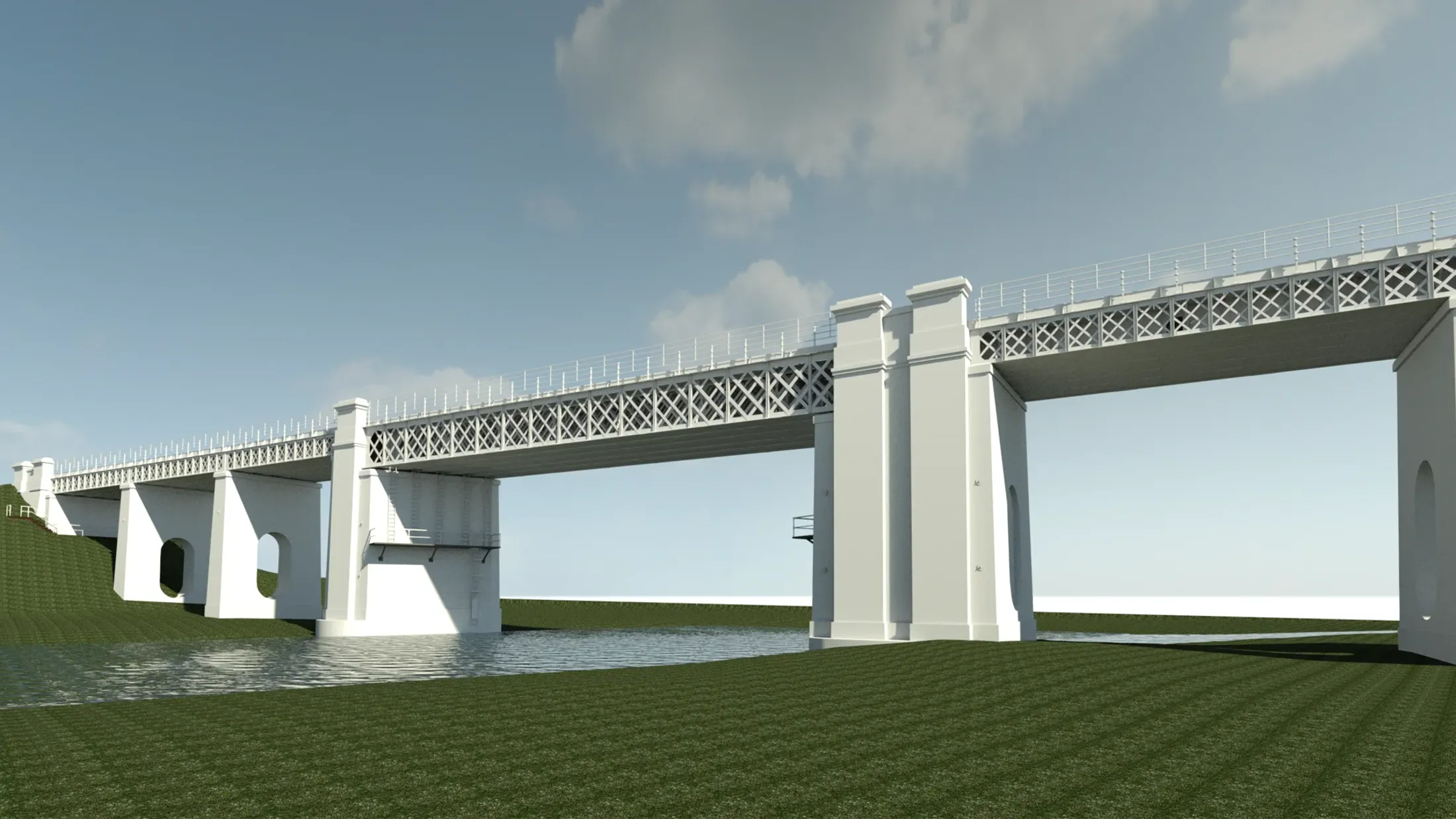
3D model of Sharnbrook Viaduct.
Fuse platform enabling transparency and engagement
The project dashboard was hosted on Fuse, Arup’s in-house platform for spatial data and analysis. Limited access to specialist software, or a lack of familiarity, can often hinder engagement with technical information, particularly among non-technical stakeholders.
Fuse presents complex technical information, such as 3D models, defect tables and repair proposals, in an intuitive, accessible format. This empowers the entire project team to engage meaningfully with the information. With the same data displayed in an open, easily digestible 3D viewer, all collaborators can gain a better understanding of the project and make more effective decisions. This inclusive approach provided an enhanced levels of access to the client team, not typical of projects where such a high volume of technical data is gathered.
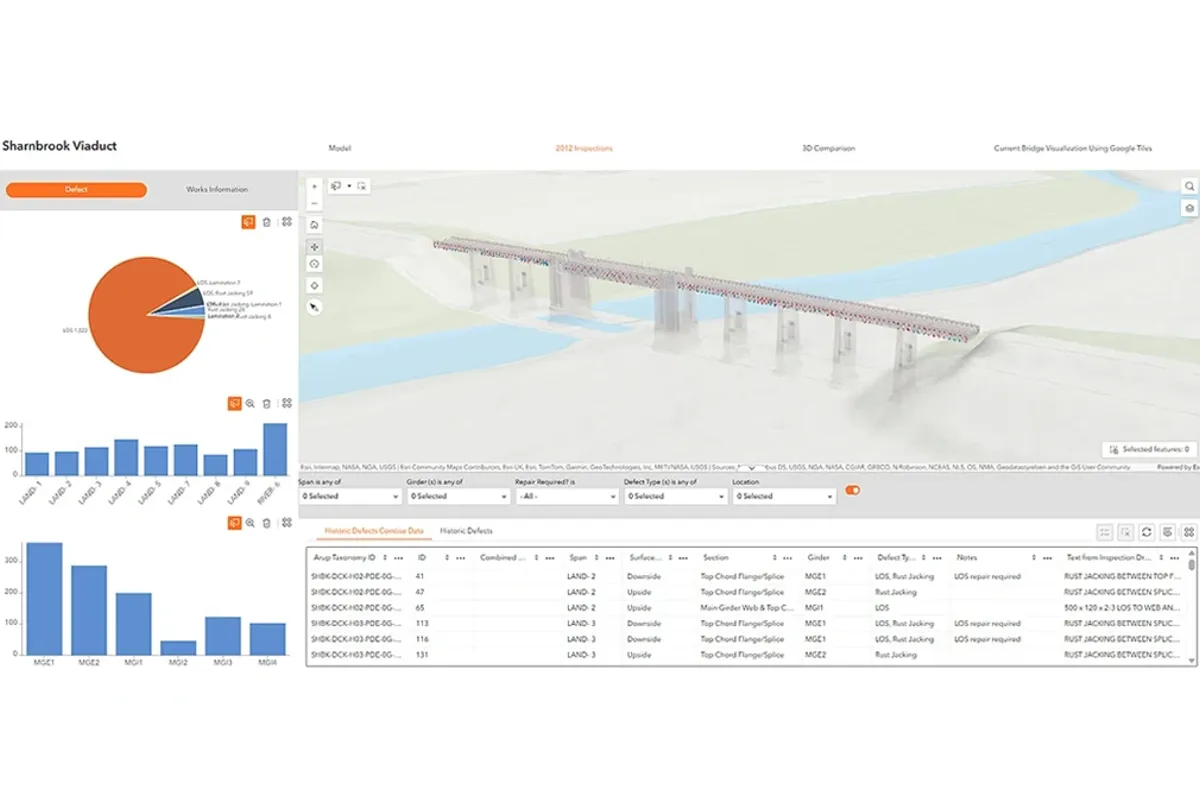
Dashboard and 3D visualisation of historic defects.
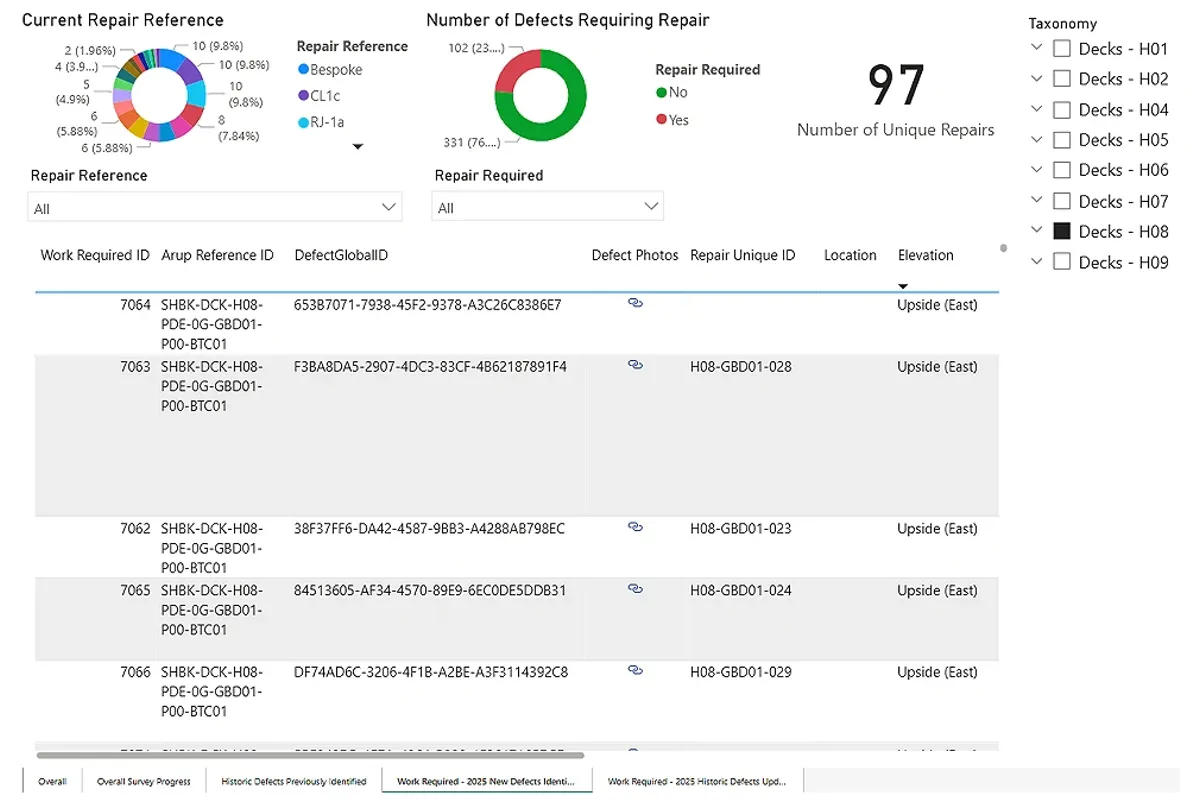
Main defect and repair dashboard.
Carbon reporting with confidence
The integration of the 3D model and Arup’s Bridge Taxonomy also enabled robust carbon reporting. Site inspection data and BIM outputs were automatically captured and transferred to a central database. Using a whole-life carbon reporting tool, One Click LCA, we calculated the project’s whole-life carbon footprint for Network Rail, providing a clear, data-backed view of its environmental impact. The Contractor was very impressed with the accuracy and quality of the carbon reporting, far above original expectations. This demonstrates that taking a data-led approach can add value across all aspects of project delivery.
The Sharnbrook Viaduct repair and strengthening demonstrates how a data-led approach can transform traditional infrastructure repair and maintenance. By integrating advanced modelling, real-time data visualisation and collaborative platforms, the project delivered measurable gains in cost, time, quality and carbon transparency. This methodology sets a new standard for efficient, informed and sustainable asset management – offering a replicable model for future rail infrastructure projects.
Projects
Explore more rail projects:

Designing a safe, sustainable tramway for Colombia's second largest city
80th Avenue Medellín Tramway, Colombia

Shaping a resilient rail future for Singapore
Singapore Rail Test Center, Singapore

Accelerating the redevelopment of stations across India
Design Handbook for Modular Railway Stations, India

Establishing the alignment for a high-speed train between Dallas and Houston
Texas Central High-Speed Train, USA
Get in touch with us
If you'd like to speak to one of our rail experts about any of the issues raised on this page or a potential collaboration then please get in touch by completing the form.
