
First sustainable road crossing in Central London in more than 50 years
Silvertown Tunnel
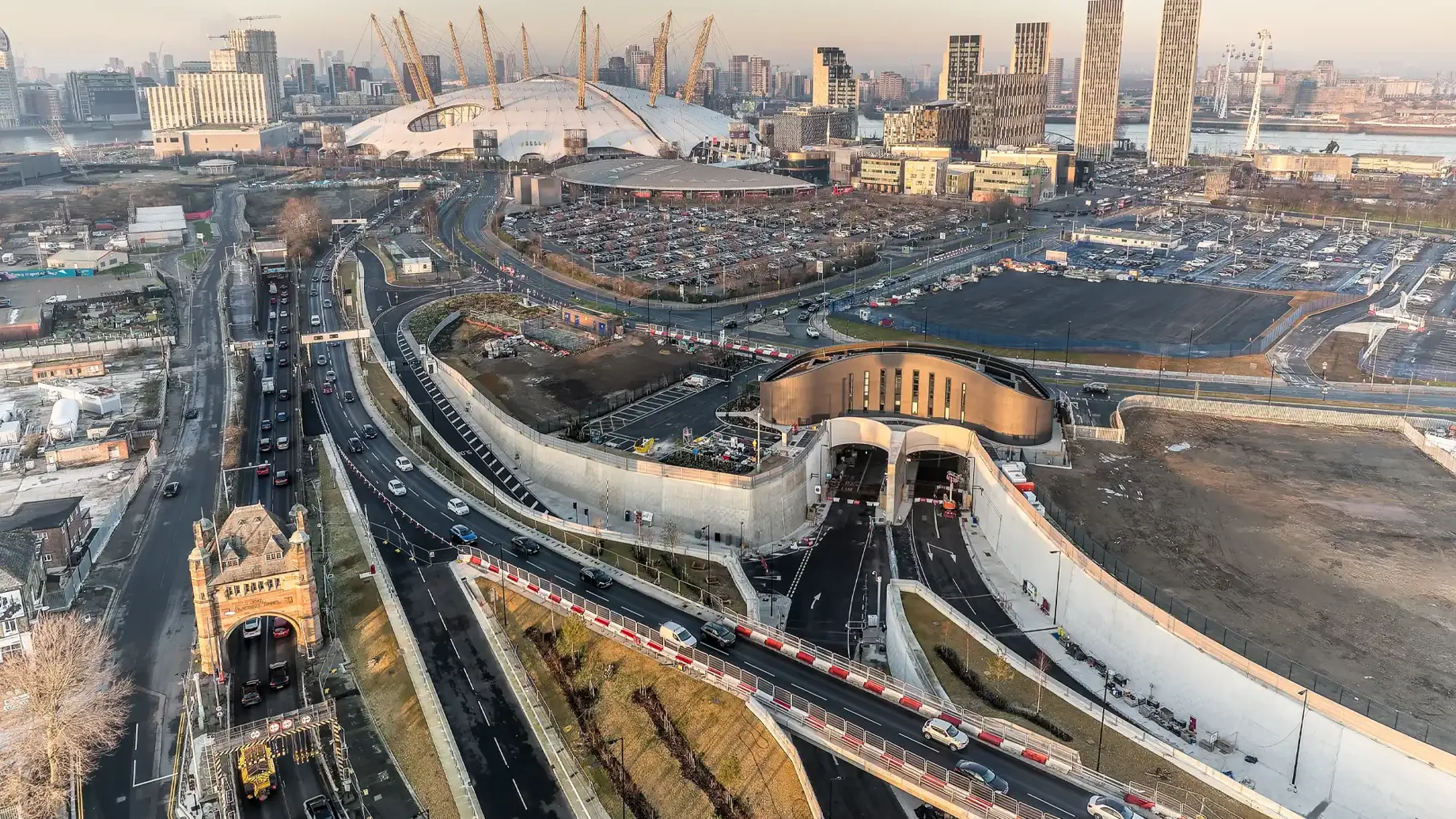
Riverlinx Construction JV – including Ferrovial Construction, BAM and SK ecoplant – together with Transport for London, needed an integrated and complex design to be delivered within a strict five-year programme to ensure the Silvertown Tunnel opened on time in April 2025.
Over nearly a decade, Arup helped Riverlinx to win the project, secure technical approvals, achieve full Development Consent Order (DCO) compliance, and deliver a fully integrated highways design within a constrained site that supports future development and active travel. Our scope covered highway design, ground engineering, intelligent transport systems (ITS), transport modelling, bridges, drainage, lighting, landscaping and portal buildings. Our approach, using BIM 3D coordination, streamlined construction, enabled efficient asset management and supported low‑carbon, long‑term network outcomes.
The Silvertown Tunnel strengthens connections across London, easing congestion and cutting emissions with faster, more reliable journeys. New bus routes improve sustainable travel options, while increased tunnel headroom reduces closures that often disrupted the Blackwall Tunnel. The project creates a resilient, future-ready link that keeps communities moving.
Highway design and network integration
During the tender stage, we developed the highway design and provided comprehensive technical support to help inform Riverlinx's tender submission. Our input ensured that the proposed solutions aligned with DCO commitments, project performance objectives, and the contractual requirements set by Transport for London and Riverlinx. This early design clarity supported a competitive and well-informed procurement process for the client.
Following this, our team delivered the full suite of highway engineering services needed to integrate the new tunnel with London’s existing road network. This included horizontal and vertical alignment, pavement design, surface and subsurface drainage, and the development of wayfinding and traffic sign strategies. Every discipline was coordinated to ensure compliance, constructability, and long-term operational performance.
A key focus of the design was minimising disruption for road users and reducing the embodied carbon associated with the works. Through detailed pavement assessment, we identified opportunities to retain and reuse substantial areas of existing carriageway. This approach reduced construction intensity, shortened programme durations, and delivered measurable sustainability benefits.
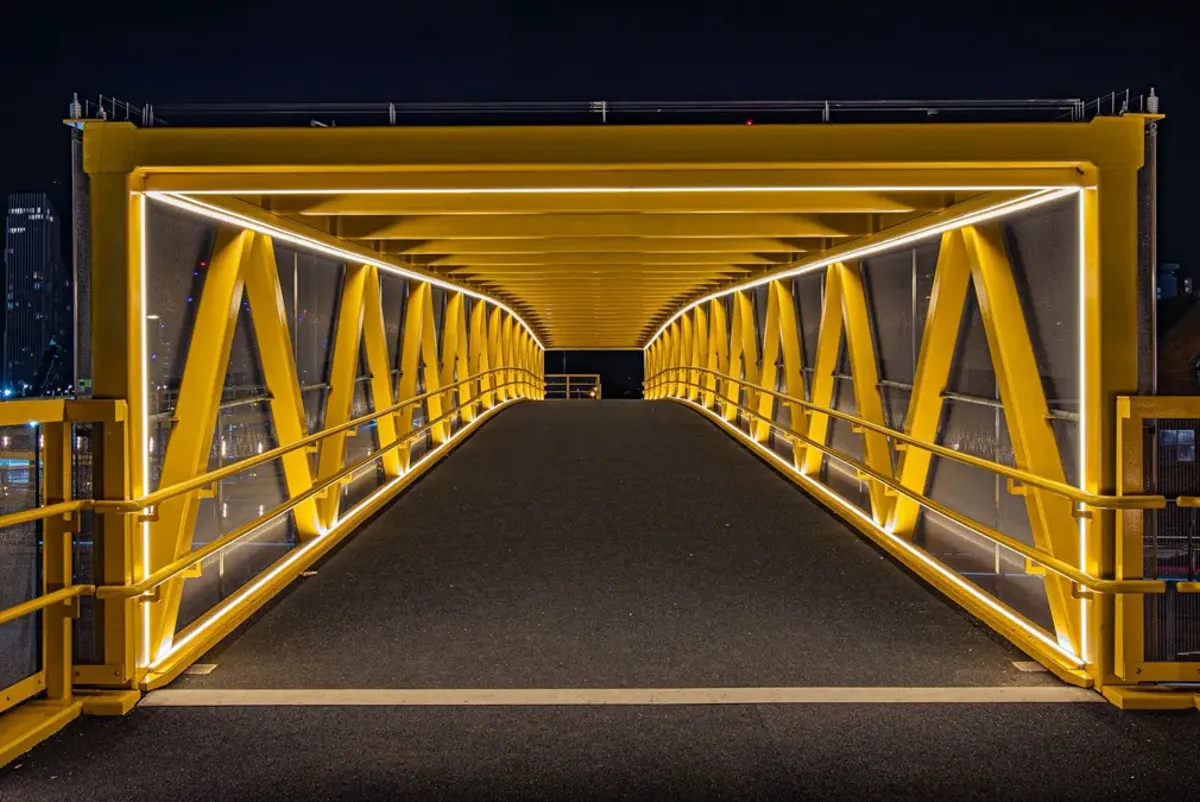
Boord Street Footbridge. Image Credit: Tom Brodie
Efficient design with intelligent transport systems
We designed both signalised junctions and roundabouts that connect the new tunnel portals with the surrounding urban highway system. By optimising geometry, staging and control strategies, we helped maintain safety and efficiency during both construction and future operation.
We also supported the development of the tunnel’s ITS, designing and integrating the technologies required for safe and efficient operation. This included a full suite of traffic control systems – such as CCTV cameras, automatic incident detection, barriers and tunnel traffic signals – to enable effective monitoring and rapid response across a range of operating scenarios.
We also delivered the strategy and technical design for driver-facing systems, including variable message signs and lane control signals. This ensured the tunnel can manage traffic dynamically, maintain resilience during incidents and keep road users informed in real time.
Integrated portal buildings for safe and reliable operation
Our multi-disciplinary team provided full structural and building services design for the portal buildings, focusing on efficiency, reliability, and maintainability. We provided specialist input into the building facades, ensuring both durability and aesthetic quality. We also addressed acoustics within operational areas to minimise noise impact, ensuring a safe and comfortable environment for tunnel operators.
The portal buildings were complemented by thoughtfully designed landscaping, creating a visually appealing transition between the operational compound and the surrounding urban environment.
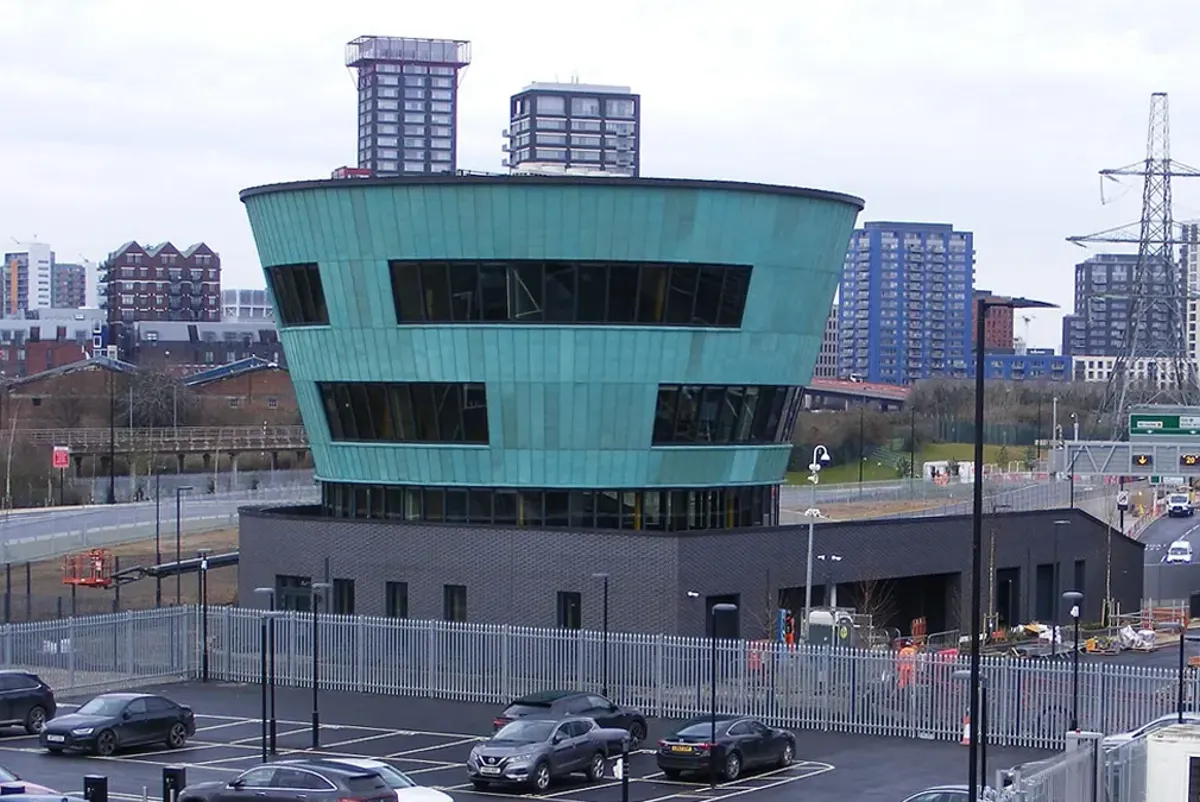
Silvertown Tunnel Newham Portal Building. Image credit: Tom Brodie
Sustainable design with environmental and heritage management
Our team assessed and managed the site’s archaeological and ecological considerations, protecting heritage assets and supporting local biodiversity throughout the design process.
Sustainability was embedded from the outset. We led environmental management during the design phase, including a targeted carbon management strategy. We quantified and reduced the embodied carbon of the portal buildings, supporting the project’s broader low-carbon goals.
Projects
Explore more roads and streets projects

Illuminating a community path for the nighttime safety and enjoyment of pedestrians and cyclists
Somerville Community Path Lighting, USA

County-wide adaptation strategy to protect a critical Bay Area transportation corridor from sea level rise
Marin County Sea Level Rise Adaptation Study, USA

California’s first long-span cable-stayed bridge
Long Beach International Gateway Bridge, USA

Planning an electric bus corridor that links communities across California’s Central Valley
Kings/Tulare Cross Valley Bus Corridor Plan, USA
Get in touch with us
If you'd like to speak to one of our roads and streets experts about any of the issues raised on this page or a potential collaboration then please get in touch by completing the form.
