
Engineering innovation for Sizewell C’s complex site
Sizewell C Nuclear Power Station
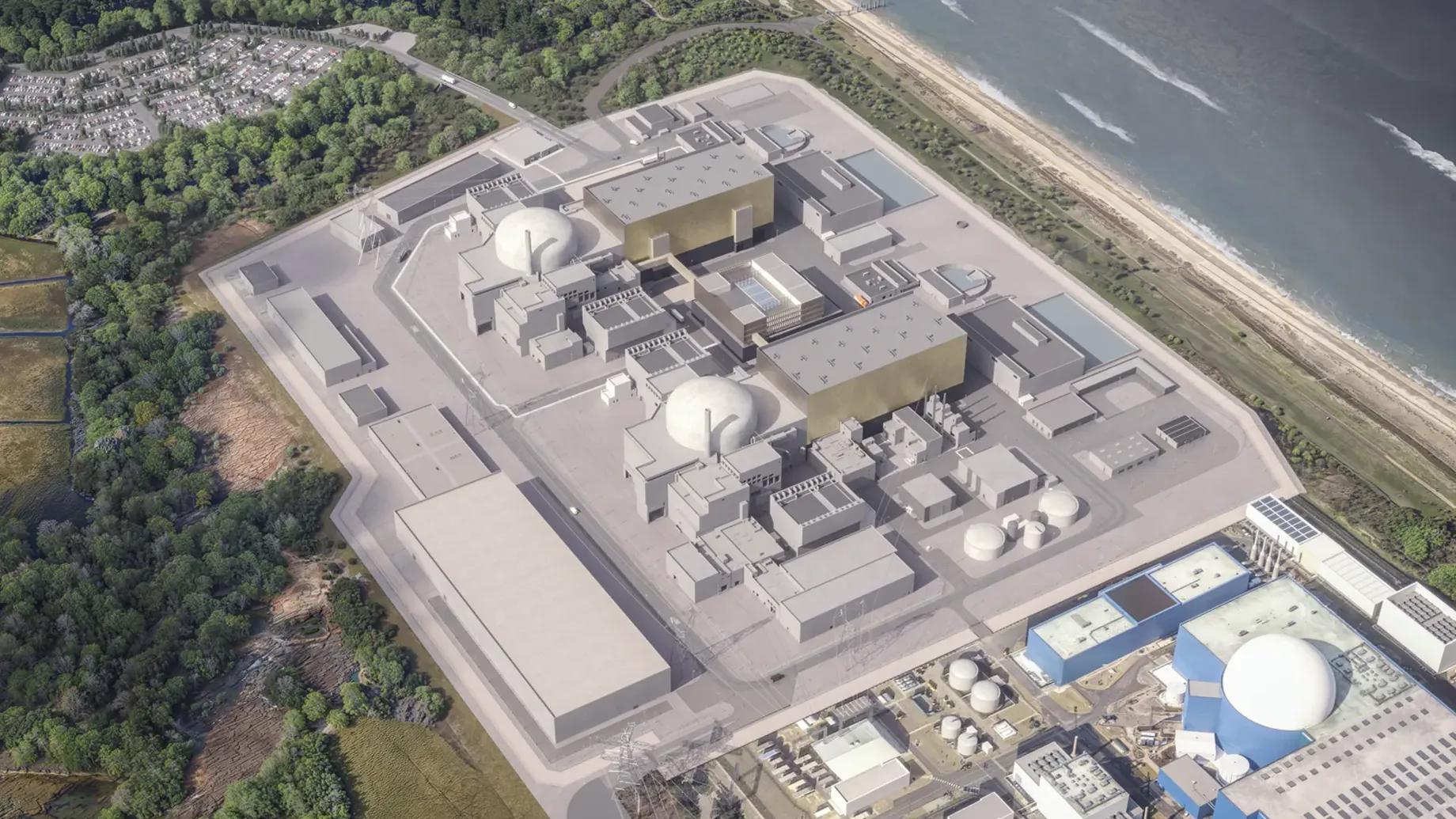
Sizewell C builds on the UK’s legacy of nuclear innovation – following Sizewell A and B – and marks a major step forward in the country’s energy transition. This nationally significant infrastructure project will deliver reliable, low-carbon electricity for millions of homes, strengthening energy security for decades to come.
Located next to an operational nuclear power station and a Site of Special Scientific Interest, the project demanded robust, efficient solutions for major excavations and retaining structures on a geologically complex ground.
Collaborating closely with Sizewell C, Arup reviewed initial proposals and worked together to refine the ground engineering approach. By leveraging in-situ ground treatment, a plastic diaphragm wall and localised retaining structures, we reduced construction risk and improved efficiency.
Our use of advanced digital tools – including a 3D ground model – enabled robust seismic and settlement assessments, building confidence with both Sizewell C and regulators. This approach minimised the need for extensive anchors and reinforcement, helping the project to avoid significant delays.
The alternative scheme allowed for phased excavation, groundwater cut-off closer to Sizewell B, and in-situ treatment of soft material. These measures helped overcome the challenges posed by an infilled paleochannel – a buried ancient riverbed – and high groundwater levels.
Engineering for uncertain ground
Our team tackled the site’s complex geology, including a paleochannel infilled with peat, clay-rich soils, beach deposits and legacy materials from Sizewell B. These ground conditions, along with a high-water table and deep excavation requirements, posed significant challenges.
Arup was initially appointed to review the proposed enabling works design. The original scheme included a structural diaphragm wall and multiple levels of ground anchors, which presented major programme, cost, and logistical risks.
Working closely with Sizewell C, we constructively challenged the original specifications to combine the retaining structure and groundwater cut-off. Once this was removed, we developed an alternative scheme using an unreinforced plastic diaphragm wall for water cut-off, paired with sloped excavation and local retaining walls. This approach simplified logistics, eliminated the need for large volumes of reinforcing steel, and met all functional and performance requirements
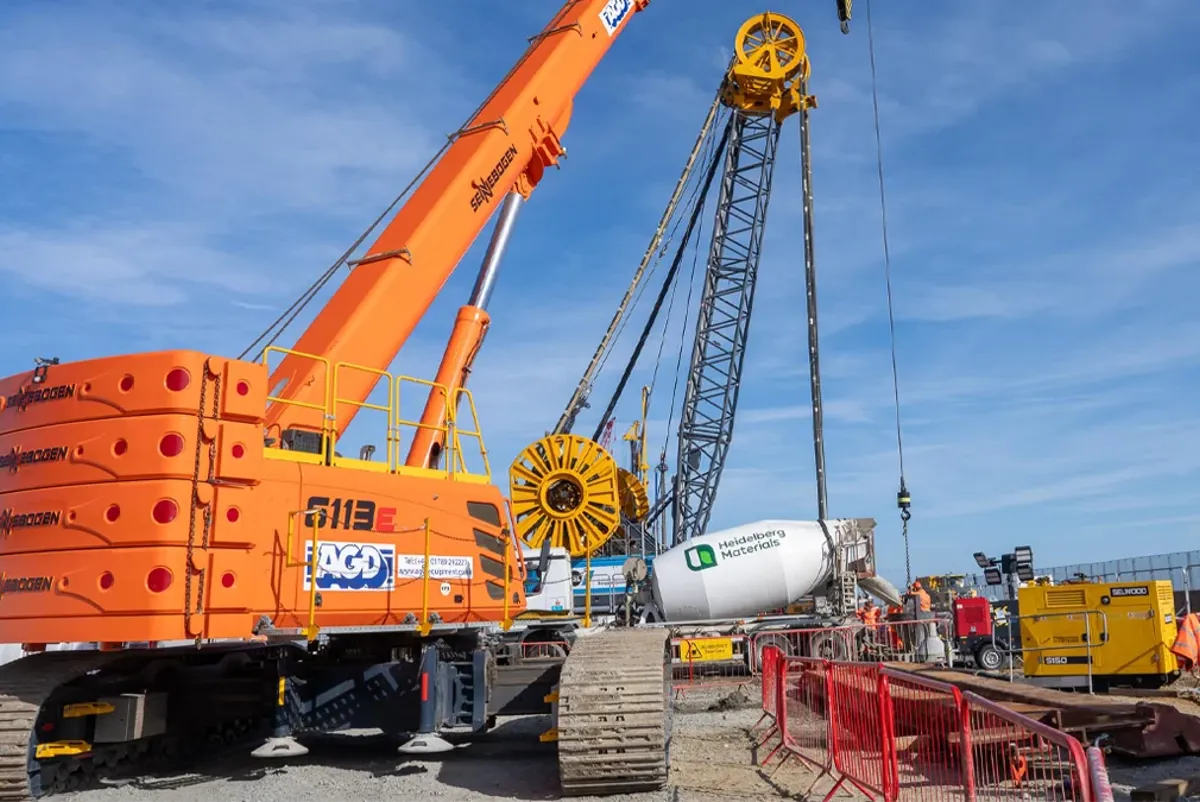
Heavy lifting equipment in action during early construction works at Sizewell C, supporting foundation and infrastructure development for the new nuclear power station. Image credit: Sizewell C
We undertook detailed ground movement and seismic assessments, including soil-structure interaction and structure-soil-structure interaction analyses. These were reviewed by Sizewell C and overseen by the Office for Nuclear Regulation. The Civil Works Alliance fully adopted the alternative scheme, and Arup continues to support the client team in assessing temporary works and earthworks sequencing.
By working collaboratively with Sizewell C and project partners, we developed a solution that simplified logistics, reduced material use and met all functional and performance requirements.
We sought Arup's assistance to help address some complex engineering challenges. The team demonstrated deep engineering expertise, a solution-focused mindset, and a highly collaborative approach.
Unlocking site intelligence through digital insight
Arup’s digital approach was central to unlocking efficiency and reducing risk on the Sizewell C project. The team developed a detailed 3D ground model to map the site’s complex geology, including soft deposits and paleo-channel features. This enabled targeted solutions across different zones and shifted the focus from generic excavation to precision engineering.
To streamline the modelling process, we used AutoPlax – an internal automation tool developed by Arup. This allowed engineers to run models in PLAXIS – a leading geotechnical analysis tool – which enabled us to adjust geometry and extract results automatically. This reduced manual effort and minimised the risk of errors, which was especially valuable given the scale and complexity of the site.
Together, these digital tools supported seismic and settlement assessments, helping to mitigate geotechnical risks and enabling client and regulator adoption of the alternative scheme.
Projects
Explore more energy projects

Generating momentum for Colombia’s offshore wind industry
Vientos Alisios offshore wind feasibility study, Colombia

Unlocking flexibility markets through data and digitalisation
Flexibility Markets Unlocked Programme, United Kingdom

Powering Scotland's future: how offshore wind farms will accelerate renewable energy
Caledonia Offshore Wind Farm, United Kingdom

Accelerating the development of global offshore wind infrastructure s
Offshore wind farms
Get in touch with us
If you'd like to speak to one of our energy experts about any of the issues raised on this page or a potential collaboration then please get in touch by completing the form.
