
Designing Western Sydney’s new airport metro railway
Sydney Metro - Western Sydney Airport, Stations, Systems, Trains, Operations and Maintenance (SSTOM)
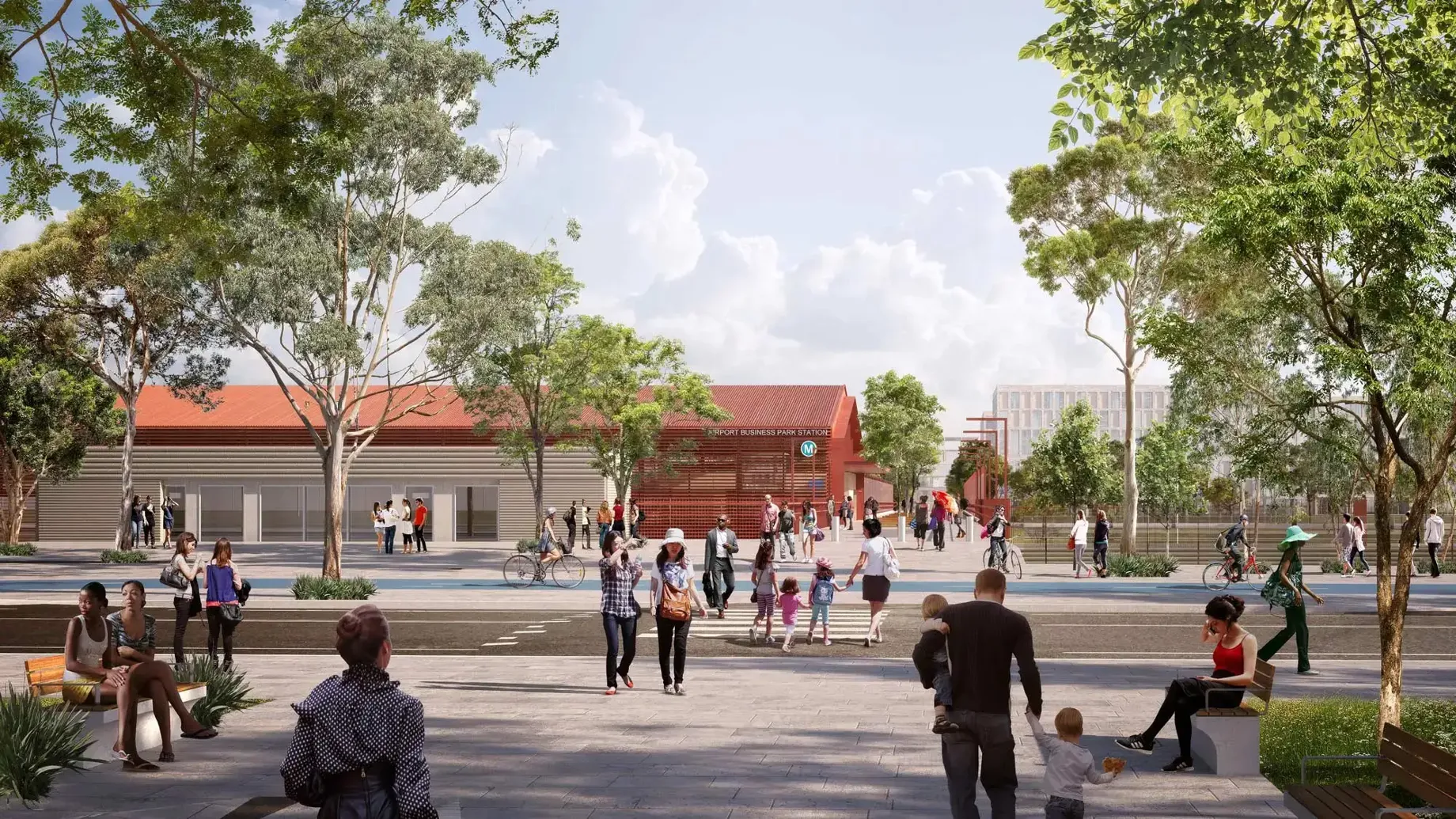
To prepare for the Western Sydney International (WSI) airport’s 2026 opening, Sydney Metro is delivering the Sydney Metro – Western Sydney Airport railway. This transformative metro line will provide safe, seamless travel for airport visitors and Western Sydney residents. With tight project deadlines, Sydney Metro required reliable partners to design the railway’s stations, systems, trains, operations and maintenance facilities.
We are partnering with Webuild, part of the Parklife Metro consortium, to lead the engineering design for six stations, 23 kilometres of rail track, overhead systems and a stabling facility for all rolling stock in a design joint venture with SMEC. To meet the ambitious timeline, we assembled a team of over 800 experts across 20 disciplines, working together from our offices in Sydney, Singapore, Melbourne, Perth, and London on one of Australia’s New South Wales’ largest public-private partnership (PPP) projects.
The Sydney Metro – Western Sydney International airport railway will provide low-carbon transport links for commuters travelling to the new Western Sydney Airport and the rapidly expanding region. It will provide significant economic benefits to the state connecting residential areas with job hubs including the new Bradfield Metro Station and travellers from the new airport to the rest of Sydney’s public transport system.
Global expertise creates a 24-hour engineering design team
We had a complex design programme, with a high volume of work and tight deadlines. To tackle these challenges, we took a global approach, with our Sydney team seamlessly collaborating with colleagues in Singapore, London, Brisbane, Melbourne and Perth.
We brought together our most skilled rail engineers from each location and implemented a 24-hour work cycle to maintain momentum. Each team had a dedicated Sydney project manager to drive precise design coordination, meeting Australian standards at every stage.
Our round-the-clock, coordinated approach allowed us to meet every project milestone, deliver work on time and uphold the highest quality standards. Through efficient collaboration, we overcame the project’s complexities and delivered quality results across multiple locations.
Ground monitoring reduces uncertainties with rare soil type
We encountered significant technical challenges when designing stations in Western Sydney’s rare clay-like soil – a first for this type of project. Constructing a 20-metre-deep station in such unpredictable material presented unique difficulties, with no previous examples or established practices to guide our approach.
To address these challenges, our team conducted continuous ground monitoring and design recalibrations to adapt designs as new data emerged. We had a dedicated team working to interpret live data and make timely, data-driven adjustments to the designs.
By using real-time insights and maintaining a flexible approach, we managed the complexities of this soil type effectively. This strategy allowed us to make steady progress despite the unique challenges of the material, laying a solid foundation for future projects in Western Sydney.
Naturally ventilated stations keep comfort high and energy use low
Sydney Metro set bold sustainability targets for our team, including achieving a 5-star Green Star buildings rating across all facilities, fully electric designs and reduced embodied carbon. Simultaneously, we needed to prioritise delivering a safe, comfortable, and enjoyable passenger experience both inside the stations and in the journey to surrounding areas. Our key challenges included minimising energy use, mitigating the urban heat island effect, and ensuring passenger safety and comfort, particularly at night.
To address these challenges, we designed all stations and the stabling yard with natural ventilation and augmented comfort conditioning to reduce energy consumption while maintaining a comfortable temperature. Advanced airflow modelling techniques, such as computational fluid dynamics (CFD) and residual flow analysis, helped us balance airflows and account for train-induced air movements.
Outside the stations, the urban heat island effect was controlled by planting trees, adding canopies, and using reflective surfaces to create shaded, cooler areas. Thoughtful lighting and wayfinding elements ensure passengers feel safe and comfortable at night, providing a seamless and secure journey from station to surroundings. Our design also incorporates long-term adaptation strategies to address future climate risks, ensuring resilience and maintaining comfort for years to come.
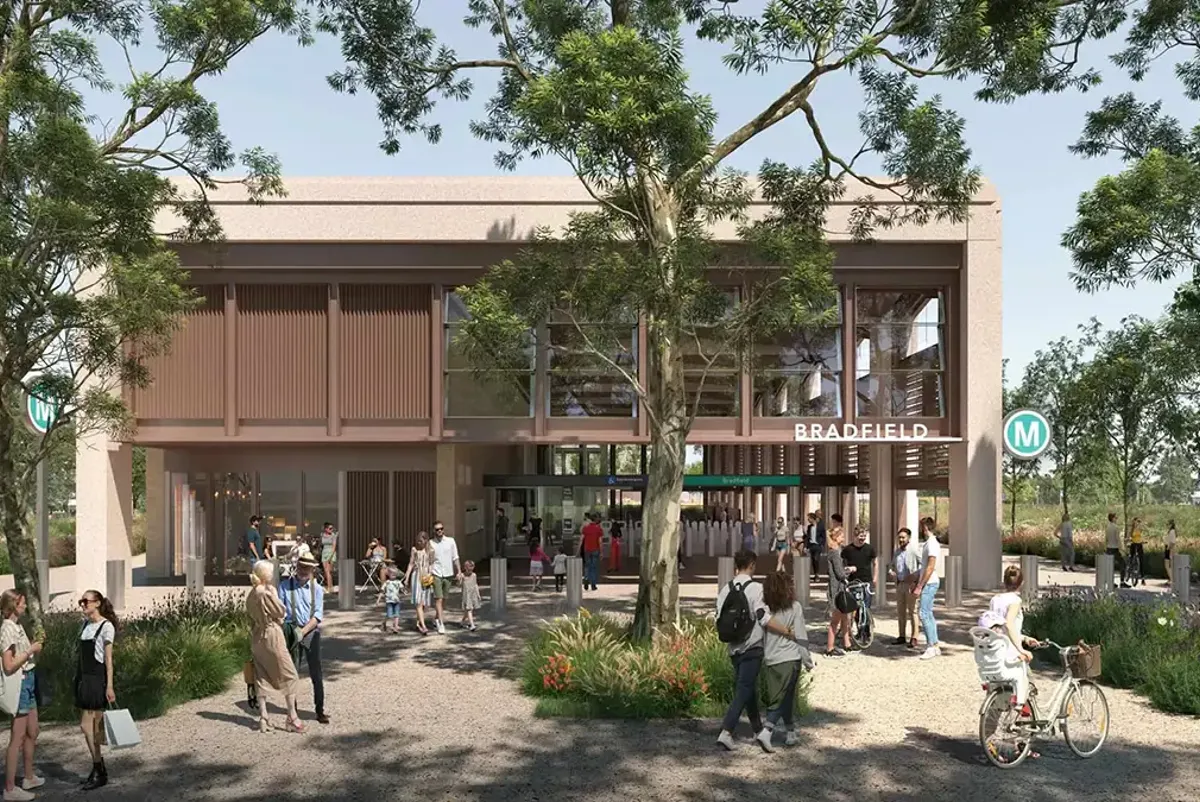
Artist illustration of Bradfield Metro Station © Design by Hassell, Imagery by Doug + Wolf
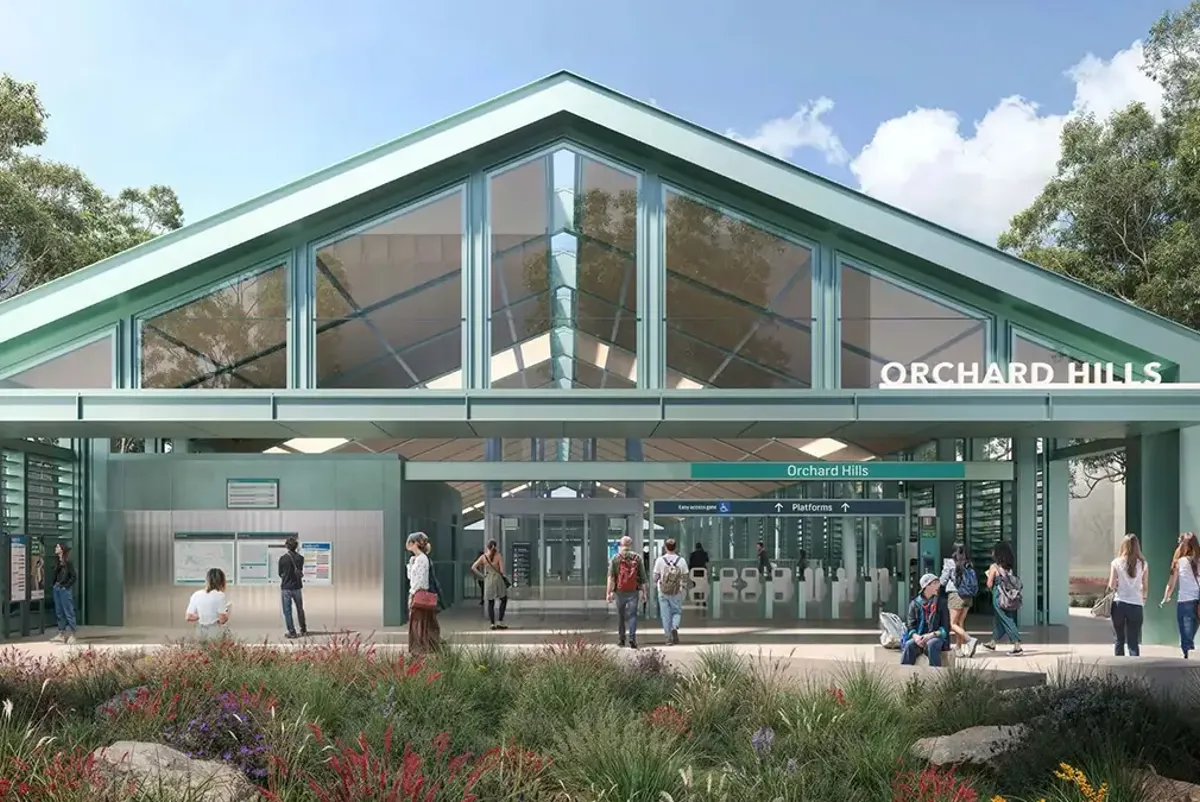
Artist illustration of Orchard Hills Metro Station © Design by Hassell, Imagery by Doug + Wolf
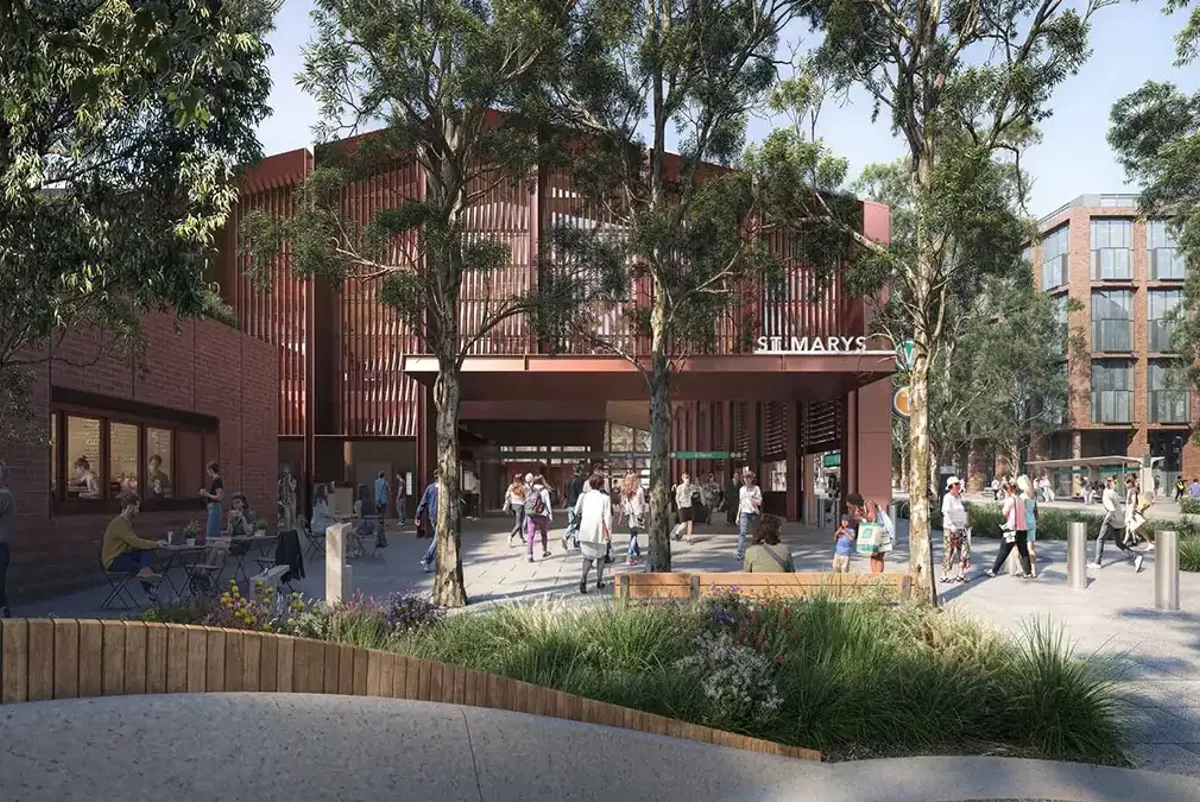
Artist illustration of St Marys Metro Station © Design by Hassell, Imagery by Doug + Wolf
SMEC | Hassell
Projects
Explore more rail projects:

Designing a safe, sustainable tramway for Colombia's second largest city
80th Avenue Medellín Tramway, Colombia

Shaping a resilient rail future for Singapore
Singapore Rail Test Center, Singapore

Accelerating the redevelopment of stations across India
Design Handbook for Modular Railway Stations, India

Establishing the alignment for a high-speed train between Dallas and Houston
Texas Central High-Speed Train, USA
Get in touch with us
If you'd like to speak to one of our rail experts about any of the issues raised on this page or a potential collaboration then please get in touch by completing the form.
