
Enhancing an iconic New York City institution on the Museum Mile
The Frick Collection
Having hosted visitors from around the world for nearly ninety years, The Frick Collection sought to renovate and enhance their facilities with the goal of providing refreshed spaces and experiences while preserving their most beloved characteristics and rich history.
To support the creation of a new underground auditorium for chamber music, speech, and art-related film and media, Arup provided acoustics, audiovisual (AV), theatre consulting, and production lighting design. Our team utilized our renowned SoundLab to acoustically optimize the new design while simultaneously equipping it to handle multiple purposes and functions.
Moving above grade, Arup also provided facade engineering and building physics consulting to develop new facades and skylights that support the aesthetic of the facilities while optimizing their function as well as the visitor experience.
Building on The Frick’s Collection’s vibrant past without overwriting it required both new, innovative techniques in addition to diligent and consistent attention throughout each stage of the development process. Our team worked closely with the client and project collaborators to tailor our multidisciplinary expertise to the local context and needs of one of the most visited cultural institutions in New York City.
Designing a theatre that honors tradition and optimal acoustic environments
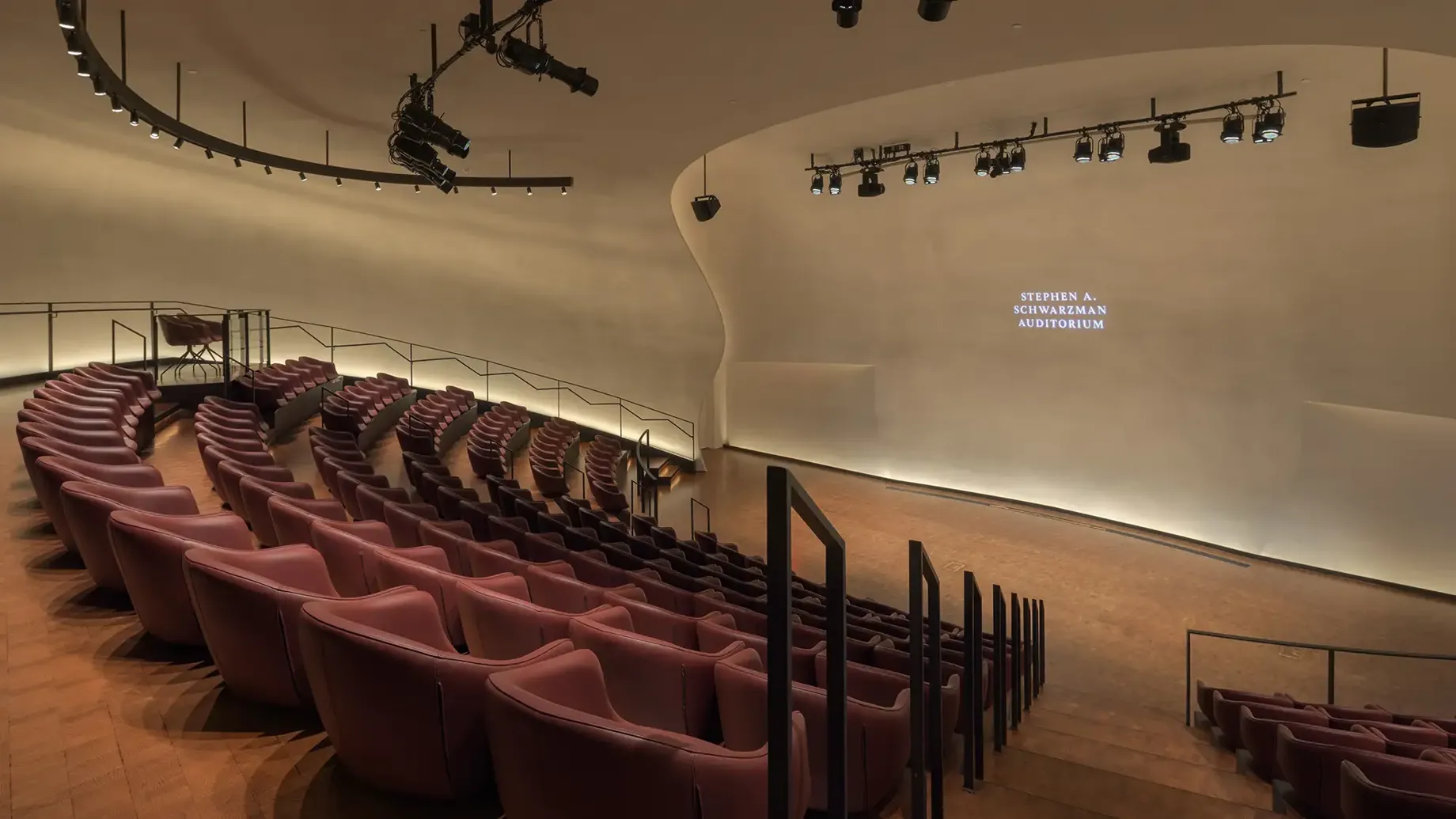
Our team was tasked with designing a new underground performance hall. The new Stephen A. Schwarzman Auditorium features a dramatic use of curvature, which draws on the designs of renowned and historic music salons, music spaces in the great palaces of Europe, and recital halls of the 17th, 18th, and 19th centuries.
With Arup’s SoundLab, our experts utilized a full 3D virtual model to optimize the shape, volume, and materials of the space to achieve impressive sound for unamplified music and speech. Working amidst spatial constraints, we presented a range of creative concepts to develop an original orientation and geometry that would fully capture the space’s potential to present, record, and livestream chamber music, speech, and art-related film and media.
Furthermore, we designed a seating arrangement with optimal sightlines throughout, comprehensive production and stage lighting design for all event types, and assistive listening capabilities integrated into the spaces.
Our team also tailored the acoustic environments in the museum’s new building to complement the art and the existing building. We upgraded the AV infrastructure and systems to enable building-wide connectivity and connection of multiple spaces to support conferences, livestreaming, and other large programming as needed.
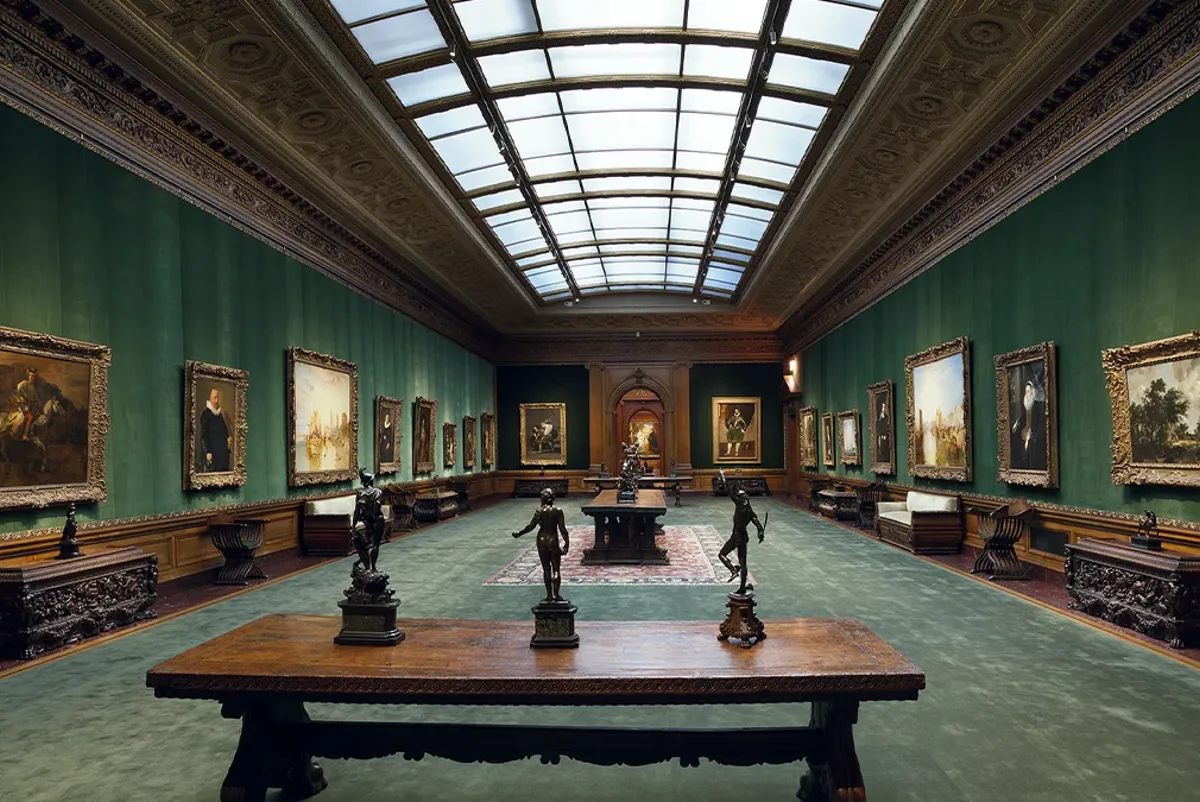
The West Gallery at The Frick Collection. Image © Joseph Coscia Jr.
Engineering a modern facade with a historic look
Our building envelope consultants provided their expertise to develop new limestone facades for the Frick Art Research Library (FARL), the music room expansions, and the south bridge. Our team also developed new glazed facades for the reception hall expansion and a new glazed link between FARL and the music building.
Furthermore, we designed new skylights across the galleries and Garden Court, featuring a new system and glazing design that manages how much daylight gets into the gallery spaces. The glass design diffuses daylight and blocks ultraviolet radiation both to optimize visitor experience and viewing while meeting conservation criteria for the artwork. The skylight system and glazing also improve the thermal and structural performance of the building envelope, conserving energy while providing condensation and moisture protection for the galleries.
To preserve a classic and consistent look amidst all these changes, our team incorporated bronze punch windows for the new building expansions, mimicking the masonry of the adjacent mansion building. We detailed the window walls with bronze features that will age gracefully over time. Additionally, the venetian blinds along the exterior can be controlled remotely and deployed to provide shade for visitors. Our experts also built in resilience and flexibility into the design, ensuring the blinds can be retracted behind stone spandrels during high wind events and removed for maintenance.
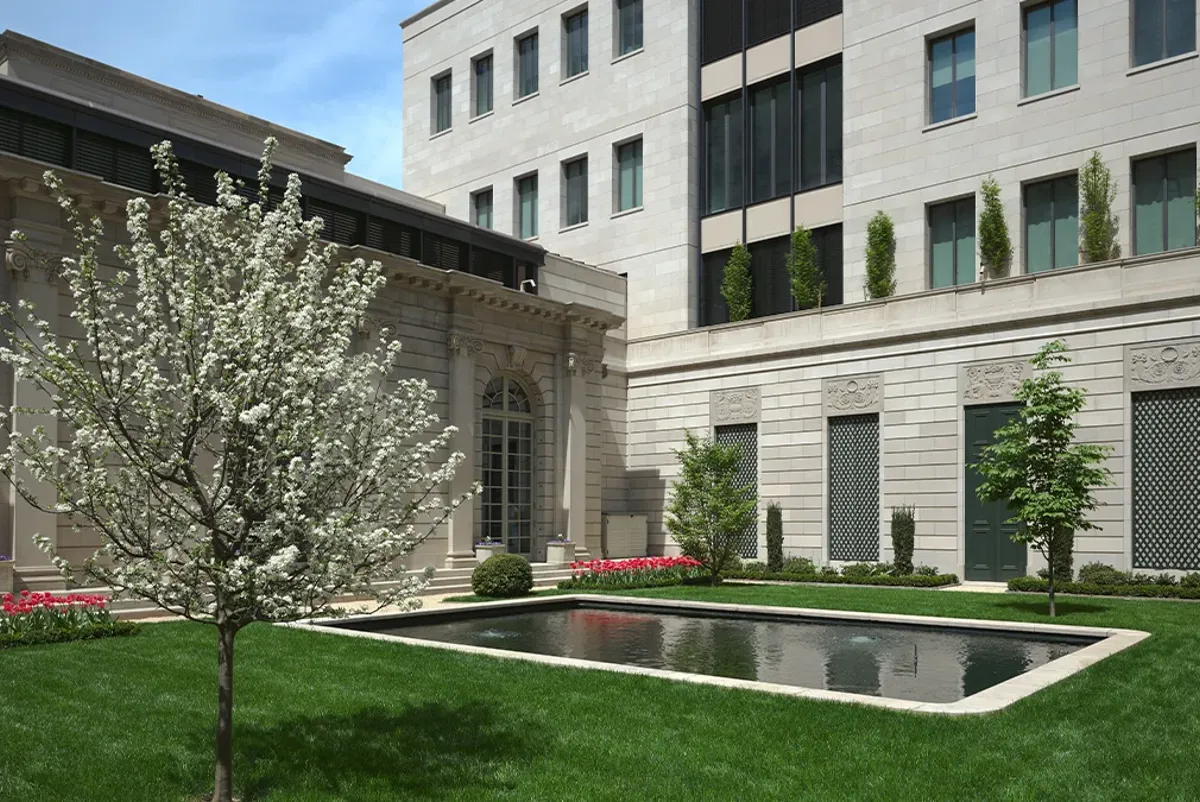
The 70th Street Garden at The Frick Collection. Image © Joseph Coscia Jr.
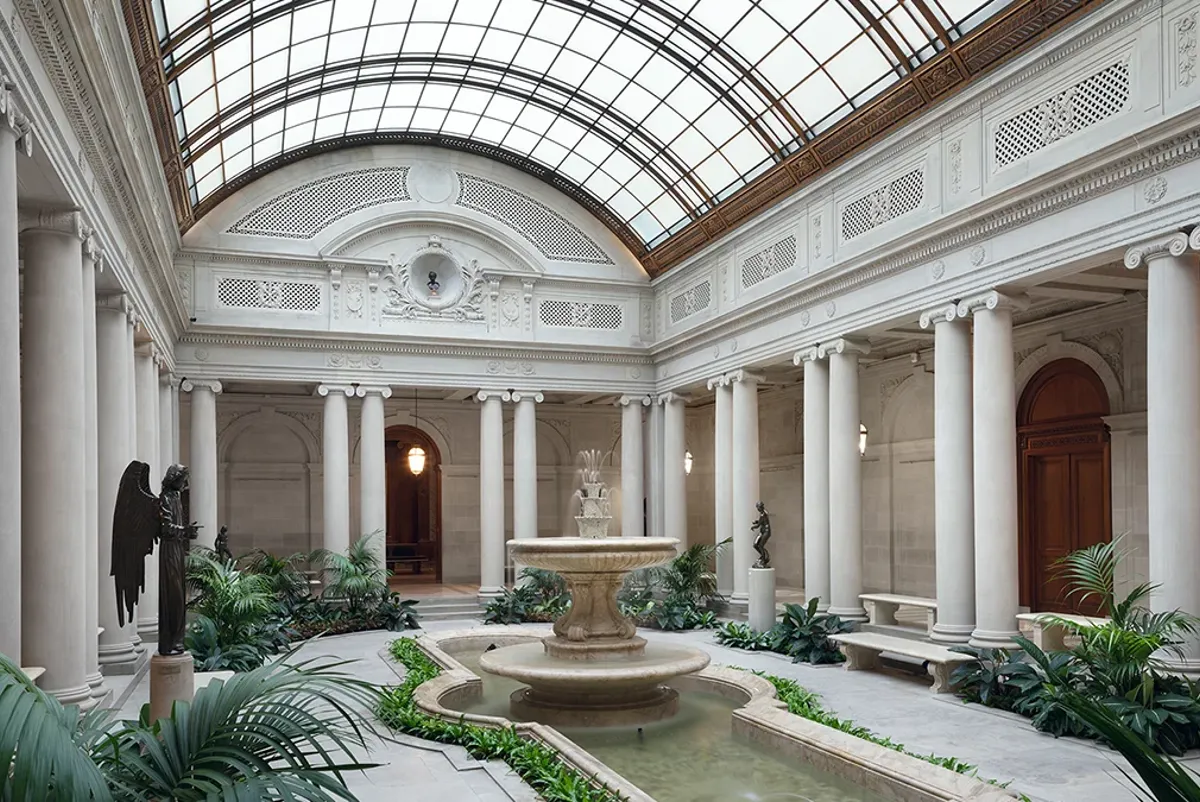
The Garden Court at The Frick Collection. Image © Joseph Coscia Jr.
Header image © Joseph Coscia Jr.
Selldorf Architects
Projects
Explore more arts and culture projects

Creating a new paradigm in live entertainment
Sphere, USA

Delivering El Paso’s first purpose-built children’s museum
La Nube STEAM Discovery Center, USA
Supporting the enduring legacy and regeneration of a valued art center
Storm King Art Center Capital Project, USA

Designing an addition to an iconic museum through multidisciplinary innovation and digital-first approaches
The Richard Gilder Center at the American Museum of Natural History, USA
Get in touch with us
If you'd like to speak to one of our arts and culture experts then please get in touch by completing the form.
