
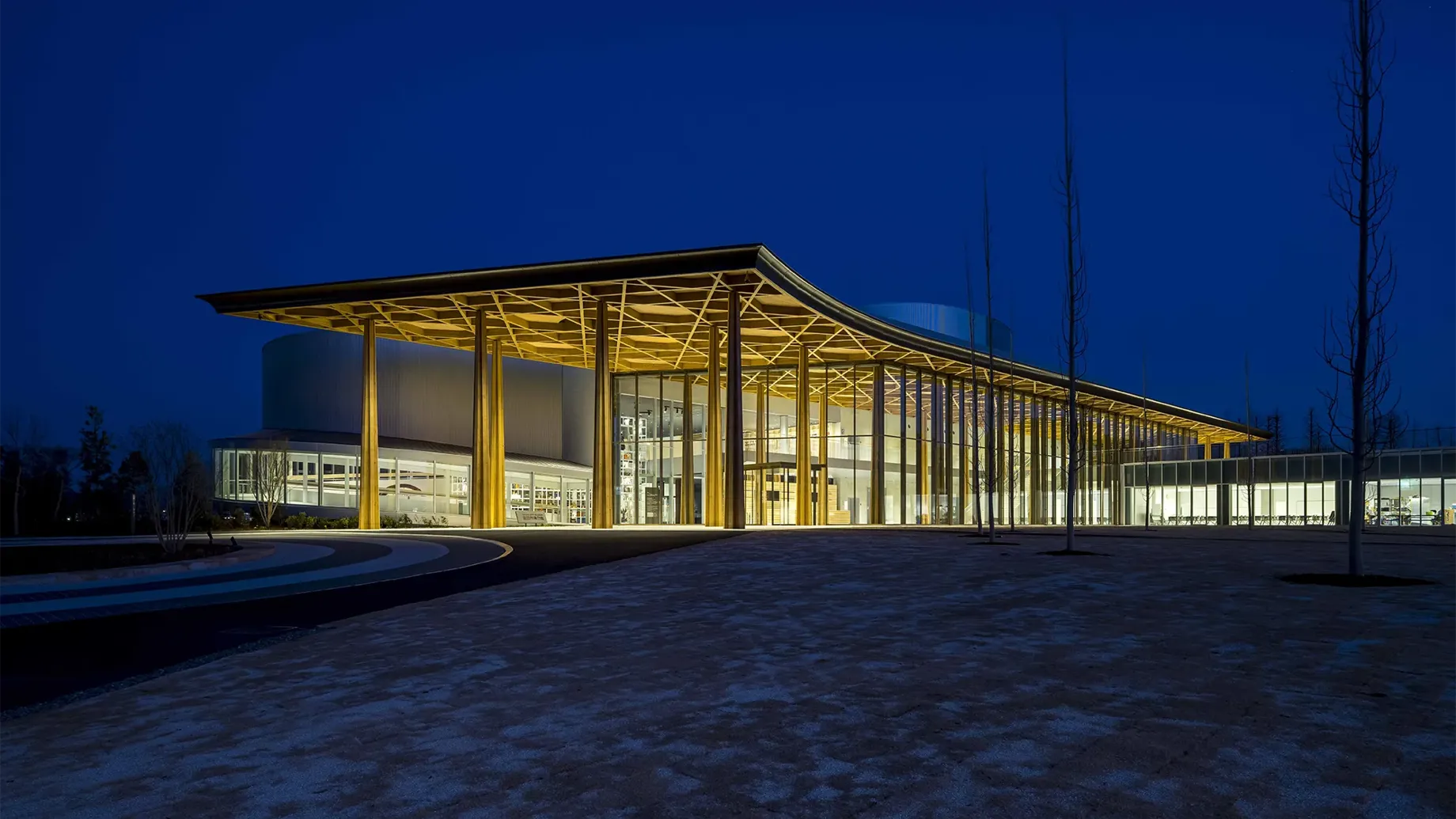
Designed by renowned architect Shigeru Ban, the Toyota City Museum is a new timber landmark in Aichi Prefecture, Japan. Located adjacent to the Toyota Municipal Museum of Art, the museum occupies a 40,000m² site with a total floor area of 7,890m². It features a curvilinear façade and timber-rich interiors that contrast with its modernist neighbour, while integrating seamlessly through shared landscape and visitor circulation strategies that enable natural movement between the two facilities.
We provided structural and building services engineering for the museum, supporting the delivery of a sustainable and resilient cultural destination. In 2024, the project became Japan’s first newly constructed museum and art facility to achieve ZEB Ready certification through integrated energy-efficient systems, delivering a reduction of more than 50% in energy consumption. The design incorporates high seismic resilience, locally sourced timber, and disaster-response infrastructure, creating a cohesive and environmentally responsible cultural campus.
Designed to form a cohesive landscape with the adjacent art museum, the Toyota City Museum represents a 21st-century architectural philosophy through its nature-integrated design and extensive use of timber, marking a clear departure from 20th-century modernism.
Beyond its role as a sustainable cultural facility, the museum also functions as a community disaster response hub, combining environmental responsibility, cultural value, and regional safety in a single, forward-looking vision.
Realising a sustainable cultural landmark
At its opening in 2024, the Toyota City Museum became the first newly constructed museum and art facility in Japan to achieve ZEB Ready certification. This milestone was achieved through the integration of a wide range of energy-saving technologies, including high-efficiency thermal systems and advanced lighting control systems, resulting in an energy consumption reduction of more than 50%.
In line with Toyota City’s environmental goals, the project made extensive use of locally sourced timber to reduce environmental impact. This approach significantly lowered CO₂ emissions while supporting a design that harmonises with nature. The museum’s sustainable architecture integrates seamlessly with the surrounding environment, community and the adjacent Toyota Municipal Museum of Art, forming a cohesive cultural campus.
Continuity between the two institutions is further reinforced through the landscape design by Peter Walker, who also designed the art museum’s grounds, strengthening visual, spatial, and experiential connections across the site.
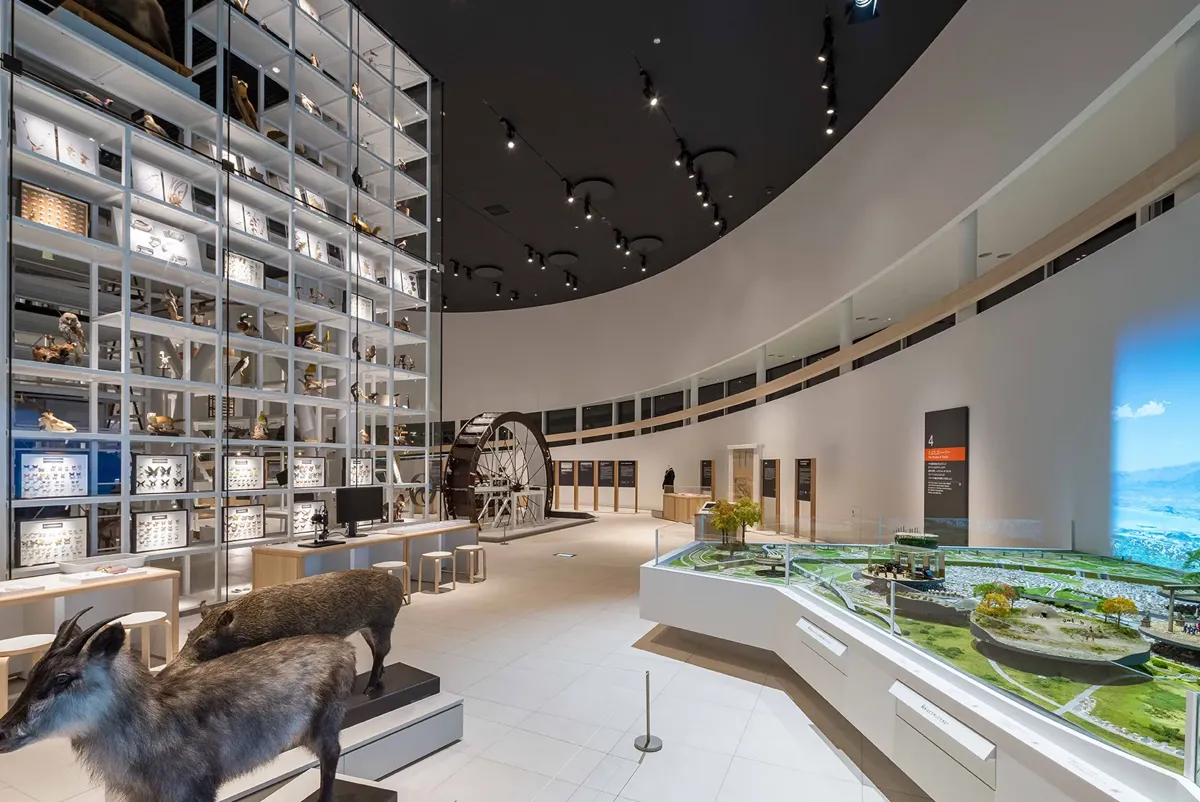
The permanent exhibition space, constructed with a steel frame, features a spiral ramp and a central, iconic display shelf. © Hiroyuki Hirai
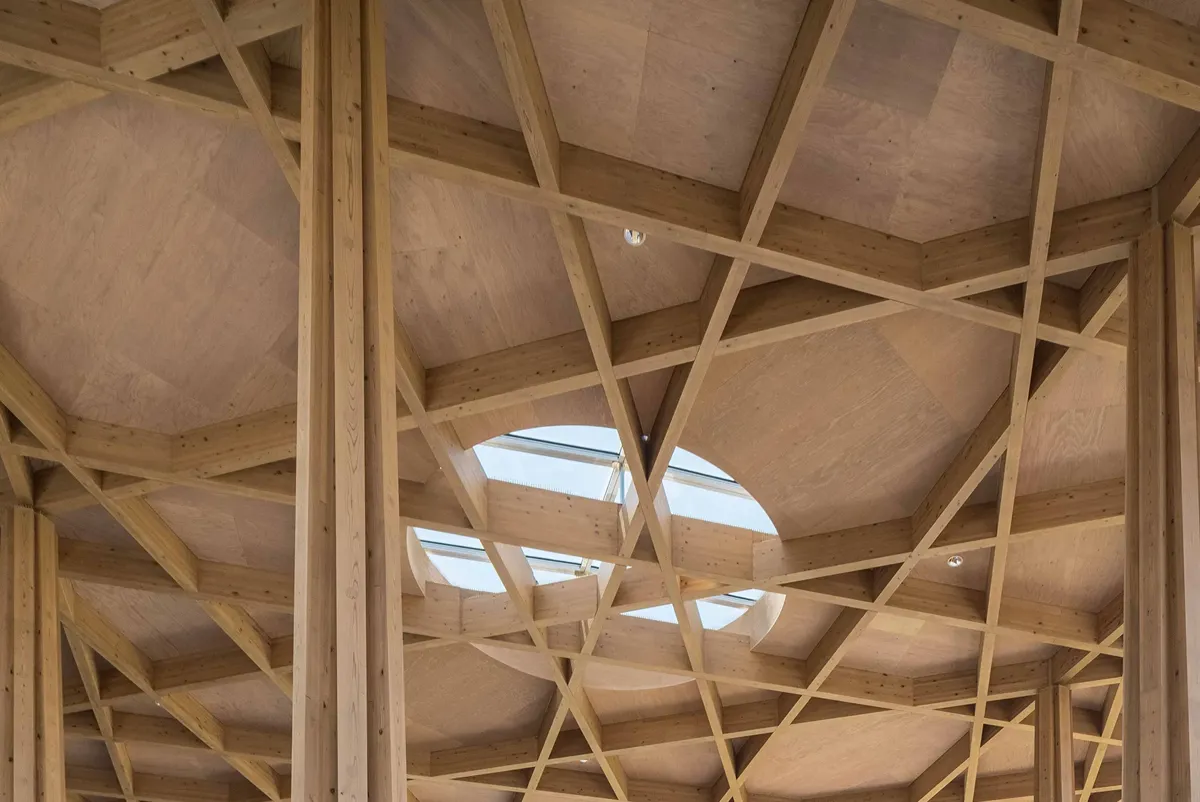
In line with Toyota City’s environmental goals, use of locally sourced timber to reduce environmental impact. © Hiroyuki Hirai
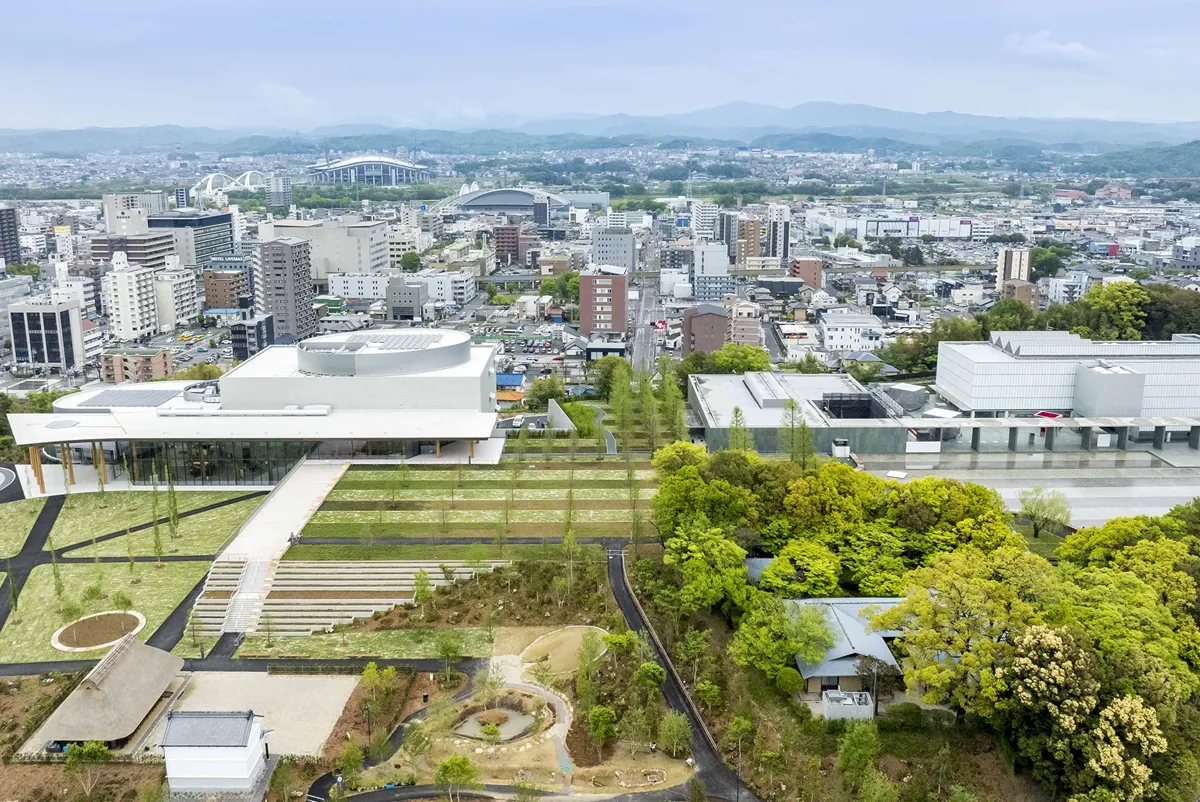
Designed to form a cohesive landscape with the adjacent art museum. © Hiroyuki Hirai
Robust seismic structure
The Toyota City Museum comprises three distinct structures unified beneath a signature timber roof that symbolises the city’s emblem. These include a timber-framed volume housing the entrance and lobby; a reinforced concrete (RC) structure accommodating permanent and temporary exhibition galleries, storage, administrative areas, workshop spaces and seminar rooms; and a steel-framed permanent exhibition hall featuring a spiral ramp and a central, iconic display tower.
These spaces are connected by an atrium known as the ‘Ennichi Space’ in Japanese culture, constructed using locally sourced glulam (glued laminated timber). To achieve a 9m span, paired beams with a depth of 600mm were installed between columns, creating an open and welcoming central space.
The structural system was carefully designed so that columns carry only vertical loads, while seismic forces are concentrated within the RC structure. This approach minimises the need for bracing, allowing the architectural form and spatial intent to be fully realised. The result is a seamlessly integrated, high-performance facility that combines architectural expression with seismic resilience, safeguarding the museum’s valuable collections.
Built-in resilience and disaster response capability
The Toyota City Museum was designed not only as a cultural destination but also a resilient, sustainable facility capable of supporting the community in times of crisis.
To enable operation as a disaster response hub, the museum is equipped with a 60kW solar power generation system, battery storage and an emergency generator. Together, these systems provide reliable backup power for critical functions, including essential HVAC systems and key exhibition areas.
In the event of a disaster, a dedicated room within the museum, supported by an independent power supply, can be activated as Toyota City’s emergency response headquarters. This capability ensures continuity of operations while reinforcing the museum’s role as a centre for community resilience and public safety.
Top image: © Hiroyuki Hirai
Projects
Explore more arts and culture projects

Creating a new paradigm in live entertainment
Sphere, USA

Delivering El Paso’s first purpose-built children’s museum
La Nube STEAM Discovery Center, USA

Enhancing an iconic New York City institution on the Museum Mile
The Frick Collection, USA
Supporting the enduring legacy and regeneration of a valued art center
Storm King Art Center Capital Project, USA
Get in touch with us
If you'd like to speak to one of our arts and culture experts then please get in touch by completing the form.
