
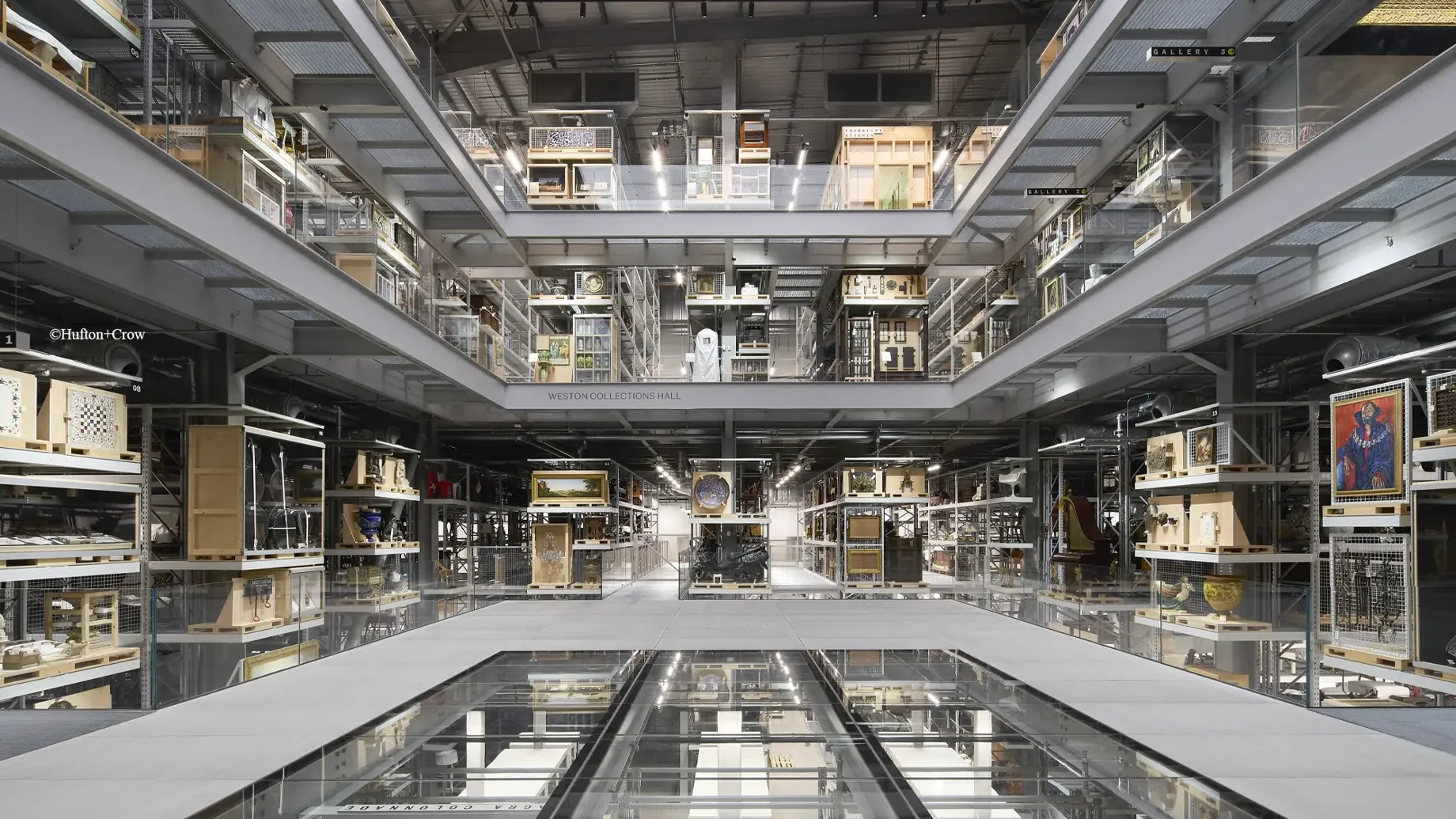
How do you design a home to display a world-famous collection of global creativity? That was the challenge set by the V&A, and Arup was there from the outset, working alongside the museum team and architects Diller Scofidio + Renfro, supported by Austin-Smith:Lord.
From early concept through to delivery, we helped realise the museum’s vision for a radically different, accessible and immersive visitor experience. This retrofit of an existing building balances conservation and environmental performance, enabling long-term climate resilience while safeguarding the collection.
The result is V&A East Storehouse in Stratford, London, a reimagining of museum storage that turns tradition on its head. On average, less than 5% of a museum’s collection is on display; here, more than half a million creative works are brought into public view. Visitors are invited behind the scenes of a working museum to explore how and why objects are collected, preserved and interpreted revealing powerful stories about global creativity and culture.
Retrofitting space for a brand-new museum experience
Spanning four levels, and bigger than 30 basketball courts, V&A East Storehouse showcases a rich array of objects. The Storehouse team cares for everything from the tiny pins used to secure a 17th century ruff to a 12-tonne section of the facade from the Robin Hood Gardens housing estate. Designing a building that would enable visitors to see and engage with such a huge variety of works demanded a meticulously detailed approach.
Our multidisciplinary engineering and design team managed the addition of new storeys to house display areas, research spaces and conservation studios, while minimising structural interventions overall. We achieved this by carefully assessing the existing building’s capacity and using this to guide the overall space planning. This enabled us to create more levels of storage and accommodation efficiently, adding new floors and strengthening existing ones.
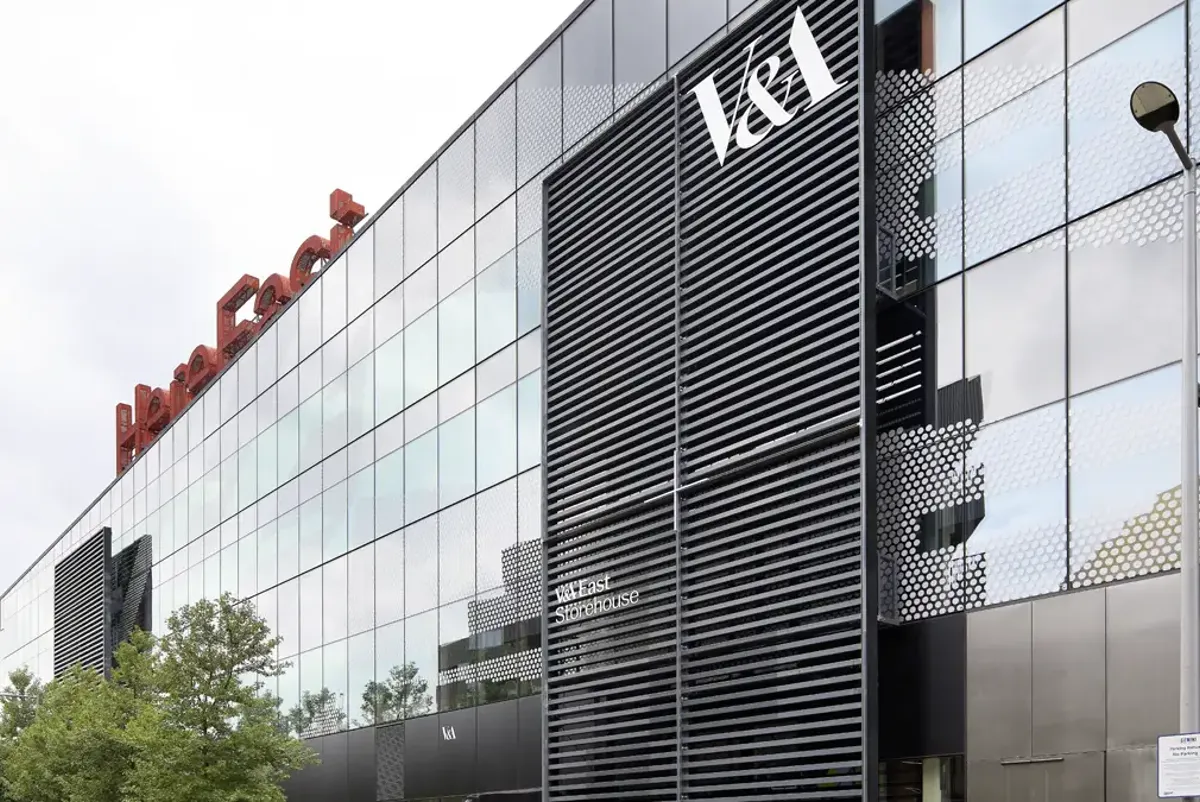
This retrofit of the V&A East Storehouse in London balances conservation and environmental performance, enabling long-term climate resilience while safeguarding the collection. © Hufton+Crow
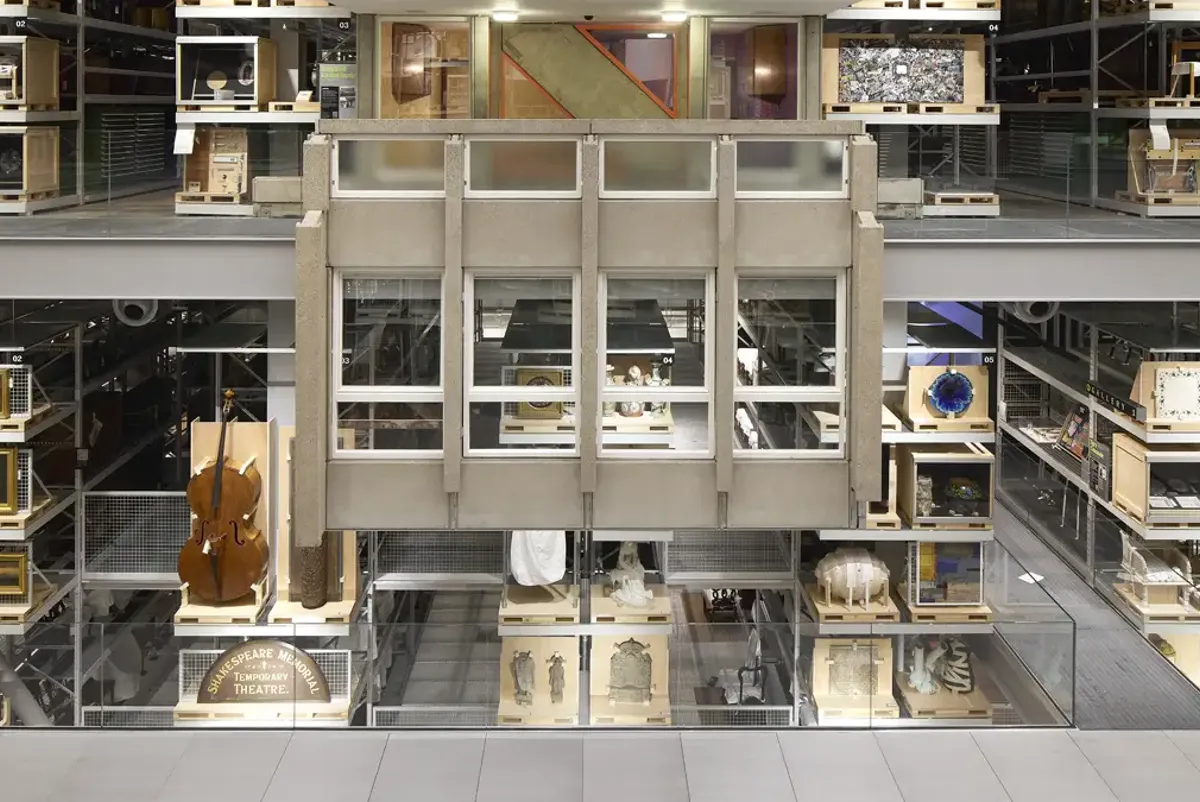
Spanning four levels, the V&A East Storehouse showcases a rich array of objects with everything from the tiny pins used to secure a 17th century ruff to a 12-tonne section of the facade from the Robin Hood Gardens housing estate. © Hufton+Crow
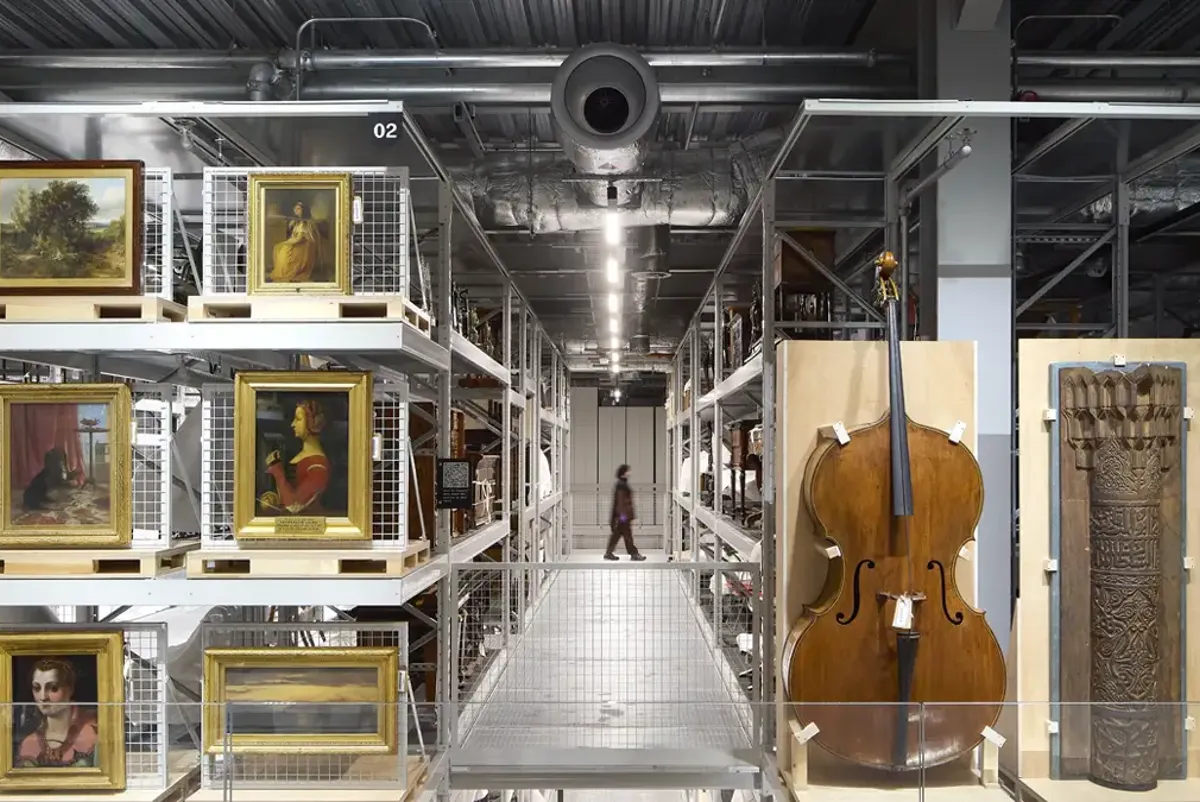
Arup's multidisciplinary engineering and design team managed the addition of new storeys to house display areas, research spaces and conservation studios, while minimising structural interventions overall. © Hufton+Crow
Engineering the optimum environment for people and objects
Our building services design uses bespoke environmental solutions for each typology of space, for visitors and artefacts alike. In areas used only for storage, a very low energy air recirculation system keeps energy consumption to a minimum. Elsewhere, we needed to strike the right balance between optimum environmental conditions for the objects, energy efficiency and maintaining indoor air quality for visitors. To achieve this, our specialists incorporated an extensive three-dimensional array of humidity sensors that control the environment throughout the space.
We combined this with a sophisticated relative monitoring algorithm that controls the rate of change in the temperature and humidity. Our team worked closely with the V&A’s curators and conservation team to agree wider temperature and relative humidity ranges, while safeguarding the artefacts by taking a strict approach to the rate of change.
Through V&A East Storehouse, visitors will be encouraged to immerse themselves in the magical behind-the-scenes world of museums and empowered to make their own journeys through the V&A’s global collections. Our world-first Order an Object experience opens up the V&A’s collections to everyone on their own terms, and on a scale never possible before. We hope this will shift the dial in creating more transparent and personalised experiences, and for everyone to find their own inspiration.
With many objects made from materials such as fabric, paper or wood, integrating the fire strategy into our building design was key. We carefully assessed the different ways this complex and unusual building will be used both day-to-day and for special events. Tailoring their approach specifically to V&A East Storehouse, our fire engineers focused on access, visibility and protection. They included specially designed lifts to evacuate disabled visitors as well as lifts suitable for firefighters. We also designed firefighting shafts to provide water and ensured good lines of sight throughout the space so that a fire would be seen as early as possible. At every stage of the design, we consulted stakeholders, including the London Fire Brigade, to develop a successful fire strategy.
Our flexible and energy-efficient lighting scheme provides high-quality, adaptable lighting for activities such as conservation work, and to enhance the visitor experience. To help guide visitors around the Storehouse – from the front desk, through the corridors and into the large central collection hall – our lighting design uses different layers of light to support the architecture and highlight areas of focus before fading out in the deeper spaces. To protect sensitive artefacts, we incorporated intelligent, reactive lighting, ensuring light levels are higher only where this is needed – which also reduces energy use and carbon emissions.
Acoustics affect the quality of the environment for staff and visitors, so our acoustic design controls noise and reverberation within this cavernous space, despite the high ceilings. Special acoustic finishes were added in areas where speakers need to be heard, and these make the environment as comfortable as possible for visitors.
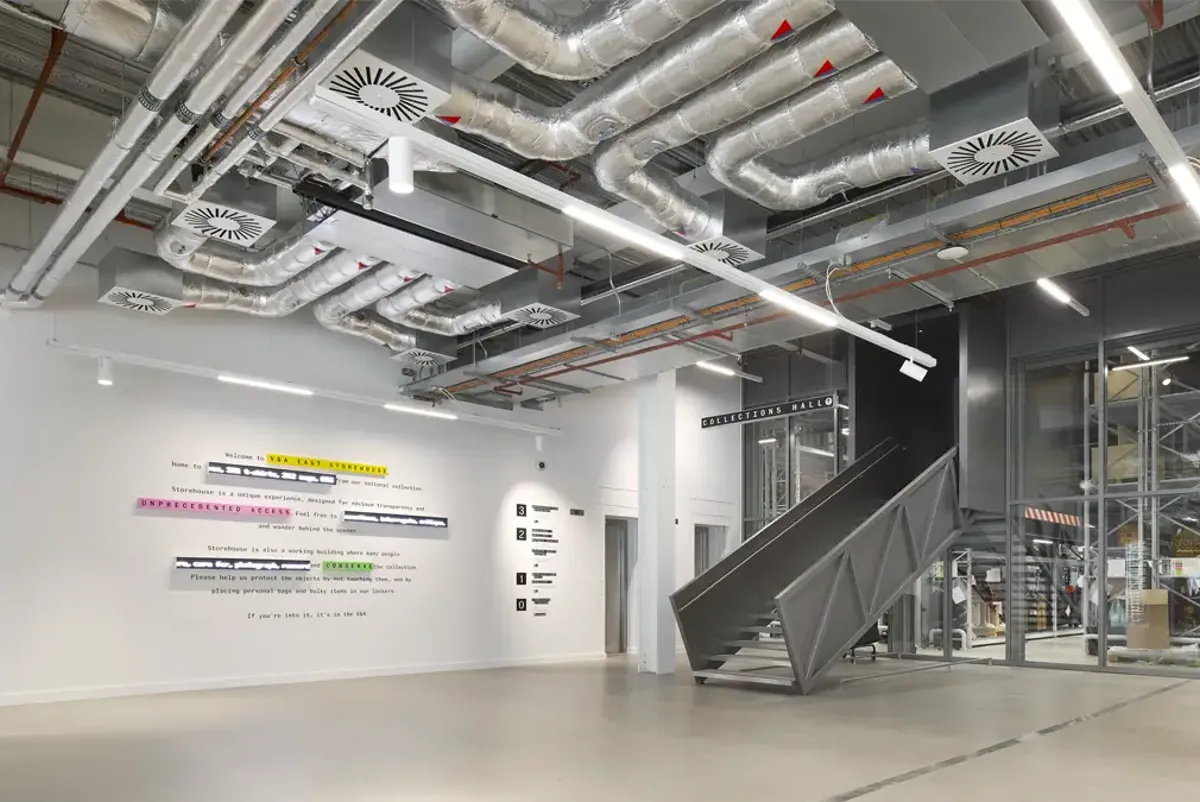
The Collection Hall at V&A East Storehouse invites visitors behind the scenes to explore the V&A’s global collections on their own terms – inspiration through a world-first, personalised museum experience. © Hufton+Crow
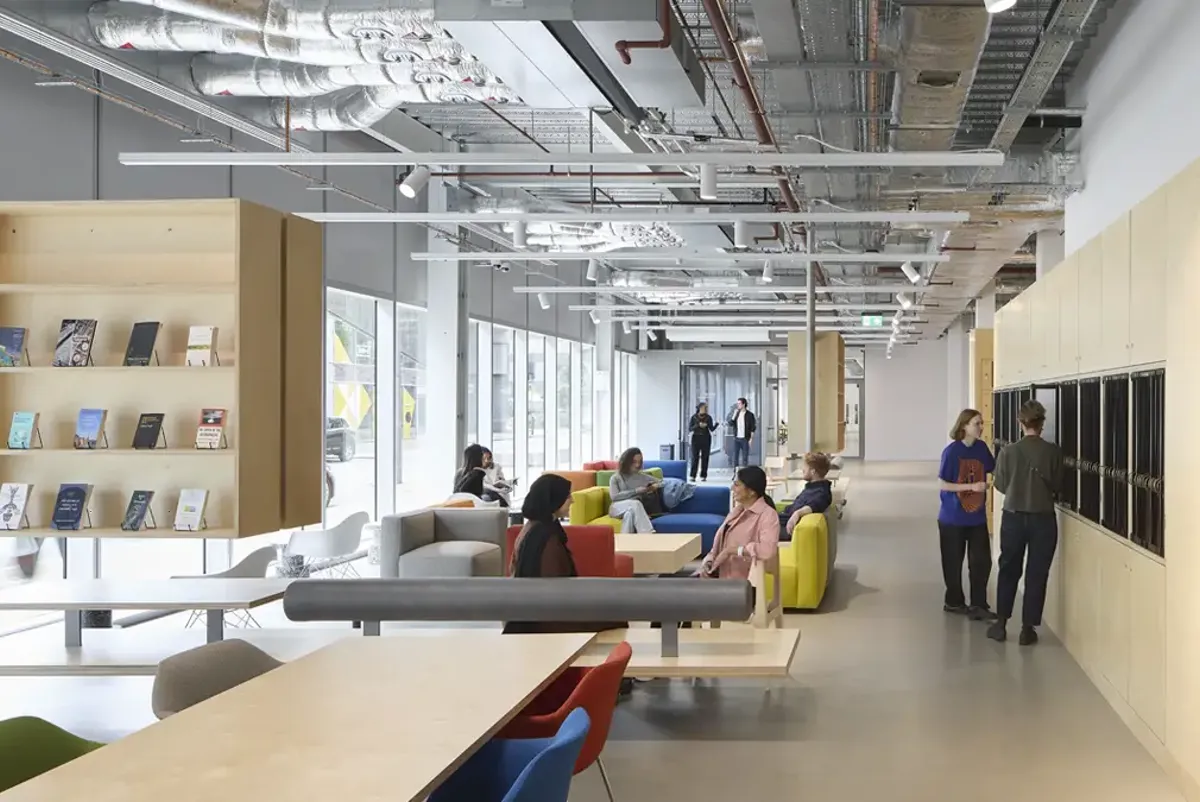
We invested time in listening to curators, conservators, archivists, technical services, and the wider client team to understand how the building needed to work for its staff as well as visitors. © Hufton+Crow
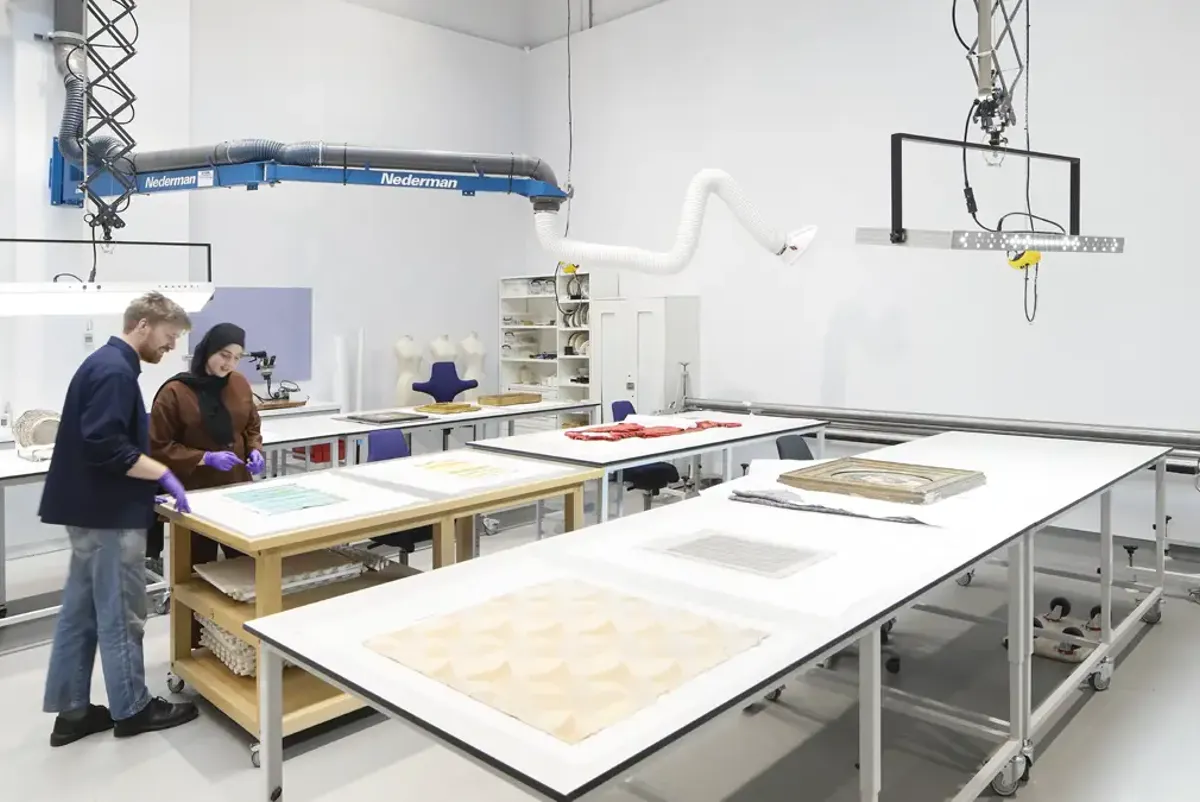
Our team’s deep experience of the sector enabled us to achieve the client and architect’s vision for a building that pushes the boundaries of museum archive and storage. © Hufton+Crow
An integrated design informed by arts and culture expertise
Throughout the project we drew on our understanding of museums and the arts and culture sector, as well as our long-standing relationship with the V&A, which includes V&A South Kensington’s Exhibition Road Courtyard and Medieval and Renaissance Galleries. We invested time in listening to curators, conservators, archivists, technical services, and the wider client team to understand how the building needed to work for its staff as well as visitors.
Our team’s deep experience of the sector enabled us to achieve the client and architect’s vision for a building that pushes the boundaries of museum archive and storage. The result is a constantly evolving hive of activity, where no two visits will be the same.
Diller Scofidio + Renfro / Austin-Smith:Lord
Projects
Explore more arts and culture projects

Creating a new paradigm in live entertainment
Sphere, USA

Delivering El Paso’s first purpose-built children’s museum
La Nube STEAM Discovery Center, USA

Enhancing an iconic New York City institution on the Museum Mile
The Frick Collection, USA
Supporting the enduring legacy and regeneration of a valued art center
Storm King Art Center Capital Project, USA
Get in touch with us
If you'd like to speak to one of our arts and culture experts then please get in touch by completing the form.
