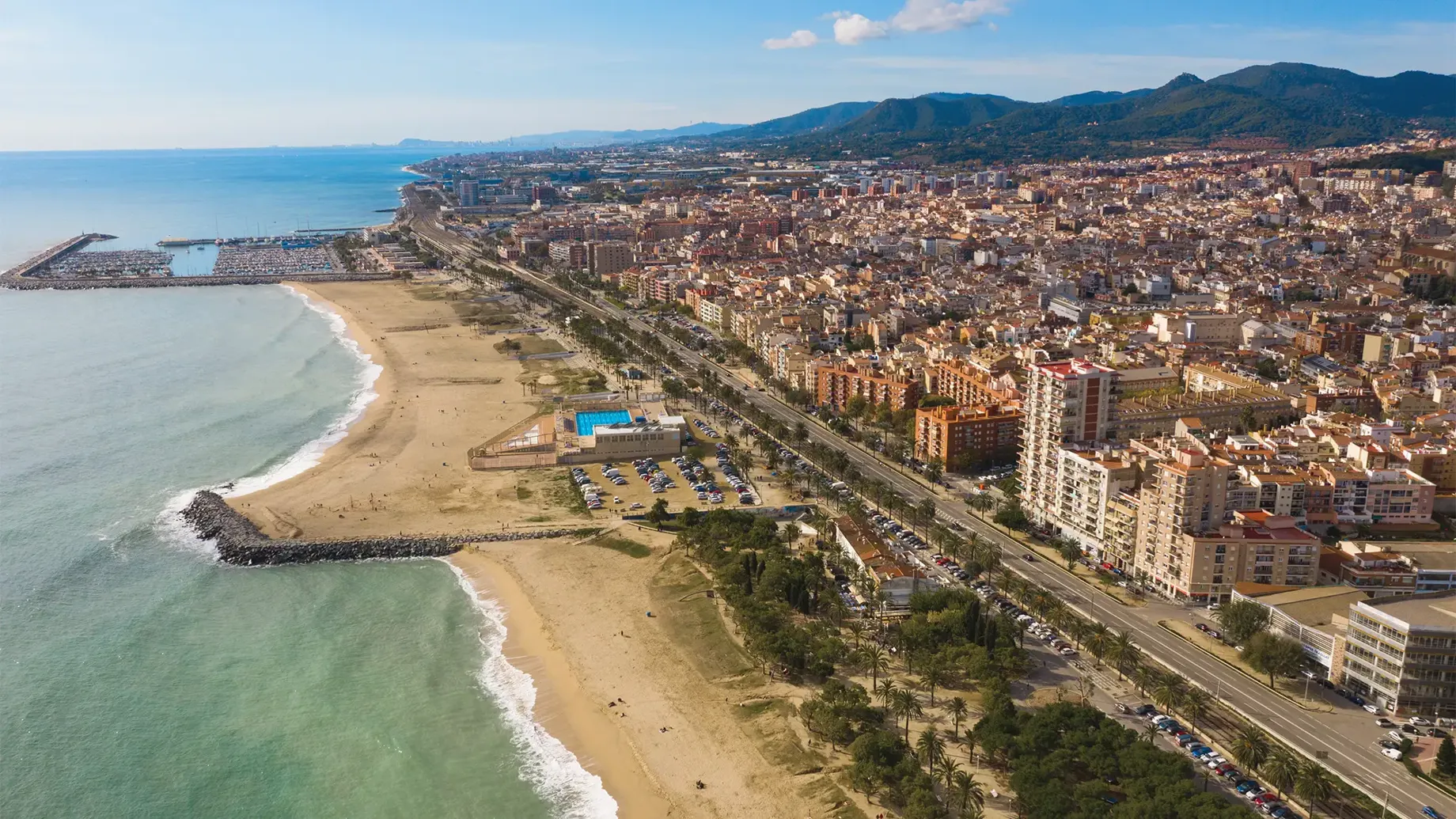
Mataró, a coastal city in Spain, took decisive steps to modernise and digitalise its sewerage system in response to the updated Public Hydraulic Domain Regulations. This initiative aligns with broader urban sustainability goals by integrating advanced technologies and climate resilience measures to address the growing risks of droughts and floods.
Arup led the technical development of a solution to create a smarter, data-driven water management system for Aigües de Mataró, the public water utility of the city, through detailed analysis of the sewerage system, a sensing solution, 3D scanning, and a measurement strategy.
Urban sustainability requires efficient resource management – particularly water use, reuse, and discharge to create more resilient and environmentally responsible cities, while also protecting urban ecosystems.
Smart sensing for better wastewater management
Our water team in Madrid conducted a detailed analysis to define the optimal sensing solution for Mataró’s combined sewer overflow (CSO) volumes, setting an innovative benchmark in Spain for accuracy. The objective was to implement a sensing system supported by precise hydraulic modelling to provide the client with real-time water discharge data. With this information, the city of Mataró gains a deeper understanding of how its water network behaves, allowing for more informed water management decisions based on the impact of discharged volumes on the natural environment. Our team has worked together with the sub-consultant 3D EAU to define the sensor-based solution.
Our water engineering experts have visited all 41 overflow points to analyse their hydraulic operation and define the best measurement strategy. To ensure precise data collection, 3D scanning technology was used at each location, creating detailed models of the existing infrastructure. This enabled the definition of key criteria for sensor installation that will record real-time water levels and discharge volumes, to improve urban sanitation and sustainability. The analysis has precisely defined the hydraulic height to volume conversion formula at each location, ensuring accurate measurement of discharged water volumes into the natural environment.
Beyond our technical role, we supported project execution through the preparation of detailed reports, tailored drawings, and a Bill of Quantities (BoQ), ensuring precise sensor installation and regulatory compliance.
Accurate measurement of water discharge
Our work on digitalising Mataró’s wastewater management system not only responds to the legal requirements established by the Public Hydraulic Domain Regulations, but it showcases our ability to draw on the best expertise and robust technology to address client’s challenges and needs. The sensor-based solution stands out for its exceptional discharge measurement accuracy, something uncommon in studies of this kind in Spain, where such estimates often carry a high degree of uncertainty.
Sensor-based technology will help minimise overflow impact, optimise stormwater discharge, and enhance response to extreme events. The digitalisation of Mataró 's wastewater system contributes to the city’s urban sustainability goals and advanced water management.
The added value of this project lies in placing emphasis on hydraulics. Extensive fieldwork has been carried out, allowing for a scan of the points to be equipped with sensors. This enabled hydraulic diagnostics and analysis, and the identification of the type of hydraulic regime at each point. This analysis made it possible to design a tailored metrological solution where feasible; otherwise, civil engineering works were proposed to improve the hydraulic conditions for proper monitoring. Ultimately, specific depth–flow rate relationships have been developed for each measurement point.
Enric Corbella
Operations Director at Aigües de Mataró
Partners & collaborators
3D EAU
What we delivered
Led the digitalisation of Mataró's sewerage system with real-time sensors that track water levels and discharges
Supported Aigües de Mataró in optimising stormwater management and minimising environmental impact
If you'd like to speak to one of our water experts about any of the issues raised on this page or a potential collaboration then please get in touch by completing the form.