
New study outlines pathway for zero-emission fuel development on Canada’s west coast
Arup and Oceans North release conceptual plan for Port of Vancouver to advance decarbonization in the maritime sector.
Last updated: 15th December 2025
A recently published report explores how the Port of Vancouver could begin supplying green shipping corridors with zero-emission fuel, reducing pollution and positioning Canada as a player in an emerging global market.
Canada is actively developing several green shipping corridors to support decarbonization in the maritime sector. Two of these initiatives focus on the cruise and bulk shipping sectors along the West Coast, where sustainable practices are increasingly critical. The study explores what it would take to establish a domestic fuel supply tailored to these routes, aiming to demonstrate how a made-in-Canada solution could power low-emission shipping and advance the country’s climate goals.
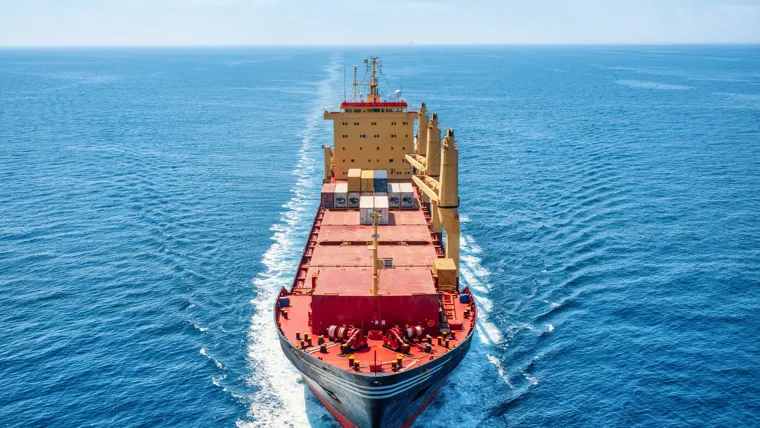
Arup partnered with Oceans North, a Canadian charity that supports marine conservation, to advance a conceptual development plan for a large-scale e-methanol production plant to fuel bulk carriers and cruise ships calling at Canada’s busiest port.
Several major ship lines and maritime analysts have identified e-methanol as a critical energy source for decarbonizing ocean-based trade and transportation. The study conceptualizes a grid-connected e-methanol facility that combines electrolysis-produced green hydrogen and carbon captured from the air.
“Decarbonizing shipping requires practical, scalable solutions,” says Jo Balmer, Americas Ports and Maritime Business Leader, Arup. “This concept demonstrates how renewable electricity, green hydrogen, and carbon capture can converge to deliver e-methanol at the scale needed for deep emissions reductions. It’s a blueprint for turning climate ambition into engineered reality.”
Compared to conventional marine fuels, e-methanol has the potential to reduce greenhouse gas emissions by 90 to 100 percent, highlighting e-methanol’s potential to deliver deep emissions reductions for the cruise and shipping sectors.
Building on an analysis of the potential supply and demand for e-methanol at the Port of Vancouver, the concept envisioned a plant that could scale up over multiple phases and eventually produce 200,000 tonnes of fuel per annum, displacing 11.5 million tonnes of carbon dioxide over its lifetime.
“The world is moving towards clean shipping, and Canada needs to move with it to maximize our economic opportunities and stay connected to global markets,” says Brent Dancey, Oceans North’s Director of Marine Climate Action. “This report helps ground future discussion around how we could proceed, as well as some of the barriers that will have to addressed.”
News
Explore more Americas news
Future of Infrastructure Group and Arup launch roadmap to unlock the power of digital twins for Canada’s infrastructure
12th February 2026

Finch West LRT officially opens, transforming Toronto transit
8th December 2025

New Arup-designed sidewalk sheds will transform New York City sidewalks
18th November 2025

Arup and partners announce roster of artists to create monumental commissions at John F. Kennedy International Airport
27th October 2025

Learn more about Arup
A global consultancy shaping infrastructure, buildings, energy and sustainability for the built environment.
