
Is the maritime industry ready for intelligent transport systems?
The maritime industry needs greater coordination, efficiency and predictability. Is it time for the sector to follow other transport modes and adopt intelligent transport systems?
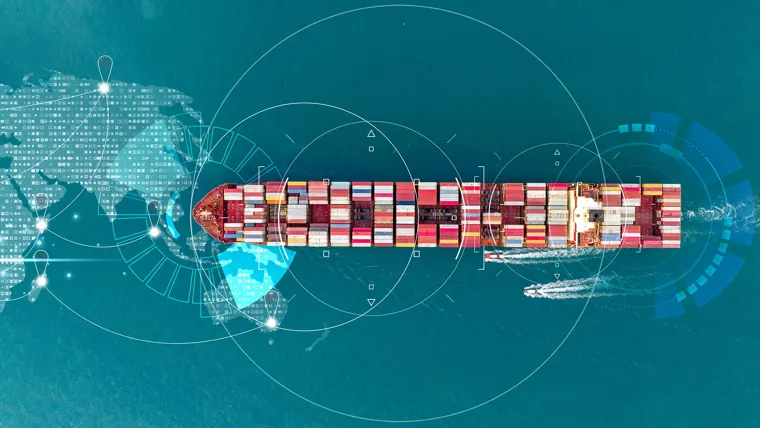
Like other transport sectors, the maritime industry is gradually becoming more digitalised. But, the presence of digital technology and services alone doesn’t deliver an ‘intelligent system’ – a truth known across industries and sectors of the economy.
While aviation, road and rail have been able to embrace Intelligent Transport Systems (ITS) – loosely defined as any digitally integrated platforms and tools that drive greater coordination and efficiency; enabling new consumer services across complex markets of vehicles and infrastructure – maritime has mostly lagged behind. Today, despite shipping’s widespread use of individual digital systems and technologies, the wider ITS promise of end-to-end insights and control hasn’t been applied in a scalable way to the operation of ports, shipping and the efficient movement of goods and people they empower.
At Arup, our work with maritime players, from port authorities to shipping companies, tells us that the need for investment in ITS is real, and that also, a conflux of challenges means a tipping point has been reached. So, the question remains; is the maritime industry ready to embrace ITS and the opportunity for change it represents?
Defining intelligent transport systems
First, let’s be clear about what maritime ITS (or MITS) really is. Rather than a specific app or platform, it’s a digital architecture – a system of systems that enables different technologies to talk to each other. It amounts to a common language for data in the maritime sector, closing operators’ gaps in knowledge; enhancing understanding and visibility between parties in the sector, driving up efficiency and leading to safer maritime activity.
ITS connects transport interfaces across modes, and it can be the digital bridge between transport on land and at sea. Currently, in many ports, visibility of the operational status of transportation modes, and the goods and passengers being moved, can only be viewed in isolation. This means, that though the efficiency of vessel or truck movements can be improved individually, the handover between the two does not achieve the same benefit. By contrast, with maritime ITS implemented, everyone involved gains the ability to smooth transitions and pre-empt and manage disruptive events.
For example, imagine the frustration and inconvenience of not knowing the expected time of arrival of a vessel in to port. Disparities in automatic location updates, combined with the threat of spoofed coordinates and lack of secure communications systems, can converge, causing confusion and chaos, not to mention severe delays in planning the processing and forwarding of cargo. Today, this is an all-too-common occurrence. Maritime ITS provides the data framework to close these gaps in visibility and resolve operational uncertainties.
Efficiency is not the only gain. Sustainability and resilience are fundamental to an efficient maritime industry, and maritime ITS provides the platform for functional coordination between all physical operational interests in the maritime ecosystem. Given the maritime sector’s need to decarbonise, and optimise its use of fuel and resources, gaining fine-grained, end-to-end insight into operational emissions or the current strength and status of its assets, are all central to the systemic resilience of future operations. This digital driven innovation could develop a more flexible and responsive marine transport network, that can meet environmental demands more effectively.
New levels of operational control
Digitalisation also offers the opportunity to introduce new business models, emerging where risks and benefits can be collaboratively shared in a transparent ecosystem. Risk and uncertainty, related to shifting maritime policy, regulation and economic sanctions, is making marine operations more complex. ITS can offer a common operating picture, that focuses on building goal-based standards to connect comprehension across transport domains and business interests. For example, operational requirements for remote controlled or fully autonomous vessels look different across global regions. A common understanding of autonomy concepts can ‘fill in the gaps’, enabling interoperable business models and inter-regional compliance in autonomy, resulting in efficiency outcomes that secure buy in from global users and simultaneously enable the sector to address shared sustainability targets.
Bringing ITS from land to sea
Connected vehicles on the highway have revolutionised the way drivers navigate, providing instant notifications of congestion events and incidents and supplying alternative routing suggestions. There are different complexities and geographical barriers in the transfer of information between connected vessels and vehicles on the highway, but they share a fundamental relationship, stemming from the need for interoperable digital standards to realise the true potential of digital transformation.
Maritime is starting to adopt similar real-time navigational information, with Orca AI launching new collaborative vessel navigational intelligence platform CoCaptain, positioned as a maritime adaptation of the crowd-sourcing principles that revolutionised road navigation. While this is a move in the right direction, the chain of dependency in decision making for vessels is much more dispersed than on highways. Therefore, the true value of the intelligence this data can provide is only realised when it is made available to parties not only involved in navigation, but also in administrative and organisational aspects of maritime transport. At Arup we have been applying this approach to the future of Hong Kong’s marine safety, modernising vessel traffic services systems to be future-ready and provide seamless vessel traffic operations to align with International Maritime Organization (IMO) and International Organization for Marine Aids to Navigation (IALA) standards for safety and efficiency.
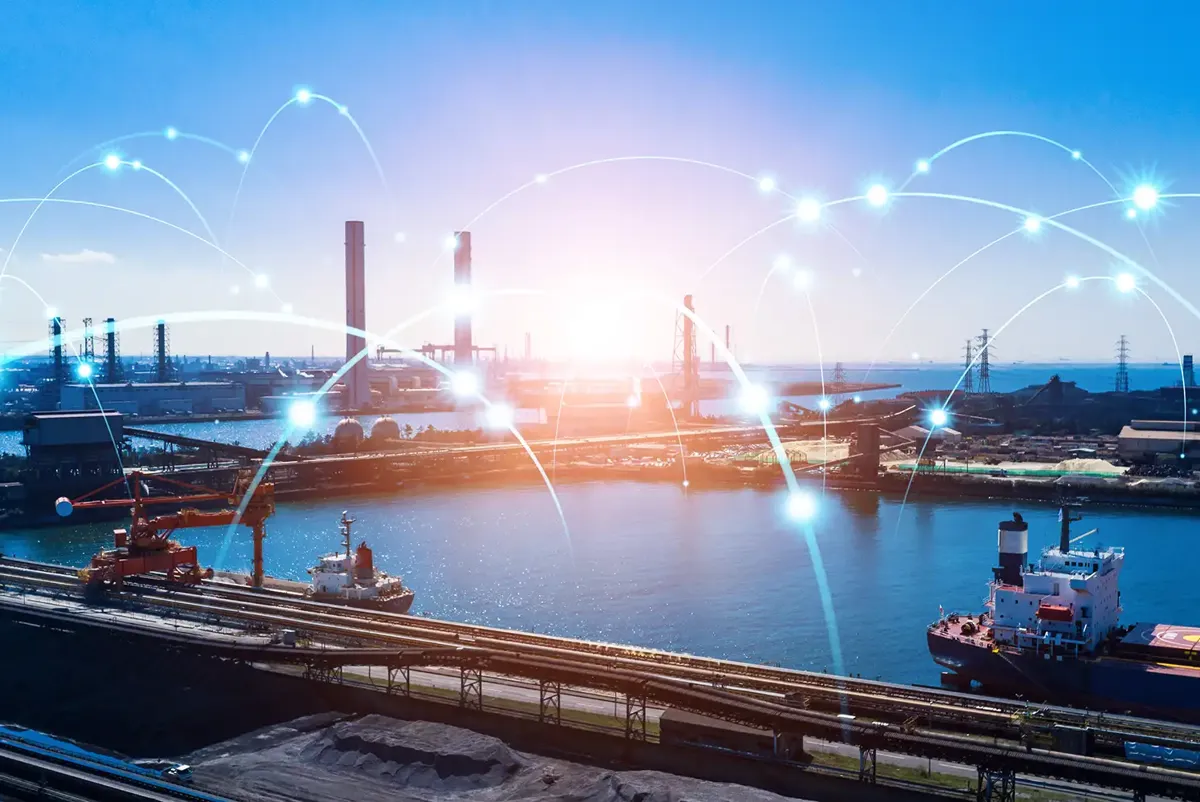
Ports: the gateway to maritime intelligent transport systems
The natural intersection of these three data types - navigational, administrative, and organisational happens in ports. They provide the facilities for the loading and unloading of people and goods from vessels, as well as offering accommodation for storage and processing of freight, and the ability to connect maritime transport with the hinterland.
Ports also play a crucial role in operational control, ensuring the safety and security of vessels arriving into the harbour. As such, they can provide a communal view across the orbit of operational functions. Ports are the modal interface that connect land and sea and are primed to take advantage of and distil the benefits of a MITS ecosystem for their customers and tenants. For these reasons, ports have a common interest in taking a lead in advancing adoption of maritime ITS.
Cost is king in the maritime sector, and operational decisions have been historically driven by a desire to keep costs low. Delays are one of, if not the, biggest contributors to cost increases in shipping, and the contrivance to stick to schedules can put crews, vessels and port infrastructure and operators under undue stress and increased risk to safety. As John Bensahlia at the Institute of Marine Engineering, Science and Technology has recently noted, in a complex global trading environment, delays are a growing problem:
Recent data has spotlighted the rise in waiting time growth. An average delay at the major ports is between 48 and 72 hours. With continuing increased demand for containers, overwhelming cargo volume, growth in Chinese exports, and a backlog of vessels arriving at congested port hubs, waiting times inevitably suffer as an effect.
This is where maritime ITS starts to reshape and improve operations. Instead of ships having to steam at full speed to make it in to port to meet time-constrained berthing, ITS enables delays to be communicated to all parties in the operational chain before impacts start to cascade (and the risk of accidents increases as crews try to make up for lost time).
With maritime ITS implemented at scale all players in the system gain the ability to see into the future, by connecting people with data to make decisions that prepare for all eventualities and keep the flow of goods and vessels running smoothly.
In a recent survey carried out by Maersk, four out of five businesses recognised supply chain challenges as a barrier to business growth, and based on current projections, it seems things won’t be getting better any time soon. Investment in visibility and agility, and adapting to alternative trade routes, is seen as a tonic to address some of the challenges. This is again a setting where MITS can help businesses to take action.
MITS strengthens operational resilience by enabling businesses to function at the edge of optimisation, quickly shifting when their operational environment changes. And, as technologies evolve, the benefit of an ITS ecosystem is that it can flex to incorporate new solutions, too.
We’ve witnessed the benefits ITS can bring for other transport sectors, like road and rail. Our experience in bringing value from the development and implementation of ITS services as part of the digital transition in land-based transport can now be translated for maritime: taking the best of ITS and applying to sea transport, creating the potential for new business models that drive growth and efficiency.
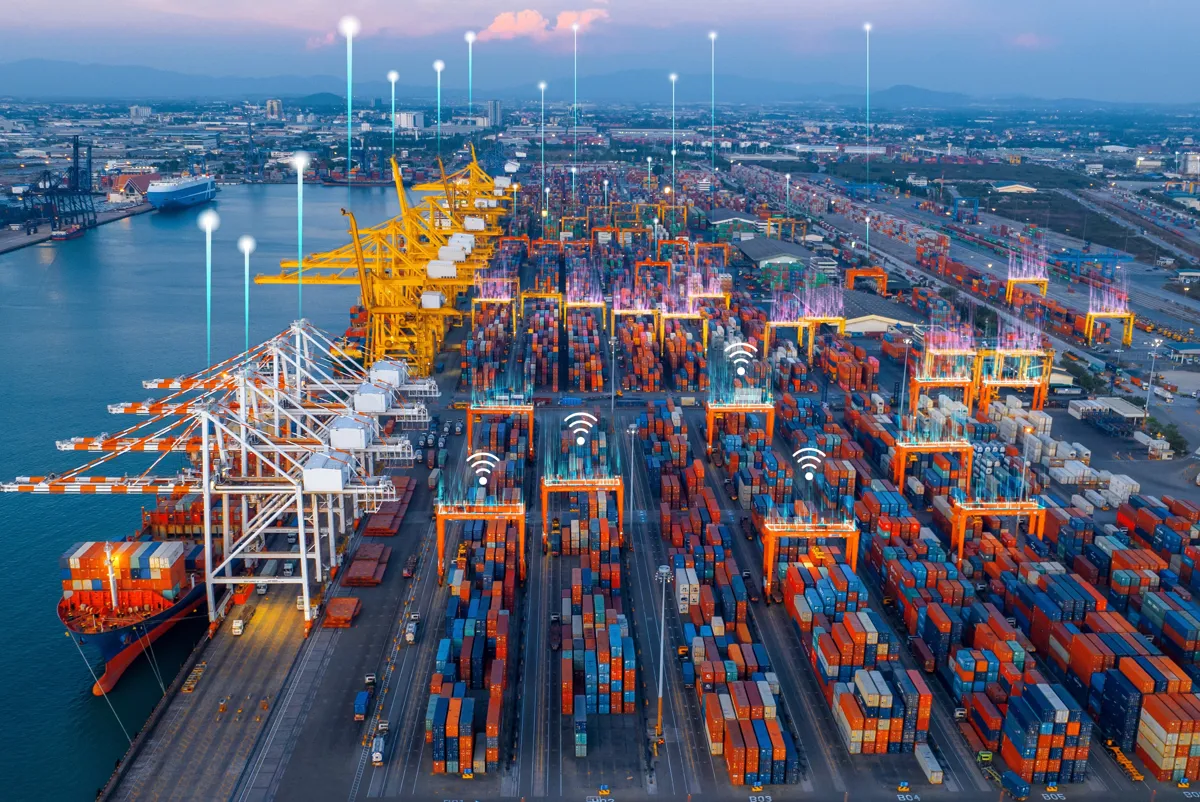
Barriers to implementation?
To make ITS a success for ports and maritime will require a top-down approach, to roll out an inclusive strategy that management and operational teams can buy in to, without fear or adjudication that digital technologies will make their lives more difficult, or worse, make roles redundant to requirements.
Given margins in the industry, it’s rational to assume port operators don’t want to overspend or overcommit and will want an ITS system that’s comprehensive yet can evolve and upgrade. To develop and implement maritime ITS successfully we must also recognise that this is a major transformation, with cultural and organisational implications too. Beyond the core data interoperability challenges – which are real, but solvable – here are some of the other challenges we can identify:
Sector fragmentation: with multiple systems and solution providers competing for the custom of businesses with opposing interests.
Global operational variation: varying requirements for operational procedures globally make it difficult to develop a single standard that can be used by all. MITS is the systems integrator that can overcome regional challenges and disparities – shipping is a global enterprise; it requires a global approach to optimisation.
Culture and training: digitalisation always transforms the way we work (and the type of workforce needed) and this can be seen as a barrier to change. Maritime will have to overcome the “we’ve always done it this way” philosophy.
First adopter mindset: historically the maritime sector has been slow to adopt new technology, unless it leaves them behind commercially or regulation dictates its need, and lengthy procurement cycles exacerbate this challenge.
Ports and maritime businesses may be at the sharp end of these changes, with the opportunity to embed continual progress, but they need the levers that come from governments and international institutions, like the IMO, to set the trajectory for change.
The promise of tomorrow
In every context and every industry that has undergone this form of digital revolution, the gains have always been more profound, and wider in application, than simply finding new ways of working, or connecting once disparate systems. The strategic effort that would underpin the development of maritime ITS would bring new understanding and intelligence to the way the sector operates.
So, what does the future look like for those in the maritime sector that act to take advantage of the digital opportunity?
As well as unlocking business value for internal users and external customers, a cohesive maritime ITS strategy can support ports in their transition to carbon free operations, achieving a green and sustainable net-zero future. It would simultaneously better prepare ports for the ever-evolving range of risks the sector faces – commercially, operationally, environmentally, and in many other known and unknown ways.
ITS should be understood as an inevitable (if currently unfamiliar) developmental phase that should now be recognised as a priority for every player in the industry.
Balancing profit and planet in the blue economy
For those working across the maritime sector, now is a good time to take advantage of the convergence of digital technology and the need for environmental regulatory compliance. With the rapid deployment and uptake of satellite connectivity at sea and the evolution of machine learning capabilities, the data and connectivity now available enables players to unlock the full benefits of digitalisation.
Maritime ITS forms the strategic foundation of digital transformation for ports and maritime transport. It can unlock added value from existing infrastructure and simultaneously help to better understand our oceans and develop strategies to balance the impacts of marine activities.


