
The opportunity of host city moments: Rethinking how cities partner with community organizations
How can host cities successfully navigate the complexities of putting on major sporting events while leaving their cities a better place after?
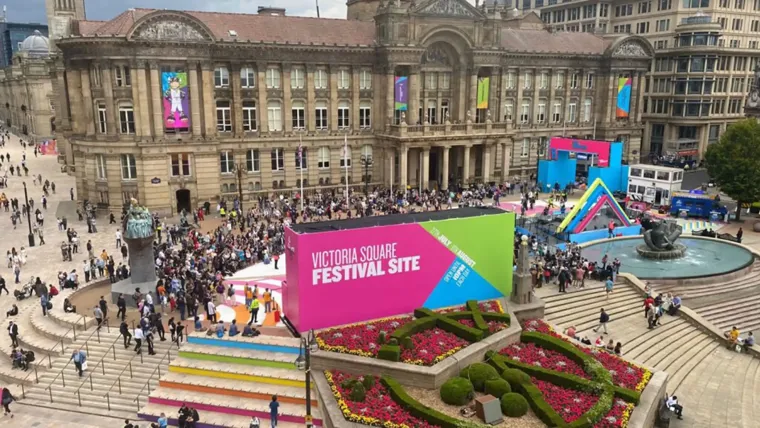
Major multi-sport events like the Olympic and Paralympic Games have become global media phenomena, with the 2024 Paris Games reaching an audience of five billion, or about 84% of the world’s potential viewers.
On the ground, audiences are also growing, compounding the challenges of hosting major sporting events. While global visibility, tourism, and event-based economic development still matter, it is now practically a requirement that cities use these occasions to catalyze urban improvements and social and economic value for their citizens that will endure long after the closing ceremonies have ended.
So, how can host cities successfully navigate the complexities of putting on major sporting events while leaving their cities a better place for all residents? By integrating community priorities and initiatives that are already delivering social, economic, and climate value into event planning, cities can better address residents’ needs. In turn, prioritizing the development of longer-term civic engagement and community impact helps cities advance visionary development for an event and beyond.
Communities as long-term partners in city-making
One effective approach to improving the planning process is to listen more closely and respond to the real needs of the communities within a city. Strategic and targeted engagement with the many local networks, leaders, and grassroots organizations that comprise communities can often be untapped. This is a task that requires experience and expertise. Host cities and sporting federations and sport franchises that effectively collaborate with their communities at the planning stage of mega sports events can tap into this invaluable existing social infrastructure. Correspondingly, community initiatives can have a greater citywide impact when they are aligned with host city government and sporting organizations than when they operate independently.
This approach aligns closely with the Green and Thriving Neighbourhood (GTN) framework co-developed by Arup and C40 Cities Climate Leadership Group, a global network of mayors and one of Arup's global partnerships. Amongst its pillars, this framework emphasizes the use of existing community networks to deliver climate, social, and economic outcomes at the neighborhood scale.
The GTN approach presents a powerful opportunity to create healthier, more connected, and inclusive communities while addressing challenges such as limited access to services, car dependency, environmental degradation, and inefficient land use. The core premise of the GTN is that complete, people-centered neighborhoods are essential to thriving cities.
What makes a community thrive and bring citywide value?
GTN recognizes that the scale of communities allows for nimbleness and greater speed for achieving local solutions. Neighborhood projects can pioneer new policy, trial innovative partnership arrangements, consider creative ways to increase citizen participation, and test new technologies or products that can support an overarching vision. These solutions can then be replicated citywide and beyond.
Host cities that recognize their communities’ potential citywide impact can collaborate with them to accelerate progress across multiple departments, such as transportation, housing, and sustainability, while breaking down traditional silos between these agencies. This teamwork helps set meaningful goals and drive immediate, real benefits for both the major events and the people of the city, during and after the games.
Building legacy through event momentum
Today, leaving a legacy of improvements is paramount for both host cities and the sporting governing bodies themselves. For example, for the 2025 FIFA World Cup Series, for which Arup has been supporting, the organizing body announced plans to make a legacy contribution of $1m to each of the 11 US host cities, with the funds to be used to build mini-FIFA pitches and support social projects to drive football and foster community across the country.
For the city of Birmingham’s 2022 Commonwealth Games in the UK, Arup collaborated with the city on planning and design decisions to secure long-term economic and community benefits from the games. In addition to expanding and upgrading the existing Alexander Stadium for the games themselves, we worked closely with residents, businesses, and organizations to accommodate broader community and cultural needs. The stadium now serves athletes of all abilities from schoolchildren to professionals. But we also used each phase of the stadium development to gather input. This ensured community buy-in and led to investment in transport infrastructure improvements for new walking, cycling, and bus routes.

The well-watched Paris 2024 Summer Olympics fast-tracked enterprising sustainable, economic, and social initiatives that were long in the works. The event spurred much needed urban improvements, notably a $46.7 billion rail network connecting the historic city center to neglected outer neighborhoods like Seine-Saint-Denis. Olympic investments concentrated in these areas accelerated development, new housing, and better connectivity, transforming Paris into a more unified and vibrant metropolis.
Facilitating major-event ambitions
Host cities without the benefit of Paris’ early urban planning are often faced with the limited capacity of their city leaders, departments, and systems, regardless of the games’ budget size and quality of their strategic plans. Additionally, these kinds of major events require many different stakeholders and departments with diversified governance structures to work together in ways they aren’t used to, facing stress tests on a daily basis.
This is where communities, and their leaders, members, and home-grown initiatives, can help city agencies and league-governing bodies expand their capacity as well as tap into active local initiatives that align with ambitious legacy projects.
One such city that is legacy-minded and currently at the center of several mega events is Los Angeles, which will host the 2026 FIFA World Cup, the 2027 Super Bowl LXI, and the 2028 Summer Olympic and Paralympic Games (LA28) among others. The nature of the city presents a number of challenges: it comprises vastly different neighborhoods with varying income levels, transit access, and resilience to climate impacts. Los Angeles is also extremely car dependent, and its sprawling geography and governance structure can further complicate event planning that aligns with city priorities.
For LA28, the city has pledged to host a “transit-first” Games, dedicating over $40 billion to sustainable, car-free transportation projects to be completed by 2028. These projects aim to move athletes and spectators throughout the Games as well as leave behind a more connected city that’s less dependent on car traffic.
Finding reciprocity
How can such a complex metropolis effectively develop transformative infrastructure that supports its events and brings legacy benefits to city? These ambitious goals have garnered their share of skeptics, but the city has nevertheless made progress with new transit developments such as the LAX/Metro Transit Center Station, a long-awaited new hub extending its metro line to its international airport. Continuing to successfully deliver the envisioned scope of new infrastructure will require stronger and more strategic collaboration between community advocacy groups, city agencies, and policy makers, aligning grassroots momentum with institutional delivery capacity.
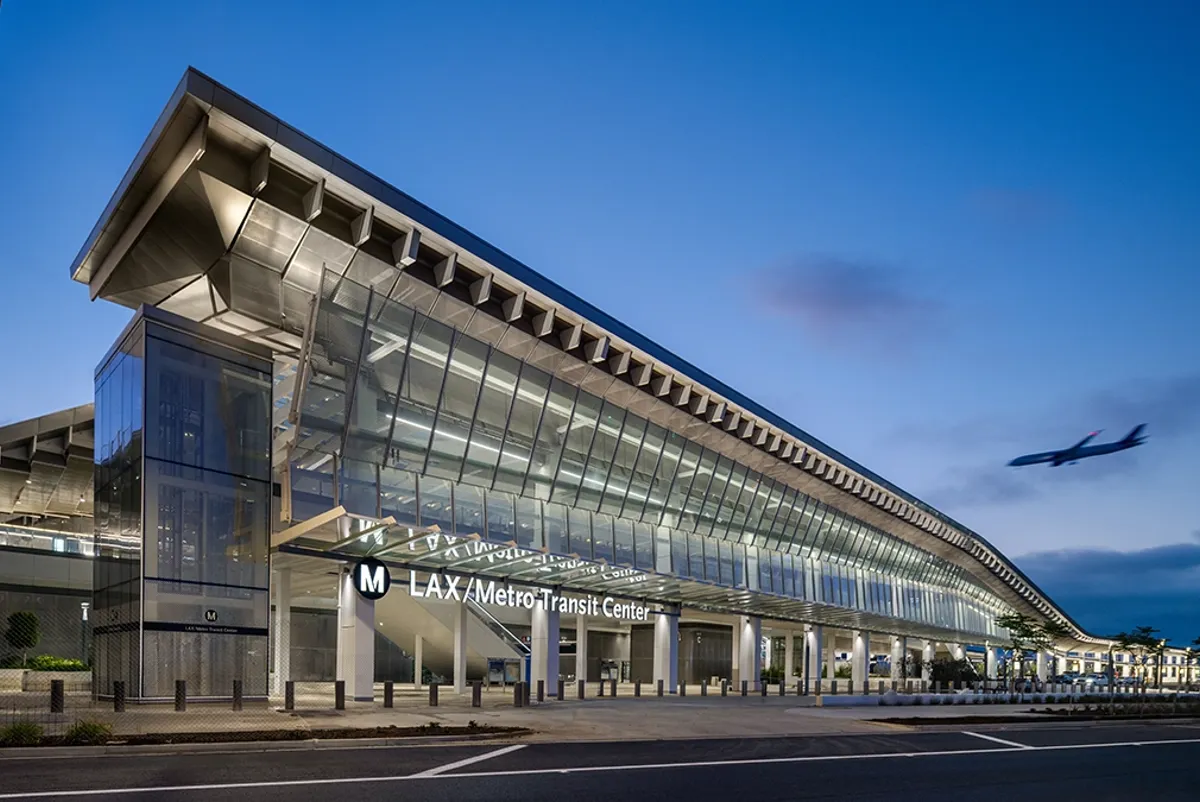
The LAX/Metro Transit Center Station reduces traffic at the Los Angeles International Airport and will dramatically improve the travel experience for visitors of upcoming cultural and sports events.
LA28 has already begun tapping into thriving local organizations. The Festival Trail is a community-driven initiative designed to create a continuous, car-free network of public spaces that will connect key venues and neighborhoods throughout Los Angeles to counter LA28’s predicted traffic congestion. Arup collaborated on Festival Trail's initial prototype for the community hubs, which includes a rapidly constructable, flexible shade structure that forms an interactive public space with local digital art and a location-based map of the trail experience accessible by QR code. The Festival Trail, along with long-standing community-driven initiatives such as CicLAvia’s open streets events, are now using the momentum of the 2028 Games to advocate for permanent investments in regional transit connections, economic development and public space to support visitors' experience in the near-term and local communities in the long-term.
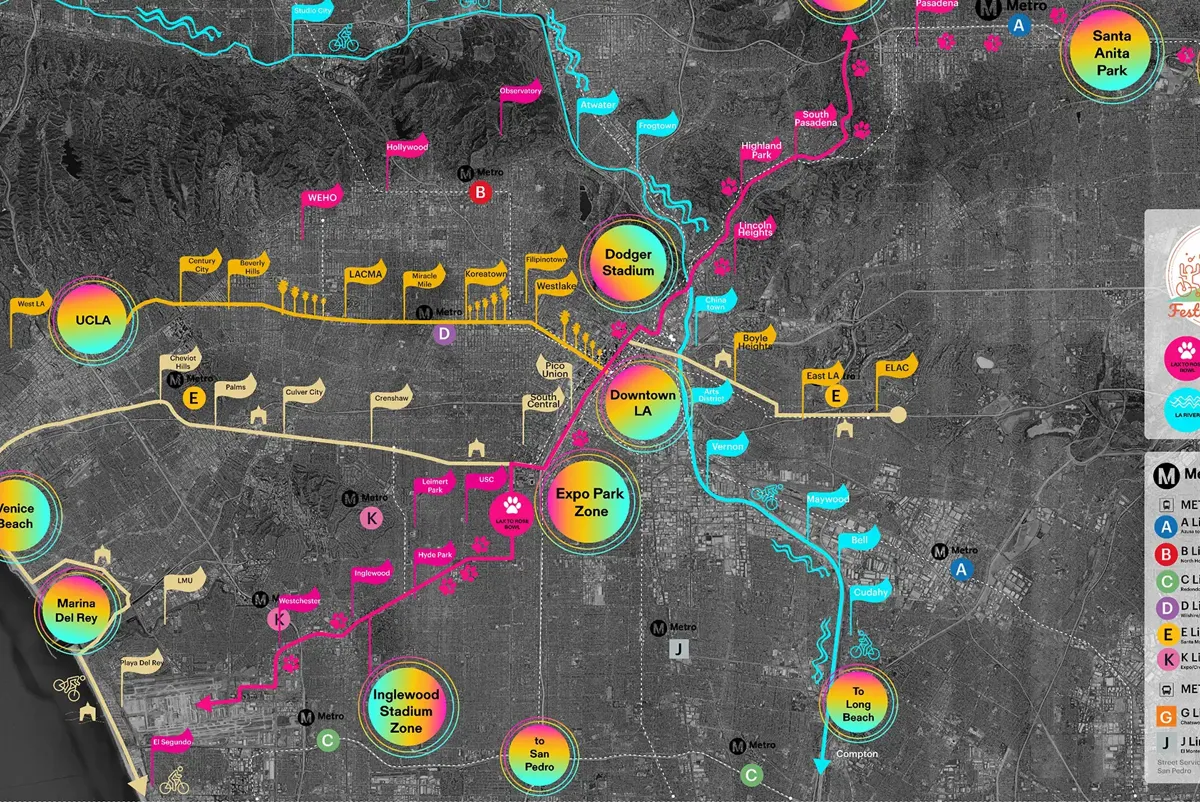
The Olympic Festival Trail, a project of community partners, community organizations, advocates, leaders, businesses, and others, is a 22-mile-long non-vehicular mobility corridor that would link together all the Olympic venues using both public transportation and active transportation.
The Festival Trail leverages mega-events to unlock a city’s full potential by investing in community voice, local creativity, and shared ownership. We are proud to partner with Arup, whose leadership in community-first collaborations are redefining how global events can deliver lasting, positive legacies for generations to come.
Rethinking the paradigm
The energy, focus, and excitement of hosting major games offer city government and agencies an opportunity to galvanize investment, mobilize resources and forge partnerships for memorable games and meaningful post-event legacies. As cities grapple with the challenges and costs of putting on these major events, they should rethink the paradigm about where valuable city resources reside and who should be integral to the planning process. In turn, communities have a rare opportunity to shape the future of their cities, expanding their impact beyond individual neighborhoods and helping to create safer, healthier, and more equitable urban futures long after the closing ceremonies.
Get in touch with our team


