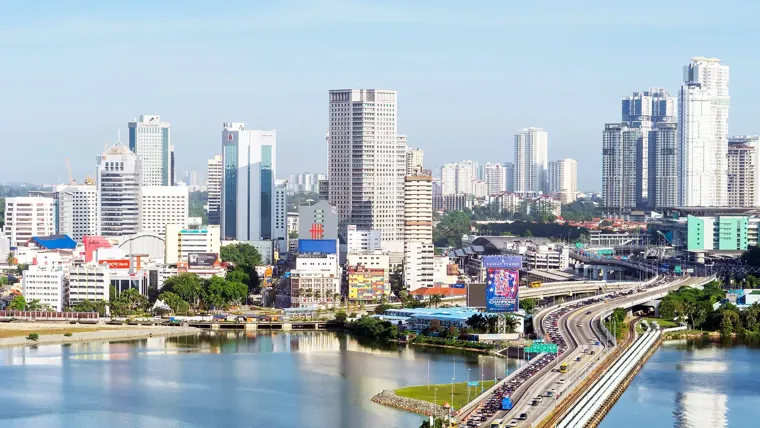
The Johor-Singapore Special Economic Zone (JS-SEZ), launched earlier this year, marks a bold new chapter in the long-standing partnership between Malaysia and Singapore. By combining Malaysia’s industrial strength and land availability with Singapore’s expertise in research, innovation and advanced services, the JS-SEZ is positioned to attract international investment through tailored incentives and drive sustainable, high-value growth. 

More than an economic engine, it embodies a shared vision for inclusive and balanced development, where economic ambition is matched by social progress and environmental responsibility. The zone is planned to be purpose built to support key sectors like data centres, advanced manufacturing and real estate, aiming to make the region a future-ready hub for Southeast Asia. 

But investment alone won’t bring this vision to life. Success depends on integrated planning that aligns infrastructure, land use, technology and sustainability from the very beginning. This coordinated approach creates an environment where industries thrive, businesses scale confidently and communities prosper together. 

With over sixty years of experience across Malaysia and Singapore, including a growing presence in Johor, we understand what it takes to transform bold aspirations into real outcomes. Here’s why integrated planning is the foundation for the JS-SEZ’s success. 

Sustainable infrastructure needs holistic planning

To attract investors, skilled workers and thriving communities, the JS-SEZ must embrace a cross-border strategy that weaves together land use, infrastructure and environmental systems. This strategy needs to be built on climate-resilient, well-connected infrastructure that enables people and goods to move smoothly across borders. This includes building future-proof connectivity – both digital and physical. On the digital side, AI-driven logistics systems, real-time data platforms and smart permitting processes can streamline cross-border trade and reduce friction. On the physical side, seamless transit systems and widespread electric vehicle charging infrastructure will be essential to support sustainable, high-mobility urban environments. 

The JS-SEZ cannot function as a standalone industrial site. It needs a clear identity shaped by a shared sustainability framework that coordinates transport, utilities, housing and economic development, with local communities involved from the start. Adopting more mixed-use zones and modular urbanism will allow the JS-SEZ to evolve flexibly as needs change over time supporting innovation, liveability and long-term resilience. 

Consider the Shenzhen Special Economic Zone. Once a small fishing village, Shenzhen has evolved over four decades into one of China’s most advanced cities. This transformation was powered by coordinated investments in infrastructure, including an extensive metro system, efficient roads, advanced air mobility, and the world’s largest fleet of electric buses. High-speed rail connects Shenzhen to Hong Kong in a fast as 15 minutes, strengthening regional ties. 

By adopting a similar integrated approach, the JS-SEZ can tackle current challenges and seize future opportunities. For example, in Iskandar Puteri, Johor’s administrative capital, we developed a sustainable public transport plan that links transport, urban development, and mobility design. This framework boosts connectivity, supports economic growth, promotes social inclusion and strengthens cross-border ties with Singapore.

Audio

Hear from Tony Chan on why sustainable infrastructure needs holistic planning:

Play

For lasting success, the JS-SEZ’s spatial and infrastructure plans should align with broader regional strategies such as Johor’s JS-SEZ Roadmap and the Special Financial Zone at Forest City. These can complement Singapore’s 2025 Draft Master Plan, particularly its focus on the northern gateway and cross-border links. Coordinated planning will help optimise land use, logistics and infrastructure so the JS-SEZ grows as a unified, connected economic zone rather than two separate developments. 

Low carbon, development-ready energy systems

Building a resilient and sustainable JS-SEZ demands integrated energy planning aligned with growth and environmental goals. Coordinating energy generation, distribution and on-site management while incorporating renewables, efficiency measures and smart grid technologies will cut emissions, enhance energy security and reduce costs. 

This strategy is especially critical for attracting large-scale industrial projects. The data centre industry, one of the most energy-intensive sectors, is also deeply committed to lowering its carbon footprint. These projects need reliable power and must demonstrate real progress in sourcing clean energy. 

The JS-SEZ can lead with a cross-border, data-driven energy strategy featuring solar power, battery storage, hydrogen technologies and stronger interconnectivity. Progress is already underway: we’re advising on a 500-megawatt solar plant that will be Malaysia’s largest and the first in integrating large-scale battery energy storage system currently under pre-development. This project represents a significant advancement in Malaysia's renewable energy efforts, driving decarbonisation while boosting grid stability and energy security. Encouraged by supportive national programmes and schemes, investors are already considering more projects of this kind, seizing the opportunity to grow within this market.  

By piloting green innovations, enforcing tough energy performance standards and building public-private partnerships, the JS-SEZ can set a new standard for low-carbon industrial growth across Southeast Asia. 

Building investor confidence with performance-based regulation

Attracting and retaining investors requires confidence in a stable, predictable and transparent environment built on the same integrated thinking that underpins sustainable planning. This means aligning regulations between Malaysia and Singapore to create clarity and consistency. Harmonising environmental, social and governance (ESG) frameworks would give investors a unified compliance landscape. This approach reduces uncertainty, speeds up approvals and shows that both governments are committed to sustainable high-integrity investment. 

The JS-SEZ offers a unique chance to apply this approach within a defined, controlled setting. For example, prioritising green manufacturing could steer investment toward solar panel production or battery assembly. Fast-track permitting, strong digital infrastructure and incentives tied to clean energy and carbon reduction will support these sectors. 

However, these measures only reach their potential when part of integrated and transparent planning. A clear, inclusive approvals process that involves local communities from the outset builds trust and ensures developments reflect shared priorities. Supporting small and medium-sized enterprises and including affordable housing in planning frameworks ensures the benefits of growth are widely distributed, helping to create a more resilient and equitable zone.  

Transport must move goods efficiently. Energy must be reliable and green. Skills training must prepare a capable workforce. Land policies must enable growth without sprawl or displacement – while ensuring space for inclusive, mixed-income communities.  

When these elements come together, investors don’t just see isolated projects. They see a long-term opportunity backed by coordinated planning and strong governance. This transforms the JS-SEZ from a special economic zone into a strategic platform for national development. 

Realising an integrated, prosperous future for the JS-SEZ

With a systems-driven approach and expertise spanning advisory, urban planning and infrastructure design, we are ready to help turn the JS-SEZ into a resilient, investor-ready, cross-border economic zone. Here, success is measured not just by economic growth but by community wellbeing, safety and opportunity.  

The next step is to embed cross-border coordination mechanisms for spatial planning, energy transition and ESG governance within the forthcoming JS-SEZ Roadmap. Aligning Johor’s and Singapore’s planning frameworks in this way will strengthen investor confidence and position the JS-SEZ as a model of regional cooperation and climate-resilient growth. 

To learn more about our work in Malaysia and Singapore and how we are supporting the JS-SEZ’s future, connect with our local team in Johor.