
Ambitious electricity grid investment would unlock significant economic growth, jobs, and energy security for the UK
Arup study reveals billions in socioeconomic benefits if ambitious investment in electricity grid modernisation is sustained to 2040.
Last updated: 10th February 2026
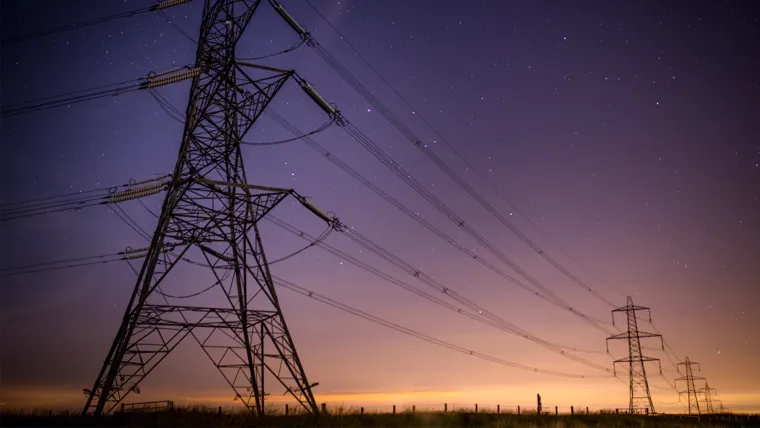
£34bn investment in the grid over the next 15 years would unlock £194bn for the economy, a 4:1 return on investment, according to a new study from Arup.
By modelling two investment scenarios, underpowered and supercharged, the study also concludes that an additional 92,000 extra jobs could be supported annually, if ambitious investment in the electricity grid is sustained to 2040.
Arup’s modelling also showed that many sectors across the economy would benefit from investment in the grid, ranging from agriculture, property, through to construction.
The services sector could grow by £95bn, with 68,000 jobs supported each year, while the property sector could grow by £33bn, and construction by £20bn. The jobs supported could be high-demand, high-paying roles, with the potential to boost skills development.
The macroeconomic study, 'Gridunlocked: Unlocking the benefits of investing in the electricity grid', conducted in collaboration with Cambridge Econometrics, highlights that benefits extend beyond economics. Maintaining ‘supercharged’ investment in grid modernisation ensures that the UK’s electricity network can fully support the energy transition and keep pace with rising demand.
Grid modernisation also reduces the UK’s reliance on unabated gas. By shielding businesses and consumers from global price volatility, it strengthens energy security and supports the development of a more diverse, decentralised, and resilient system.
The report emphasises that grid investment alone cannot unlock these benefits. It calls for a more joined-up, programmatic approach to planning and delivery across generation, storage, transmission, distribution, and demand side flexibility. Such coordination would enable greater operational and economic synergies, with digitalisation further enhancing grid flexibility and stability.
Strategic coordination across the critical interfaces of policy, finance, technical design, supply chains, and project delivery is essential for sustaining momentum of a whole-system energy transition and maximising its socioeconomic benefits. The report also highlights the importance of early and meaningful community engagement to ensure that local voices play an active role in shaping the UK’s energy future.
Mark Neller, Energy Leader for Arup in the UK, India, Middle East and Africa, commented: “Our research shows that ambitious grid investment is a catalyst for economic growth, job creation, and energy security. The choices we make today will determine the pace and success of the UK’s energy transition. Unlocking the benefits depends as much on how we deliver as on what we invest. By investing wisely, designing boldly, and delivering with purpose, we can unlock a more affordable, secure, and clean energy system for all.”
Juergen Maier, Chair, Great British Energy, stated: "Expanding electrification across UK homes, industry and businesses is essential to cutting bills, lowering emissions, and improving energy efficiency. At Great British Energy, our role is to unite public and private sectors to unlock investment. The Gridunlocked report by Arup helps to show what can be achieved by working in partnership, delivering significant investment for long-term grid security and energy efficiency opportunities."
Whilst the focus of this study has been the UK, many of the observations and recommendations of this report are internationally applicable and if applied will support the global energy transition to a net zero world.
Energy at Arup
We are committed to imagining, designing and realising green energy solutions to shape the future energy system.
Related news
Explore more energy news
Riding the wave: how transitioning to sustainable energy sources creates a competitive advantage for ports
18th September 2025
Arup and Equatic partner to advance world's first large-scale ocean carbon removal facility
11th December 2024

UK government responds positively to digital spine feasibility study
19th August 2024

Arup and partners celebrate opening of new Grid Storage Launchpad at Pacific Northwest National Laboratory
14th August 2024

Learn more about Arup
A global consultancy shaping infrastructure, buildings, energy and sustainability for the built environment.
