
Arup’s First Nations leadership builds in strength in Australia and New Zealand
Arup has strengthened its First Nations leadership team across Australia and New Zealand with two key appointments.
Last updated: 14th October 2025
Respected leader and proud Gomeroi woman, Melanie Grills, has been appointed into the role of Arup’s First Nations Lead, Australia & New Zealand (ANZ).
The newly established position reports directly to the Managing Principal, ANZ, Liam O’Donohue, who celebrated the significance of Melanie’s appointment to the firm, its clients, and the broader community.
Liam said: “Melanie’s new role1 is a testament to her commitment to cultural integrity, as well as the success of our First Nations workstreams which have matured into established and impactful business functions.”
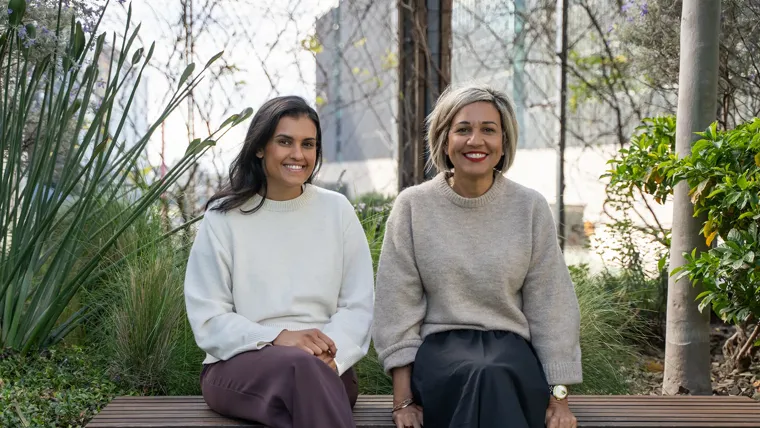
Melanie (pictured above on the right) said: “I’m encouraged by the progress we’ve made in deepening relationships with First Nations communities and businesses, and in embedding cultural knowledge through our work. This puts us in a strong position to further bolster these connections, foster true partnerships, and ensure Arup’s commitments continue to translate into meaningful outcomes.”
In her newly established position, Melanie will oversee all First Nations workstreams across ANZ, including First Nations Project Services, the Aboriginal and Torres Strait Islander Employee Network, Arup’s Reconciliation Action Plan, and the firm’s Indigenous Procurement Strategy.
Arup also welcomes a new First Nations Strategic Design Lead, Shay McMahon, a Yuin woman with a decade of experience across architecture, urban design, and planning. With a strong focus on Indigenous knowledge systems and participatory design, she has contributed to several frameworks and documents that have shaped culturally responsive design practices we see today.
The First Nations Strategic Design Lead will support clients through Arup’s Designing with Country Offering, leading design strategy across key projects, embedding Country-centred design thinking, and collaborating with Traditional Custodians and knowledge holders to shape environments that reflect and respect Aboriginal ways of living, cultural values, and identity.
Shay (pictured above on the left) said: “I’m excited to join a company that values cultural integrity and design excellence. I believe there’s a delicate interplay of exploration through engagement required to understand design outcomes, one that honours the rich intersection of cultural, ecological, and place-based principles.”
Liam concluded: “These changes mark an important milestone in our reconciliation journey, recognising that First Nations leadership is not only central to our firm’s commitments, but is also an increasing priority for our people, clients, and the communities we serve. We reaffirm our collective responsibility to nurture cultural understanding, drive positive impact, and embed First Nations principles across our business.”
1. In this role, “First Nations” refers to Aboriginal and Torres Strait Islander peoples in Australia, and Māori in Aotearoa New Zealand.
News
Explore more Asia Pacific news
Arup leads decarbonization of inter-island ferries in the Philippines
13th July 2025

Harnessing digital twin technology to address plastic waste in Philippines Pasig River
24th June 2025

Arup and Autodesk team up to accelerate industry-wide collaboration
17th June 2025

Arup experts share trends shaping the future of rail at Asia Pacific Rail
11th June 2025

Learn more about Arup
A global consultancy shaping infrastructure, buildings, energy and sustainability for the built environment.
