
Cutting congestion and protecting homes from flooding
A120 Bypass and Flood Alleviation Scheme
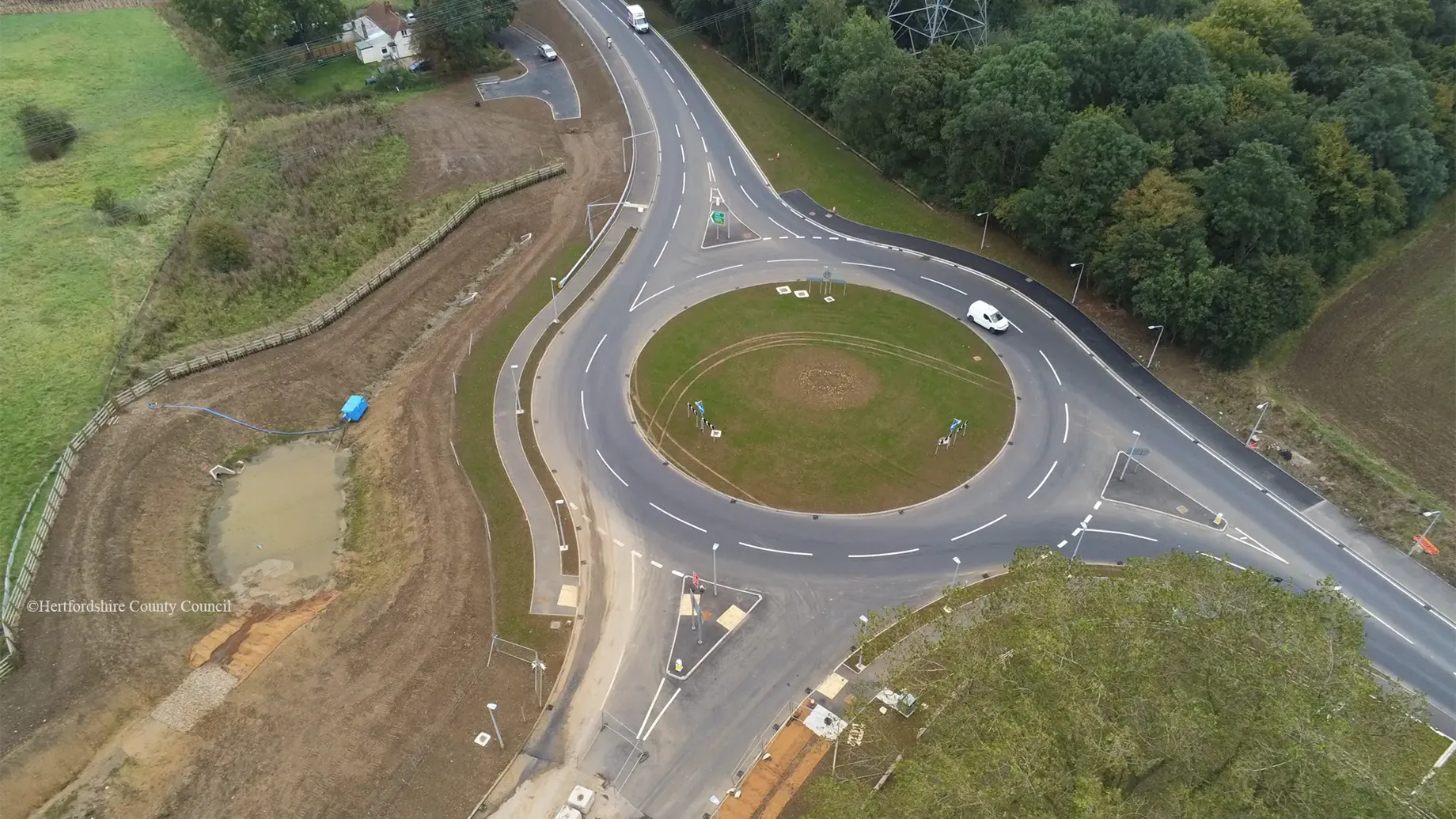
A key route linking the M11, Stansted Airport, Bishop’s Stortford and the A10, the A120 used to pass through Little Hadham. However, the four-way signal-controlled junction in the village was struggling to cope with traffic levels. The road became increasingly congested, and residents faced queuing traffic and the resulting noise and air pollution.
Due to its location at the confluence of three watercourses, the community also suffered from several flood events, with more than 70 homes and businesses at risk of being inundated, some as often as every few years.
In 2013, Hertfordshire County Council partnered with the Environment Agency, securing funding to deliver a bypass for Little Hadham. Arup was appointed to design a new section that integrated flood alleviation measures, addressing congestion while enhancing flood protection. Involved from business case to completion, we also played a critical role in developing the planning application, obtaining funding and providing contract advice.
Re-routing the A120 has made journey times more reliable and improved air quality in the village. In addition, incorporating water storage into the road embankments has reduced the risk of flooding for over 70 properties. Little Hadham’s bypass opened in December 2021 and has significantly improved the quality of life of its residents.
Co-ordinating asset integrity management
Our transport specialists, environmental designers and reservoir engineers tackled the technical design challenge of a scheme that combines the statutory requirements for both highways and reservoir design.
Two road embankments along the bypass act as dams. After heavy rainfall, each holds back a large volume of water, reducing flows in the rivers through Little Hadham. The scale of the volume of water storage behind the embankments meant that they had to meet the requirements of the Reservoirs Act, not just those for a road scheme. Our experts ensured the integrity of these structures so that they would remain safe and watertight in all weather conditions.
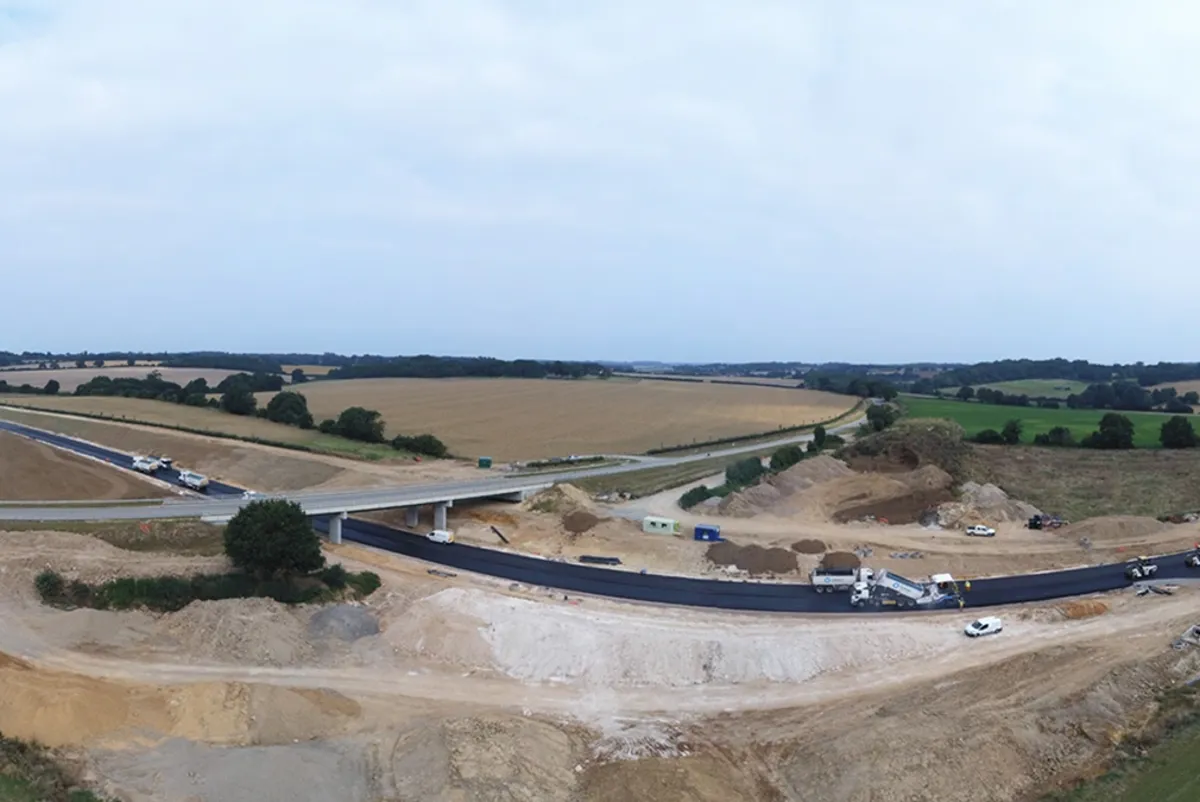
Flood alleviation works along A120. © Hertfordshire County Council
A particular challenge was how to discharge excess water if the reservoirs fill up after exceptionally heavy rainfall. Water could not be allowed to flow directly over the top of the embankments and across the road, so we designed upstream weirs to solve the problem. When levels are high, water flows over the weirs before passing underneath the road the spillways and back into the watercourses.
We led the preliminary design, helping to develop a joint planning application and securing all necessary consents. We also worked with Hertfordshire County Council and the Environment Agency to develop the Environmental Impact Assessment, stakeholder engagement, consultations and two compulsory purchase orders – as well as supporting the public enquiry.
I wish to congratulate Hertfordshire County Council in overseeing the development of this important scheme which will provide so many benefits locally and regionally. It will remove the bottleneck in the village thereby improving journey times for all who use the A120 as well as greatly improving the overall wellbeing of residents in Little Hadham with the removal of the long lines of stationary traffic. Including flood defences in the scheme will also make their lives much safer.
Enabling easy and affordable asset maintenance
Understanding maintenance requirements was vital. Both Hertfordshire County Council and the Environment Agency need to inspect, maintain and repair different elements of the bypass appropriately. Our experts worked with both organisations’ maintenance teams to understand their requirements, budgets and processes. Based on these, we developed a bespoke strategy that separates road and reservoir assets as far as possible, enabling each organisation to maintain their assets easily and independently.
When it came to procurement, this project did not fit either the council or Environment Agency’s existing frameworks, so we helped to assess the procurement options and offered contract advice. Throughout the construction process our team also supported the contractor, GRAHAM, on site. We developed cost-effective methodologies to keep the programme on track, and resolved challenges in constructing the embankments, their groundwater flow cut-offs and the road pavement. We also led community and stakeholder communication activities, keeping residents and road users informed of progress.
With the bypass now complete, work is underway to enhance the centre of Little Hadham – making use of space that was previously given over to through traffic. A new controlled crossing has already been installed at the local school and improvements to active travel routes are under consideration.
This partnership scheme between Hertfordshire County Council and the Environment Agency has delivered a once-in-a-lifetime beneficial change for the community in Little Hadham and the surrounding area, addressing the two biggest issues that were affecting the village – traffic congestion and flood risk, and while delivery was through a most pressing time the benefits of the scheme have been demonstrated many times since it became operational only a short time ago. Arup teams’ technical expertise and support in developing and constructing the dual-purpose reservoir and road structures has ensured it has performed well.
GRAHAM
Projects
Explore more roads and streets projects

Illuminating a community path for the nighttime safety and enjoyment of pedestrians and cyclists
Somerville Community Path Lighting, USA

County-wide adaptation strategy to protect a critical Bay Area transportation corridor from sea level rise
Marin County Sea Level Rise Adaptation Study, USA

California’s first long-span cable-stayed bridge
Long Beach International Gateway Bridge, USA

Planning an electric bus corridor that links communities across California’s Central Valley
Kings/Tulare Cross Valley Bus Corridor Plan, USA
Get in touch with us
If you'd like to speak to one of our roads and streets experts about any of the issues raised on this page or a potential collaboration then please get in touch by completing the form.
