
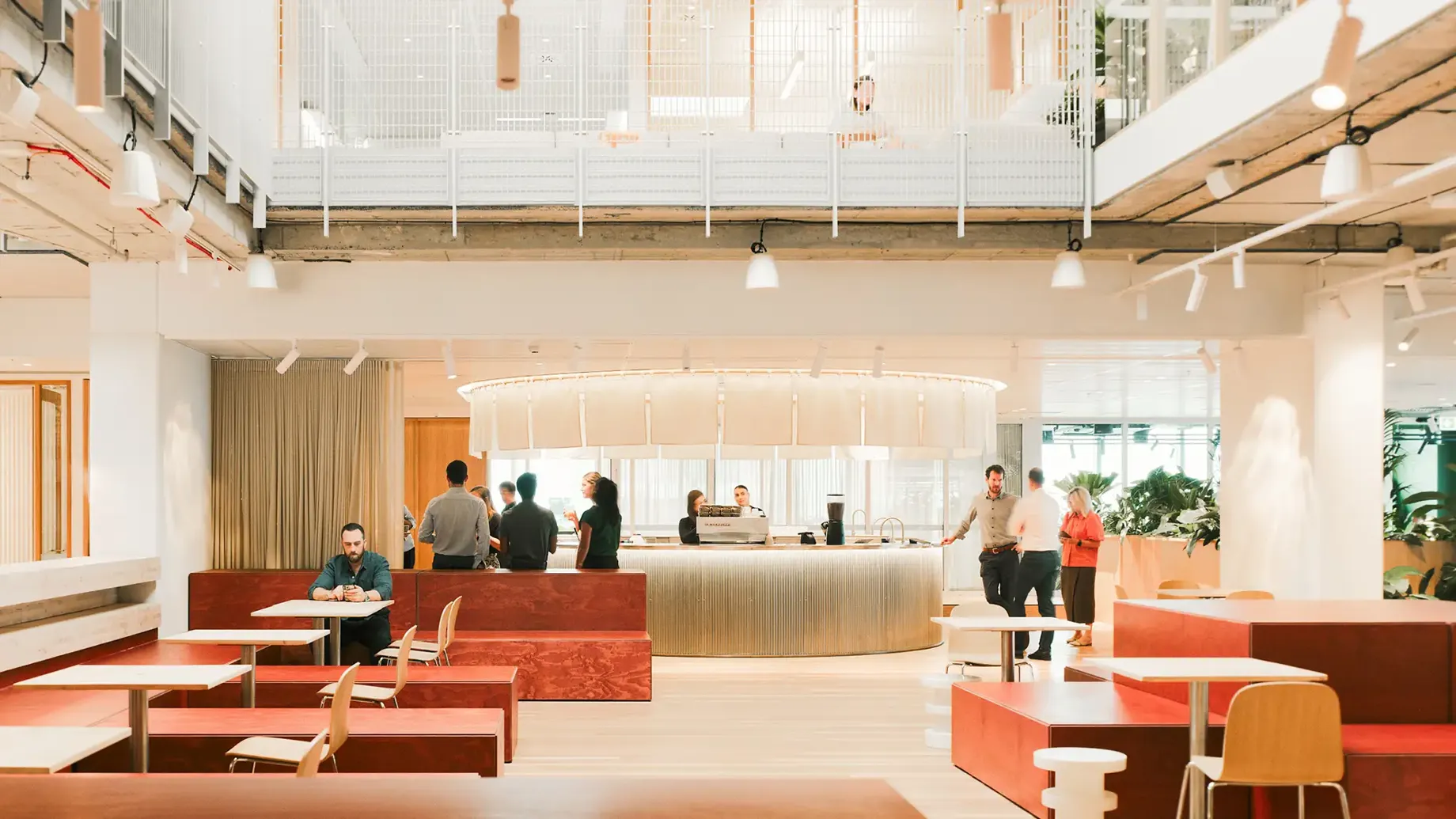
Our Brisbane team needed a new workplace that reflected who we are – our values, culture and connection to each other and the city. Located on the city’s fringe in an outdated office, our previous workplace no longer supported our ways of working. We sought a flexible, people-centred environment that would grow with us, foster collaboration and offer a stronger sense of place within Brisbane’s evolving urban fabric.
Through regenerative and sustainable design, building upon previous workplace project experience, and guided by the imperatives of the Living Building Challenge, we demonstrated what’s possible when transforming space within existing legacy buildings into high-performance, future-ready workspaces. Our experts in structural engineering, workplace strategy, landscape architecture and sustainable buildings collaborated with Hassell, Buildcorp, Blaklash and Five Mile Radius to create a space centred on sustainability and wellbeing. Together, we created a workplace that celebrates Country, enhances environmental outcomes and meets the needs of our dynamic and diverse team.
Now located in Brisbane’s CBD, our new workplace is a hub for connection between people, place and purpose. It celebrates regenerative design principles, enhances wellbeing and provides a vibrant setting for collaboration and community. With space to grow, host and create, it supports our work today and our vision for tomorrow, contributing to Brisbane’s transformation ahead of the 2032 Olympics and the city’s long-term future.
Regenerative and sustainable fitout benefits people and the environment
Our new workplace is designed to meet the Living Building Challenge certification, the Living Future Institute’s global benchmark for regenerative buildings. This approach aligns with our firm’s commitment to pursuing this challenge for all new workplace fitouts in Australia and New Zealand.
We leveraged insights from our Auckland, Adelaide, and Perth workplaces, applying them to material selection, collaboration, procurement models and progress tracking. Adopting a scientific approach, we monitor every material – from timber to adhesives and furniture – and all waste reuse through a digital dashboard. Our strategy marked a shift in material sourcing, focusing on what is available and reusable rather than designing first and sourcing later. We also prioritised working with local suppliers to source salvaged materials, a fundamental shift supporting sustainability and the circular economy.
Collaborating with Buildcorp and Five Mile Radius, we incorporated over 100 salvaged materials from other sites, such as ripple iron, pine cores and green granite from a demolished building façade. Partnering with Five Mile Radius, a research, design, and manufacturing studio for natural and recycled materials, we increased the use of recycled materials in the furniture throughout the space. For example, the meeting room tables are made from camphor laurel – an invasive weed species. By removing this tree, we have created bespoke and quality furniture while benefitting the natural environment.
An inclusive, healthy and connected workplace experience
Together with Hassell, we held a series of workshops with our Brisbane team to craft a workplace experience strategy that guided our design decisions. This process highlighted several themes our people wanted in their new space: visibility, ease, inclusion, connection and kindness. Our design targets a WELL Platinum Certification and prioritises the health and wellbeing of those who use the space. Features include sit-stand desks and winter gardens with louvres that allow access to fresh air.
The Living Building Challenge recognises that environments with a greater connection to nature demonstrate improved performance by the people who inhabit them. Biophilia is prioritised throughout the workplace with almost 2,000 plants and over 80 species. Nearly 100 per cent of all workstations, meeting rooms, boardrooms and breakout spaces have a direct line of sight with either the natural landscape, water or vegetation – exceeding the 75 per cent benchmark.
The workplace is designed to be inclusive, accommodating neurodiversity and mobility needs. Facilities such as a parent’s room, a multi-faith space with a foot wash, focus rooms, smaller neighbourhoods and ramps for level changes ensure a supportive environment for all employees and guests
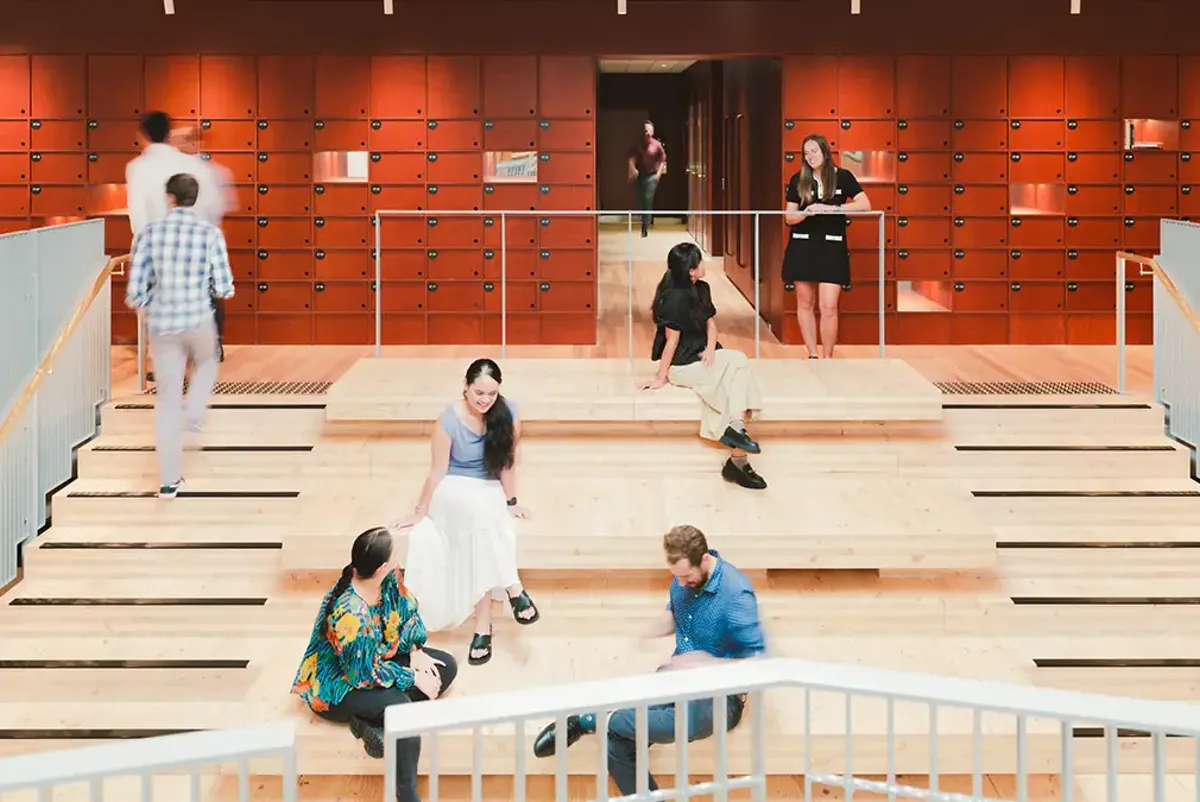
The large timber staircase is designed to foster collaboration and teamwork © Hassell
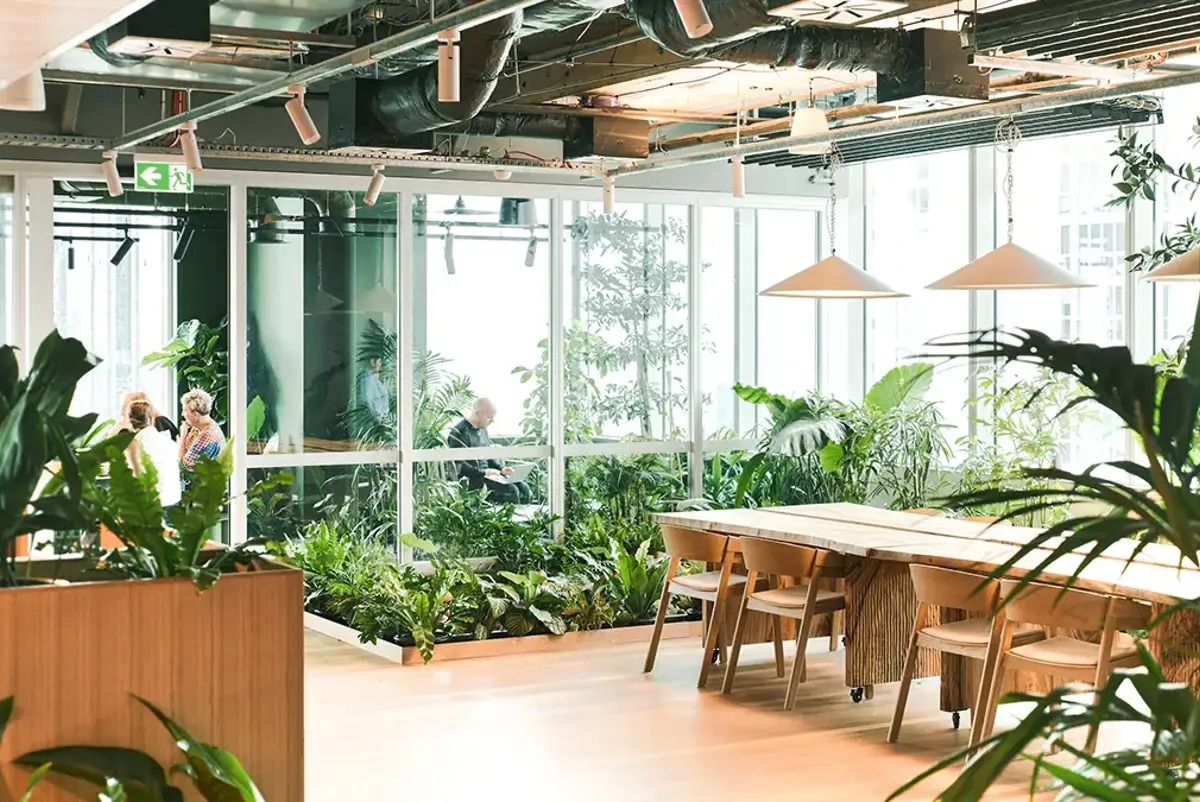
Vibrant gardens and plants in communal areas © Hassell
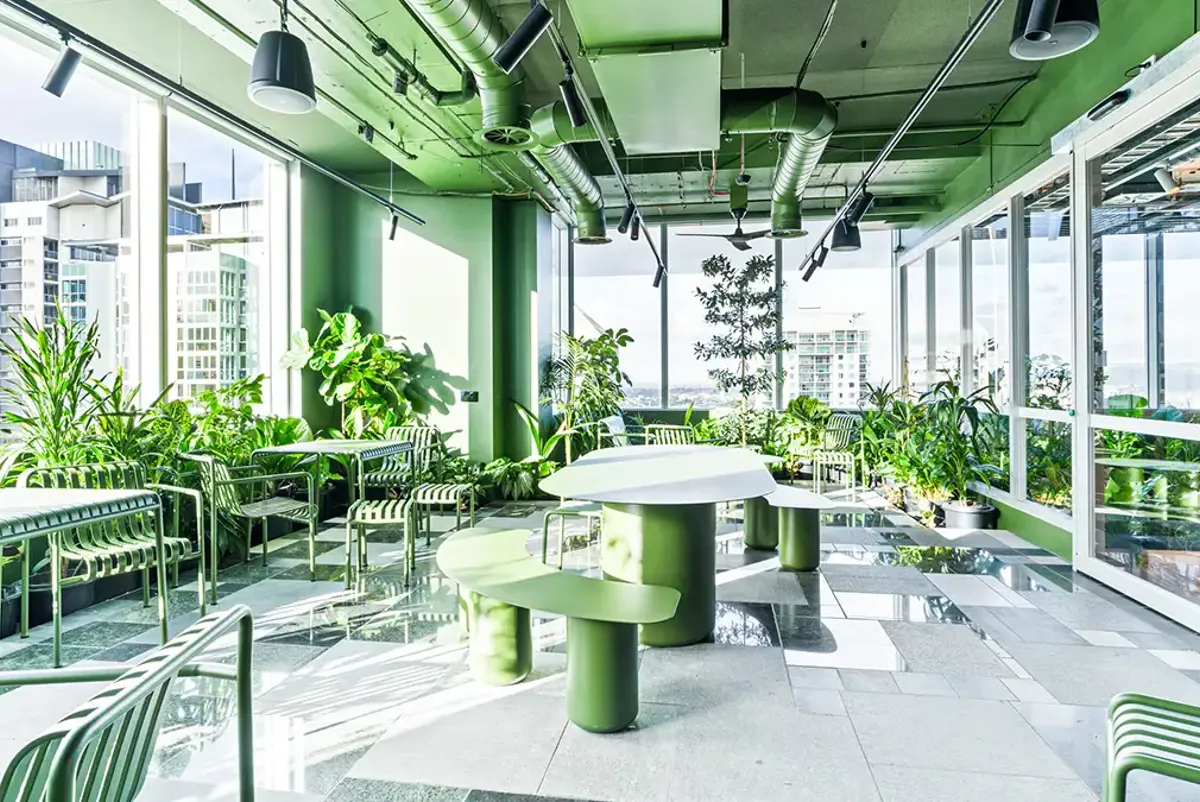
The winter garden area © Buildcorp
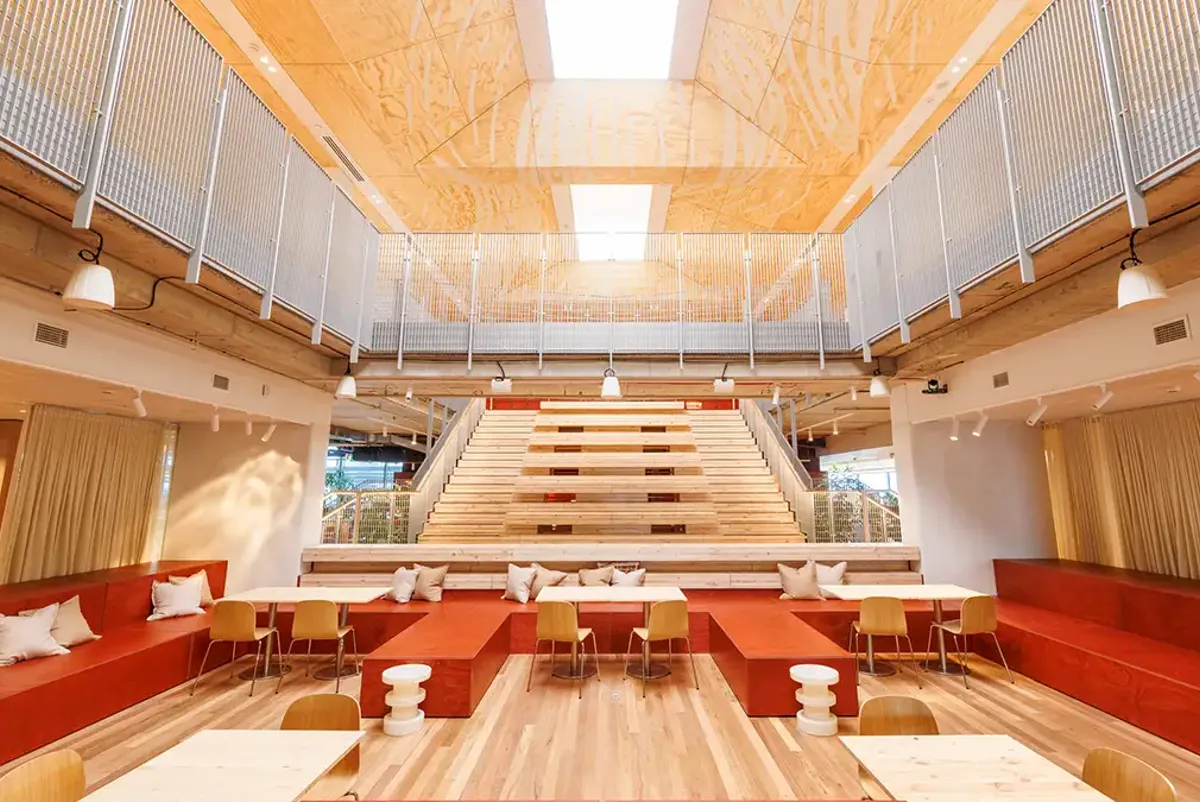
Keisha Leon’s artwork transforms the atrium ceiling into a living dialogue with Sky Country © Black Canvas
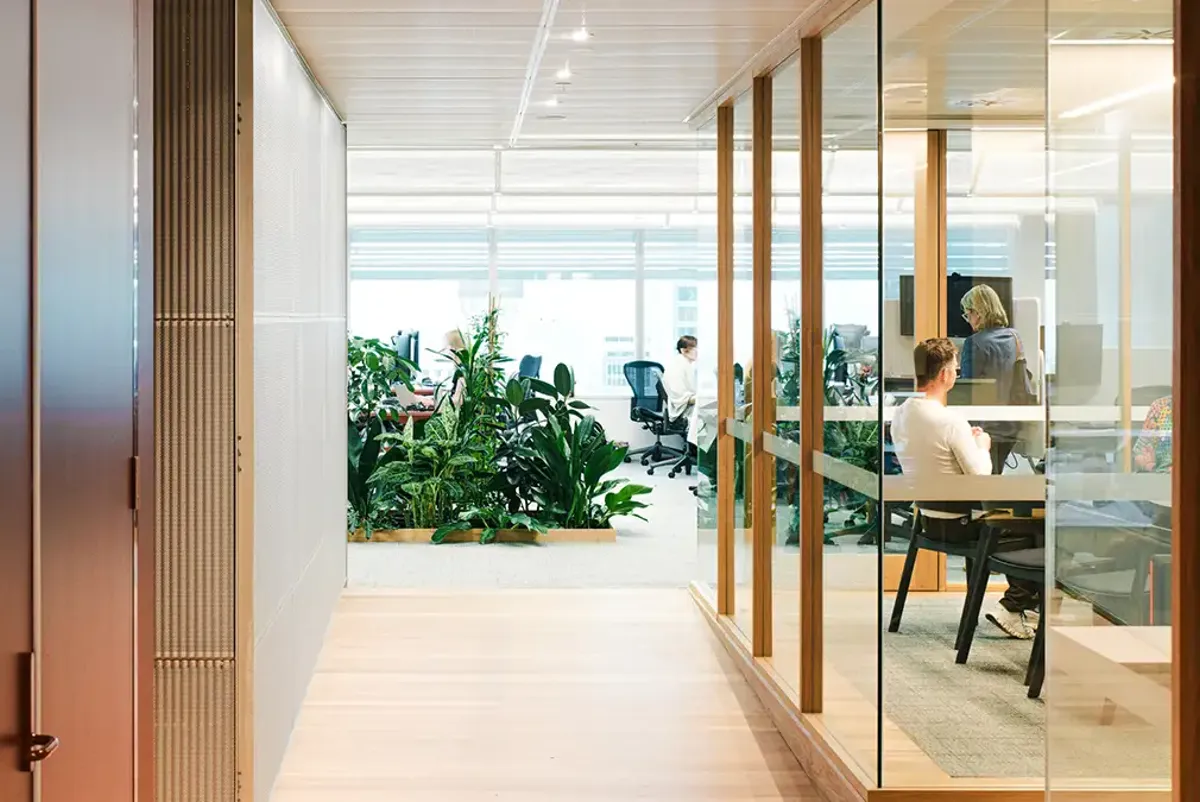
Visibility across the workplace enhances connection © Hassell
Embedding First Nations voices in workplace design
The workplace embeds First Nations design as a living dialogue with Country. Blaklash reimagined the space as an extension of the cultural landscape, where every element from wayfinding to furniture speaks to Country.
As part of the Living Building Challenge, Blaklash led an immersive eight-hour biophilia workshop with the whole project team, unearthing the site’s layered history – from its original creek to the surrounding riparian woodlands. In collaboration with Five Mile Radius and Hassell, Blaklash reimagined the workplace’s central hub as a contemporary interpretation of the original waterway adjacent to the site. This communal area became a modern gathering place, mirroring the role creeks once played as meeting points for community, travel and trade. Knowledge was translated into tactile design gestures, including bespoke timber furniture and joinery referencing the creek and endemic plant species through carving details. Each piece became a functional artefact of place, weaving the landscape’s memory into daily workplace rituals.
Keisha Leon’s artwork transforms the atrium ceiling into a living dialogue with Sky Country. Keisha Leon is a proud Waanyi and Kalkadoon woman and designer who runs her own design studio Cause/Affect. Blaklash led the artwork’s technical execution, collaborating with Studio Ongarato to extend its presence into meeting rooms through glazing decals ensuring Leon’s vision became an active, daily encounter with Sky Country.
Moving beyond performative gestures, with Blaklash we reimagined our Acknowledgement of Country as an ongoing dialogue with place. Blaklash wrote prose that speaks to the original waterways and acts as an integrated Acknowledgement of Country. The text was strategically woven into the workplace, orienting employees and guests to cultural landmarks like the Brisbane River and the original creek.
The result is a workplace that actively learns from Country: furniture patterned after riparian ecosystems, storytelling artwork mapping Sky Country, and commissioned prose anchoring the space in local knowledge. From the moment of arrival and during the day’s work, the workplace design invites a continuous dialogue with Country, its history and its future.
Modular staircase design provides a place for connection
The workplace features expansive, open floor plates designed to maximise visibility and connection. This is intentional to promote spontaneous interactions and access to collaborative areas, fostering a culture of open communication and teamwork.
A timber staircase is the centrepiece of the workplace layout, connecting the two floors and providing a place to host events and for people to connect. The design features modular CLT panels that are screwed together, eschewing the need for traditional stair stringers and maintaining the pure ziggurat form. The design adopts a “kit-of-parts” approach, with each element dimensioned to fit within the goods lift and sequenced for efficient onsite assembly. Mechanical screw fixings support ease of construction and potential re-purposing – aligning with circular economy principles. No structural adhesives were used to connect the panels, avoiding the need for potentially harmful glues and enhancing both environmental performance and end-of-life disassembly.
Due to the challenges of wet trades in the building, concrete was ruled out early in the material selection process. We selected cross-laminated timber (CLT) for its lighter weight and carbon sequestration benefits. CLT aligns with the project’s sustainability goals and Living Building Challenge. The supporting structure incorporates steel beams discreetly and efficiently, enabling the clean expression of timber. The staircase support system was designed to facilitate future flexibility, allowing for potential future extensions or integration with adjacent floor spaces.
Hassell / Buildcorp / Blaklash / Five Mile Radius
Projects
Explore more building retrofit projects

Securing the future of a 15th century building in the heart of Yorkshire
York Guildhall, United Kingdom

Employing adaptive reuse to support Seattle’s growing life sciences industry
Unison Elliott Bay, USA

Repurposing an old school building into a space for 21st century science
Sir William Henry Bragg Building, University of Leeds, United Kingdom

Transforming a 19th century concert hall into a modern performance venue
Bristol Beacon refurbishment, United Kingdom
Get in touch with us
If you'd like to speak to one of our property experts about any of the issues raised on this page or a potential collaboration then please get in touch by completing the form.
