
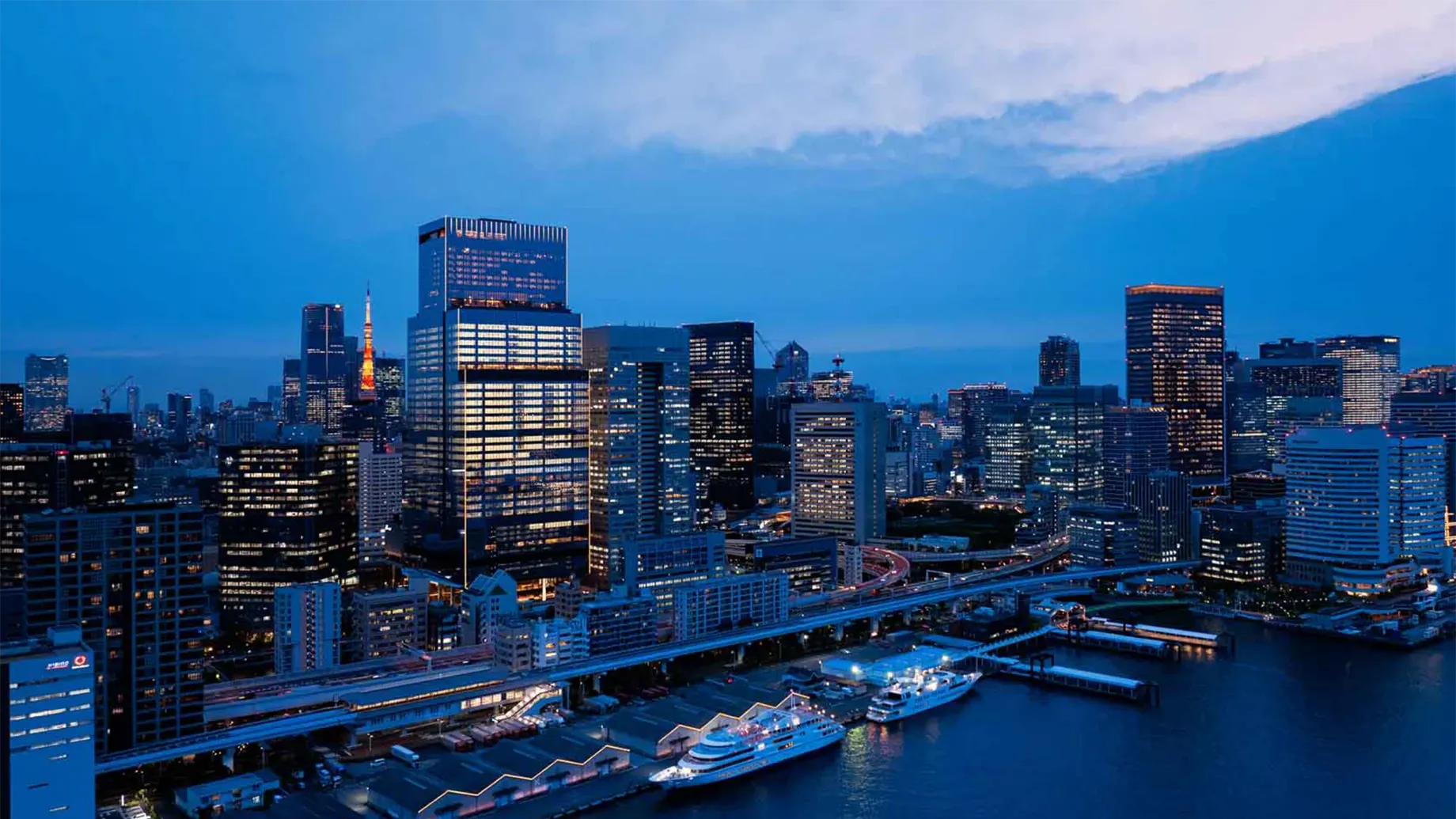
BLUE FRONT SHIBAURA is a large-scale mixed-use development comprising twin towers of approximately 230m, housing offices, a hotel, residences, and retail shops. Located in Shibaura, Tokyo, the project occupies a site of over 4ha, incorporating existing buildings owned by Nomura Real Estate Development Co., Ltd. and East Japan Railway Company, as well as the former car train terminal site.
We provided structural engineering services from masterplanning through to site supervision, as well as façade engineering during the early planning stages.
The project is being delivered in phases. The first tower, TOWER S, opened in September 2025, with the full development – including the second tower, TOWER N – scheduled for completion in 2031.
A unified sculptural landmark
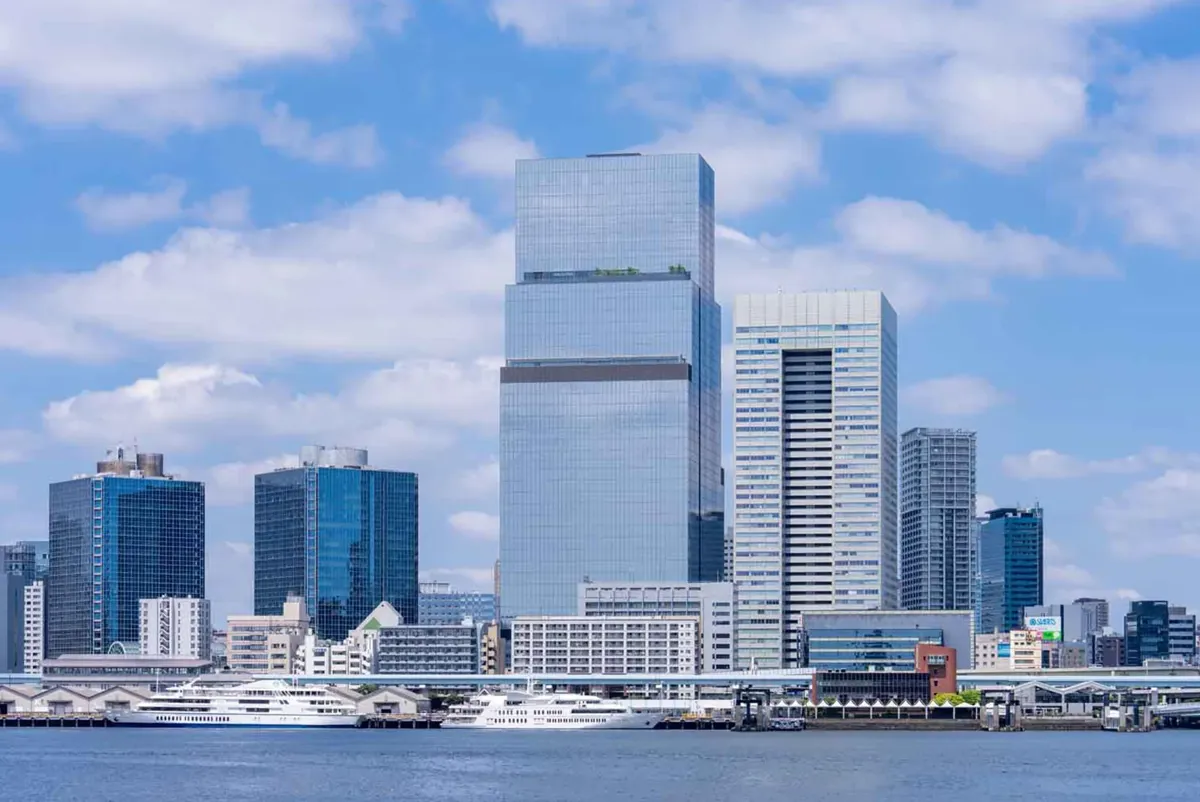
The twin towers, each with a distinct form yet conceived under the poetic concept of ‘two as one’, were envisioned by world-renowned architect Fumihiko Maki. The inspiration came from Edo-period ukiyo-e artist Harunobu Suzuki’s ‘Lovers Walking in the Snow’, depicting two figures sharing a single umbrella – mirroring how the two towers stand together to form a unified new landmark for Tokyo.
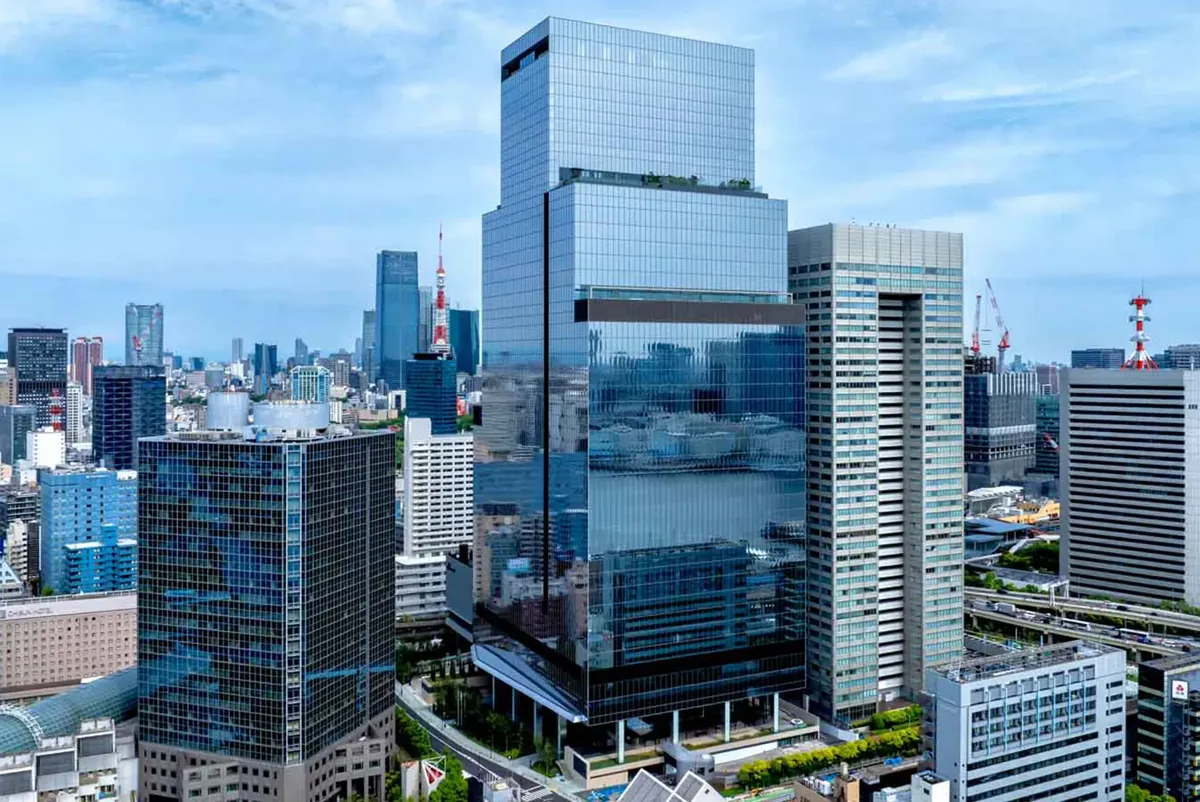
The exterior reads as an abstract glass sculpture: dynamic, yet delicate, reflecting Tokyo’s dual character of vibrant energy and serene stillness.
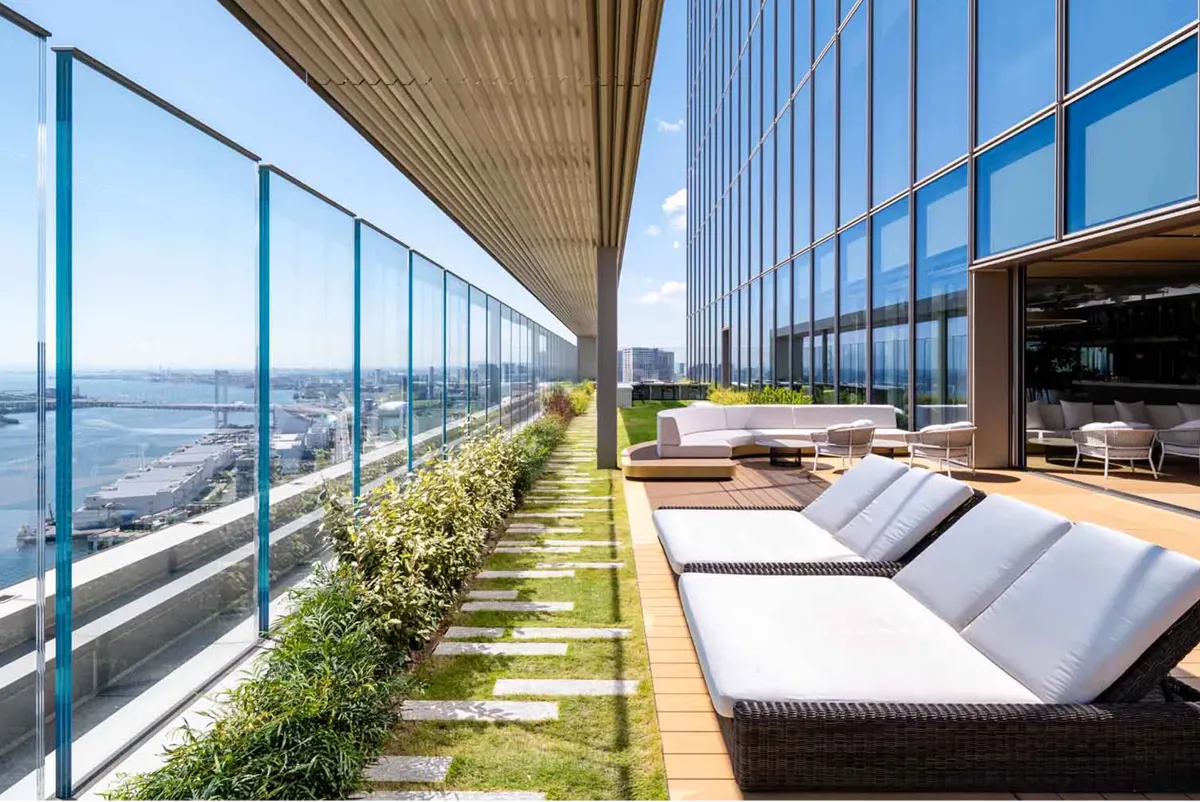
The building silhouette steps back progressively at upper levels, responding to the receding elevator core and forming sky terraces that open toward the horizon. From elevated sky gardens, visitors can experience panoramic views where bay, river, mountains, sky, and city merge into a single landscape.
Achieving this openness required a large-span structural system – rare in conventional high-rise design – while also meeting the stringent seismic performance required for the development to function as a disaster response hub.
Balancing openness with resilience was one of the key challenges of this project.
The total floor reaches approximately 550,000m², making it the largest project undertaken by Arup’s Tokyo office.
Innovative megastructure for an open and flexible tower
In supertall buildings around the world, structural systems known as megastructures—such as outrigger systems—are commonly employed. In contrast, high-rise buildings in Japan have traditionally relied on uniform moment-resisting frame structures.
For this project, we proposed the adoption of an outrigger system from the competition stage, tailored to the building’s setback form and designed to also function as a transfer truss. This megastructure maximises the efficiency of the central frame and damping devices, while minimising the number of perimeter frames—resulting in a well-balanced, highly-efficient structural scheme.
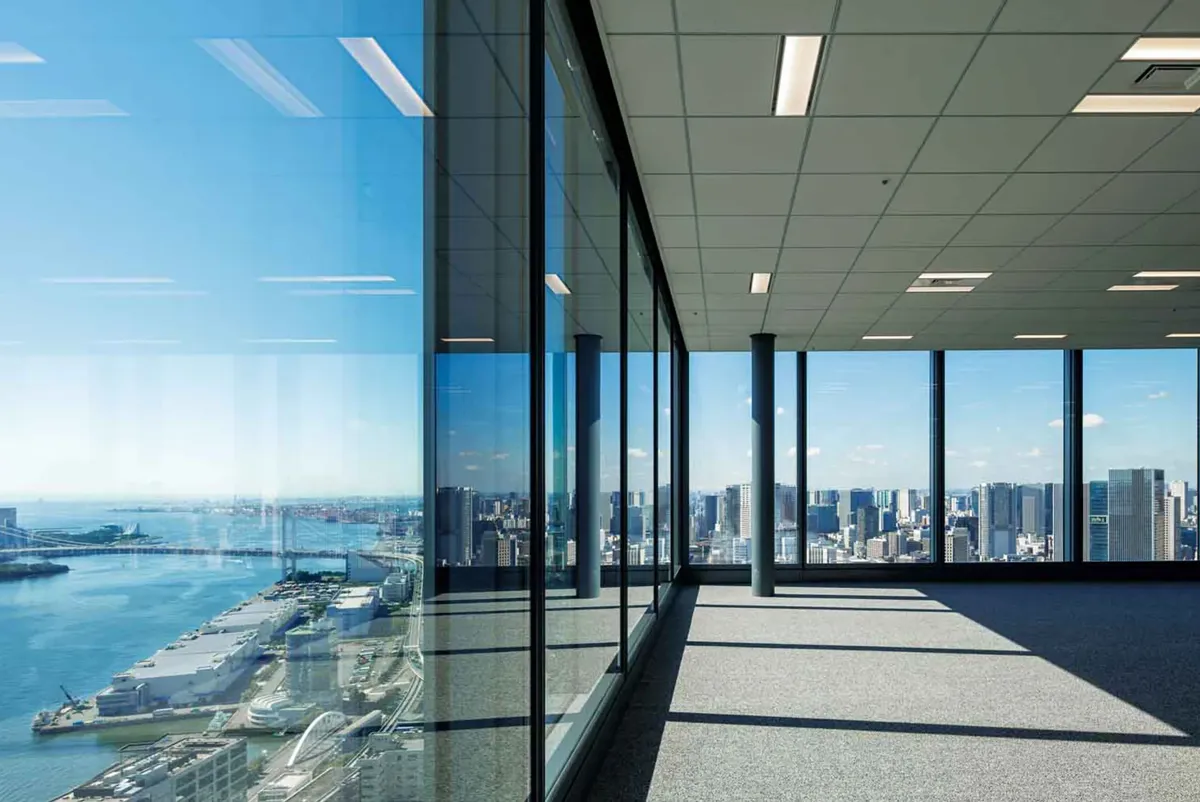
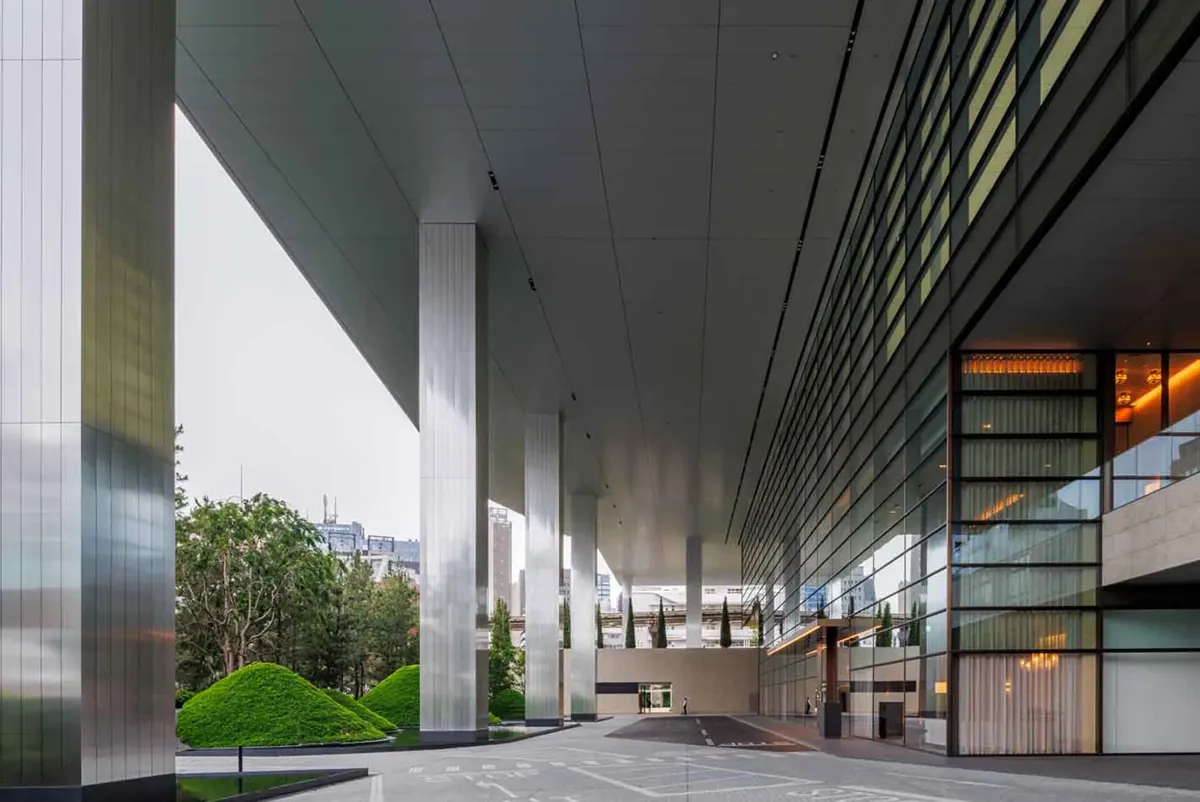
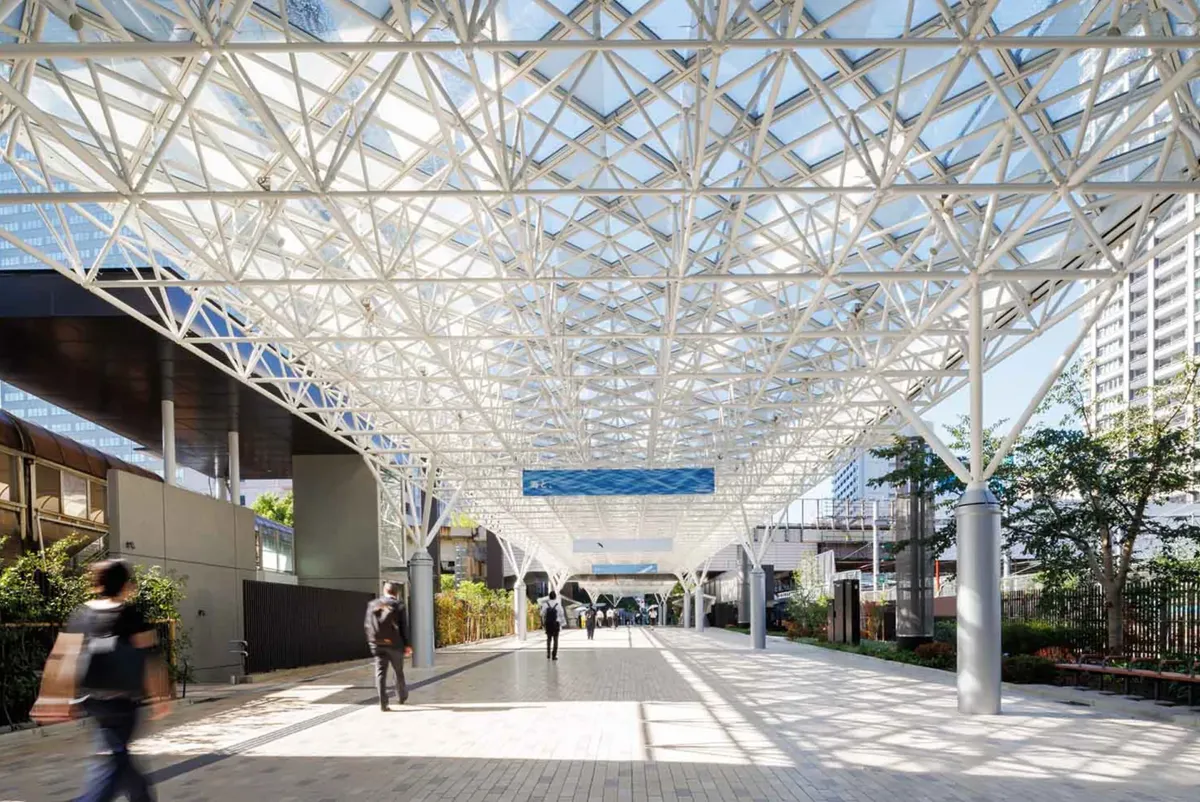
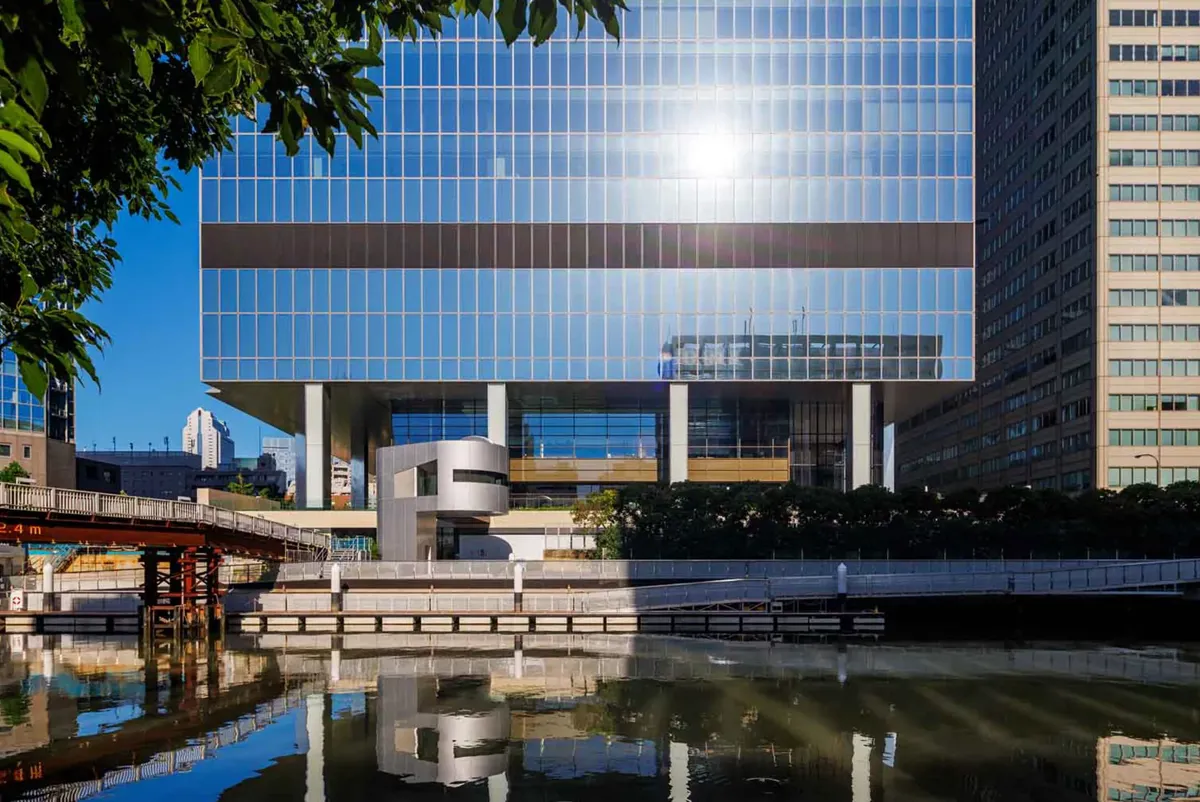
The outcome is a highly open architectural configuration that maximises panoramic views and enables flexible interior spaces exceeding 20m in depth. Furthermore, the long-span perimeter structure allows the lower levels to be opened up as public realm, creating a new urban landscape that harmonises with the surrounding city environment.
Mid-storey seismic isolation for enhanced safety and comfort
In this project, Shimizu Corporation—joining from the detailed design phase—proposed and implemented an innovative mid-storey seismic isolation system that utilises the upper portion of the building itself as a mass damper. By introducing a seismic isolation layer at a mid-level floor, the upper and lower sections of the building are able to sway in opposite directions during an earthquake, effectively cancelling out vibrations. This significantly reduces movement in both the upper and lower parts of the structure.
Unlike conventional seismic isolation systems that reduce motion by lengthening the natural period of the upper structure, this approach treats the entire building as an integrated damping mechanism. As a result, it achieves high seismic performance without the need for a large number of additional damping devices.
This innovation is particularly beneficial for the upper floors, which will house a luxury hotel. The system greatly reduces whiplash motion—one of the most difficult types of seismic response to control—thereby minimising the risk of furniture and fixtures toppling, as well as damage to interior and exterior finishes. This enhances both safety and occupant comfort while contributing to the long-term asset value of the facility.
Currently, demolition of existing high-rise buildings is progressing steadily in the Phase 2 construction area, in preparation for the grand opening of TOWER N in FY2030. We will continue to be actively involved in the project and contribute to its successful realisation.
Top image © Kawasumi・Kobayashi Kenji Photograph Office.
Nomura Real Estate Development Co., Ltd.
SHIMIZU CORPORATION
Projects
Explore more property projects

Delivering a seamless user experience for a vibrant mixed-use development in the heart of Detroit
Hudson's Detroit, USA

Serving the greater Houston community with an accessible, cutting-edge facility
Houston Endowment Headquarters, USA

Seattle Convention Center’s Summit building breathes new life into Seattle’s urban core
Seattle Convention Center Summit building, USA

How can timber help to decarbonise housing construction in Africa?
Gatsby Africa, Kenya
Get in touch with us
If you'd like to speak to one of our property experts about any of the issues raised on this page or a potential collaboration then please get in touch by completing the form.
