
Enhancing flood defences with nature-based solutions to protect people and wildlife
Brighouse Flood Alleviation Scheme
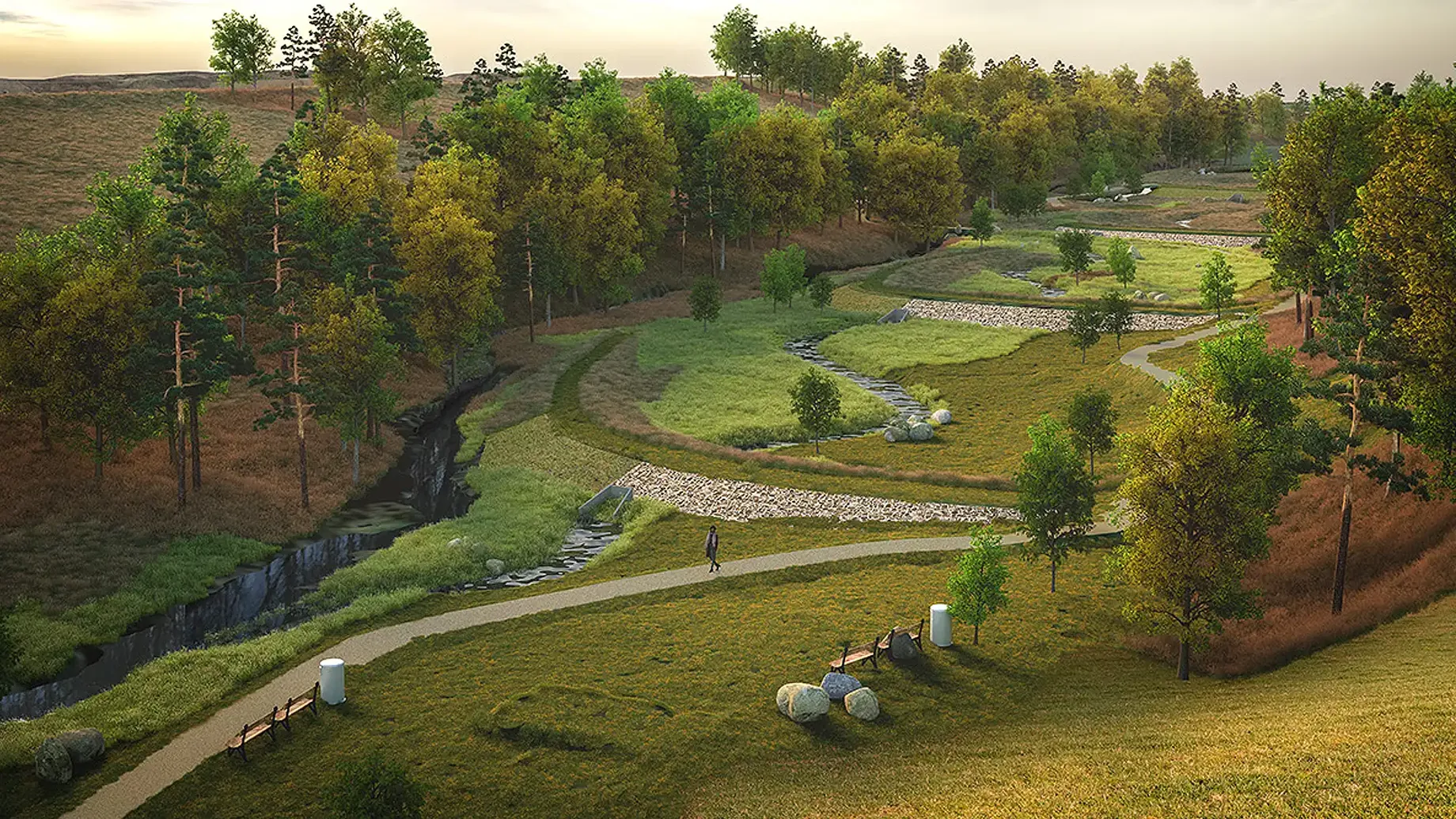
Brighouse in the Calder Valley has been subject to flooding on 43 occasions since 1827. The community needed a scheme to better protect homes, businesses and transport links in the area with durable flood defences. As the risk management authority, the Environment Agency needed a solution that was socially, economically and environmentally sustainable.
Arup developed a comprehensive scheme to reduce flooding across the town and increase the community’s resilience to flood events. This involved refurbishment and repair to extend the life of existing flood defences, construction of new flood defence assets, and creation of five landscaped washland areas designed to slow the flow and mitigate the impact of rising flood waters. Our work involved optioneering and detailed design, environmental impact assessment, securing planning permission and supporting the construction process.
The scheme has helped unlock the economic potential of Brighouse as a focal point for regeneration in the Calder Valley. It reduces flood risk to over 350 commercial and 55 residential properties, and the main highway connection from Calderdale to the M62.
The combination of measures implemented minimises carbon costs and maximises benefits for nature, the environment and the surrounding community – exceeding biodiversity net gain targets and improving amenity space within the town.
A collaborative approach to flood risk management
Our work involved close collaboration with the Environment Agency’s professional partners to align designs with wider programmes and future development strategies for transport, economic and housing growth.
Brighouse plays a vital role in West Yorkshire’s economy through its strong manufacturing heritage and strategic location within the Leeds City Region – supporting trade and investment across the UK and beyond. Significant development is in progress in and around the town to foster inclusive growth, boost local employment, and position Brighouse as a vibrant hub for enterprise and community life in Calderdale and the wider region. Improving the flood resilience of Brighouse’s commercial properties and transport infrastructure supports these efforts.
Our collaboration with the EA’s partners, particularly Calderdale Council, helped identify further opportunities to broaden benefits to the community. In two local public parks, attenuation basins were created. These landscaped structures are designed to temporarily store excess water before gradually releasing it into the drainage system. Working with the council, our landscape designs incorporate an active travel corridor and a course for a park run along footpath routes for people to enjoy.
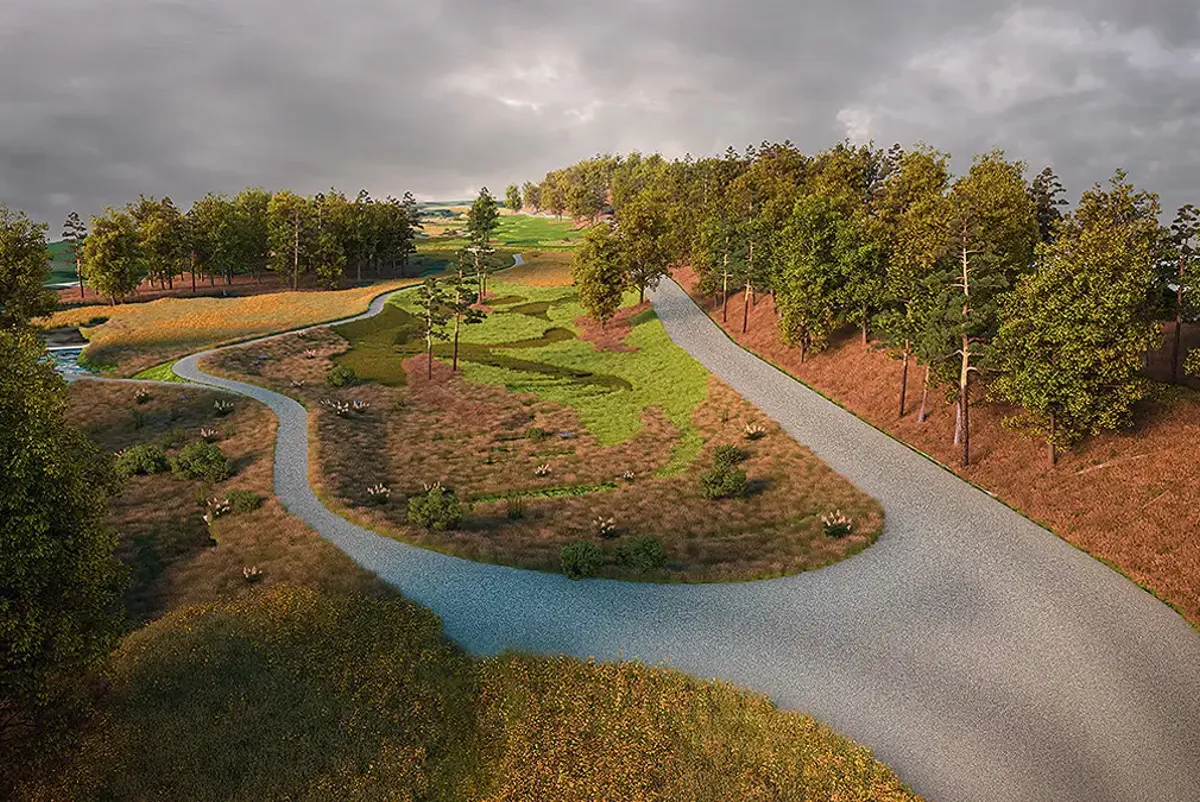
Landscaped basins in Whinney Hill Park will help slow the flow of floodwaters into Brighouse.
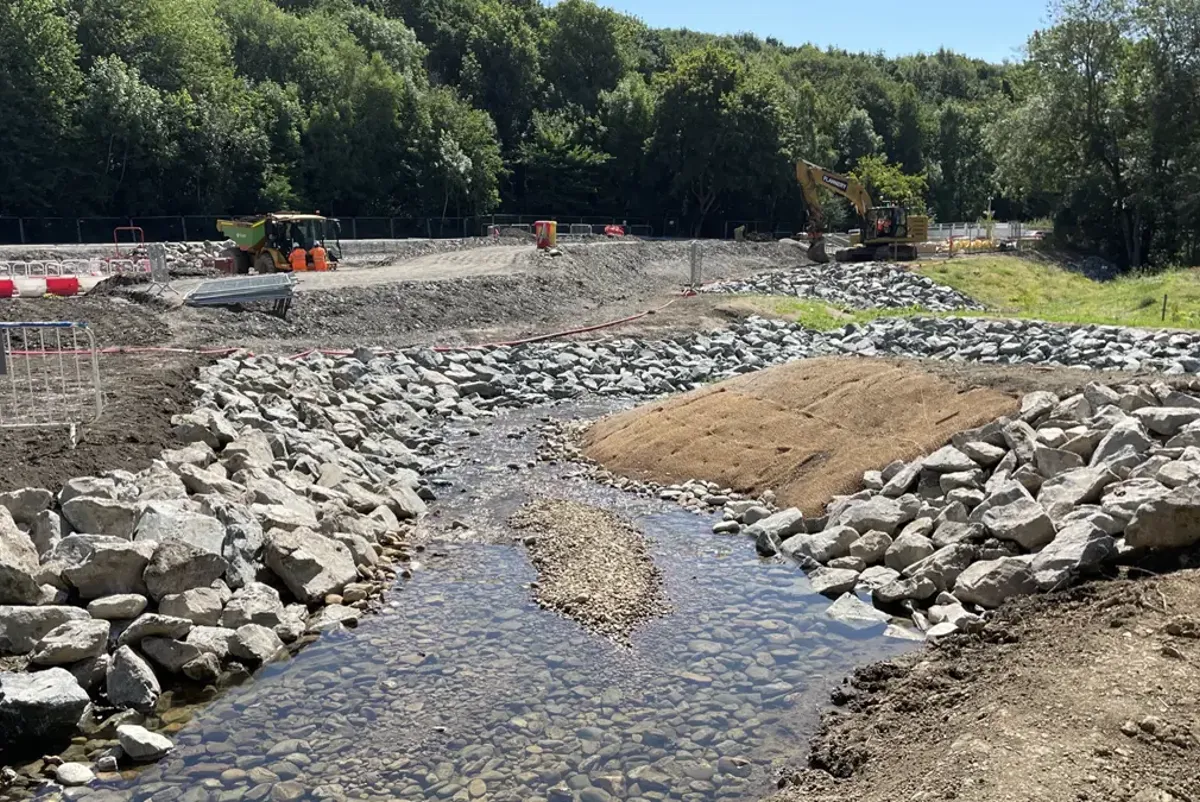
Realigning Clifton Beck makes it easier for fish to swim through.
Restoring nature through sustainable water management
Planning requirements for biodiversity net gain (BNG) are designed to ensure that developments leave the natural environment in a better state than before. By embedding habitat gains throughout the Brighouse scheme, we exceeded these requirements, achieving a 36% gain in terrestrial habitat and 16.5% gain in watercourse habitats, as well as removing barriers to fish passage.
In Brighouse’s Wellholme Park, an existing weir severely impeded fish movement. To address this, we designed a new channel with naturalised riverbank profiles. We included channel margin features such as bars, islands and vegetation at the water’s edge to help improve the flow of the river. Improving the substrate diversity (the variety of material on the river bed) supported a wider range of habitats for different organisms. These measures resulted in a 16.57% gain in watercourse BNG units on site, while realising key Water Framework Directive objectives to improve water quality, remove barriers to fish migration, restore rivers and rehabilitate flood zones.
Our catchment analysis also identified the optimum locations for a programme of complementary natural flood management interventions in the upstream Clifton Beck catchment. These are being implemented and managed by a network of NGOs, coordinated by Calderdale Council and Yorkshire Wildlife Trust. They are expected to yield increasing benefits for biodiversity, carbon sequestration and flood attenuation as they mature over the next few decades.
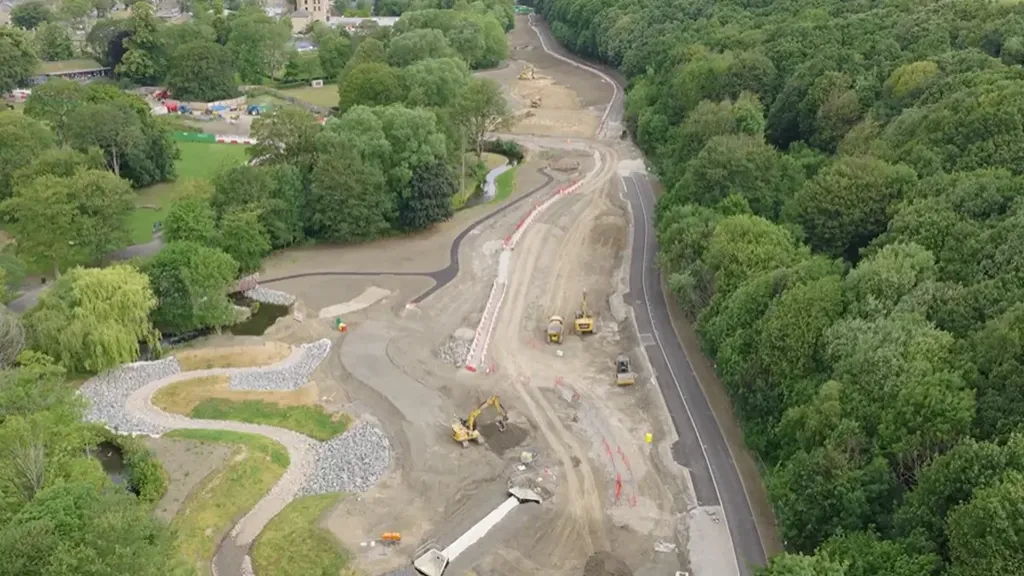
Bam Nuttall Ltd / Calderdale Metropolitan Borough Council / Yorkshire Wildlife Trust
Projects
Explore more water projects

Geospatial analysis and visualization to support community-led, cross-border environmental interventions
Tijuana River Index, Mexico, USA

Improving water security and sanitation for millions in urban India
Australia-India Water Security Initiative (AIWASI), India

Using AI to uncover and prioritise Inflow and Infiltration reduction opportunities
Addressing Inflow and Infiltration with Severn Trent Water in Gloucester, United Kingdom

Creating cool and green streets with spatial data
Strategic Prioritisation Map for Water Sensitive Urban Design, Australia
Get in touch with us
If you'd like to speak to one of our water experts about any of the issues raised on this page or a potential collaboration then please get in touch by completing the form.
