
Creating world-class aircraft maintenance facilities to transform British Airways’ operations
British Airways Engineering Wales
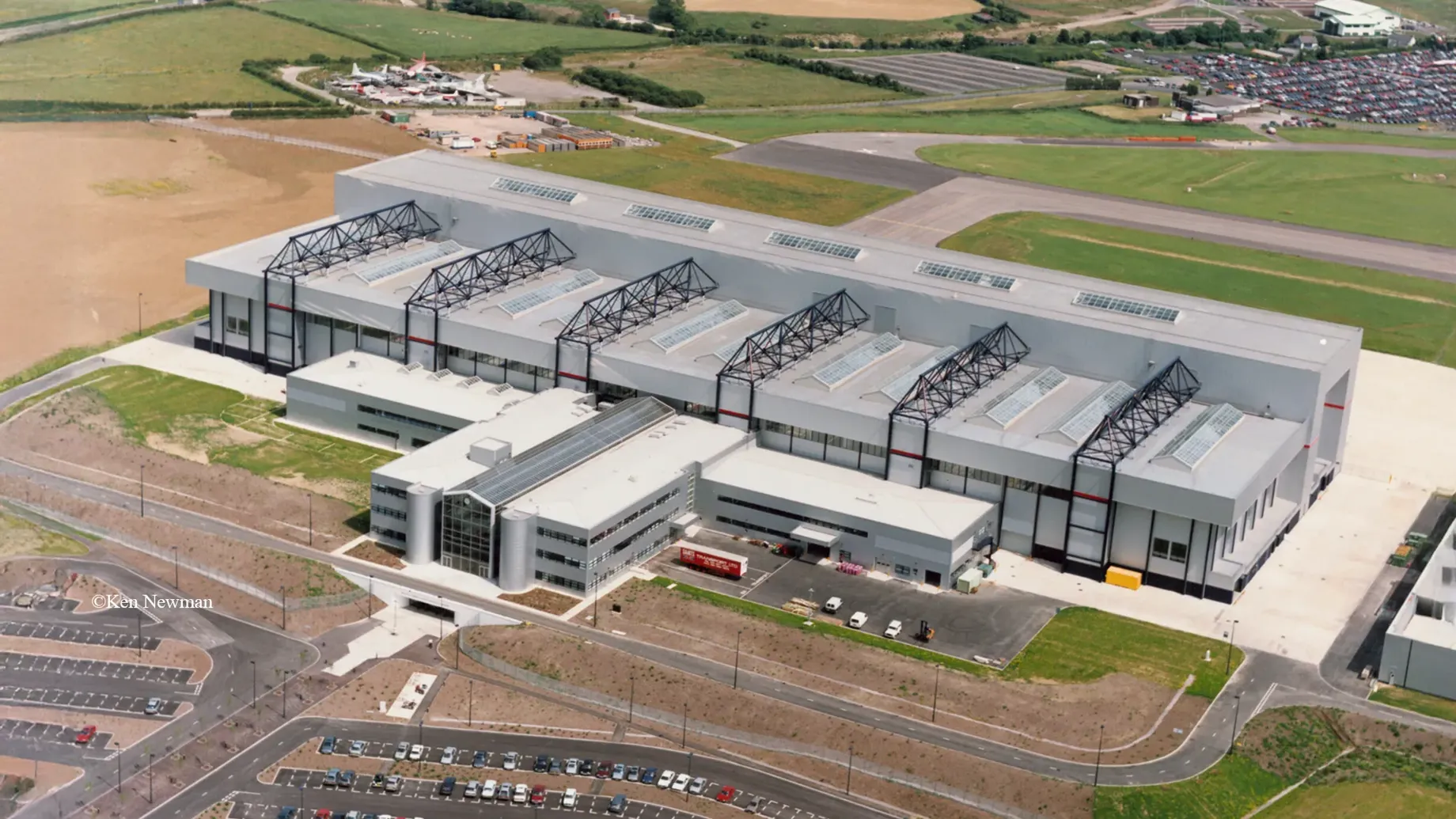
Operating one of the largest and most modern aircraft fleets of any airline in the world, British Airways requires advanced maintenance facilities. Its highly skilled team relies on specialist infrastructure and equipment to enable the deep maintenance, repair and operation of a flexible fleet. This is central to the airline’s global reputation for aircraft quality and reliability.
For more than 30 years, Arup has supported British Airways Property Services in maintaining and modernising British Airways fleet. We are repurposing maintenance facilities across the UK to service the latest aircraft models, improving efficiency and passenger comfort. British Airways values Arup as a single point of contact for services including master planning, feasibility studies, engineering, project management, construction oversight and operational readiness.
Expanding maintenance facilities is central to British Airways’ £7bn programme to deliver a world-class customer experience and drive on-time performance, giving the airline greater flexibility and control. Works at Cardiff have not only extended the lifespan of a 30-year-old facility, reducing whole-life carbon emissions, but also safeguarded 480 jobs for the British Airways Engineering Wales team, with 160 roles relocated from other sites.
Adapting facilities to meet future needs
When British Airways launched its heavy maintenance centre in Cardiff, it turned to Arup. As design team leaders, architects and engineers for the project – including civil, structural, building services, geotechnical, acoustic, fire and wind engineering – we created a 22,000m² hangar with three bays for deep maintenance of all Boeing 747 variants.
Opened in 1993, the facility introduced suspended access docking, hydraulic servicing pits and 10-tonne overhead cranes. The site also features an engine ground run pen, a 35,000m² apron and 15,000m² of workshops, offices and stores. To maximise clear floor space, we incorporated two 233m-long roof girders spanning the structure. At the time of construction, these were believed to be the longest in Europe lifted into position by hydraulic towers.
Across more than three decades of use, Arup has continued to adapt the maintenance centre for British Airways’ evolving fleet. Through rigorous feasibility studies, engineering expertise and design solutions, we have ensured facilities remain fit for the future.
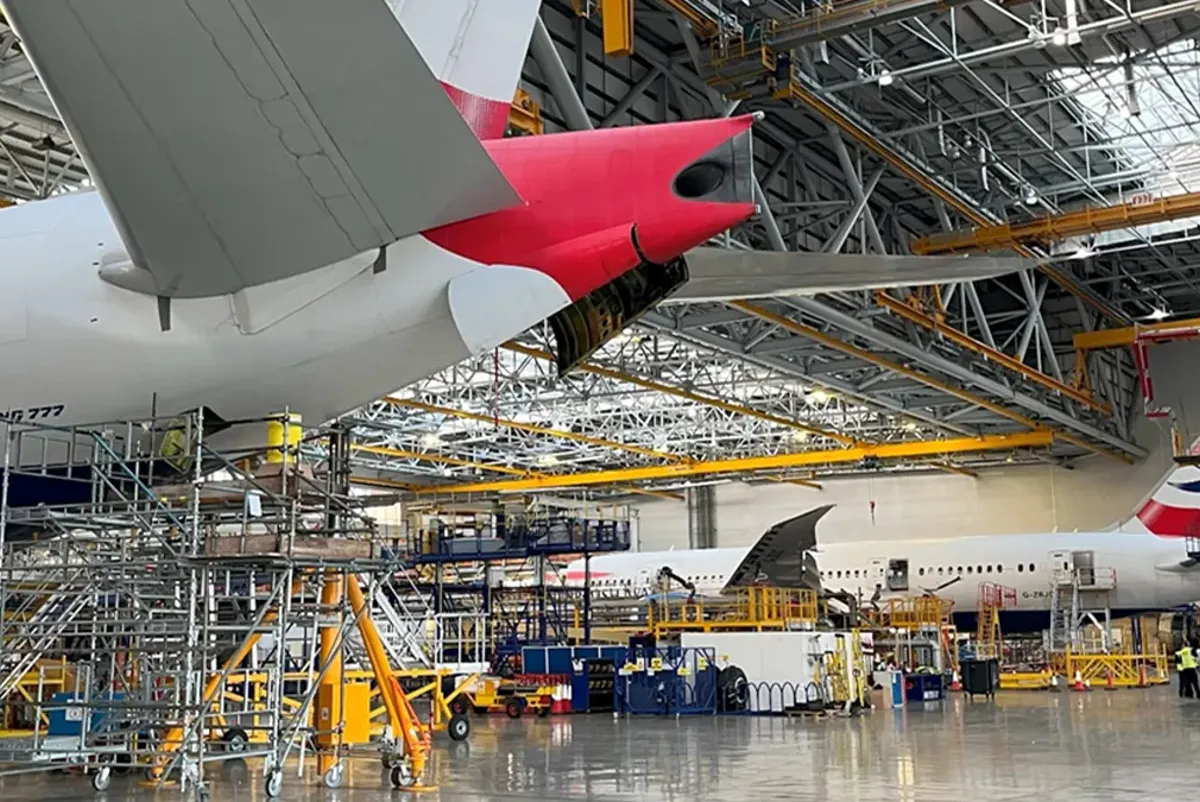
British Airways aircrafts inside Bays 2 and 3.
Unlocking opportunities for new aircraft technologies
With British Airways retiring Boeing 747s and introducing Boeing 777s and 787 Dreamliners, its maintenance centre in Cardiff needed adapting for modern aircraft dimensions and servicing requirements. Arup led a feasibility study that identified Bay 2 for conversion into a fully flexible bay to service the future fleet.
Opened in 2019, the repurposed bay incorporates modern, lightweight, mobile docking stations, upgraded workshops for large-scale component painting and extended repair workshops to handle more composite materials in new aircraft. New clean rooms meet stringent standards for temperature, humidity and airborne particles, supporting the aviation industry's evolving needs.
Building on the success of this project, Arup is now expanding Bay 3 at Cardiff. Previously used for servicing Boeing 747s and fitting new cabins and the Club Suite to Boeing 787s and 777s, the bay will be modified to create a second fully flexible facility for servicing the larger, long-haul Airbus 350, as well as Boeing 777s and 779s and more complex maintenance work. This will increase the airline’s efficiency across maintenance operations and support long-term growth.
Reducing costs and whole life carbon
Together with British Airways, Arup achieved significant savings on BA’s investment in the refurbishment of Bay 2, completed on schedule without disrupting 24-7 operations in adjacent bays.
Significant savings came from eliminating the need for a temporary screen between Bay 2 and Bay 3, where aircraft maintenance continued around the clock. Using digital modelling and close collaboration with contractors and British Airways Engineering Wales team, we identified alternative ways to mitigate dust and noise.
We further reduced costs and carbon emissions by reusing existing elements, including mezzanine steel beams, staircases, balustrading, plant and 400Hz cables. Additional savings were made by optimising workshop and paint booth layouts to minimise the amount of new construction required.
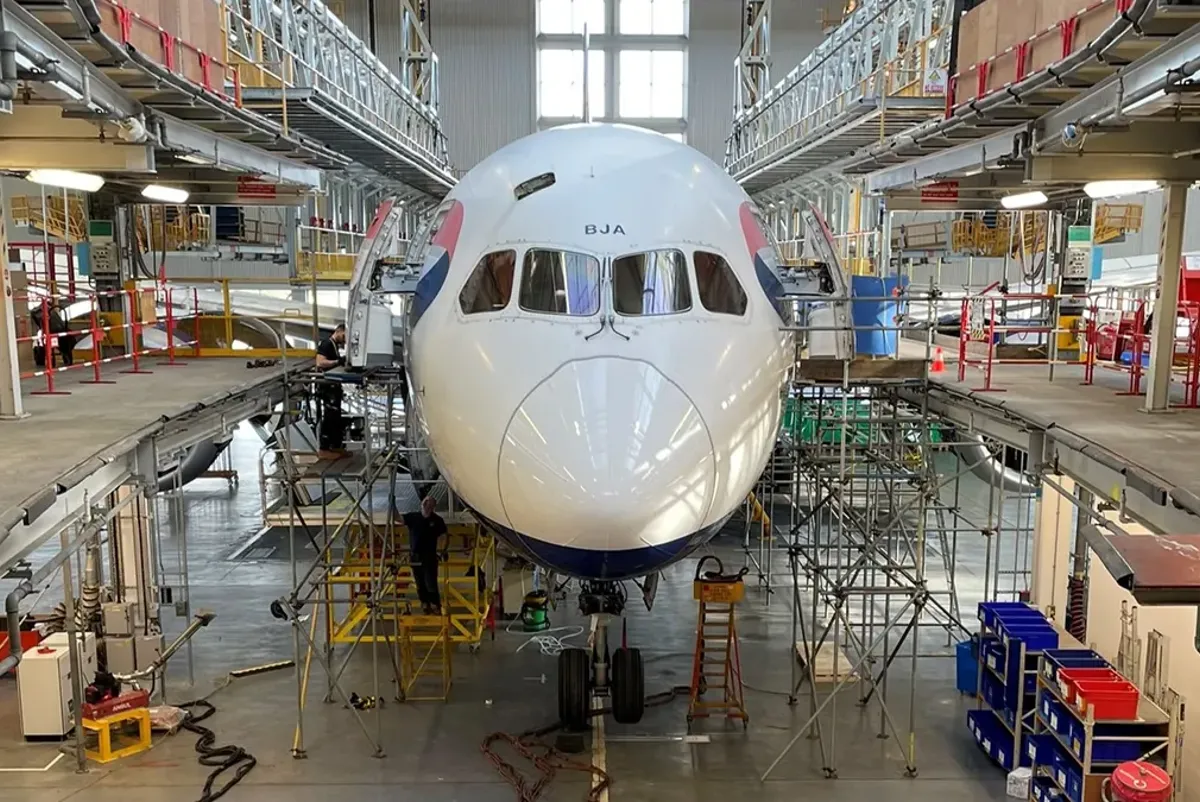
British Airways aircraft inside Bay 3.
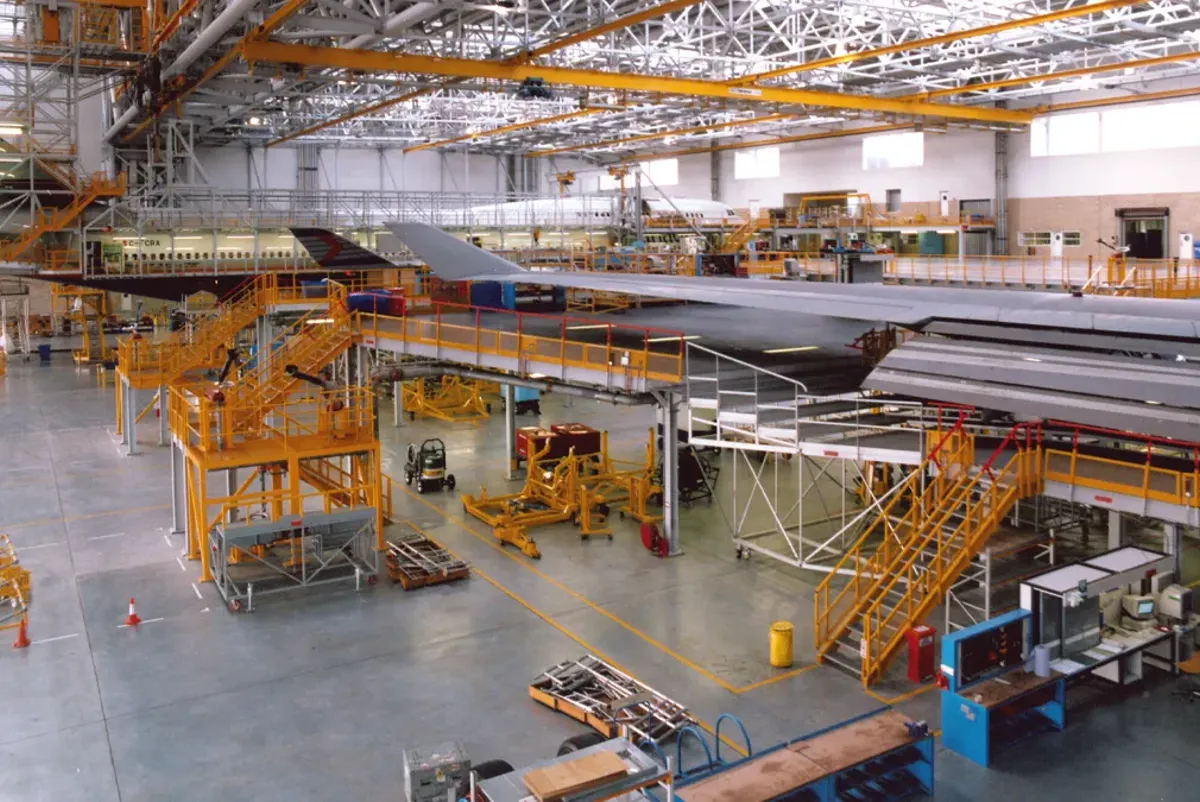
Inside view of Bay 3. Image credit: Ken Newman
Reducing risks through specialist expertise
In developing complex technical facilities, such as ground run pens and fire protection systems, British Airways benefits from our unique access to specialists across Arup to ensure that facilities meet all performance criteria and operational readiness. These include acoustic, fire and vibration engineers, building environment control experts and digital specialists.
The hangar fire protection system we engineered at Cardiff combines foam deluge coverage above the aircraft, with the innovative use of foam cannons positioned to protect aircraft underwing, overwing, undercarriage and tail structures.
Growing partnership across the UK
Building on the success of our partnership at Cardiff, Arup and British Airways have upgraded maintenance facilities across the UK to provide flexibility for nine different aircraft types.
At London Heathrow – one of the world’s busiest international airports – improvements include adapting a Grade II listed building for Airbus 380 aircraft, refurbishing hangars for all Boeing 787s and 777s, adding two engine pens for vital testing, upgrading a paint hangar for wide-body aircraft and replacing hangar doors, all while maintaining 24-7 operations.
We are also supporting British Airways with master planning, design, project delivery and feasibility studies across Cardiff, London Heathrow, Glasgow and BA’s latest Hangar 11 acquisition at Gatwick. This ensures regional airports remain integral to the airline’s network and deliver wider economic benefits through enhanced transportation services and improved air traffic management.
Projects
Explore more aviation projects:

Redefining Japan’s future airport city
Narita Airport City, Japan

Transforming the travel experience at Zayed International Airport
Zayed International Airport Terminal A, United Arab Emirates

Crafting a New York–inspired atmosphere for passengers traveling through JFK’s global gateway to the world
JFK New Terminal One Art, Branding, and Digital Experience Program, USA

Helping Vancouver International Airport to prepare for unexpected weather
Vancouver International Airport After Action Review, Canada
Get in touch with us
If you'd like to speak to one of our aviation experts about any of the issues raised on this page or a potential collaboration then please get in touch by completing the form.
