
A flexible stage for Mauritian life that blends culture, arts and business
Caudan Arts Centre
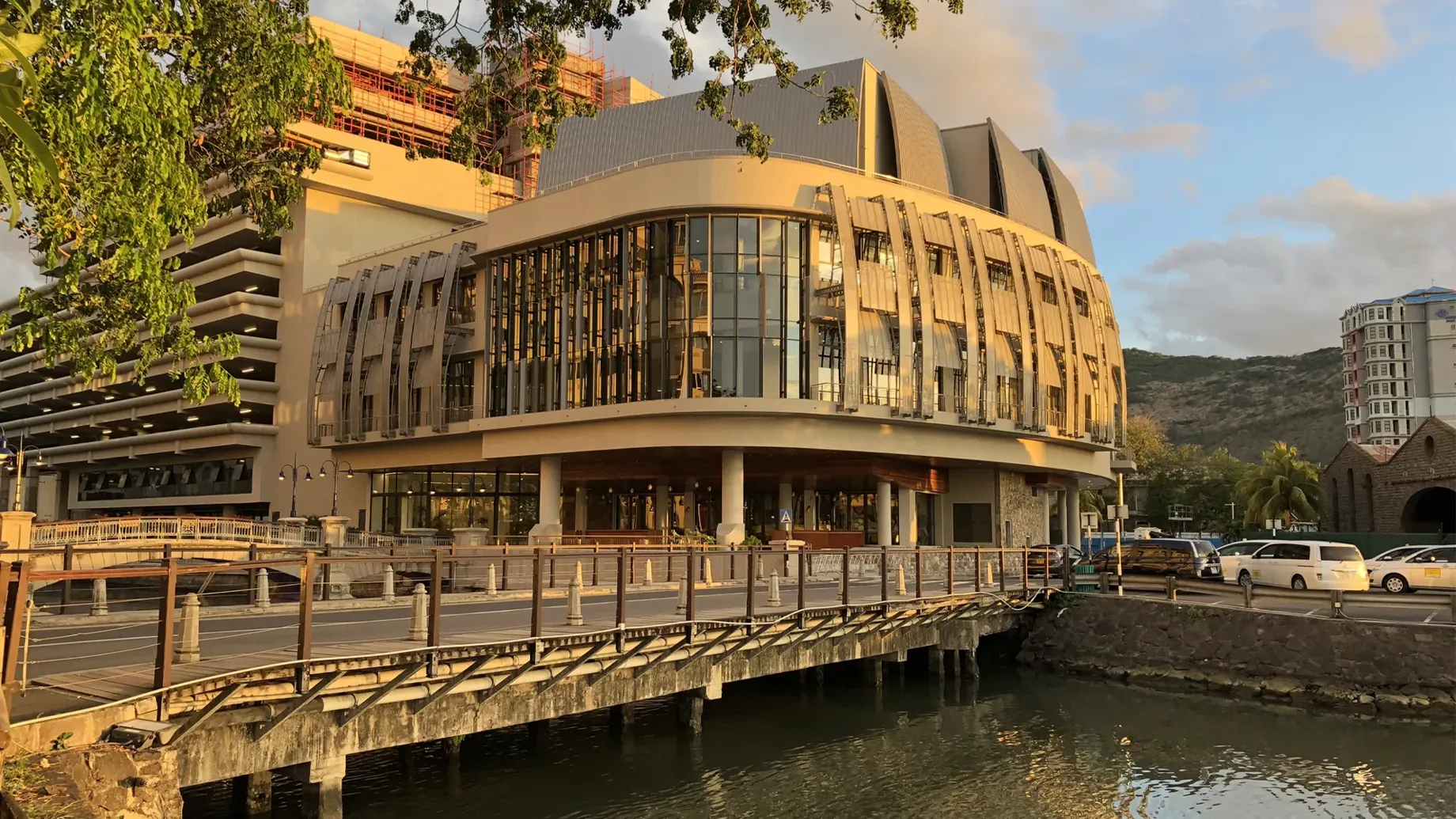
Situated on Port Louis’ Le Caudan Waterfront, Caudan Arts Centre is a first-class, modern venue for the creative arts. At its heart is a 431-seat theatre that hosts a vibrant programme of drama, music and dance. This versatile, mixed-use hub also includes a restaurant and facilities for conferences and education programmes.
We partnered with Caudan Development – a long-term Arup client – to design, engineer and advise on this award-winning project. Our local team in Mauritius led the structural, civil and MEP engineering. They collaborated with Arup’s UK-based experts in theatre and venue design, fire engineering, architectural lighting and acoustics. Together, we transformed what was once a car park into an inspiring cultural destination.
As the first new theatre in Mauritius in nearly a century, Caudan Arts Centre enables local artists to perform in a state-of-the-art venue equipped to stage high-end productions and product launches.
By nurturing local artists, hosting events and attracting businesses, this mixed-use hub has become a focal point for community life, innovation and creativity – generating economic growth and new opportunities.
Welcoming both local artists and international productions
Caudan Development was keen to make the most of the site, which overlooks the Bassin des Chaloupes.
Our specialists worked closely with executive architects Didier Ho, and with Maurice Giraud, on the concept and design. There were three key groups to consider: audiences, performers and the construction team.
The venue had to be a high-quality space that would attract audiences from across the island. Acoustics, technical equipment and backstage areas needed to be suitable for a range of drama, dance, music and other performances by both local and international artists. And, critically, the design had to factor in the ground conditions, and local construction methods and capabilities.
Shaping an effective, resilient structural design
Collaborating with the architects and developer, we explored different configurations for the building. Our design was driven by acoustics inside the venue, while also considering a range of other factors.
We retained some of the former car park to provide parking for the Arts Centre, but kept the theatre space structurally isolated so vehicle noise and vibration do not affect performances. With part of the parking area lying above an existing power utility building, we planned the construction process carefully to ensure that the city’s electricity supply would not be put at risk.
Our structural design also had to factor in the poor ground conditions in and around Port Louis. We used piled foundations to make sure the building would remain stable and resilient, despite the nearby river. And as Mauritius is exposed to tropical cyclones, we designed the building with the lateral stability required to resist extreme cyclonic wind gusts.
Inside the building, we prioritised sightlines, minimising visual obstructions such as columns. This approach continues throughout the atrium and conference rooms. Creating a self-supporting balcony area to retain unobstructed views of the stage was a challenge. We achieved it by spanning the full 18m width of the atrium with a main beam supported by two stepped cantilever beams, each spanning 7m.
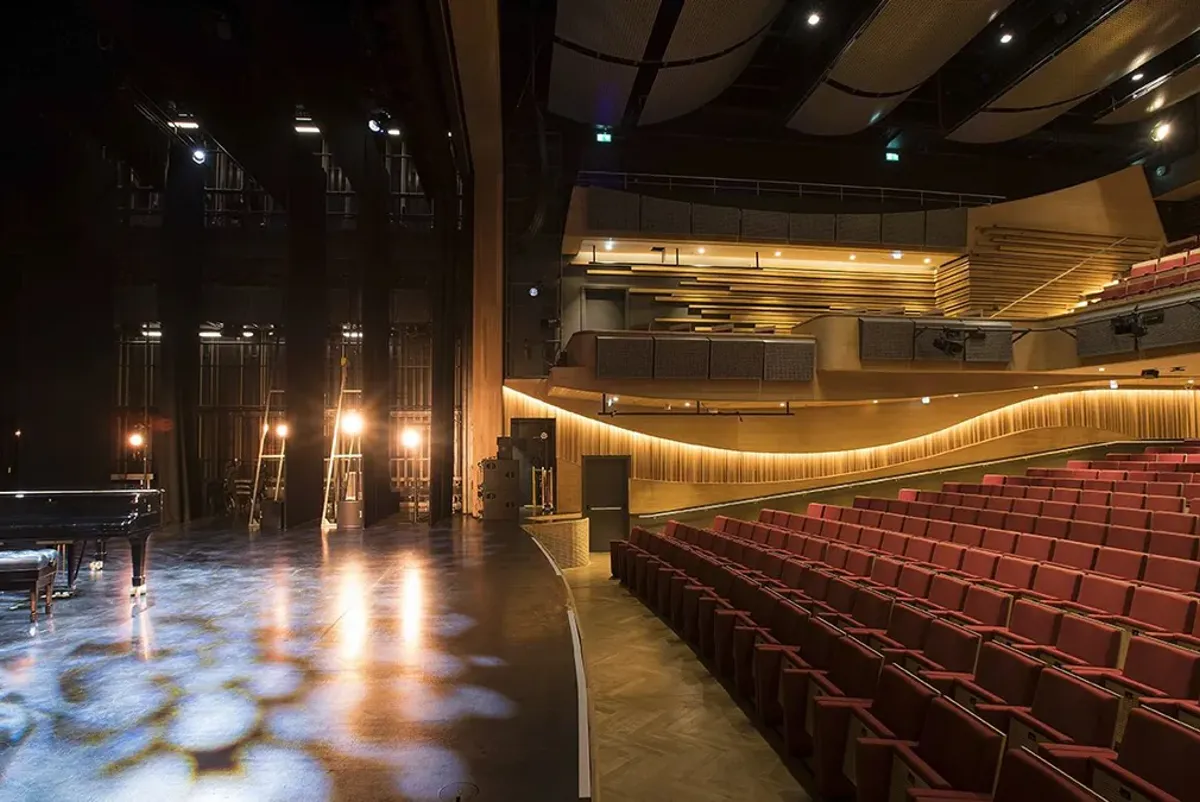
The venue is a high quality space, suitable for a range of performances including drama, dance and music, for both local and international artists. © SAW
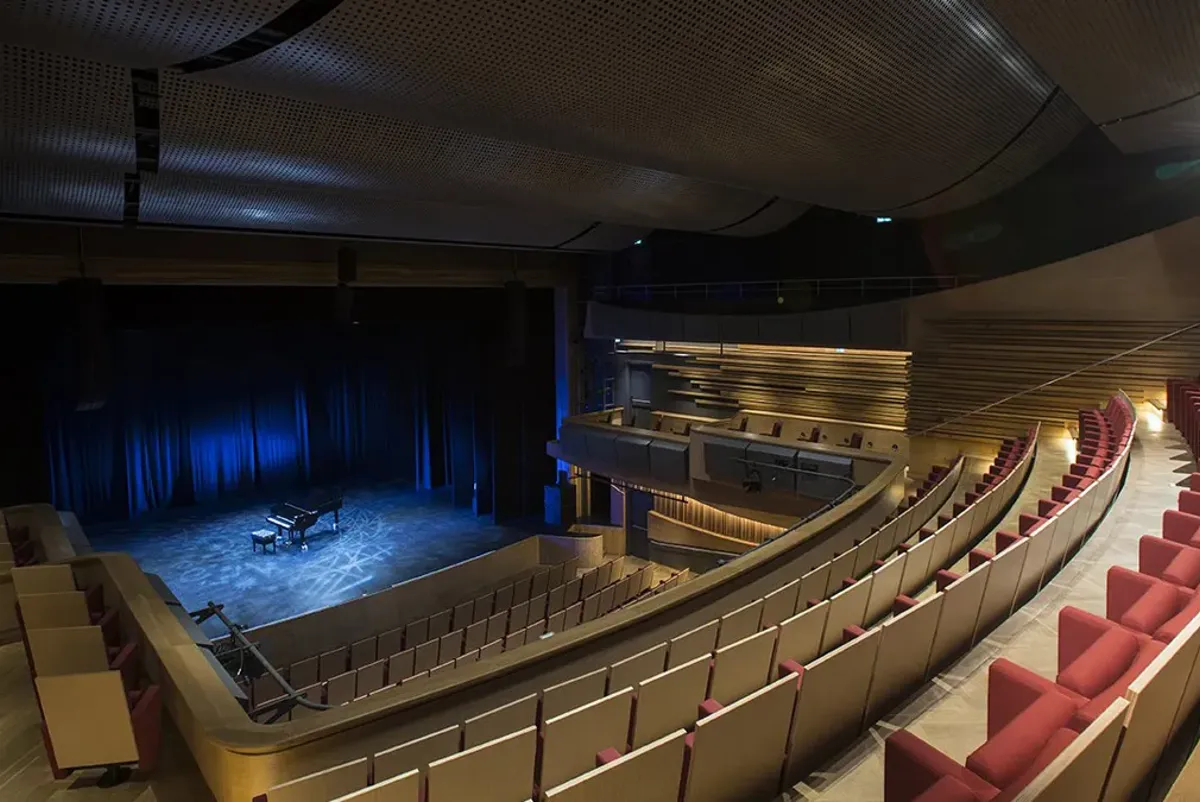
To support product launches the goods lift was optimised to allow vehicles to be driven directly onto the stage. © SAW
Engineering comfort and safety seamlessly into the building
Our mechanical, electrical, public health and fire (MEPF) engineers designed services that balance performance, aesthetics, comfort and safety.
Liaising with the local authorities, we created new connections to the power, water and drainage networks. Our team in Mauritius also collaborated with contractors and specialists to establish the sound, lighting and ICT requirements
Within the building, quiet chillers and ventilation equipment work with the underfloor air distribution system to maintain a stable, comfortable environment without disturbing performances. In the foyer and transient spaces, natural ventilation keeps energy use down, supporting the project’s low-carbon objectives, while an advanced building control system monitors and optimises heating, ventilation, air conditioning, lighting and critical services. To support product launches the goods lift was optimised to allow vehicles to be driven seamlessly onto the stage.
Optimising acoustics and backstage areas
To refine the acoustics, our experts modelled the effect of different surfaces in the auditorium, including the shape of the balconies. Working with the architects we recommended contours and materials to improve the clarity of the sound and create a sense of envelopment and spaciousness. The result is a venue that works for all performances, from unamplified speech to piano recitals.
Backstage, we followed the same approach – balancing quality with local availability of skills and equipment. We also worked with the theatre’s technical director to shape the operations brief, which considers the needs of artists and productions. The high-performance sound and lighting equipment can be adapted to each performance and to meet future requirements. It uses counterweighted machinery that purposely keeps backstage operations – and maintenance – intuitive and straightforward.
The auditorium seating – a key part of the audience experience – was carefully engineered for comfort and to support the acoustics in the room.
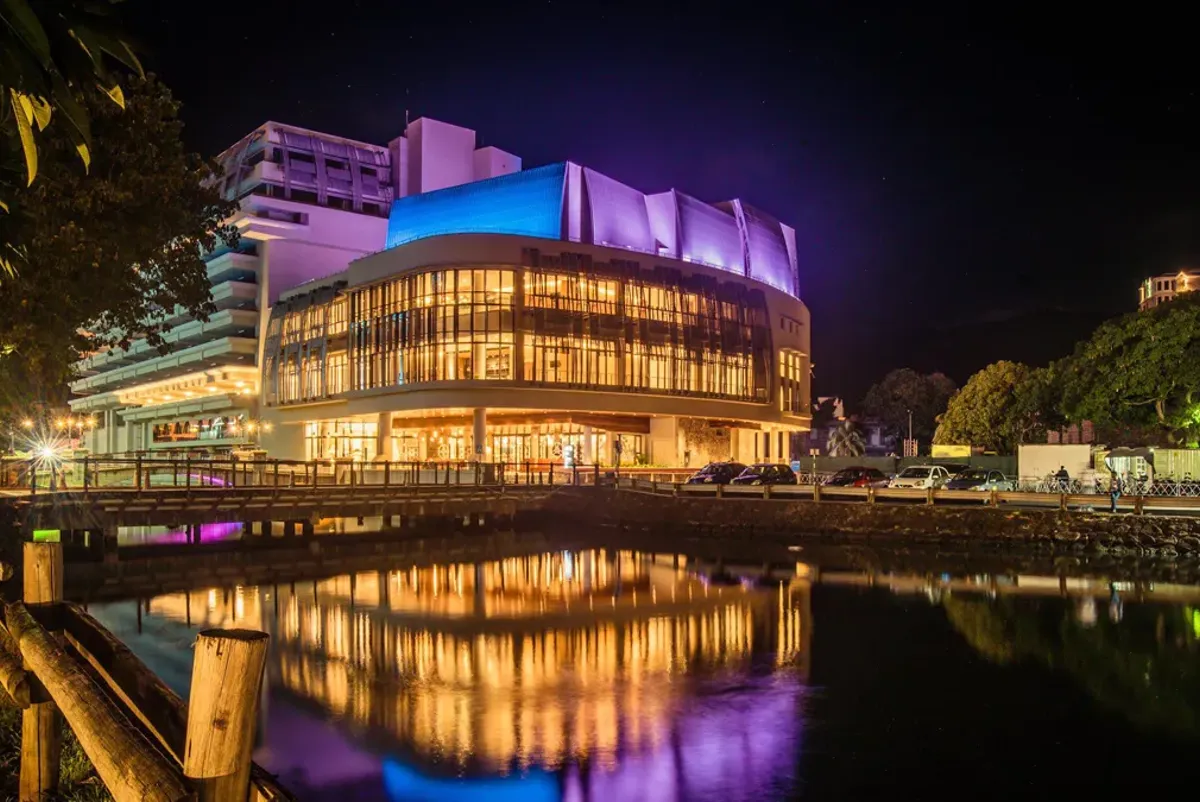
Pile foundations were used to make sure the building would remain stable and resilient, despite the nearby river. © Caudan Arts Centre
Creating a vibrant and inclusive venue
We also advised Caudan Development on models for operating and staffing the theatre. This included examining how many people would be required to run the building, the skillsets they would need, and what staffing costs would be.
Completed on schedule and inaugurated in 2018, the venue now plays host to a range of productions, conferences, and events. In addition, artists and school groups are making use of the rehearsal and education spaces upstairs.
It’s clear that the local community in Mauritius is embracing the Caudan Arts Centre, and the venue is already fulfilling its motto by providing ‘creativity for all’.
Dider Ho
Projects
Explore more arts and culture projects

Creating a new paradigm in live entertainment
Sphere, USA

Delivering El Paso’s first purpose-built children’s museum
La Nube STEAM Discovery Center, USA

Enhancing an iconic New York City institution on the Museum Mile
The Frick Collection, USA
Supporting the enduring legacy and regeneration of a valued art center
Storm King Art Center Capital Project, USA
Get in touch with us
If you'd like to speak to one of our arts and culture experts then please get in touch by completing the form.
