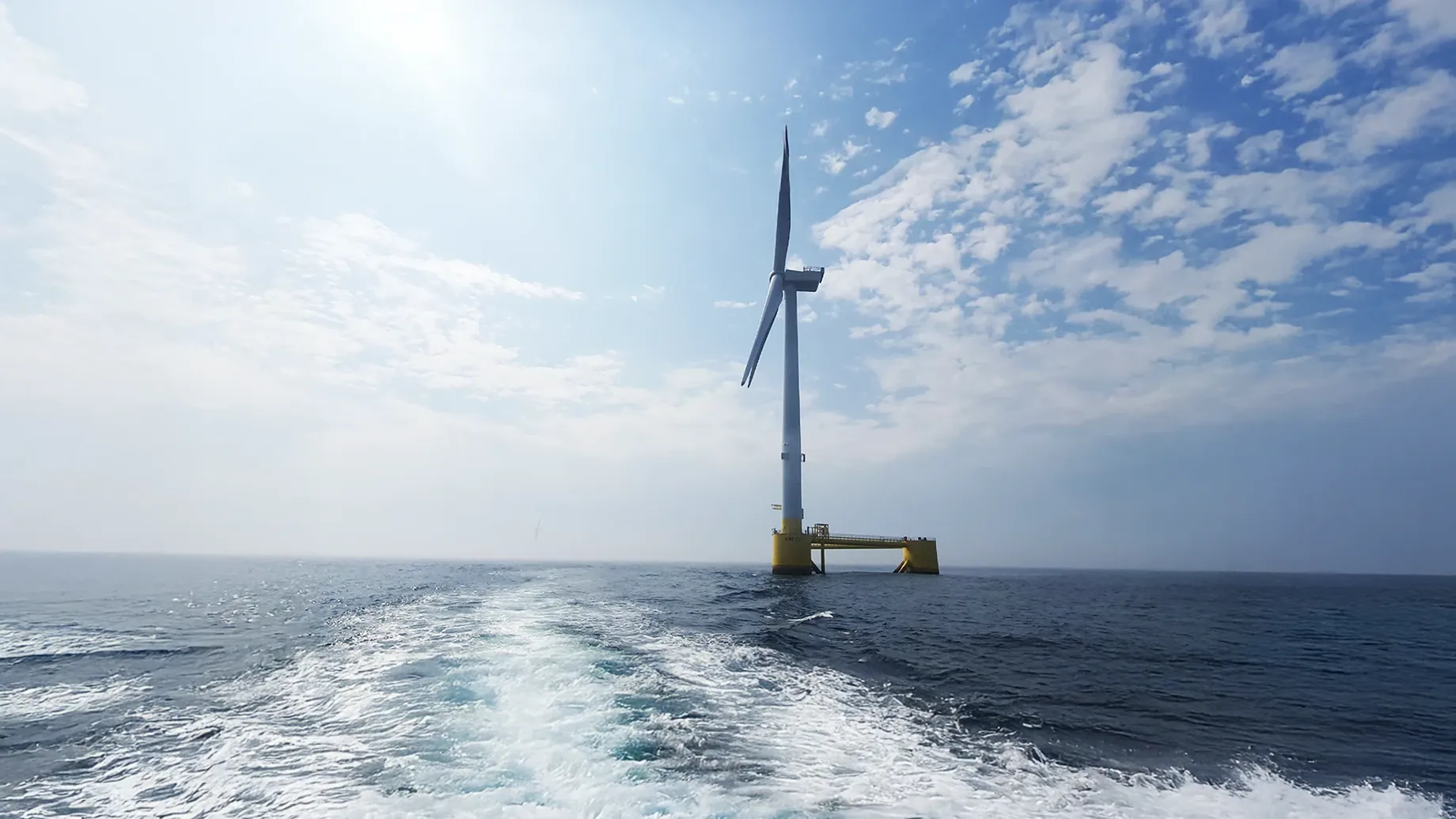
As a next generation offshore wind developer, Cerulean Winds appointed Arup as PMO to support successful project initiation, design management, and delivery of the Aspen Floating Offshore Wind Farm. In fulfilling this role, Arup provided services typically associated with an owner’s engineer, providing independent technical assurance and helping to establish a strong foundation for project execution.
Arup has been Cerulean’s strategic partner since the seabed lease stage, leading three bid submissions and establishing a strategy to maximise likelihood of project success.
We are now leading project delivery, starting with the Aspen Floating Offshore Wind Farm – the first of three, alongside Beech and Cedar, that will form the NSRG. Our role includes setting up and running the project management office, technical strategy and oversight, developing regulatory submissions and integration with supply chain partners.
Floating offshore wind is in its formative stage. Cerulean has an opportunity to lead the UK industry in the global market through rapid development and successful delivery of the first scaled wind farm.
Cerulean’s plans for the NSRG – with green generation, integrated electricity transmission and decarbonisation of the oil and gas sector – could set the standard for coordinated energy infrastructure. Once complete, NSRG will reduce Scotland’s CO2 emissions by around 25%.
Supporting the strategic leasing round
In 2022, Crown Estate Scotland set up a unique seabed leasing round of offshore wind development. The Innovation and Targeted Oil & Gas (INTOG) leasing round offered seabed rights to build up to 5.7 GW of offshore wind projects in the North Sea. The leasing round was open to both small scale innovative projects (IN) and projects that would provide offshore wind power directly to oil and gas facilities (TOG) in the North Sea to decarbonise its operations.
We worked closely with Cerulean Winds and its consortium partners on bids to the TOG lease pot for three offshore wind farms: Aspen, Beech and Cedar. Our experienced team led the creation of the primary bid materials, including the delivery plan, organisation definition and project description.
We also collaborated with Cerulean and its consortium partners through the application process to deliver robust technical scheme designs, validated compliance with leasing round requirements and performance standards; build key supporting documents including a project development schedule and development expenditure estimate; and compile the final applications for submission.
We applied our previous experience with offshore wind leasing rounds to provide valuable, strategic advice. We provided critical review and advice on specific aspects of the submission, such as the feasibility of the technical design and viable routes to market. Our specialist business advisory services shaped the delivery team organogram, conveying the consortium’s experience and skills and allocating roles and responsibilities.
De-risking renewable energy infrastructure development
Floating offshore wind projects require a developer to deploy a range of skills and expertise: establishing a robust project delivery framework, executing design, managing consents, engaging with stakeholders and achieving successful financial outcomes. Embedded within Cerulean’s agile and innovative organisation, our project delivery team brings vital industry knowledge to define and de-risk the project.
As Cerulean’s trusted partner for project delivery, our role includes everything from advising on and overseeing critical engineering activities, to delivering regulatory submissions and setting up project management systems.
For example, to get a clear understanding of the seabed geotechnical characteristics, we advised on the technical requirements for collecting seabed data through desktop studies and offshore surveys. We also created a project development schedule. By combining our industry knowledge with input from Cerulean’s consortium partners, we outlined the critical path to delivery and key project milestones.
By integrating best practice in project delivery with Cerulean’s entrepreneurial approach, we are creating a detailed and robust plan for rapid development of the Aspen Floating Offshore Wind Farm.
Fostering industry collaboration to optimise delivery
Cerulean’s unique consortium delivery model engages key suppliers early in the project to optimise the schedule and improve integration. Our owner’s engineer and project delivery team recognised the value in this delivery model and enhanced its effectiveness by collaborating with industry-leading contractors, manufacturers and other consultancies to maximise value brought to the Aspen project.
We have created standardised tools and processes to ensure clear, consistent input from across the consortium. This has increased efficiency and generated a greater sense of collective purpose. Establishing and operating a collaborative online environment has enabled seamless collaboration across organisations.
Whave also partnered with Cerulean’s executive team to plan and execute key technical works, including leading workshops to align engineering works to project requirements.
Beyond the direct project stakeholders, we have used our wider industry knowledge and relationships to understand and de-risk key technical and delivery aspects of the project. For example, we applied our embedded knowledge of the contract for difference allocation process to support successful submissions to regulator Ofgem under the revised Allocation Round 7 regime.
We drew on our understanding of the national energy system operator for the UK (NESO) to ensure Cerulean’s electricity grid reform regulatory submissions maximised the likelihood of a rapid connection to the grid.
Working seamlessly with the consortium consultants and contractors, and wider stakeholders, we’re enabling Cerulean’s core team to deliver a project that will create over £4bn in gross value added for the UK as well as thousands of green jobs.