
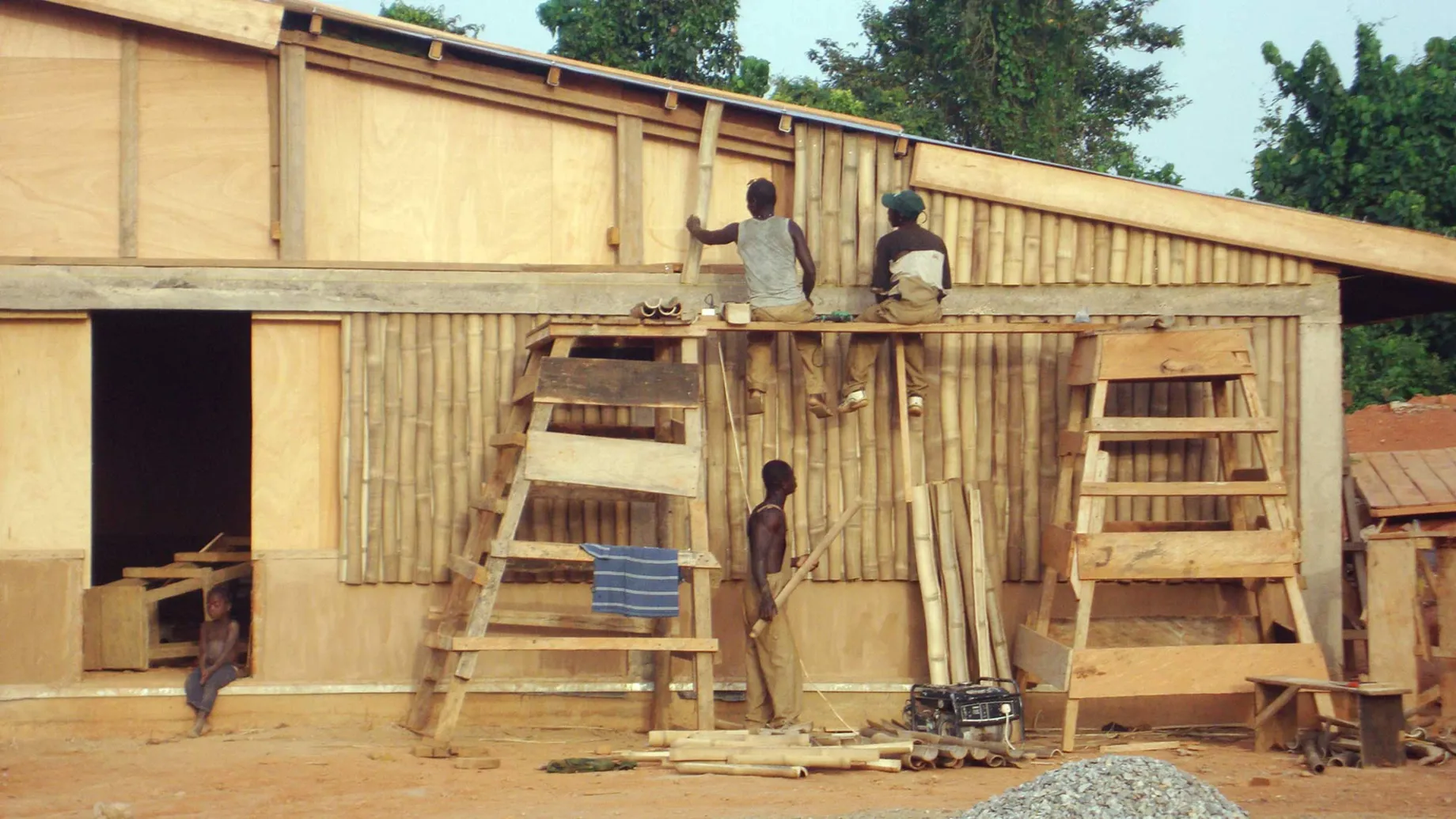
Ghana’s remote Dwabor village needed an innovative, sustainable and community-centric kindergarten. The worn-out condition of the old kindergartens heightened the demand for better learning environments to ensure quality early childhood education.
Arup provided engineering and design expertise to develop a prototype kindergarten, setting a model for a local rollout programme. We created a modular, scalable design tailored to the community’s needs. In collaboration with Davis Langdon and the Sabre Charitable Trust, we worked to improve education provision in Ghana's Komenda-Edina-Eguafo Abrem (KEEA) municipal district with the support of the Municipal Education Office. This project was built with the help of volunteers from Arup and Davis Langdon, working closely alongside the local community.
The new kindergarten is a model of effective sustainable educational facilities. It features light, airy and cooler classrooms that promote a dynamic range of activity-based learning. Class attendance grew following the completion of the project, which demonstrates the positive impact of a good school environment.
A sustainable collaboration with government and community
The project’s success was measured using ASPIRE, a software-based tool designed to check the sustainability of infrastructure projects. This thorough evaluation ensured that the kindergarten aligned with best practices in international development. Close collaboration with the government and the local community was crucial to achieving this.
By involving local stakeholders, the project followed sustainable principles. It also helped the Sabre Charitable Trust reach its goals for kindergarten education.
Using local resources for durable building solutions
We helped transform local resources into durable and cost-effective building materials. The use of bamboo, coconut husks and soil showcased practical solutions that are low carbon building materials and economically viable.
One of the main features of the school is its distinctive metal roof, which was designed to collect rainwater for reuse. Inside the roof, fibres from coconut husks dampen the noise from rain, preventing downpours from interrupting classes. Additionally, colourful slatted bamboo windows can pivot to allow light in without glare from the sun.
For the walls, soil stabilised blocks proved stronger during tests than local concrete (sandcrete) blocks. When we used concrete, we replaced portland cement with pozzolana, made from fired palm kernels.
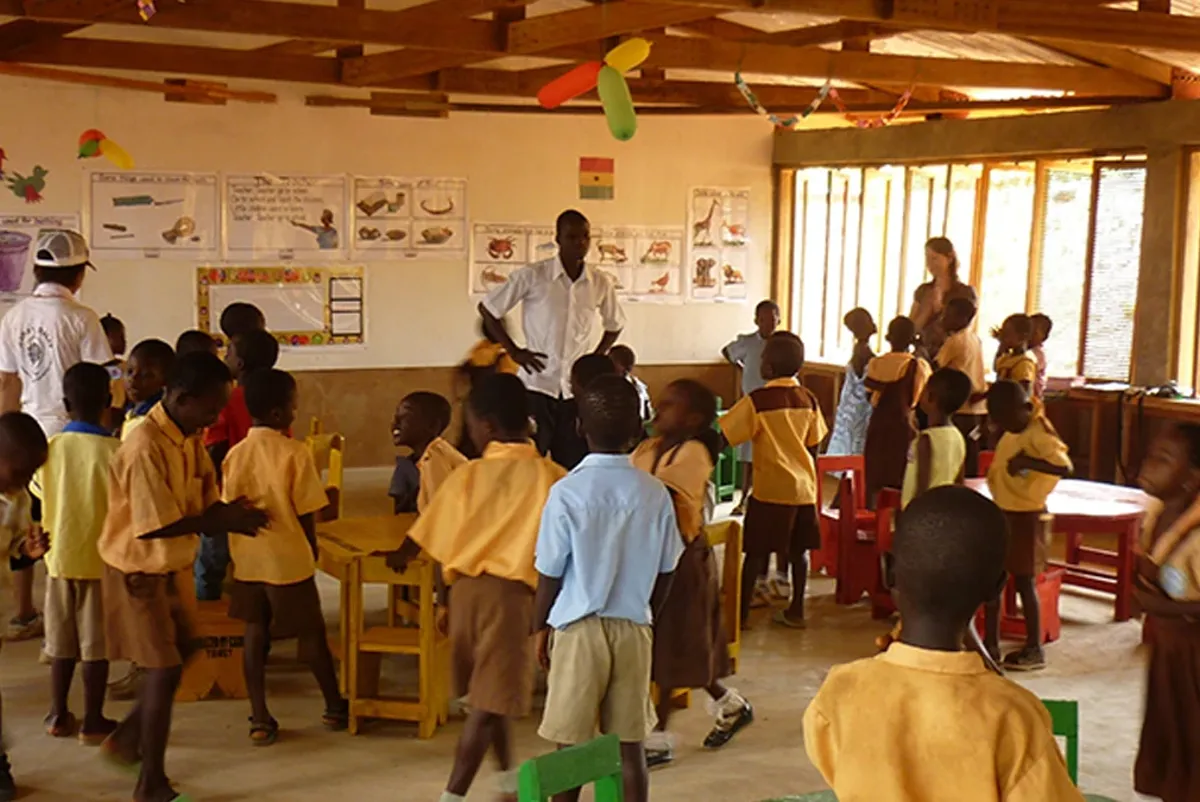
The design of the kindergarten is both modular and scalable, maximising daylight and ventilation while minimising heat and noise.
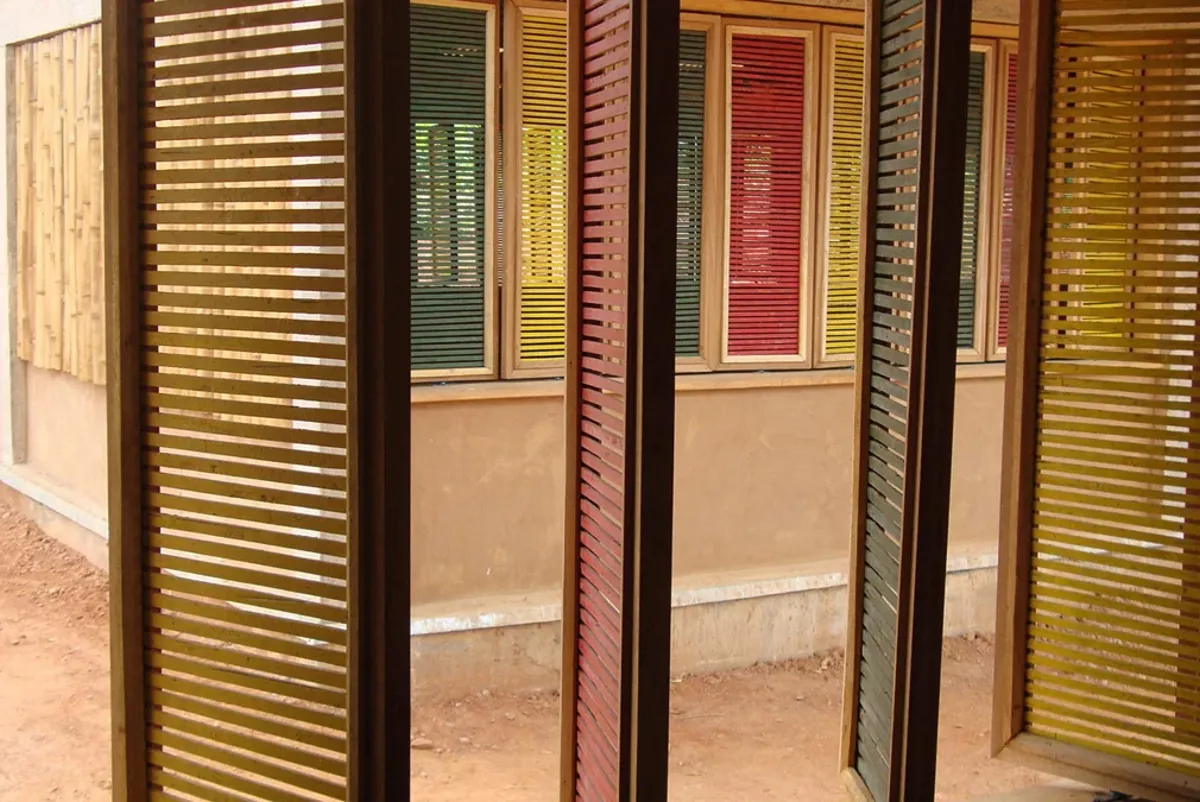
The use of bamboo, coconut husks and soil showcased practical solutions that are low carbon building materials and economically viable.
Improving early childhood education
The design of the kindergarten is both modular and scalable, maximising daylight and ventilation while minimising heat and noise. These practical design elements helped improve the learning experience for children, ensuring a comfortable and conducive environment.
Children at the kindergarten also have the opportunity to learn from their surroundings. As well as flexible inside space for activity-based learning, the school has outdoor teaching areas. Here, the natural environment becomes an educational tool as children explore the world around them.
Projects
Explore more international development projects:

Ensuring worker safety in Pakistan’s textile sector
Pakistan Accord on Health and Safety in the Textile and Garment Industry, Pakistan

Ntunga Maternity centre brings vital healthcare access to mothers and children
Ntunga Maternity Centre in Rwanda, Rwanda

Strengthening climate resilience in Asian cities
Urban Climate Change Resilience Trust Fund Technical Assistance Project

Creating inclusive, sustainable economic growth in Türkiye
Global Future Cities Programme: Türkiye, Türkiye
Get in touch with us
If you'd like to speak to one of our education experts about any of the issues raised on this page or a potential collaboration then please get in touch by completing the form.
