
A guidebook for a walkable, greener and connected Kuala Lumpur
Green Connector Network Guidebook
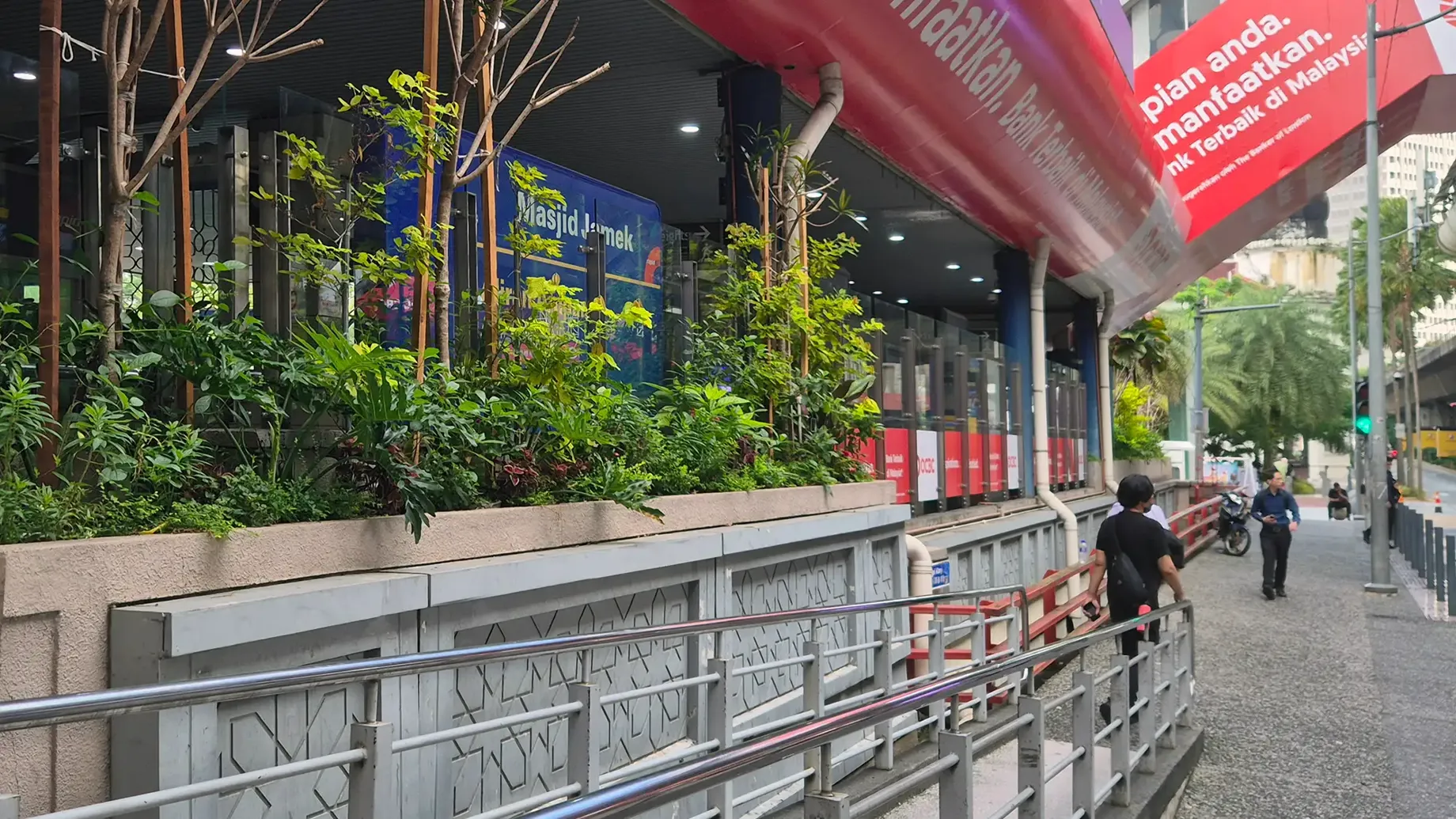
Think City and Kuala Lumpur City Hall (DBKL) sought to develop the Green Connector Network Guidebook, linking heritage sites through walkable, shaded and climate-responsive corridors within Kuala Lumpur. The city’s car-centric layout disrupts walkability, while fragmenting districts and public spaces. The Guidebook will reconnect the city through nature-based infrastructure that enhances mobility, strengthens cultural identity and climate resilience, and restores pedestrian-first streets.
In collaboration with Think City and DBKL, we developed a strategic concept masterplan, which covers a 20 km² area within the city’s Inner Ring Road. Our team undertook spatial mapping and analysis to identify optimal corridors that would connect commercial hubs, cultural assets and ecological zones. This was followed by a quantitative suitability assessment evaluating 13 potential corridors across four criteria, incorporating stakeholder inputs. Based on this, three corridors were prioritised for early implementation.
The Guidebook lays the foundation for a future Kuala Lumpur Central Park vision, positioning green infrastructure as a strategic anchor for urban resilience and liveability. It also serves as the first major step in advancing the Green Connector Network Programme – one of the 10 flagships under the Warisan KL Programme, and is aligned with the Kuala Lumpur Structure Plan 2040.
From data to design: a blueprint for urban transformation
Our team applied an evidence-based, multi-scalar methodology that integrates GIS spatial analysis, multi-criteria suitability mapping, and KPI benchmarking to identify the most effective green connector alignments. This approach ensured all recommendations were data-driven, replicable, and grounded in both local priorities and global best practices.
Using GIS mapping and scenario modelling, we evaluated multiple corridor options and determined those with the highest feasibility and impact potential. The KPI-driven framework was designed to be scalable and adaptable, allowing other Malaysian cities to replicate and refine it. To strengthen the methodology, we convened technical experts from Singapore, the Philippines and Hong Kong, ensuring a holistic and future-ready planning framework.
Crucially, the Green Connector Network extends beyond analytical outputs into a clear path for implementation. Following the prioritisation exercise, the team progressed into ideation and concept development for the selected corridors, translating strategic intent into actionable design interventions. Outcome indicators were established to track environmental, social and economic performance, ensuring long-term impact could be measured and communicated. Early pilot projects have already been identified to showcase tangible benefits, raising public awareness, catalysing local activation and laying the groundwork for sustained investment and future city-wide rollout.
Designing spaces that bring people together
We identified 13 potential corridors and prioritised three: Jalan Parliamen to Jalan Tun Perak, Jalan Perdana to Jalan Maharajalela, and AKLEH to Taman Eko Rimba Kuala Lumpur. These corridors balance impact, feasibility and alignment with the project’s vision to create a greener, more connected city.
Sustainability is also embedded throughout the Guidebook. The corridors will be comprised of a network of nature-based solutions, including native planting, shaded greenways and permeable pavements to naturally cool urban areas, manage stormwater and improve air quality. Over time, these interventions will establish ecological corridors that restore biodiversity and reduce reliance on hard infrastructure.
Improving the pedestrian experience was another key priority for Think City and the City Hall. The Guidebook places people at the centre of urban design, creating safe, inclusive and vibrant public spaces. Smart traffic management, safer crossings and an expanded cycling network enhance accessibility and safety. Shared pathways that are supported by well-designed seating, lighting and public art enrich comfort and placemaking, while multi-purpose public spaces, shaded green corridors, and an eco-pedestrian bridge further strengthen connectivity and community life.
The integration of nature-based solutions across the corridors enhances environmental resilience while supporting low-maintenance, cost-efficient green infrastructure, advancing Kuala Lumpur’s broader climate and liveability goals.
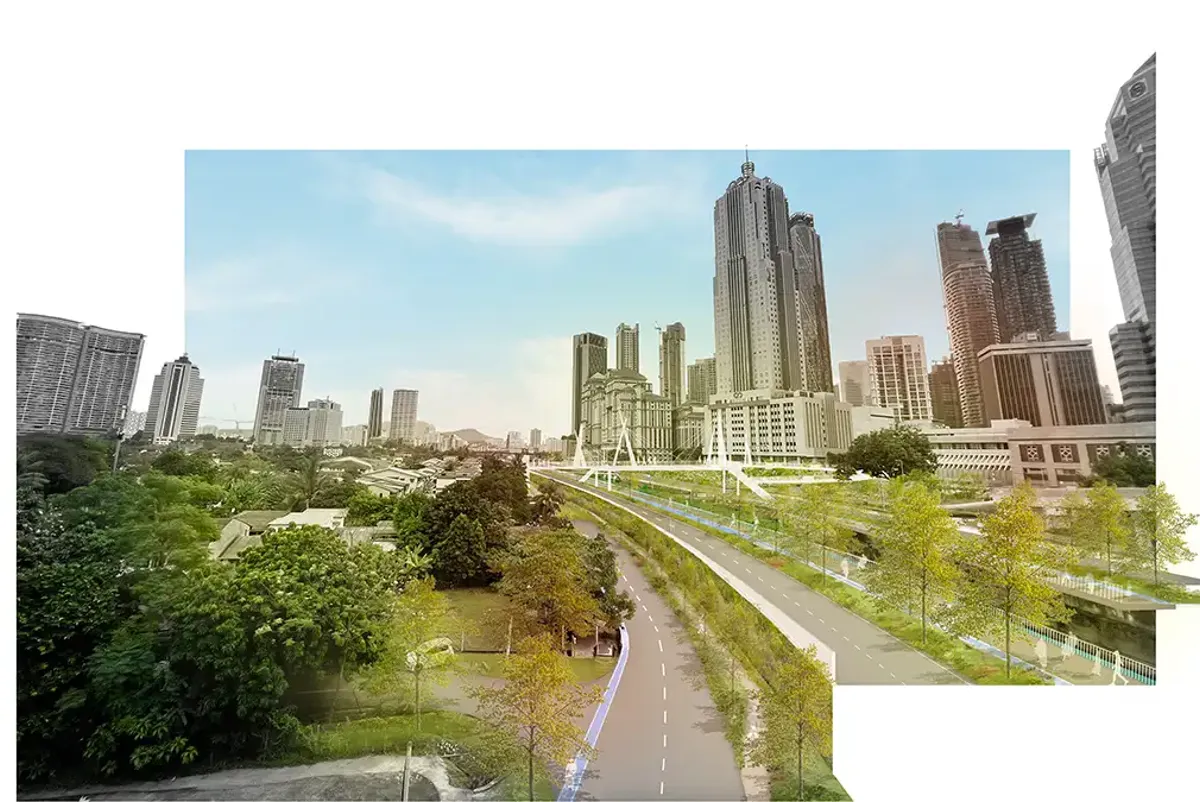
Concept vision: AKLEH to Taman Eko Rimba Kuala Lumpur
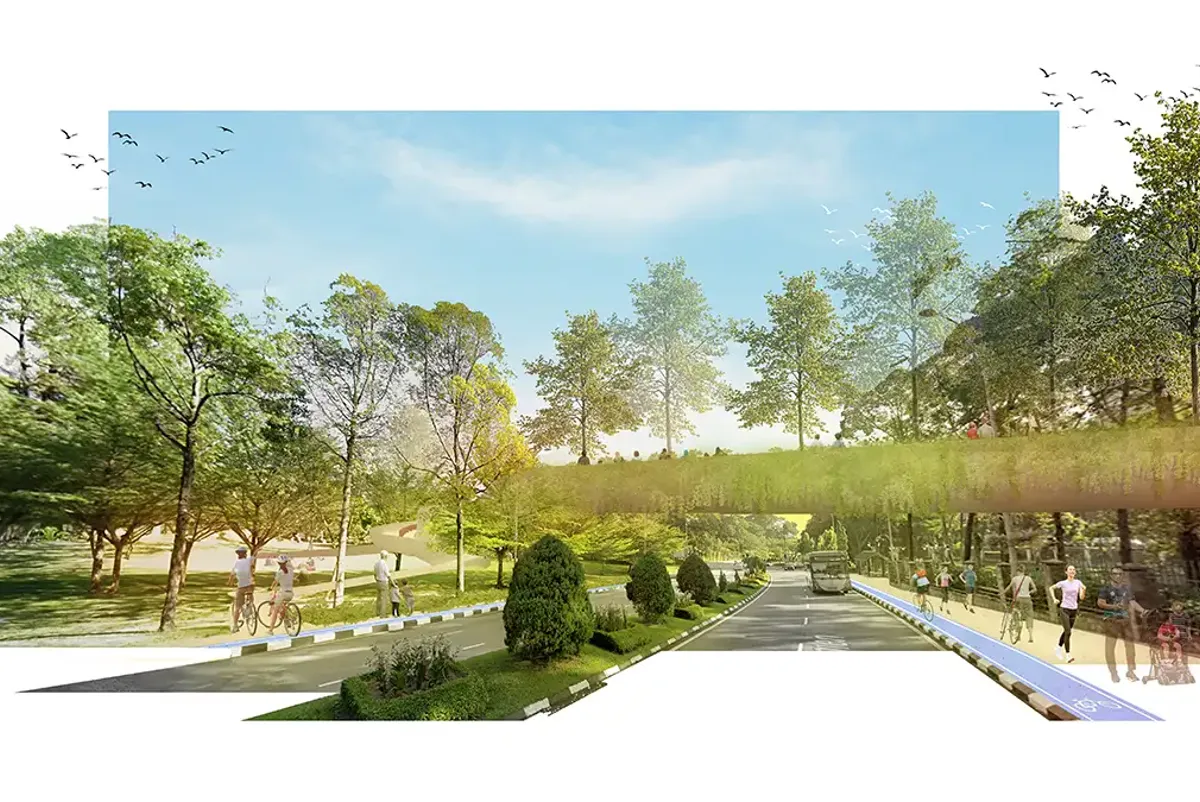
Concept vision: Jalan Parliamen to Jalan Tun Perak
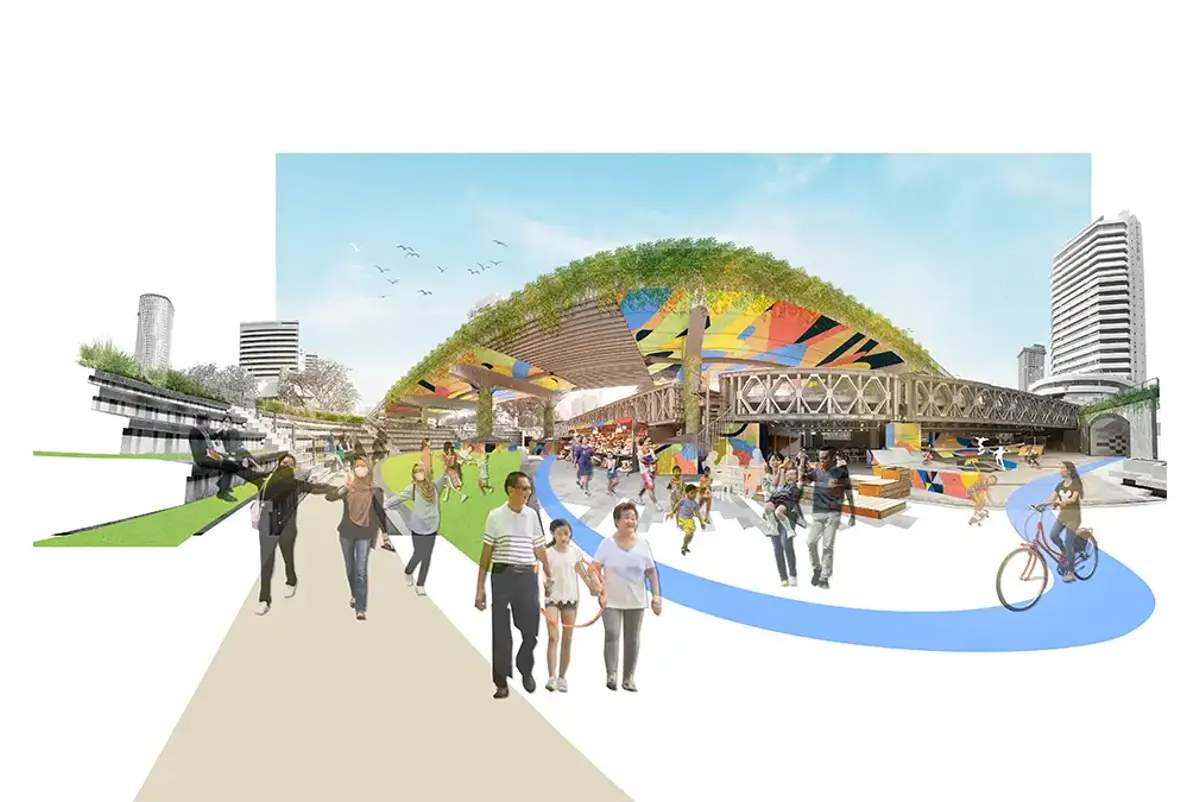
Concept vision: Jejak Pahlawan
Kuala Lumpur City Hall (DBKL)
Projects
Explore more masterplanning projects

Masterplanning Adelaide’s new inner-city neighbourhood
Thebarton Masterplan, Australia

Designing resilient and outcome-focused infrastructure for Betio Port
Betio Port Masterplan Study, Kiribati

Redefining Japan’s future airport city
Narita Airport City, Japan

Developing a master plan for regional regeneration in Victoria
Victorian Goldfields World Heritage Master Plan, Australia
Get in touch with us
If you'd like to speak to one of our masterplanning experts about any of the issues raised on this page or a potential collaboration then please get in touch by completing the form.
