
A world-class sports complex setting a new standard for sustainability
Harold Alfond Athletics and Recreation Center at Colby College
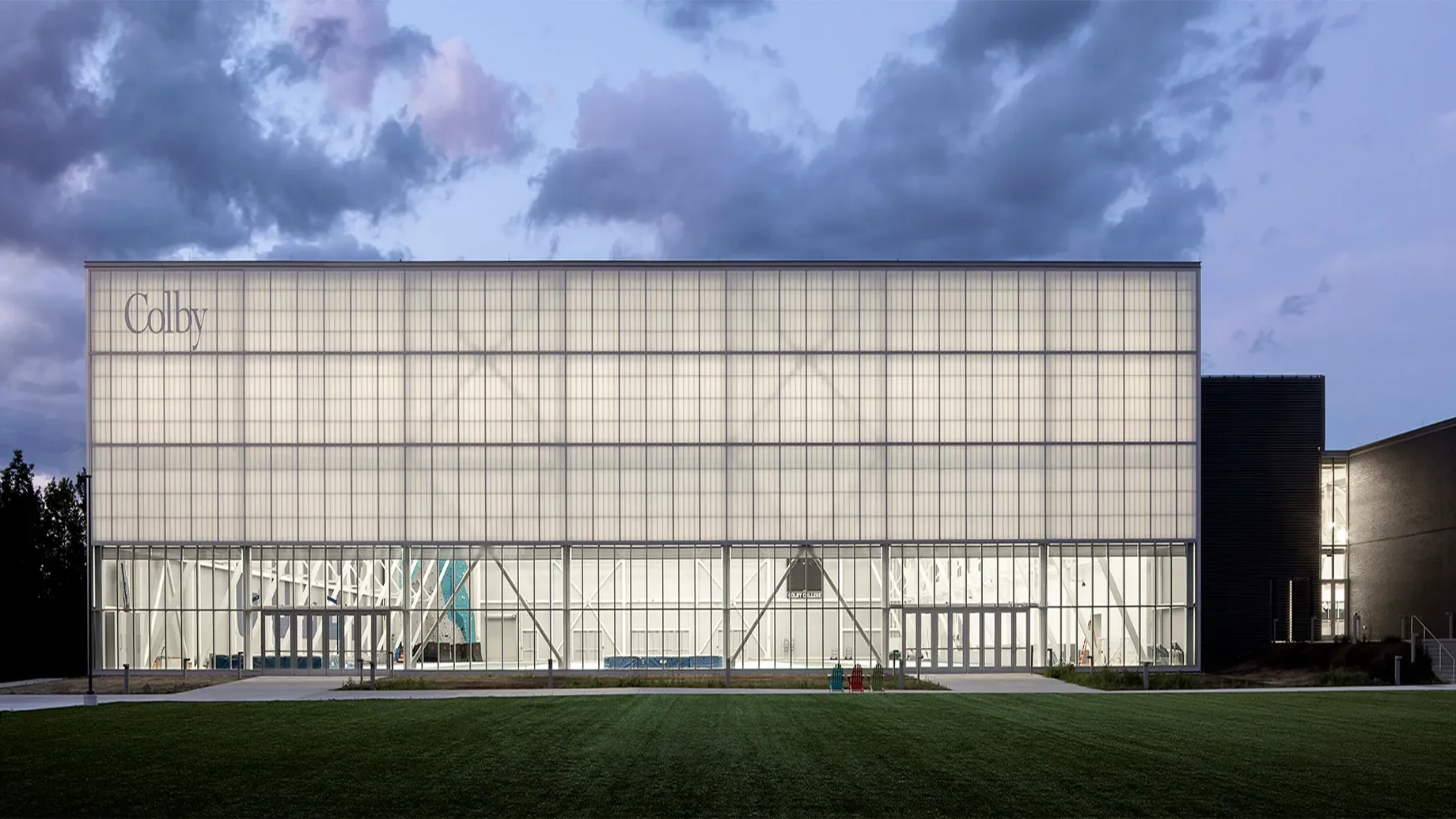
Colby College’s Harold Alfond Athletics and Recreation Center is a state-of-the-art sports complex notable for both its top-tier facilities and its ambitious approach to sustainability. Designed by architects Hopkins and Sasaki in collaboration with Arup, this elegant, light-filled 350,000ft2 sports complex was designed to serve the needs of Colby’s large population of varsity athletes while also meeting the stringent performance targets required for LEED and SITES certification. In addition to being home to Maine’s sole Olympic-sized (50-meter) pool, the center features an ice arena, a nine-court squash competition center, Field House with 200-meter track, four tennis courts, a three-court basketball arena, and a fully appointed 13,500ft2 fitness center.
A recognized leader in sustainability planning and the engineer behind world-class sports facilities from the Beijing Bird’s Nest to Cincinnati’s Paul Brown Stadium, Arup was commissioned to provide structural, MEP and fire protection engineering as well as acoustics, audio visual, facades, and IT/communications and sustainability. Our integrated team collaborated with Hopkins and Sasaki to develop a portfolio of sustainable solutions that work together to maximize the Harold Alfond Center’s energy performance, conserve water, and significantly reduce greenhouse emissions and embodied carbon.
The combination of solutions developed by the team, which include daylight harvesting and air system energy recovery wheels, enabled a reduction in energy use below the modern code baseline. Opened in fall 2020, the Harold Alfond Athletics and Recreation Center has earned LEED Platinum and SITES Gold status—a rarity among large-scale athletics and sports facilities. Opened in fall 2020, the Harold Alfond Athletics and Recreation Center has earned LEED Platinum and SITES Gold status—a rarity among large-scale athletics and sports facilities.
Reducing embodied carbon
Arup’s structural designers undertook an intensive iterative design process to help Hopkins and Sasaki hone-in on the most lightweight structural solution possible. The optimized long span design lowered embodied CO2 by approximately 800t. The project team was able to reduce the structure’s steel tonnage by 20% while lowering the volume of concrete required by 5%.
The project team coordinated with third-party modelling and testing agencies to conduct extensive wind tunnel testing, analytical snow modelling, and flume testing to help tune the overall building massing in response to extreme environmental loads prevalent in this area of Maine.
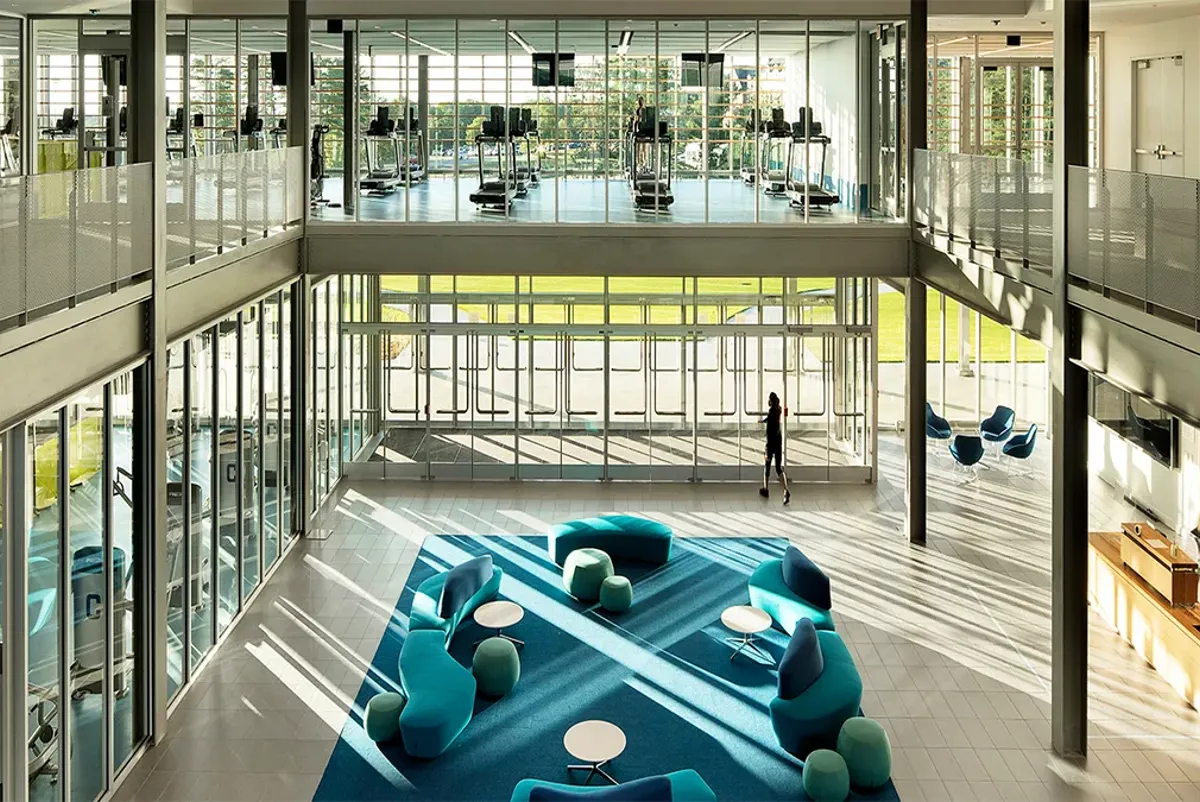
This elegant, light-filled 350,000ft2 sports complex was designed to serve the needs of Colby’s large population of varsity athletes while also meeting the stringent performance targets required for LEED and SITES certification. © Jeremy Bittermann
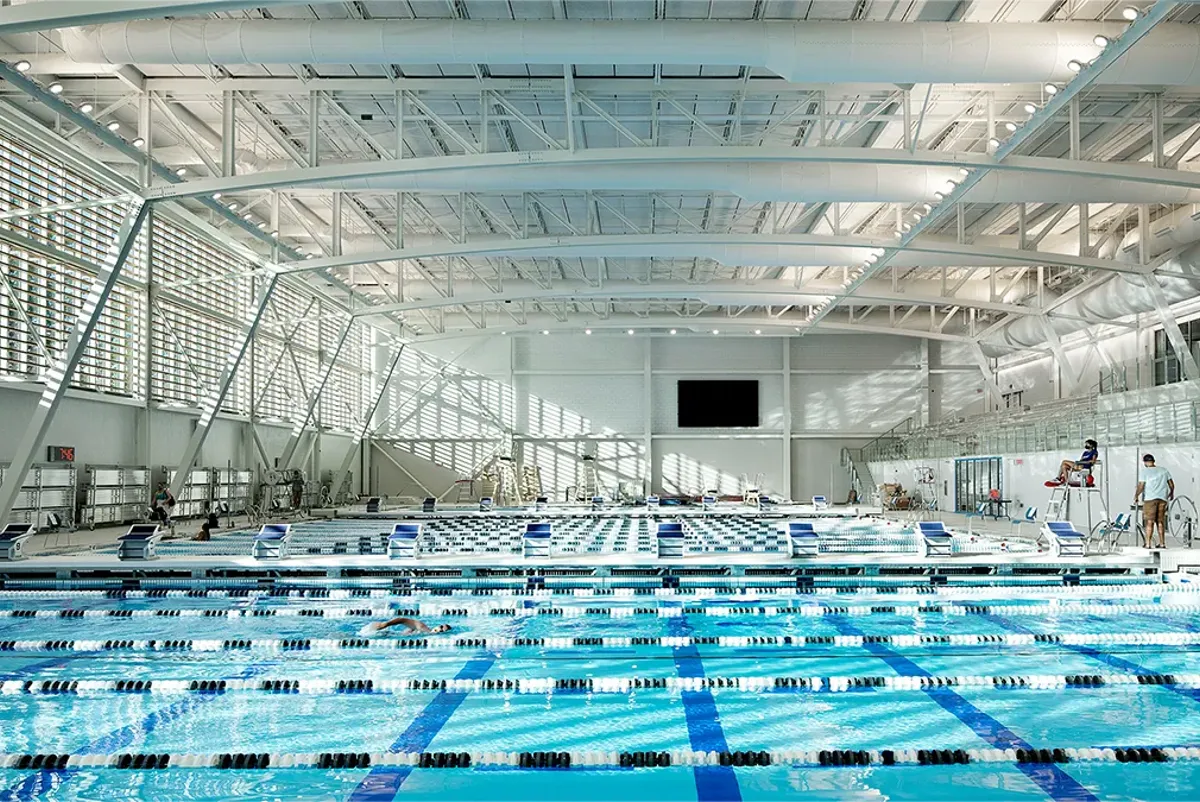
Arup’s MEP specialists implemented a range of sustainable building systems designed to significantly reduce both energy and water consumption at the Harold Alfond Athletics and Recreation Center. © Jeremy Bittermann
Awards
Projects
Explore more education projects

Fostering arts and culture through a sustainable, expanded campus
California College of the Arts Campus Expansion, USA

Realising a sustainable campus landmark
National Taiwan University Humanities Building, Taiwan

A sustainable retrofit designed around staff and students
University of Southampton Business School, United Kingdom

Repurposing an old school building into a space for 21st century science
Sir William Henry Bragg Building, University of Leeds, United Kingdom
Get in touch with us
If you'd like to speak to one of our education experts about any of the issues raised on this page or a potential collaboration then please get in touch by completing the form.
