
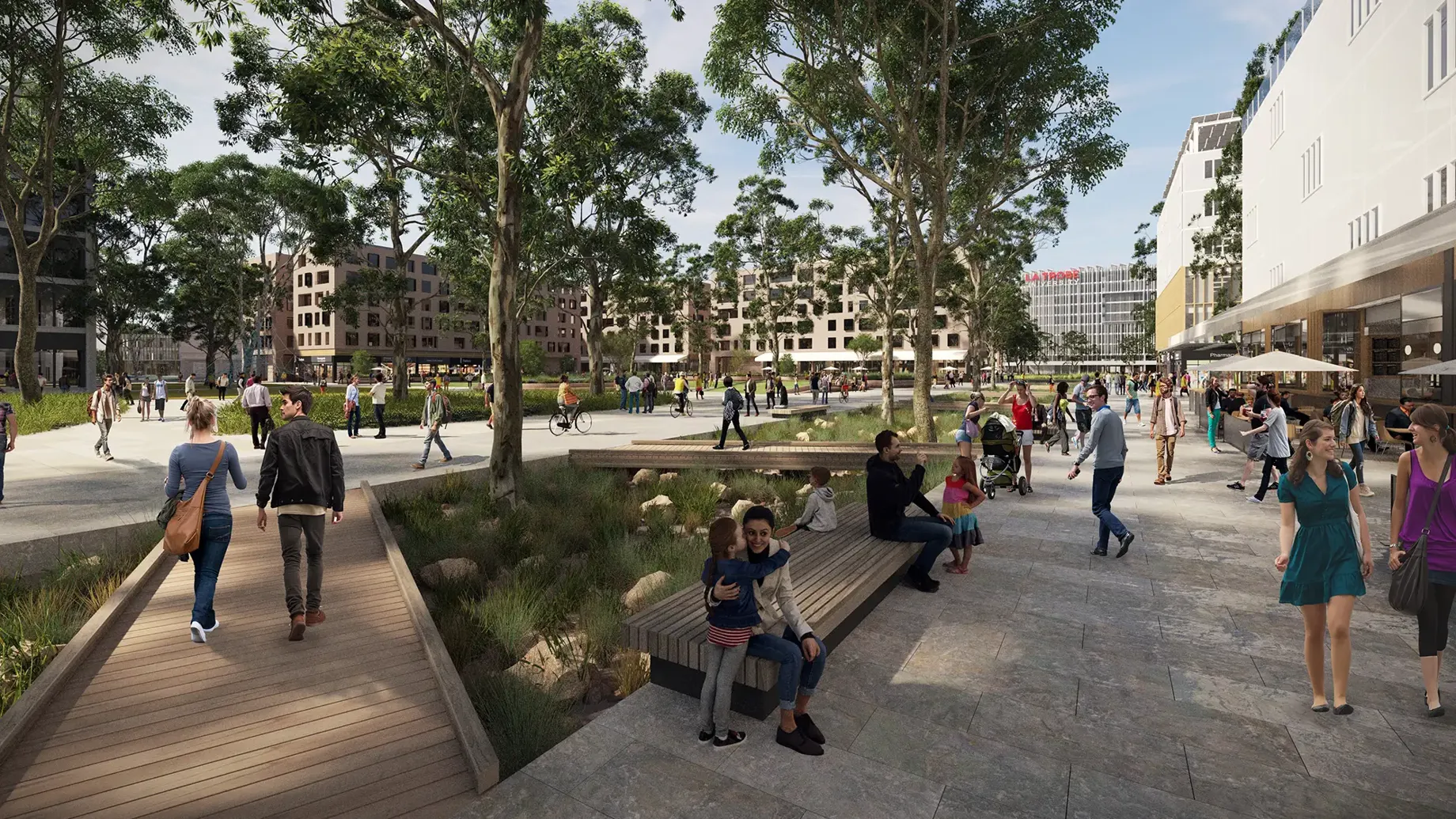
La Trobe University is creating a ‘university city’ that blends education, housing and community at its Bundoora campus in Victoria, expanding the typical university campus offering. We were commissioned to help develop a 25-year masterplan that will translate this vision across a 255-hectare site in Melbourne’s north, evolving it from a mid-century, parking-ringed bush campus into a collection of research and innovation-based ecosystems.
We brought together multidisciplinary expertise across urban design, landscape architecture, engineering and sustainability to deliver a cohesive masterplan for the University. The plan enables a doubling of the student population, provides homes for 15,000 new residents, and establishes more than 100 hectares of climate-resilient open space. The design links vibrant villages via walkable green infrastructure, ecological corridors and water-sensitive urban systems.
The masterplan responds to a shift, in which tertiary students and staff expect high-quality, connected living environments rather than isolated commuter campuses. By co-locating learning, living and employment, the University will foster deeper collaboration between academia and industry, set within a nature-rich campus. The result is a more inclusive, low-carbon university model that aims to attract talent and amplify economic, academic and social value.
Walkable villages for innovation, job creation and wellness
The current university core will connect to three self-sufficient villages that include housing, shops, education, work, open space and recreation facilities. With 15 per cent of new homes allocated as affordable housing, the masterplan delivers a diverse mix of apartments and townhouses, creating a connected, inclusive community.
Structured around 20-minute city principles, each village provides access to all daily needs within a short walk, supporting a high-quality, low-carbon lifestyle. Villages encourage active transport to create vibrant public realms. The campus co-locates research, industry and community to attract talent and enable stronger translational research, collaboration and job creation.
Our team formed an interdependent framework for the future of La Trobe University’s Bundoora campus, where built form, ecology, transport and community amenity function holistically. We brought together multidisciplinary design and technical expertise to design a framework that will help deliver the University’s sustainability and performance targets of net zero carbon by 2029 and net zero waste by 2050.
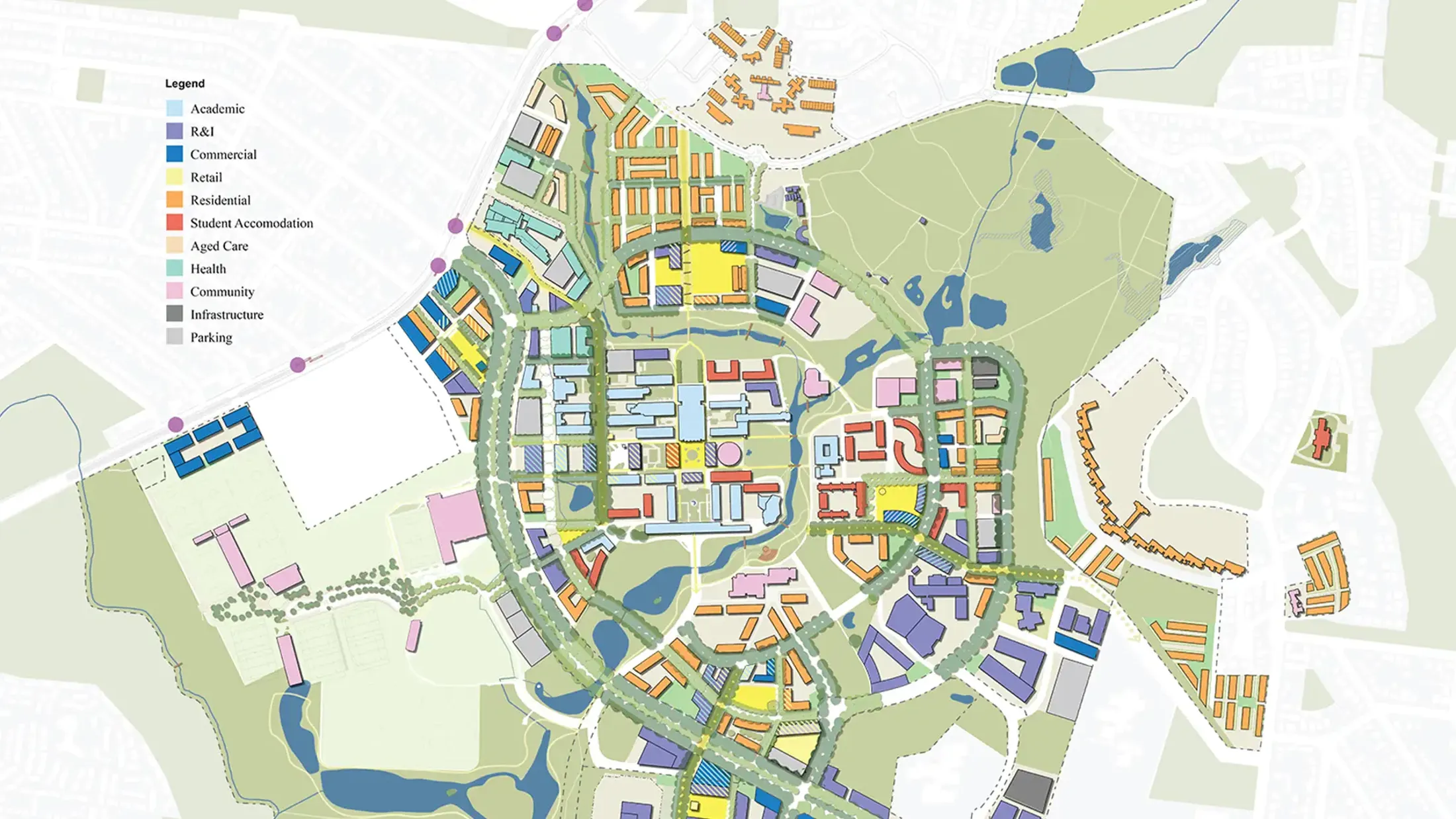
Masterplan map
Supporting natural systems across campus
The masterplan is anchored by its existing natural landscape, inspired by the Nangak Tamboree Wildlife Sanctuary and surrounding bushland reserves. Blue-green infrastructure, including ephemeral wetlands, creeks, vegetation and parks, is embedded into every village to slow, store and filter both storm and floodwater. These natural systems are reimagined as the framework for urban resilience, restoring biodiversity corridors and protecting waterway health.
More than 100 hectares of climate-resilient open space will anchor the new campus. This approach intentionally reflects caring for Country values, championing water sensitivity, ecological stewardship and living with natural systems rather than resisting them. These interventions create a regenerative urban environment that is sustainable, flood-adaptive and deeply rooted in its natural and cultural context.
Encouraging 70 per cent of trips to be via active or public transport
Our transport planners collaborated closely with landscape architects to develop a movement framework that prioritises seamless connections to surrounding communities, while embedding safe pedestrian and cycling routes throughout. The result of this integrated approach is the creation of more than 30 new streets and laneways, transforming the existing road network into a connected system of multi‑modal, people‑first streets that support local living.
The masterplan supports high-quality public transport options, including electric buses and future autonomous shuttles, enabling a significant shift away from car dependency and targeting 70 per cent of all trips to be made by active or public transport.
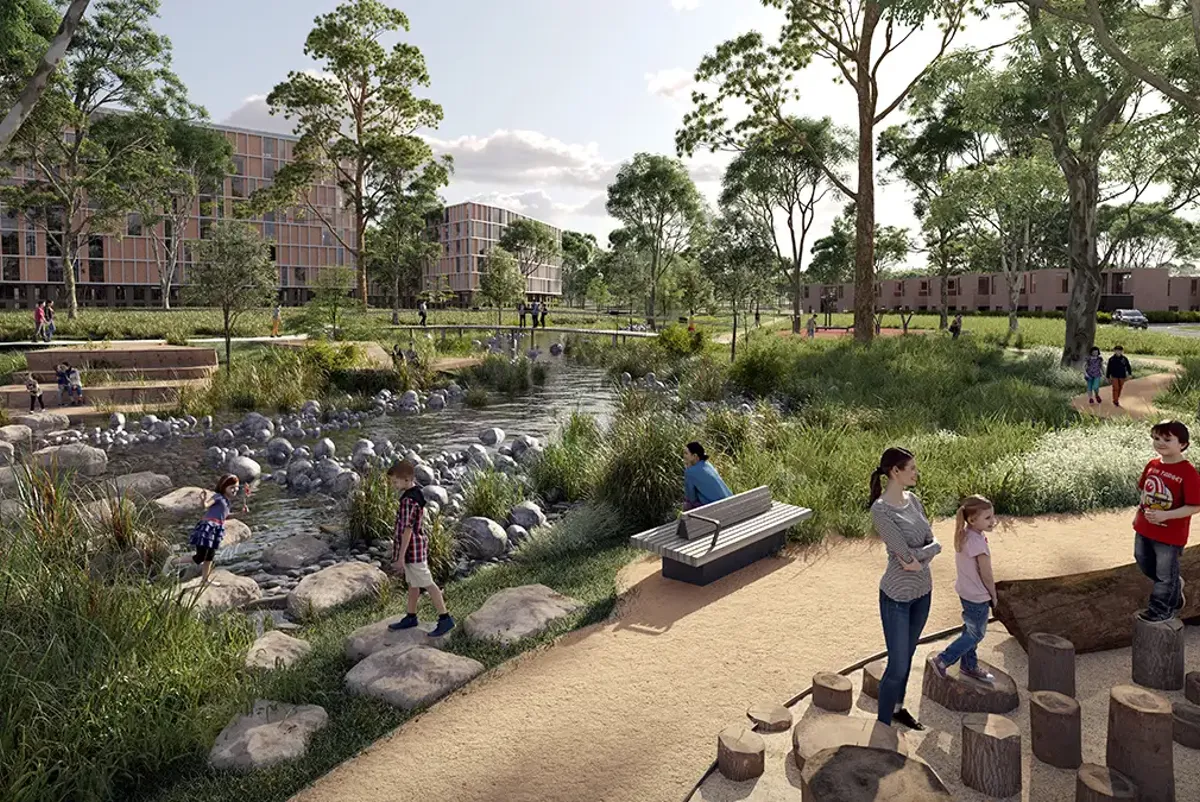
Artist illustration of campus vision with landscaping, water and gardens
Projects
Explore more education projects

Fostering arts and culture through a sustainable, expanded campus
California College of the Arts Campus Expansion, USA

Realising a sustainable campus landmark
National Taiwan University Humanities Building, Taiwan

A sustainable retrofit designed around staff and students
University of Southampton Business School, United Kingdom

Repurposing an old school building into a space for 21st century science
Sir William Henry Bragg Building, University of Leeds, United Kingdom
Get in touch with us
If you'd like to speak to one of our masterplanning experts about any of the issues raised on this page or a potential collaboration then please get in touch by completing the form.
