
Protecting New York City's subway stations against future flooding
MTA NYCT Feasibility study and design for long-term flood mitigation and resilience
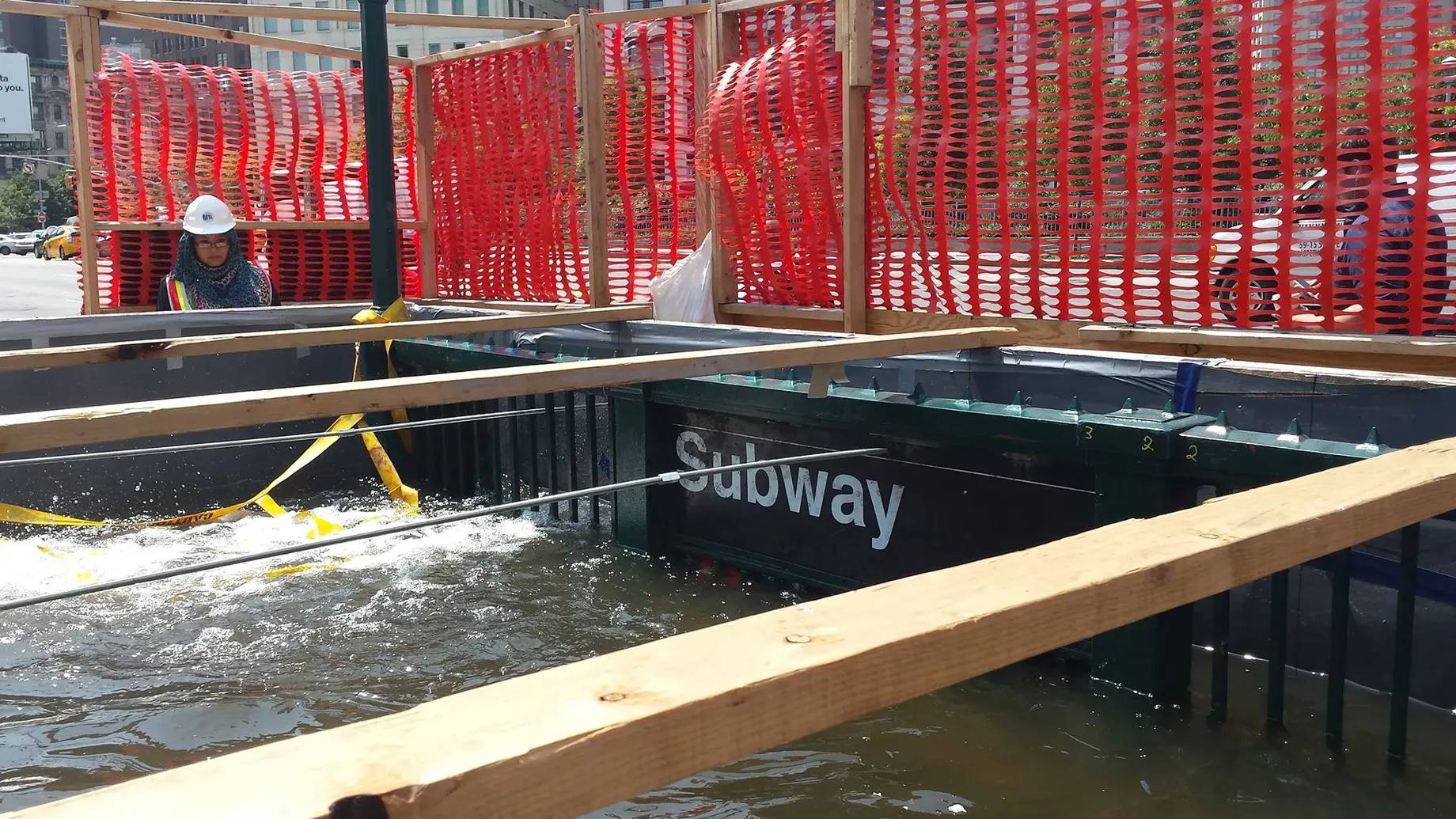
The New York City subway system suffered extensive flooding damage following Superstorm Sandy in 2012, highlighting the need for more resilient solutions to protect stations from future flood risk. Traditional solutions, such as barriers placed at the bottom of entrance stairwells, are costly and inefficient, placing an additional load on surrounding structures.
Arup undertook a feasibility study, and subsequent design, for long-term flood mitigation and resilience for eight stations in Manhattan. Arup’s study revealed that no existing tools or solutions available at the time would fully address the problem the stations faced. In response, Arup collaborated with ILC Dover to develop Flexgate - a fabric-based gate installed at the top of a subway entrance that can be deployed quickly and withstand flooding associated with Category 2 hurricanes.
Flexgate comprises of material used in NASA’s spacesuits and replaces traditional flood barriers, introducing an innovative point-of-application system that eliminates the need for post-storm cleanup. The gate stretches horizontally, completely covering both the entrance and stairwells.
Following a prototype demonstration for NYCT officials, the Flexgate is now being installed across vulnerable stations across New York’s subway system and different variations of the Flexgate are being developed for vertical-plane application.
A collaborative effort for flood management
Arup worked with ILC Dover, a firm known for manufacturing of high-performance flexible materials most often used in the aerospace industry. The team developed a set of specifications to which the prototype would have to perform; factors such as product life span, its load capabilities, and how the device would interact with the in-place infrastructure were taken into consideration during the development process. A specific criteria of the project was that no re-engineering of the existing structures could occur. This required the solution to be seamlessly integrated with the surrounding infrastructure.
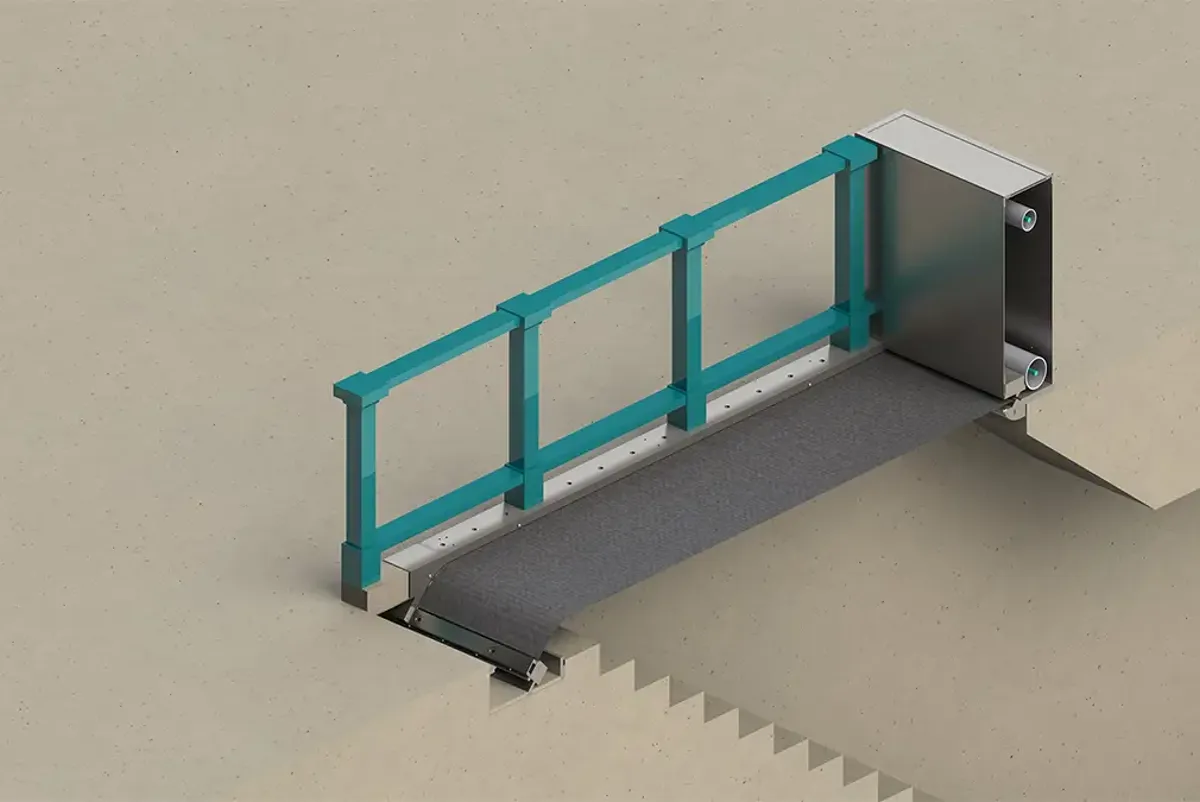
The team developed a set of specifications to which the prototype would have to perform. © ILC Dover
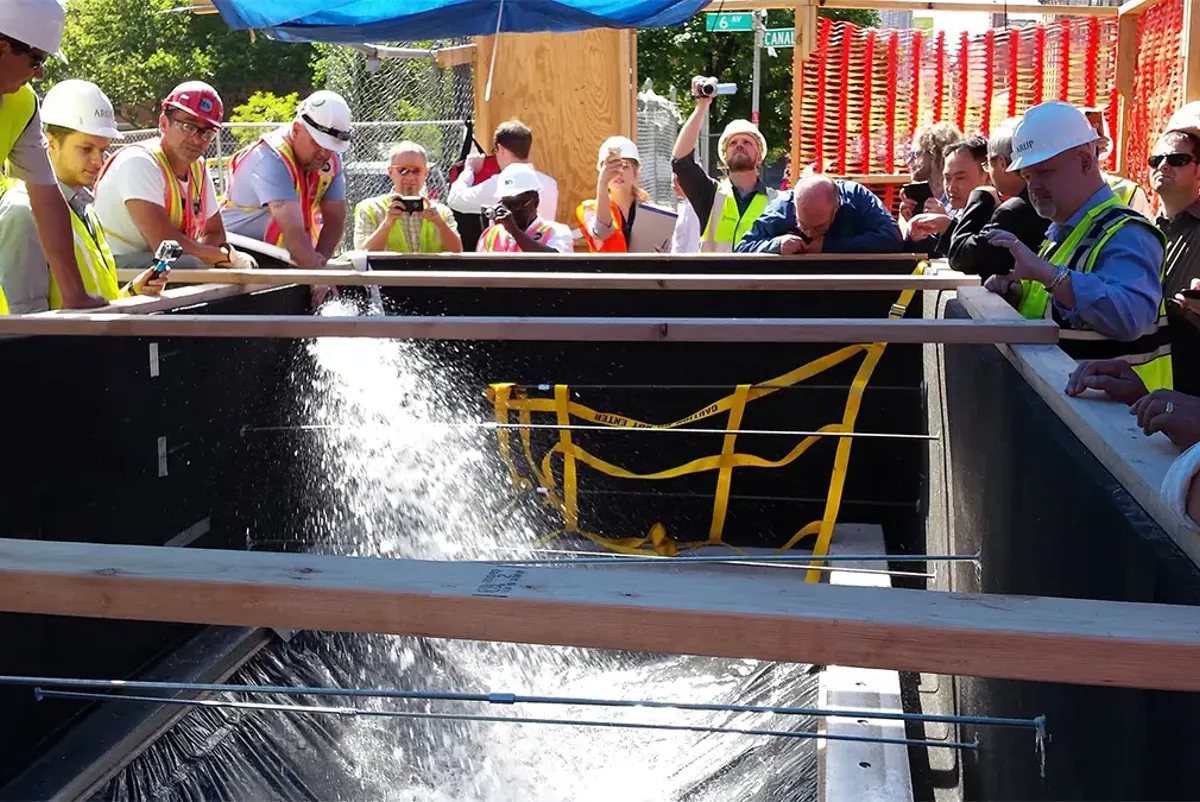
Flexgate comprises introduces an innovative point-of-application system that eliminates the need for post-storm cleanup. © ILC Dover
Awards
-
ACEC New York, 2016
Platinum Award winner (Transportation category)
Projects
Explore more rail projects:

Enabling historic investment to achieve a more modern, reliable, and connected Northeast Corridor rail network
CONNECT NEC Program, USA

A state-of-the-art 19km tramway network that will serve as the backbone of mobility in the Québec region
TramCité, Canada

Owner’s Engineer for Canada’s transformational Alto high-speed rail network
Alto High-Speed Rail, Canada

Creating two iconic stations as part of a major line extension
Toronto-York Spadina Subway Extension, Canada
Get in touch with us
If you'd like to speak to one of our rail experts about any of the issues raised on this page or a potential collaboration then please get in touch by completing the form.
