
Developing an investment strategy for resilient water systems
Prioritising investments for water security in Ethiopia
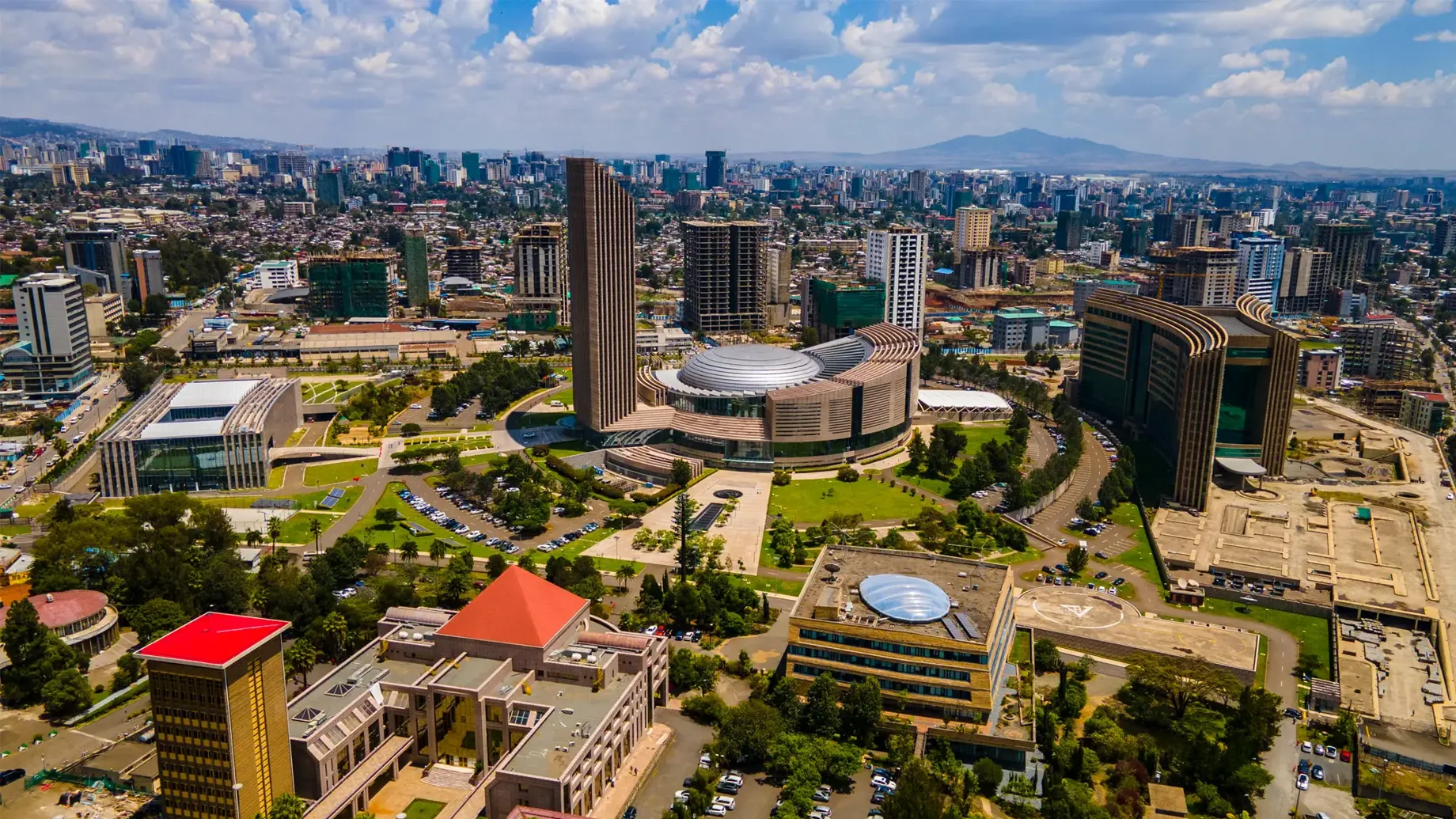
The Awash River in Ethiopia is a key water source for Addis Ababa and surrounding cities. In this region, both rainfall and demand for water are highly unpredictable. A reliable, resilient drinking water supply in the face of climate change, population growth, development ambitions and other uncertainties is essential to support residents, farmers’ livelihoods, industries and climate resilience for future generations.
Arup led a team that included Nexsys Analytics, HR Wallingford and Echnoserve. Together, we worked with Ethiopia’s Ministry of Water and Energy (MoWE) to analyse the risks and increase the resilience of the water supply in the Upper Awash upstream of Koka sub-basin (UAUK). We assessed hundreds of thousands of plausible futures and developed a phased adaptation roadmap and an investment strategy.
The roadmap and our recommendations are helping local decision-makers determine where, when and how to invest in maintaining and improving water systems between now and 2100. Drawing on funding from the World Bank, this will enable the ministry to reduce water losses, and to take strategic decisions that will lead to a sustainable balance between demand and supply.
Understanding multiple challenges
It was important for us to understand the unique challenges the area faces. The UAUK sub-basin is experiencing mounting pressure from rapid urbanisation and industrial growth. Water demand is rising steeply, driven by population growth in major settlements including the capital, Addis Ababa. Away from the cities, water is also needed to sustain industry, agriculture and livestock.
The water system here is already struggling to meet demand. Non-revenue water losses, which include leaks and burst pipes, are approaching 36%. Groundwater sources are under stress and investment is needed to conserve water supplies, identify new sources of water and help to manage demand. But with so much uncertainty on the horizon – particularly in relation to rainfall patterns and socio-economic change – the path to a secure and resilient water system was far from obvious.
The outputs of this work are useful to streamline governance and aid implementation which is critical for the ministerial relationship with Shegger and Addis cities. MoWE plans to use the model and tools for future planning, which will help bring stakeholders together.
Preparing for different futures
Our team worked with the Ethiopian Ministry of Water and Energy to create a roadmap for improving water resilience, applying a decision-making under deep uncertainty (DMDU) approach.
DMDU acknowledges that the future is highly uncertain. The number of variables and the range of outcomes for each variable make attempts to predict and plan for specific conditions unwieldy and unworkable. Instead of attempting to forecast the future accurately and recommending a single course of action, we used DMDU to identify a whole range of different possible futures, and tested potential infrastructure, policy and management measures against each of those futures. On this project we applied a DMDU approach to just the UAUK basin, but it can also be used to shape a national or transnational strategy.
Using specialist hydrological modelling software and computing power developed within just the last few years, our team could explore hundreds of thousands of plausible scenarios and the impact of different sequences of interventions in each. Sample interventions included building dams, fixing leaks in the supply network and a variety of demand management strategies.
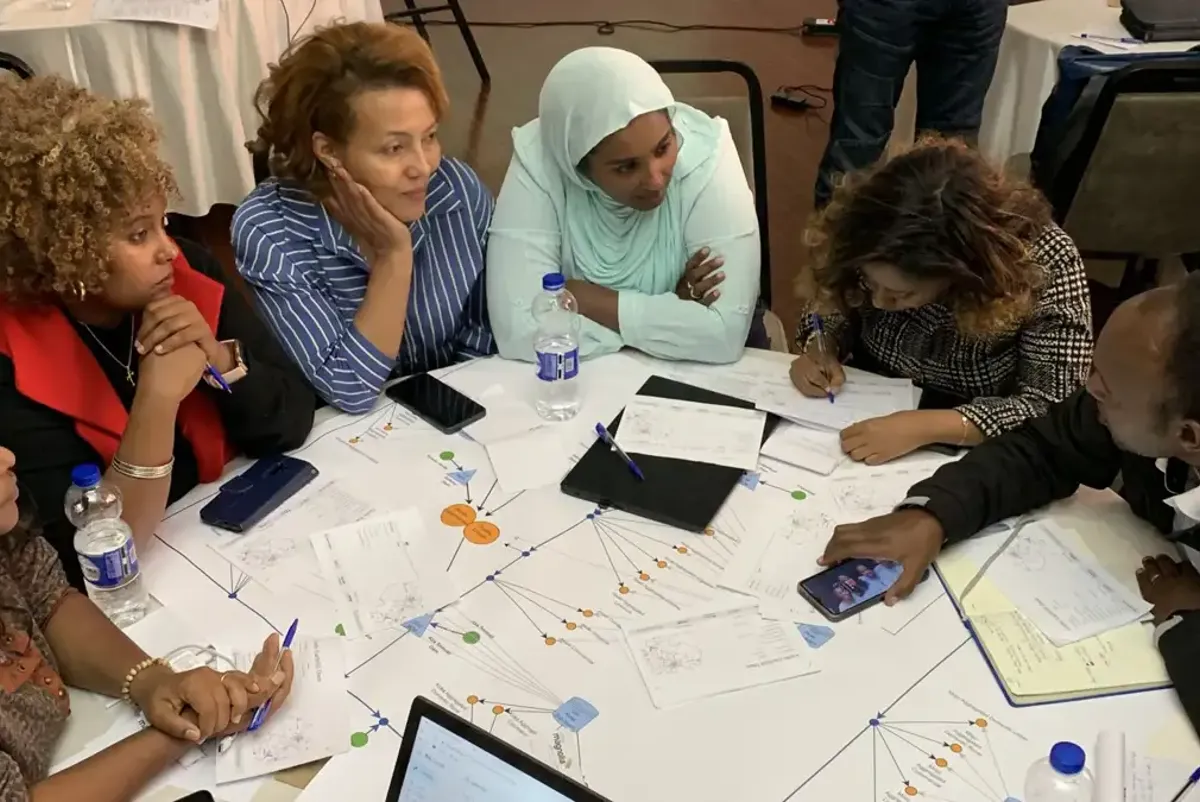
We held regular workshops that helped us incorporate vital local knowledge and to take account of the local political, economic and geographical context in our recommendations.
Drawing on our experience with the City Water Resilience Approach, we worked with stakeholders in UAUK to build local development plans, priorities, performance metrics and potential policy levers into the model. We held regular workshops with stakeholders including the Ministry of Water and Sanitation, The World Bank, Addis Ababa Water and Sanitation Agency and academics from Addis Ababa University.
These workshops helped us incorporate vital local knowledge and to take account of the local political, economic and geographical context in our recommendations. This ensures that investment in infrastructure will always be targeted where it’s most needed, whether that investment takes place in five, ten or twenty years’ time.
We also built capacity among key departments and academics in Ethiopia. Sharing our experience, open-source tools and processes means that local teams can use, review and adapt the pathway as needed. Arup’s experts have offered ongoing support to help maintain the model and support new users.
Managing demand for water
Our analysis revealed that high and rising demand for water is the most likely driver of a potential system failure, so strategies to manage demand are crucial. If this continues to be the most significant factor, our pathway will recommend options such as increased metering ratios, reducing non-revenue water and regulating abstraction. The pathway will also point to measures that address the root causes of high demand such as changing planning regulations to shift demand to locations with a more abundant water supply.
Grouping options into adaptive pathways suited to the different plausible futures gives a flexible roadmap to a more sustainable future. The short, medium, and long-term strategies provide a clear picture of the options for investment. This can be used by Ethiopia’s Ministry of Water and Energy, and by external organisations such as the World Bank.
If conditions such as economic activity change – or if better information becomes available, then the model can be re-calibrated. This will generate new recommendations to ensure that investment will help the water system to remain as resilient and robust as possible, whatever the future holds.
It could take ten or even twenty years to construct a new dam in the UAUK sub-basin. But the tools and processes we have developed are already supporting local decision-makers. They can now be confident they are taking evidence-based action that will help to safeguard the water supply for millions of people.
Nexsys Analytics / HR Wallingford / Echnoserve / Ethiopia’s Ministry of Water and Energy / Addis Ababa University
The Arup Journal 2026 Issue 1
Explore our work in Ethiopia’s Upper Awash Basin, where we used a decision making under deep uncertainty approach to help shape a resilient water future, and how we shaped the landmark Kai Tak Sports Park in Hong Kong.

Projects
Explore more water projects

Geospatial analysis and visualization to support community-led, cross-border environmental interventions
Tijuana River Index, Mexico, USA

Improving water security and sanitation for millions in urban India
Australia-India Water Security Initiative (AIWASI), India

Creating cool and green streets with spatial data
Strategic Prioritisation Map for Water Sensitive Urban Design, Australia

Promoting climate resilient flood defence and development through nature-based solutions
Lower Darent Riverside Strategy, United Kingdom
Get in touch with us
If you'd like to speak to one of our water experts about any of the issues raised on this page or a potential collaboration then please get in touch by completing the form.
