
Shaping sound and structure at Oxford University
Stephen A. Schwarzman Centre for the Humanities
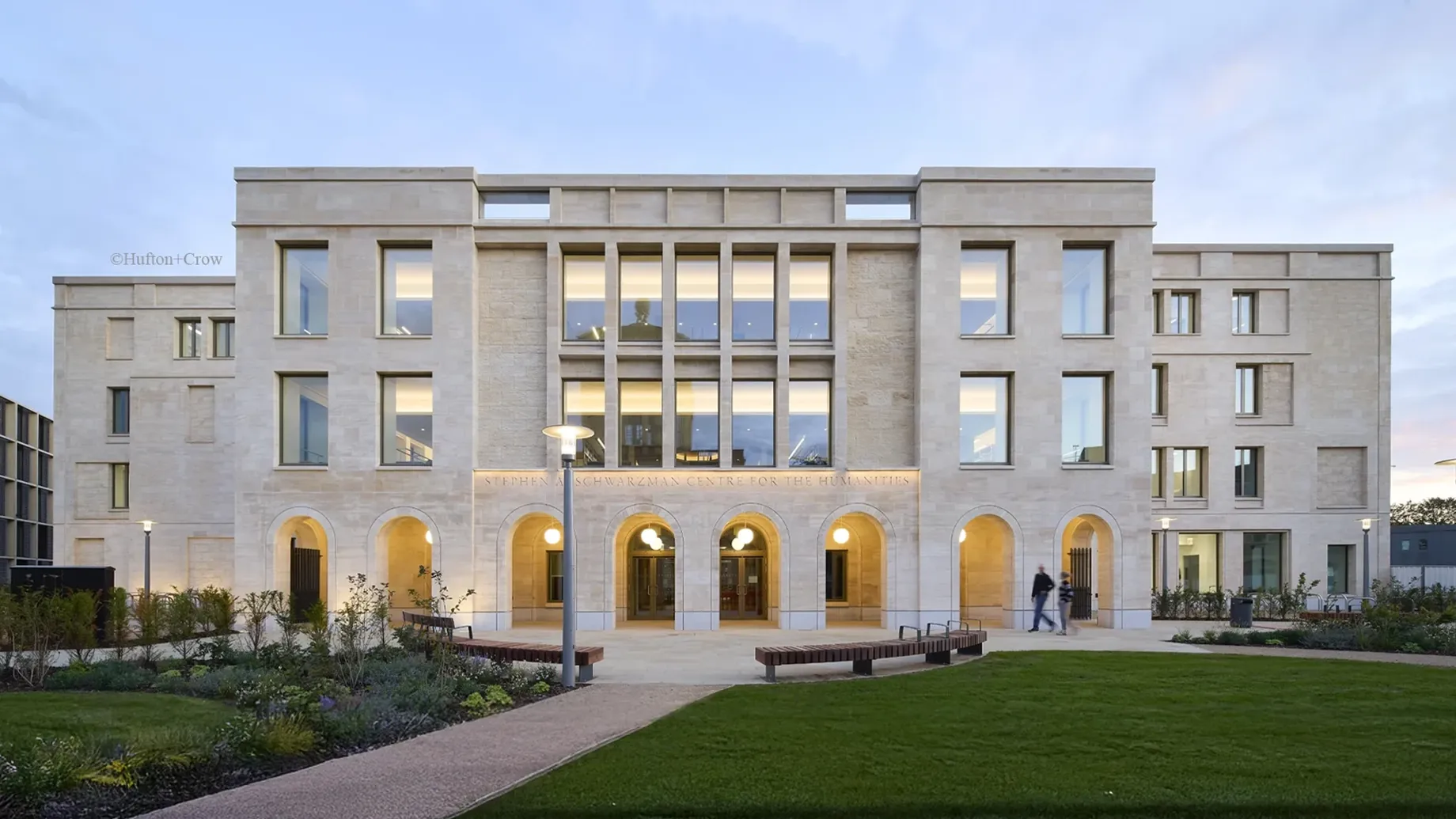
The Stephen A. Schwarzman Centre for the Humanities at the University of Oxford unites once-dispersed humanities faculties into a single cultural hub. Blending legacy and innovation, this landmark building combines acoustically excellent performance spaces, sustainable design and welcoming public areas.
Arup developed a façade strategy that integrated traditional, heritage materials with off-site construction and enabled Passivhaus certification for exceptional thermal comfort and minimal environmental impact. Our acoustic design included box-in-box construction to minimise sound transmission and tailored reverberance to create ultra-quiet, flexible spaces for a diverse mix of performance uses, concerts, rehearsals and experimental arts.
This project will co-locate the university’s humanities faculties for the first time, bringing visibility, accessibility and cultural vibrancy to the university. The combination of technical innovation with architectural sensitivity puts the centre at the heart of creativity, research and public engagement, enriching both the university and the wider community for generations to come.
Acoustic expertise from concept to construction
Arup was appointed as a specialist acoustician to shape the sound design of the concert hall, multi-use performance room and rehearsal room. From the outset, our acoustic team worked closely with Oxford University representatives and musicians to shape an acoustic brief that guided every decision – from room geometry to the subtle control of background noise.
Using digital modelling and Arup’s SoundLab - our immersive environment for exploring and shaping sound - we tested design possibilities, inviting the Oxford University team to experience the acoustic landscape before construction had even started. This dialogue between aspiration and reality allowed us to create spaces that would resonate with the centre’s diverse artistic ambitions.
To support the centre’s diverse artistic aims, we designed the concert hall, rehearsal spaces and black box – an adaptable room for experimental or intimate performances – with distinct acoustic profiles. To minimise sound transmission between rooms, we used box-in-box construction - independent concrete shells mounted on resilient bearings. These were engineered to physically isolate each space and prevent noise transfer, ensuring every room maintains its distinct acoustic profile without interference from its neighbours.
In the concert hall, a generous 14-metre ceiling offered the necessary acoustic volume, allowing sound to develop fully. The interior was carefully shaped to enhance reflections and scattering that lend clarity to every performance, from intimate recitals to the grandest symphonic showcases.
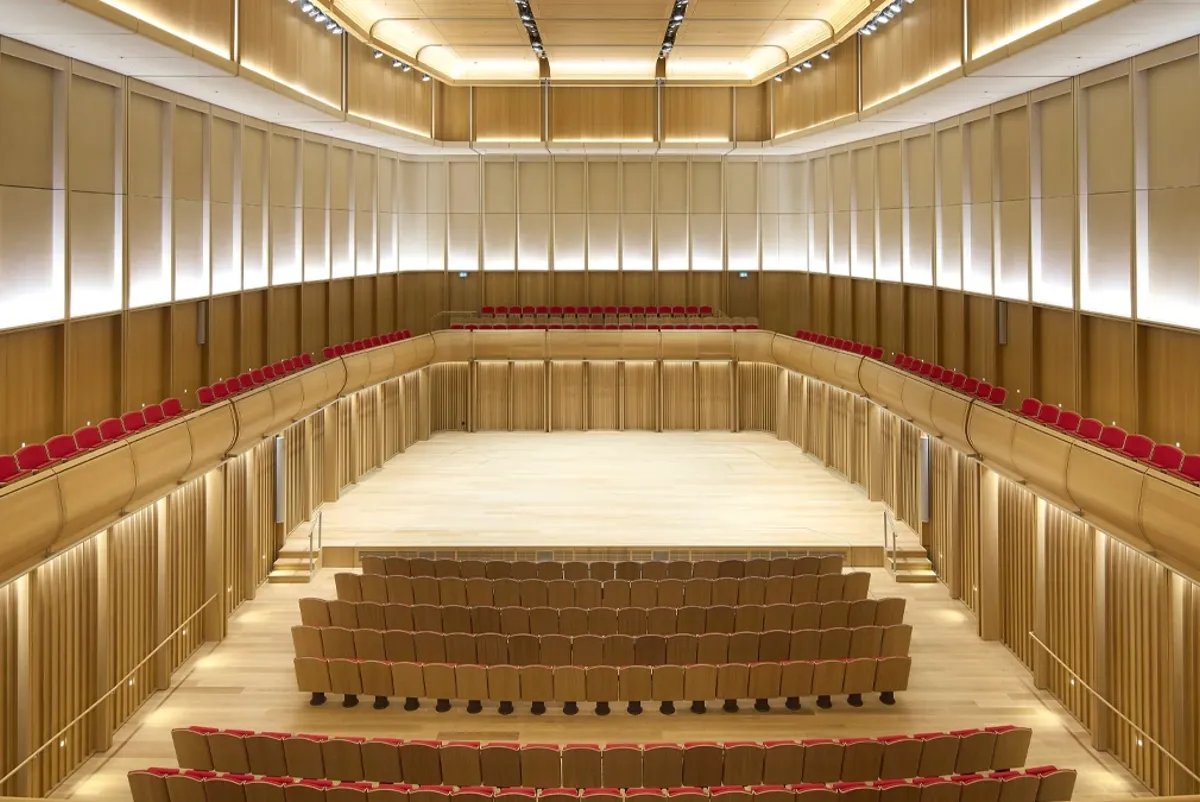
The concert hall is shaped to enhance reflections and scattering that lend clarity to every performance. ©Hufton+Crow
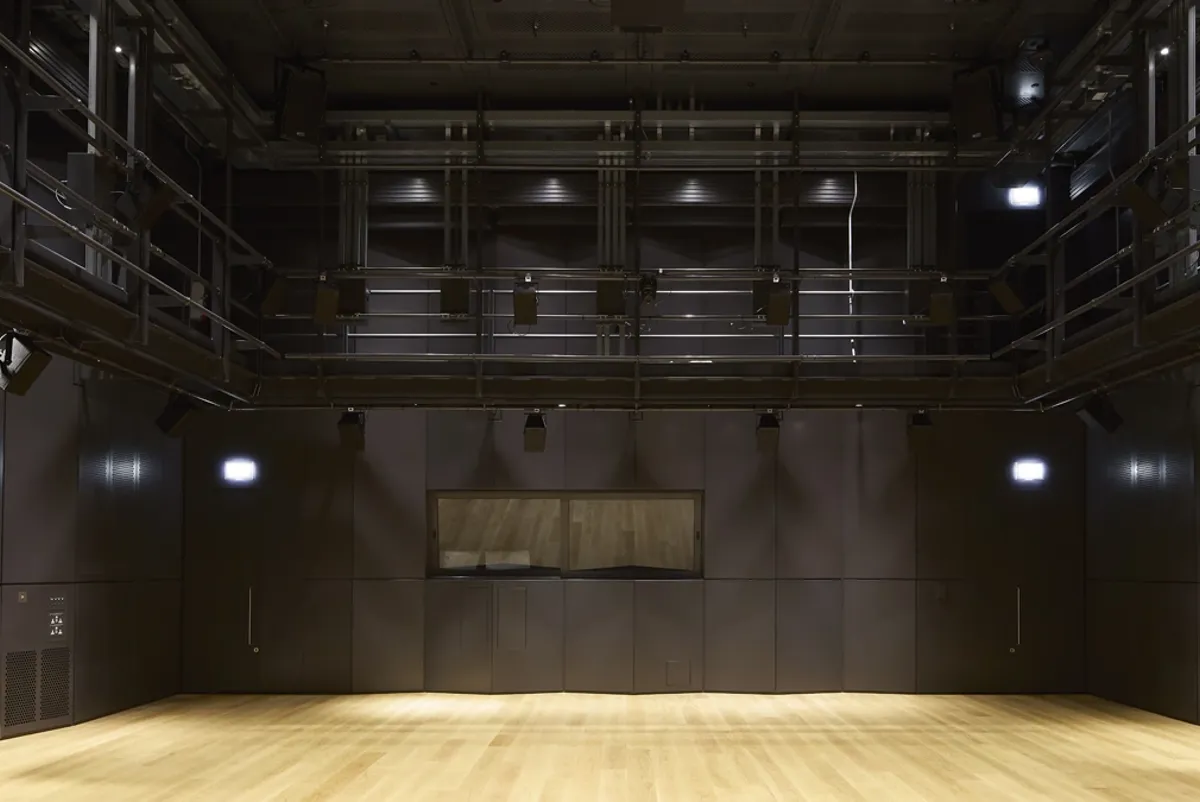
The black box offers a highly flexible setting for experimental or intimate performances. ©Hufton+Crow
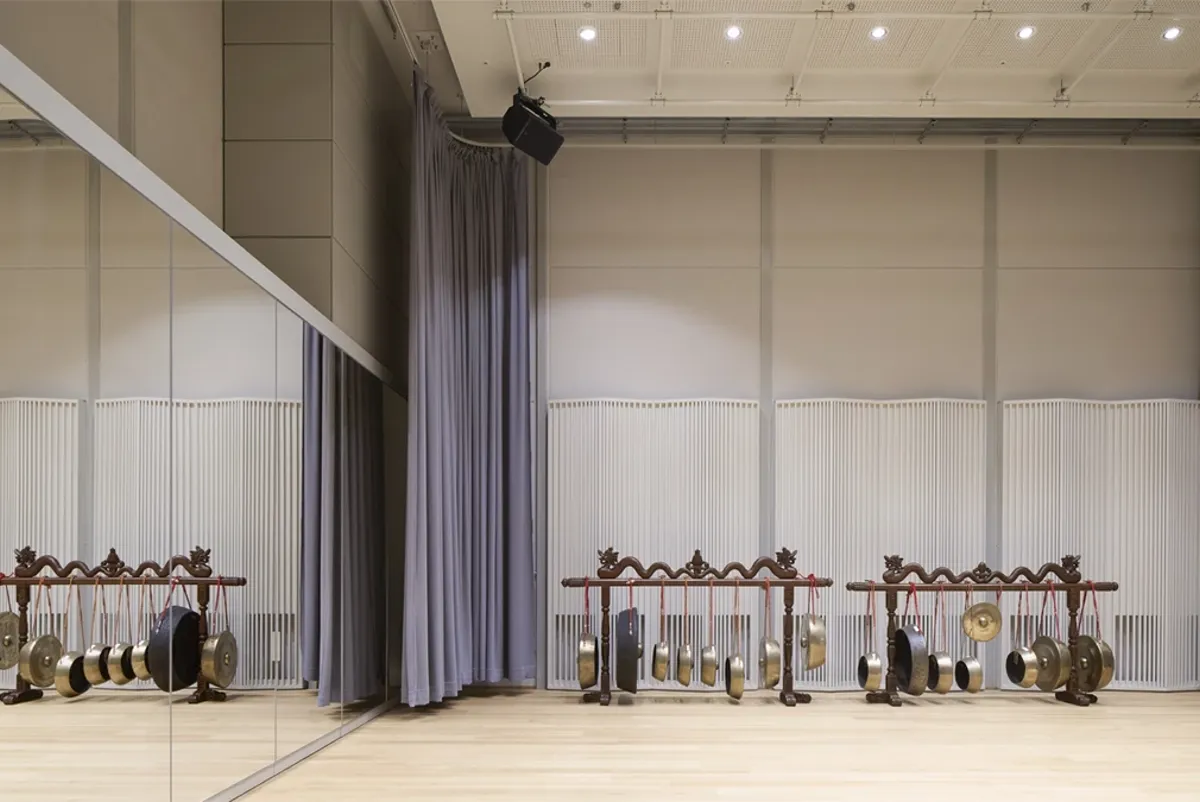
The performance spaces were engineered to isolate each space and prevent noise transfer. ©Hufton+Crow
Engineering ultra-quiet, flexible performance spaces
Achieving a very low background noise level was a challenge that demanded technical precision. We targeted a noise rating of 10, indicating an exceptionally quiet environment that requires careful co-ordination across every system. For example, the ventilation system delivers gentle, low-velocity air through acoustically treated air chambers and seat-level diffusers, all tuned to the demands of multiple uses.
Around the upper perimeter of the concert hall, we introduced sound-absorbing banners, enabling adjustable reverberance tailored to the needs of each performance. This flexibility supports everything from solo recitals to full ensembles – without compromising sound quality. Using SoundLab, we tested and refined the banner design to ensure it could be tailored to different musical styles.
Honouring heritage through façade design principles
Appointed as façade engineer, Arup was tasked with providing a solution that respected Oxford University’s architectural heritage while meeting modern construction demands. The design called for a harmonious integration of traditional materials, like stone and brick, with contemporary building methods, all within a challenging schedule and complex site constraints.
Working closely with Hopkins Architects, we developed a precast façade strategy that balanced visual richness, technical performance and practicality. Through a pre-contract design stage, we collaborated with Laing O’Rourke as it developed the final facade design. Over 18,500 stones and 160,000 bricks were laid into moulds with concrete precast off-site, achieving both precision and the enduring beauty of Oxford’s heritage.
Our materials experts helped define the technical performance of the precast concrete, and the selection and specification of the Clipsham limestone, hand-made bricks and traditional lime mortars which face the precast panels and building entrances.
This approach enabled efficient fabrication while preserving Oxford’s craftmanship standards. Jointing was minimised for a clean, cohesive appearance, with stitched joints supporting structural integrity and visual continuity.
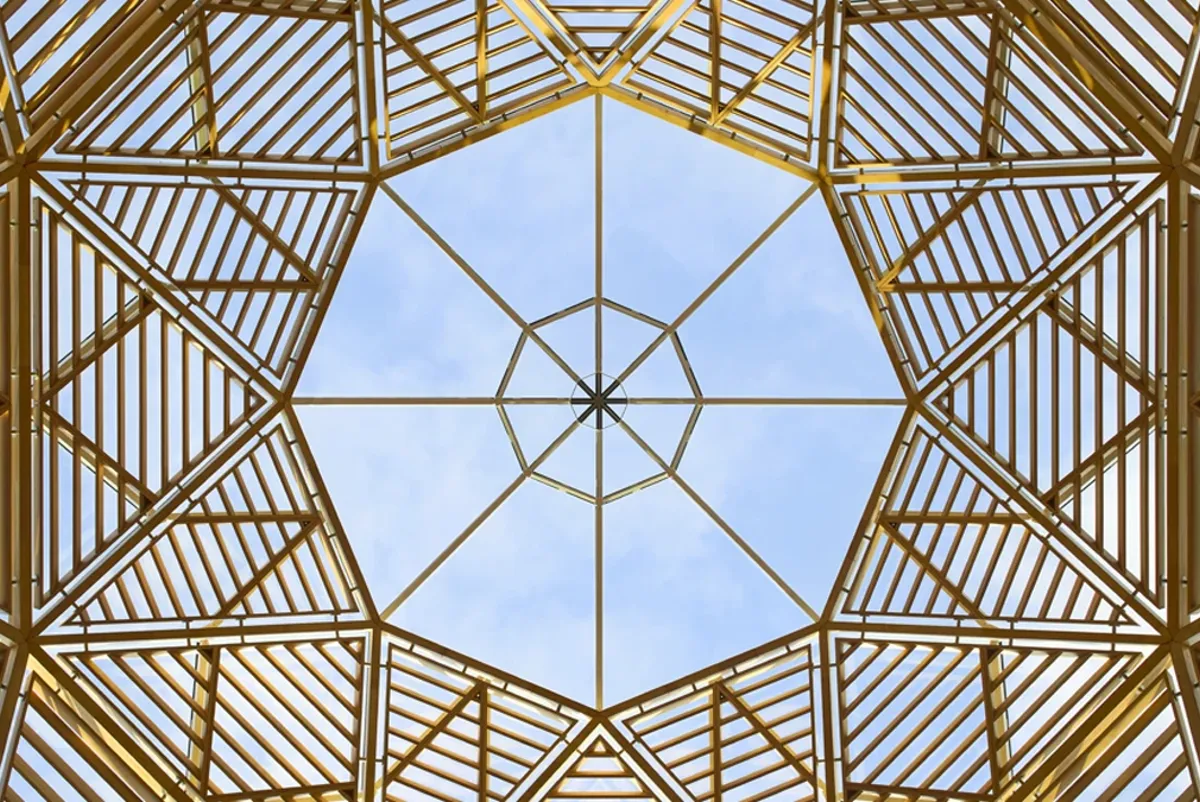
The layered dome structure is crafted from timber, steel and glass. ©Hufton+Crow
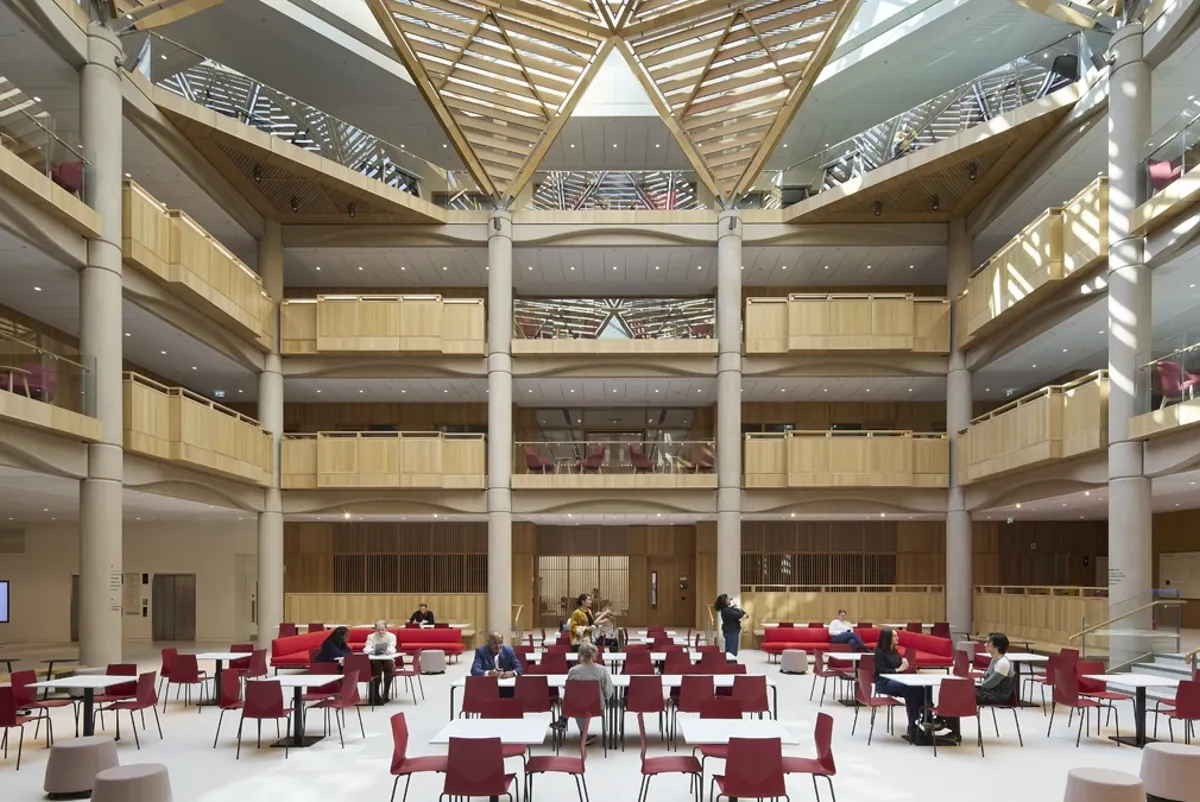
A light-filled atrium creates an open, welcoming cultural hub for the community. ©Hufton+Crow
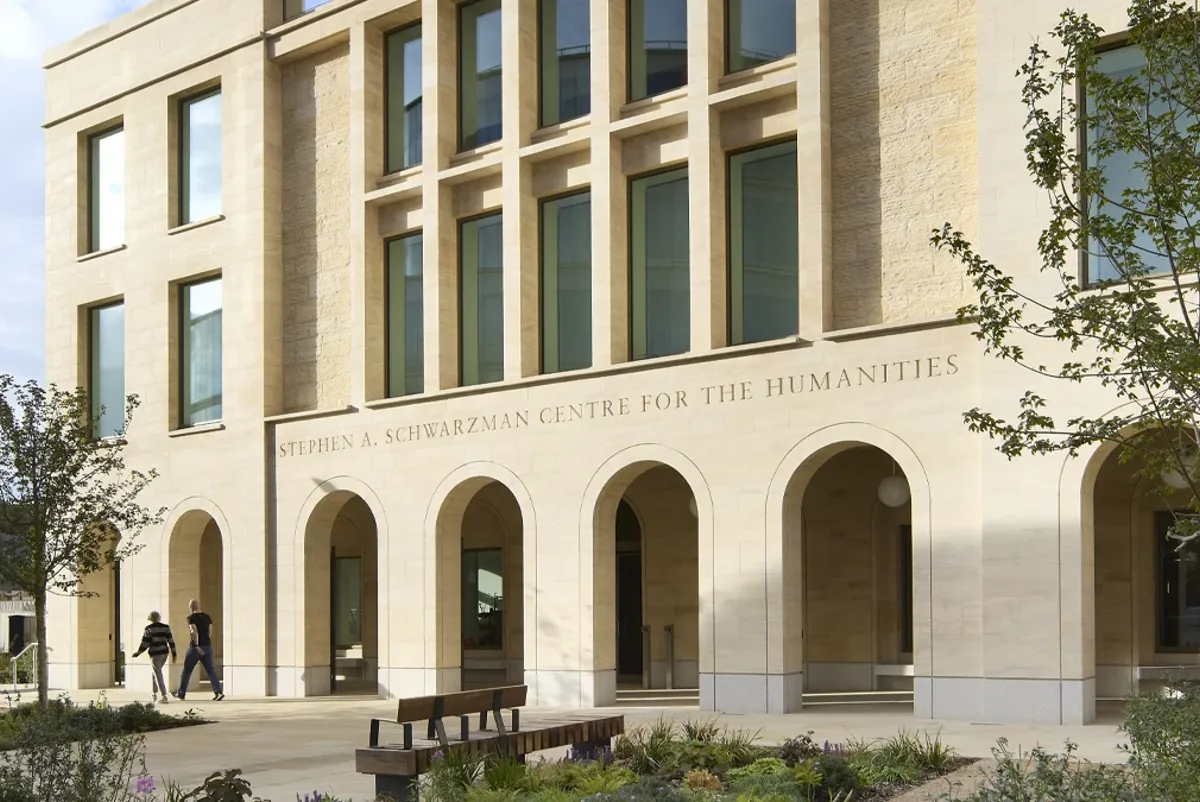
The heritage-led façade was engineered to deliver advanced energy performance. ©Hufton+Crow
Balancing design intent with environmental performance
Beyond appearance, the façade was engineered to meet demanding thermal and airtightness standards. Detailed thermal analysis guided the integration of Passivhaus accredited, thermally broken aluminium-framed glazing systems into the precast panels, optimising energy performance and maximising natural light.
These efforts helped the centre to achieve Passivhaus certification – a rigorous approach that recognises buildings achieving the highest levels of comfort and energy savings. At the time of completion, the Passivhaus Institute confirmed that the Centre is the largest Passivhaus certified university building in Europe and the world’s first Passivhaus concert hall.
Construction and assembly
Before construction began, we carried out comprehensive evaluations to confirm the design’s ability to meet insulation and airtightness targets. Clear performance benchmarks were established to guide the contractor’s work and prioritise energy efficiency throughout the project.
At the heart of the building is the great hall – a welcoming atrium enclosed by a timber-lined internal dome and protected by an external glass and steel structure. The dome is particularly appreciated from within, where the layered composition gently anchors the building’s spatial arrangement – creating a sense of openness and calm.
The glazing system, developed by Hopkins Architects and Arup, and delivered by Novum Structures, was pre-assembled on-site using a method we devised to meet the university’s schedule and quality expectations. This coordinated approach allowed the inner and outer domes to be constructed at ground level and carefully installed atop the roof, forming the architectural centrepiece around which the building is organised.
Making an open space for the community
The Stephen A. Schwarzman Centre for the Humanities is designed to welcome everyone. Its open layout, versatile performance venues and shared spaces invite engagement from students, academics and the wider community. Together, providing a vibrant cultural hub that encourages connection and creative exchange.
Hopkins Architects / Novum Structures / Laing O’Rourke
Projects
Explore more education projects

Fostering arts and culture through a sustainable, expanded campus
California College of the Arts Campus Expansion, USA

Realising a sustainable campus landmark
National Taiwan University Humanities Building, Taiwan

A sustainable retrofit designed around staff and students
University of Southampton Business School, United Kingdom

Repurposing an old school building into a space for 21st century science
Sir William Henry Bragg Building, University of Leeds, United Kingdom
Get in touch with us
If you'd like to speak to one of our education experts about any of the issues raised on this page or a potential collaboration then please get in touch by completing the form.
