
Shaping future‑ready mobility
Strategy concept for the refurbishment of Federal Motorway A2
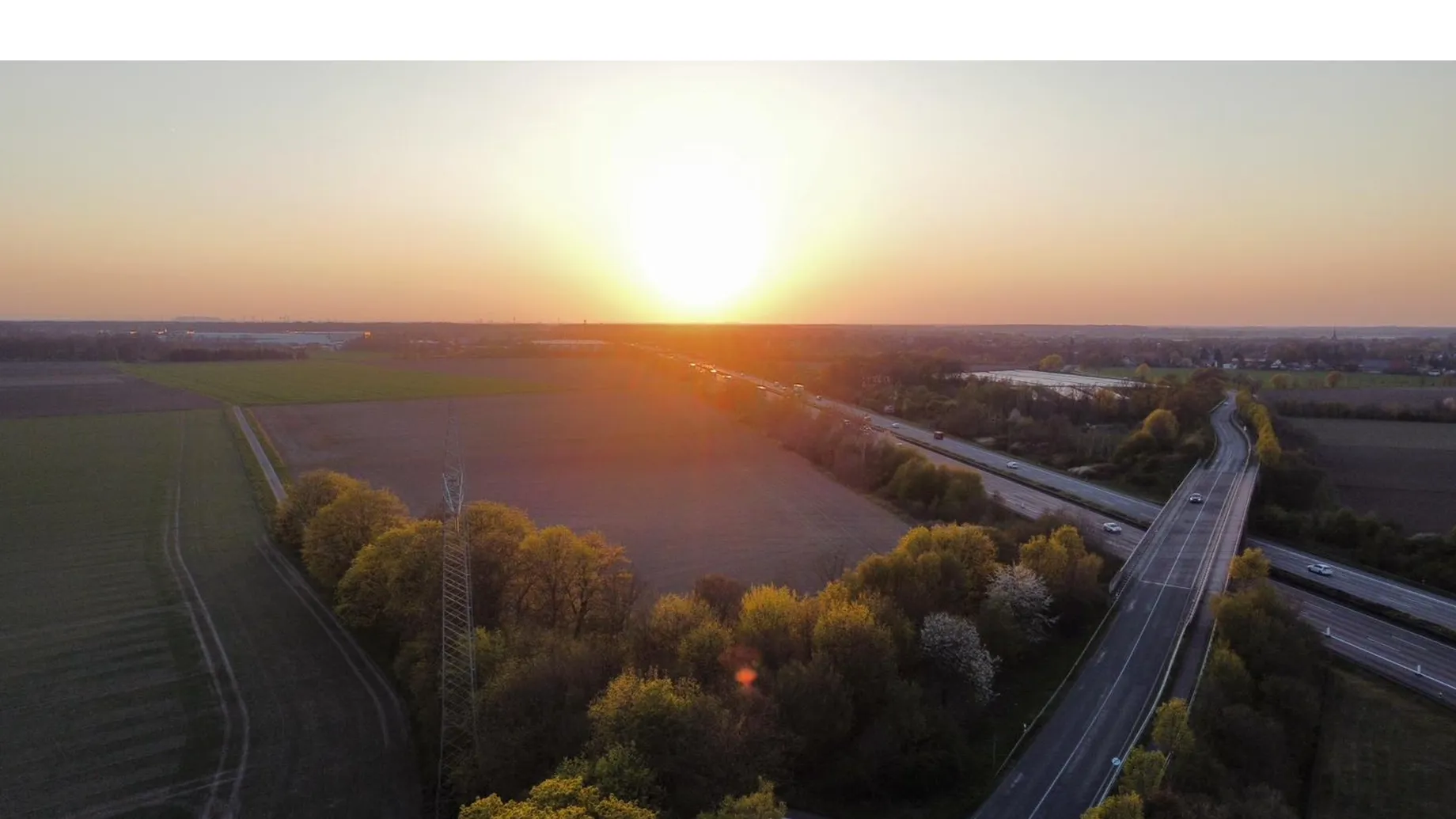
The A2 motorway is one of Germany’s main transport arteries. Its major refurbishment is intended to deliver not only structural upgrades, but a comprehensive qualitative modernisation to cope with future demands. Arup shows how this can best be achieved with a strategic renewal concept.
The A2 motorway runs from North Rhine‑Westphalia via Lower Saxony, Saxony‑Anhalt and Brandenburg to the Berliner Ring, the orbital motorway around the German capital city. It is one of Germany’s principal traffic corridors. Beyond that, the A2 forms a central part of European route E30, forming part of the wider trans‑European transport network.
For the A2 section in Lower Saxony, Autobahn GmbH (Northwest region, Hannover office) is responsible. It coordinates the planning, construction, maintenance and operations for the approximately 155 km long section. In the west, the motorway crosses the partly hilly Weser Uplands, before continuing eastwards through the North German Plain. Further east, the route passes through urban areas (north of Hanover and Brunswick) as well as sparsely populated, forested regions.
With average daily traffic volumes of up to 110,000 vehicles, this motorway section carries very high traffic loads and in the coming years and decades will require extensive renewal and modernisation: for carriageways as well as bridge structures, noise barriers and rest areas.
To support this need, Arup has developed a comprehensive strategy concept that will enable the renewal of the A2 to be carried out not reactively and in isolated measures, but strategically, transparently and sustainably.
A wide range of modernisation needs
First, we thoroughly analysed the starting position. The analysis showed very heavy traffic loads, particularly in the Hanover area, numerous congestion‑prone sections and several technical bottlenecks. The carriageway is predominantly asphalt and will require comprehensive rehabilitation in the foreseeable future.
Beyond the roadway, ageing bridges also need to be refurbished or replaced with new structures. Furthermore, there are noise barriers totalling over 100 km in length, some of which are in poor structural condition or difficult to inspect due to limited accessibility. The service areas will require upgrades, from expanding heavy goods vehicle parking spaces to developing charging infrastructure for electric vehicles.
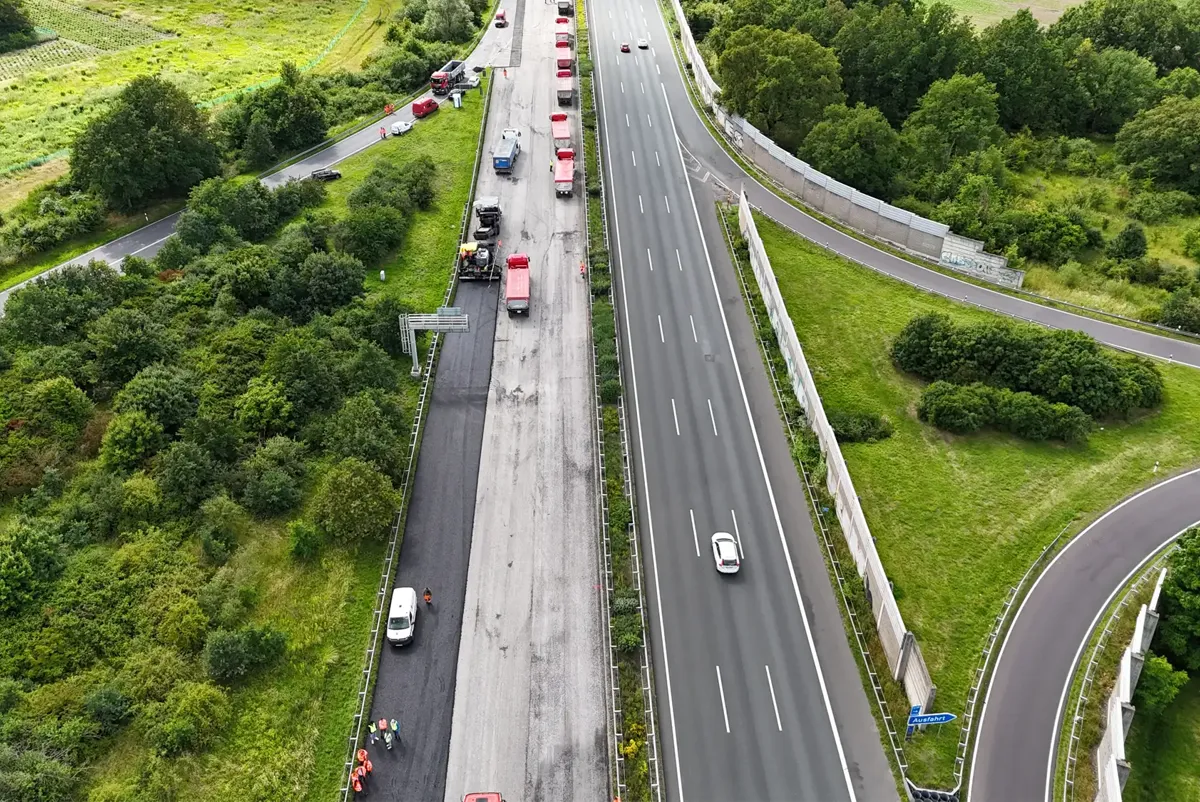
In traffic and construction site management, optimised traffic routing, simulations, diversions, and adjustments at bottlenecks must be taken into account.
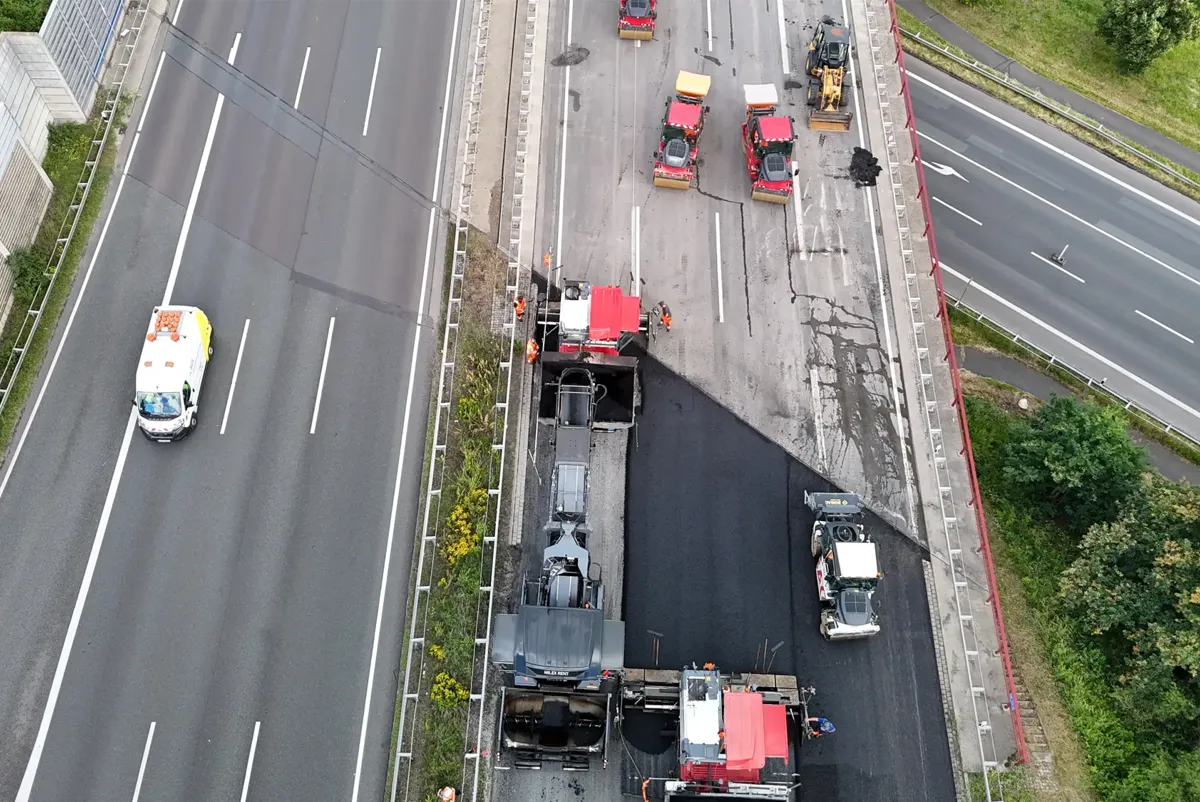
The circular economy plays a central role, for example through the recycling of reclaimed asphalt and the use of low‑CO₂ construction materials.
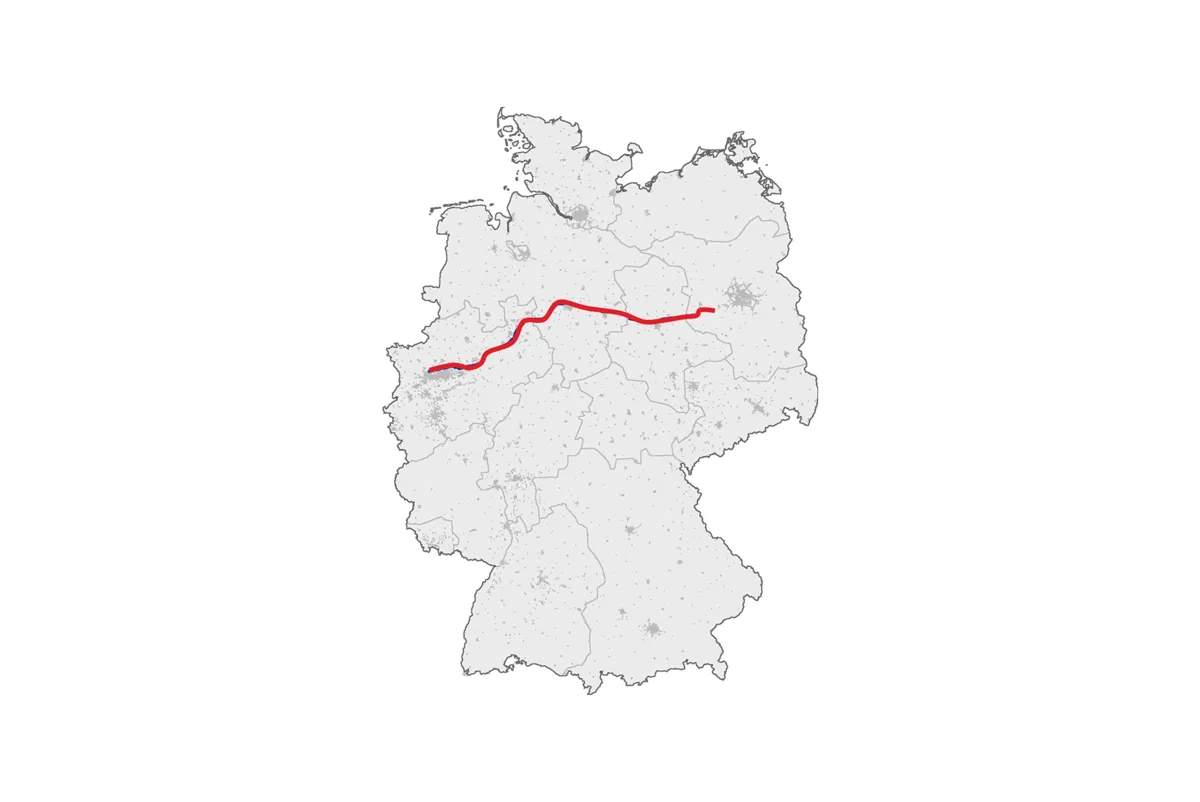
The federal motorway A2 runs from North Rhine‑Westphalia through Lower Saxony, Saxony‑Anhalt and Brandenburg to the Berlin Ring.
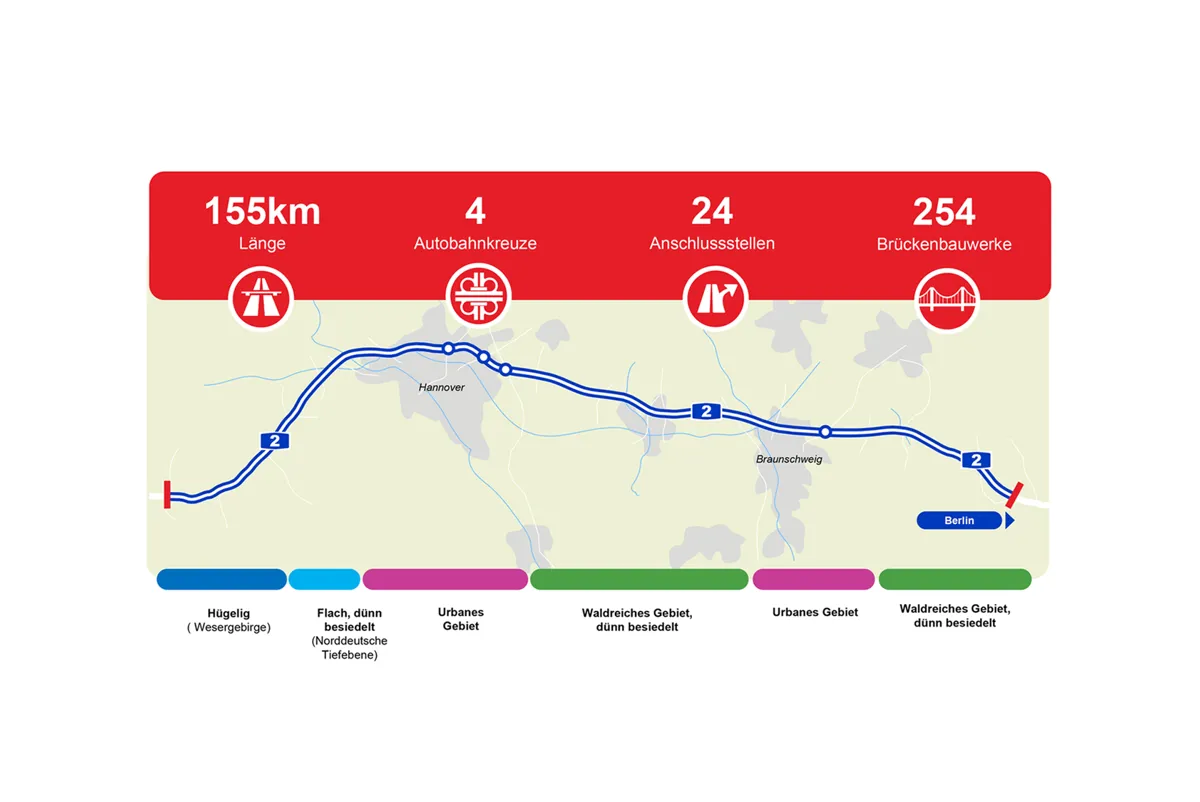
The route of the 155‑km section of the A2 in Lower Saxony.
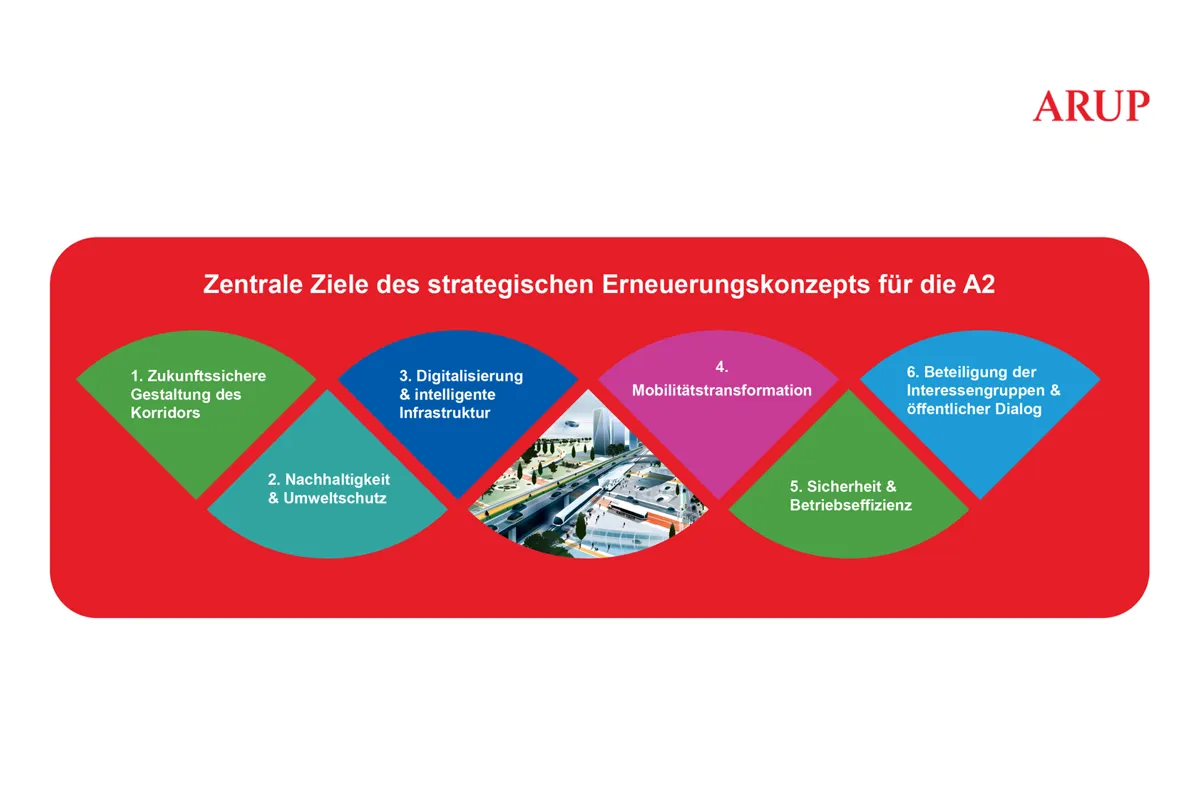
Key objectives of the A2 strategic renewal concept
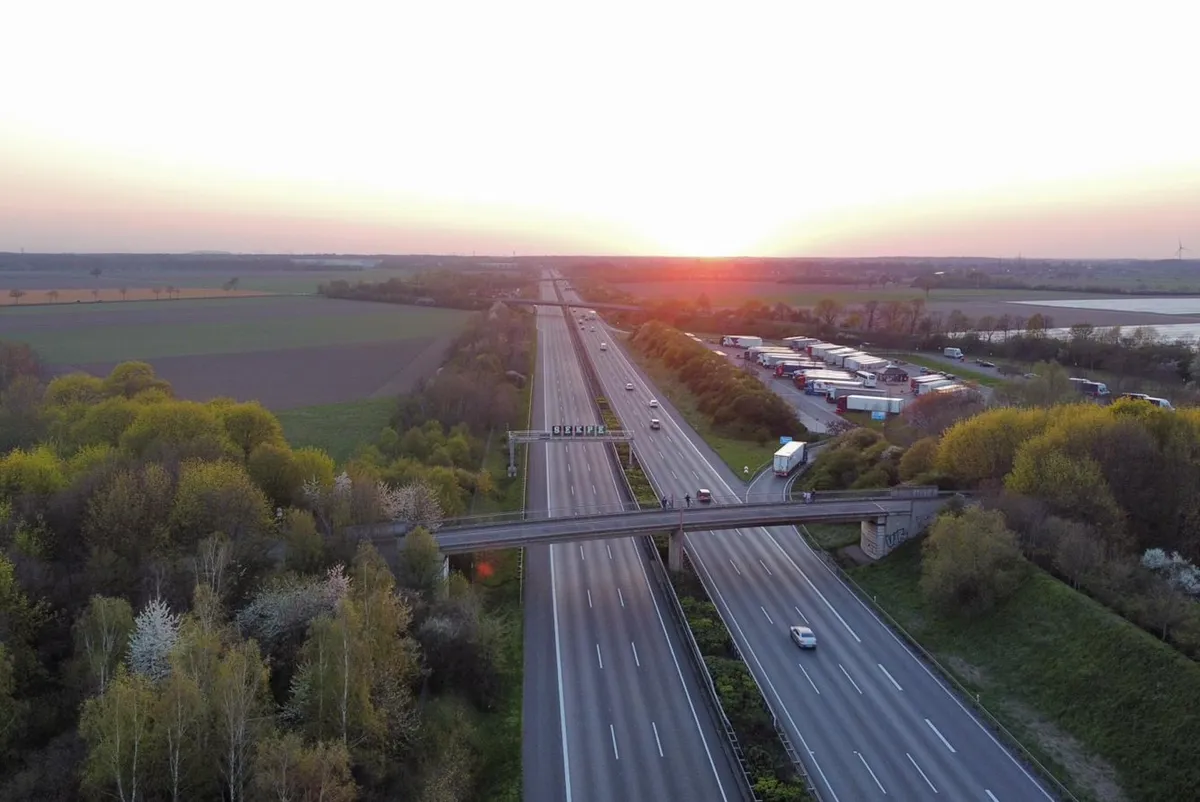
The implementation of the measures defined in the A2 strategic renewal concept along the 155 km corridor is expected to take around two decades.
Measures for qualitative development
Based on the analysis, a catalogue of measures was developed to address both the preservation of the infrastructure and the qualitative development of the entire corridor. The focus is on environmental and sustainability aspects, the needs of users, residents and other key stakeholders, as well as the route’s long‑term climate resilience.
The team examined a wide range of possible measures; around 40 were assessed in detail and prioritised. In addition to weighting criteria, sensitivities were tested with a particular focus on economic efficiency, traffic and sustainability. This resulted in an implementation concept that arranged the A2 sections into an actionable sequence and now forms the basis for subsequent renewal planning.
The key focus areas of the strategy concept for the comprehensive refurbishment for the A2 are:
- Future‑proof the design of the corridor
- Sustainability and environmental protection
- Digitalisation and smart infrastructure
- Mobility transformation
- Safety and operational efficiency
- Stakeholder engagement and public dialogue
From modular bridge systems to connected habitats
We explored technological and structural innovations such as modular bridge systems and optimised asphalt and concrete variants. In addition, options for photovoltaics on infrastructure elements and intelligent traffic guidance systems were identified.
The circular economy plays a central role, for example through recycling reclaimed asphalt and using low‑CO₂ construction materials. Environmental and climate protection are systematically integrated, such as through habitat connectivity, green bridges, measures to improve flood and heat resilience, and improved water management.
For traffic operations and work zone management, optimised traffic routing, simulations, diversion strategies and structural adaptations at bottlenecks must be considered. For the service areas, expansions, conversions and modernisations are already planned today, including a significant build‑out of infrastructure for electric heavy goods vehicles.
Finally, our concept recommends carefully structured and transparent communication with the public and stakeholders, with a particular focus on noise protection and work zone organisation.
A project spanning decades
Renewal of the A2 is to be carried out in sections, based on the age and condition of the structures and carriageway elements. Influencing factors such as traffic loads, accident clusters and environmental requirements also play a role in prioritisation. These framework conditions result in a time horizon of around 20 years for the overall programme. In this way, kilometre by kilometre, a modern, resilient and future‑ready A2 will be created.
The strategy concept is expected to begin in 2040; the exact start date to be determined by Autobahn GmbH.
Images: © Arup (Graphics), © Die Autobahn GmbH des Bundes (Photographs)
ifok GmbH / Durth Roos Consulting GmbH / HELLER Ingenieurgesellschaft mbH
Projects
Explore more roads and streets projects

An actionable framework for safer public roadways providing access to BART stations
Safe Trips to BART, USA

Connecting Los Angeles communities in a sustainable way
Taylor Yard Bikeway and Pedestrian Bridge, USA

Engineering one of the longest cable-stayed bridges in the United States
US 181 New Harbor Bridge, USA

Renewable energy microgrid pioneers decarbonizing model for an EV bus transit system
Martha's Vineyard Transit Authority microgrid, USA
Get in touch with us
If you'd like to speak to one of our roads and streets experts about any of the issues raised on this page or a potential collaboration then please get in touch by completing the form.
