
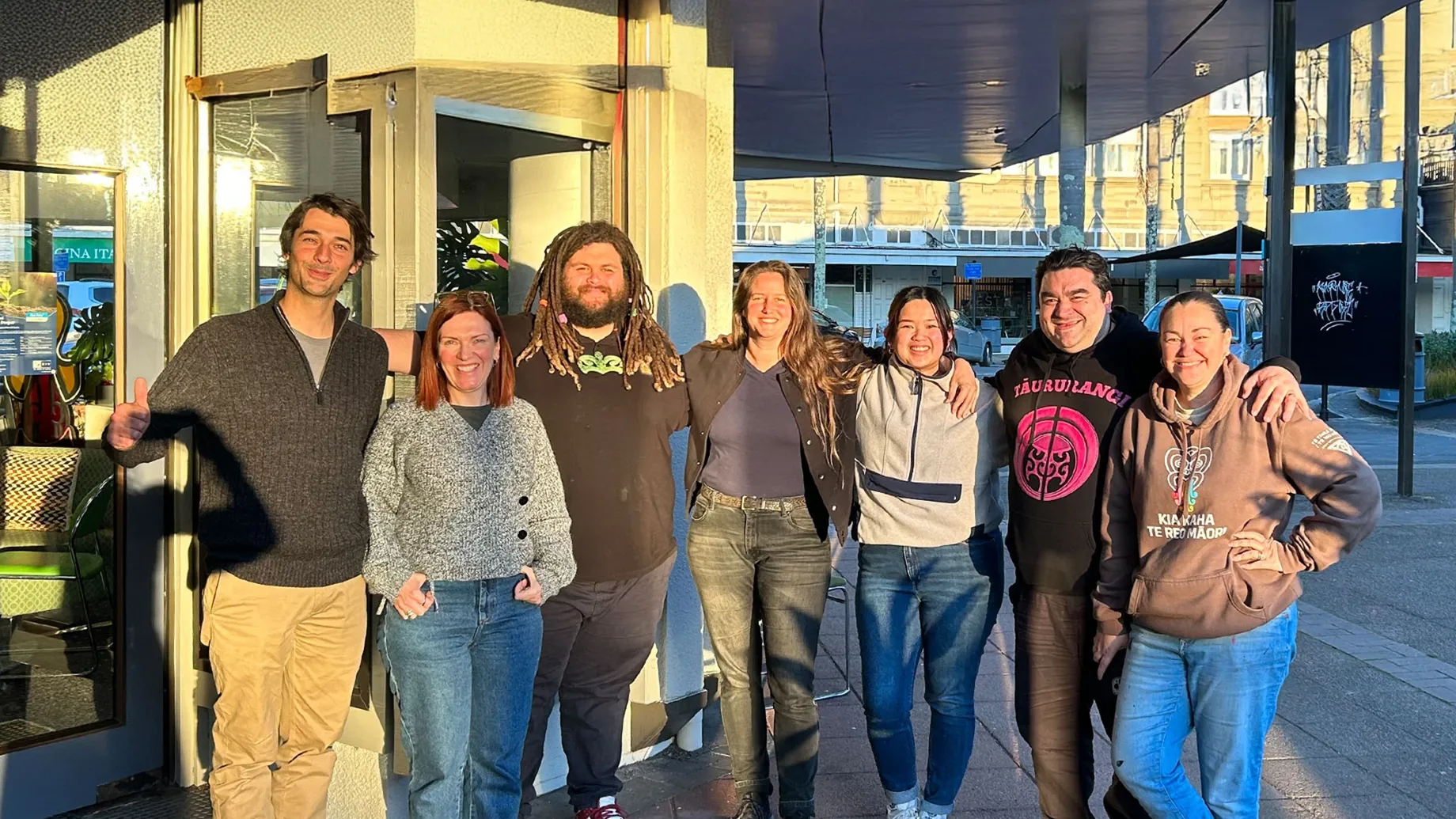
Working in partnership with Tāiki e! Impact House, a dynamic hub in the town of Tairāwhiti Gisborne on the east coast of New Zealand, we reimagined Treble Court, a once-vibrant but recently declining community space to become a flexible courtyard that was a living expression of the Aroha Economy – an indigenous-inspired system rooted in generosity (koha), care (manaaki) and intergenerational decision-making. Arup put its planning and design processes to one side in a highly unusual collaboration that was guided by the community to create something that truly worked for the people who would use it.
People over process
The project began with a three-day immersion with no pre-planned agenda. Through spontaneous site visits, workshops, rapid visioning and prototyping, we worked with community members to learn what they needed from the space. It soon became clear that the most important element was the flexibility and programming of the courtyard, allowing its use to adapt as Tāiki e! continues to grow and change. We developed scenarios using a modular kit of parts to facilitate a variety of activities. These interventions included lighting, planters, modular seating, modular tables and projection mapping, allowing the courtyard to be configured easily and flexibly.
“Less hui, more doey”
The scenarios we developed were not just about making the area more beautiful. They carried a focus on the future. In the short term, activations could create a vibrancy and usefulness for today’s users. Medium-term interventions could attract and onboard new users and, in the longer term, Treble Court will be able to serve as a place of refuge during natural disasters, with connectivity, supplies and, most important of all, trust. Already, some of the scenarios have been activated. Tāiki e! has a strongly action-oriented ethos: less hui (meetings), more doey (action). This is placemaking as living practice, not just planning.

We have worked closely with Arup, combining their expertise in urban design with our understanding of local needs. Together we’ve crafted a vision that is ambitious yet grounded in our community. This is more than an urban redesign; it reflects who we are and aspire to be, embodying the spirit of aroha – love, compassion, and generosity – at its core.
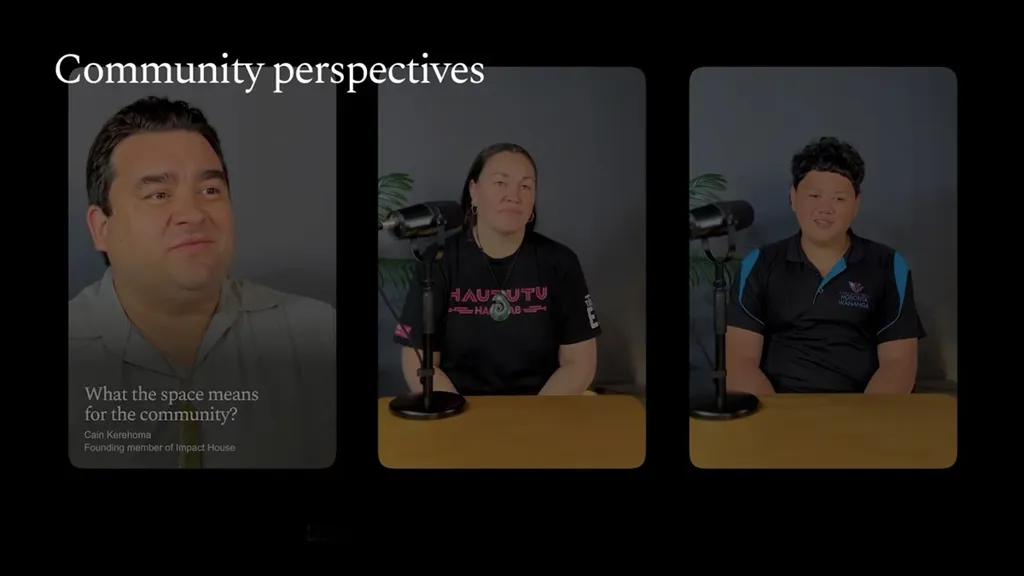
True to Māori principles
For Arup, this collaboration was about more than creating a design. It was about learning how global expertise can stand alongside a kaupapa (purpose) that is both deeply local and focused on the future. Our design process was guided by Tāiki e!’s strong conviction in upholding Māori values and principles. To embody the Aroha Economy, the space needed to reflect growth, generosity and intergenerational experiences. Our process was enriched by being entrusted with mātauranga Māori (Māori knowledge) such as the maramataka (Māori lunar calendar), which guides activities based on energy cycles. Traditional wisdom around kai (food) informed decisions on cultivation. And waiata (songs) allowed the stories of local iwi (tribes) to weave everything into tangible interventions.
The project at Treble Court was more than a redesign. True design is not just spatial. It is cultural, spiritual, and intergenerational. What began as the digital team’s internship programme volunteering at a startup weekend grew into a co-design journey, where Arup and Tāiki e! blended international expertise with local vision through kōrero, mentorship, and community-led, listening-first collaboration. Our work with Tāiki e! is a living demonstration of what happens when world-class design thinking and community vision work together.
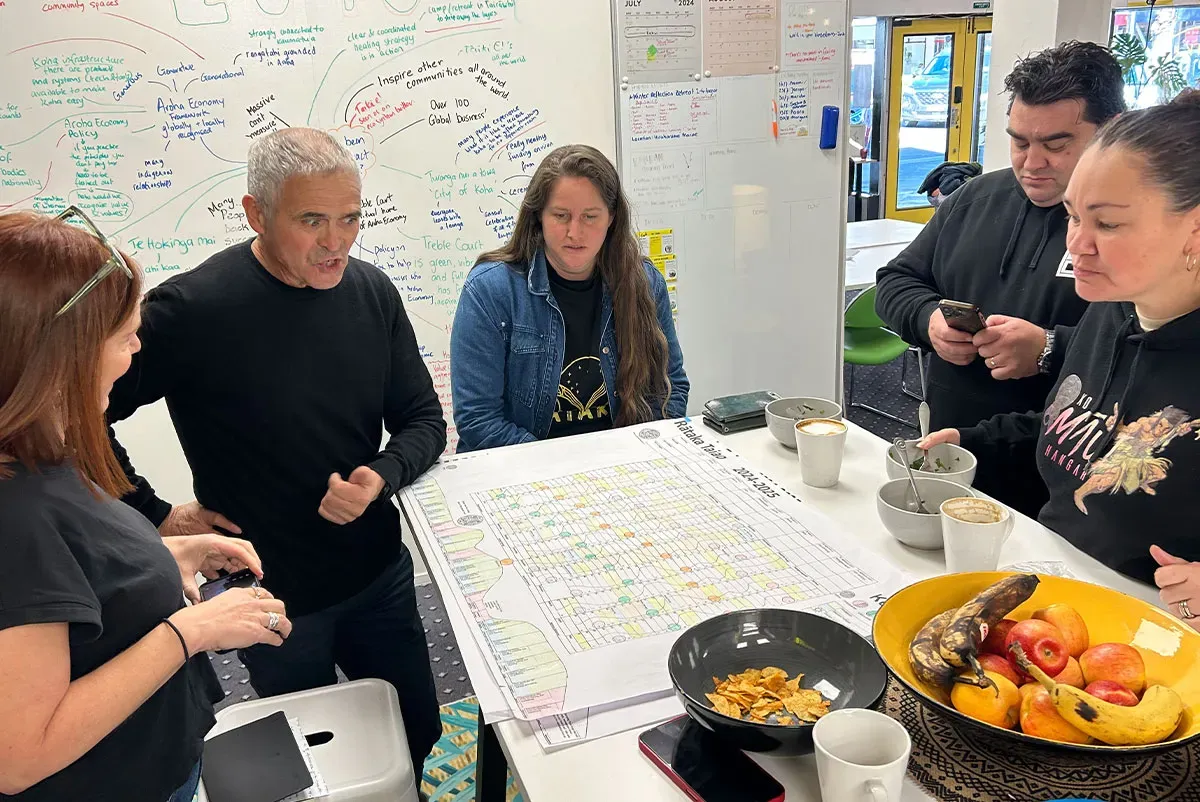
Sharing cultural knowledge about the Maramataka to inform programming of the space
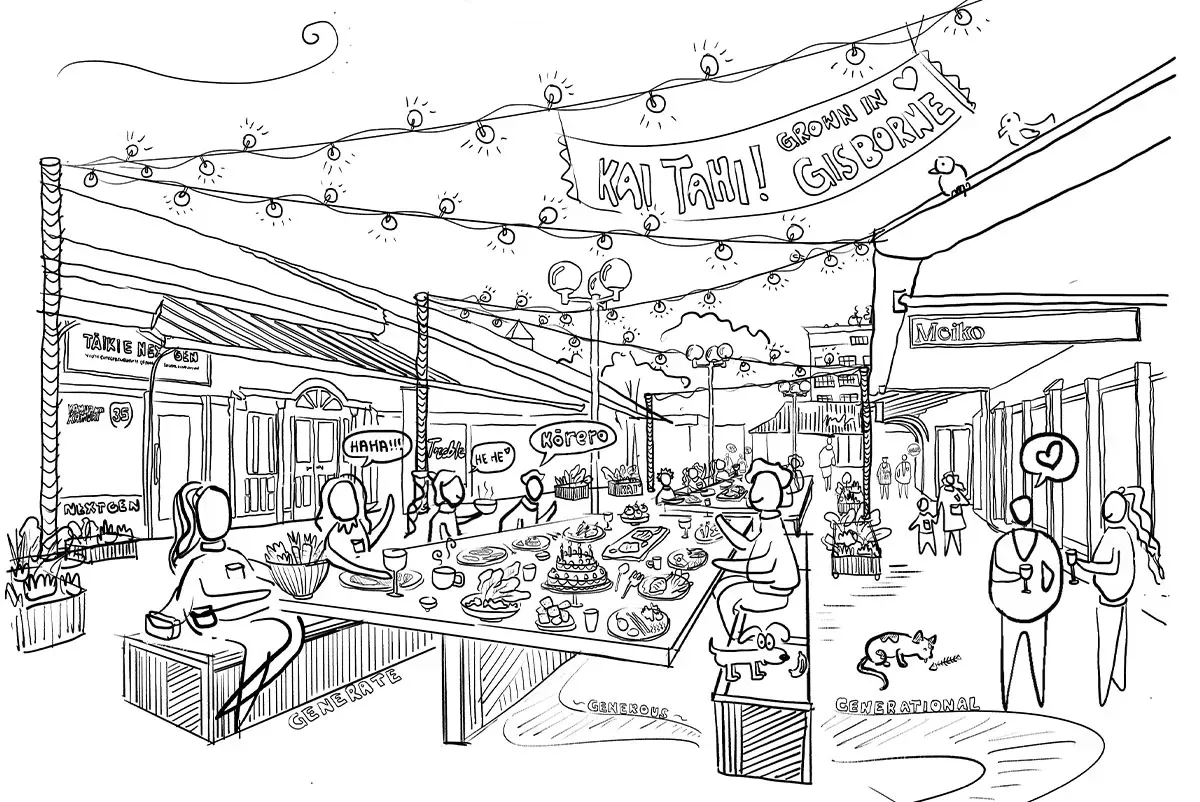
Sketch showing how the space is designed to bring the community together.
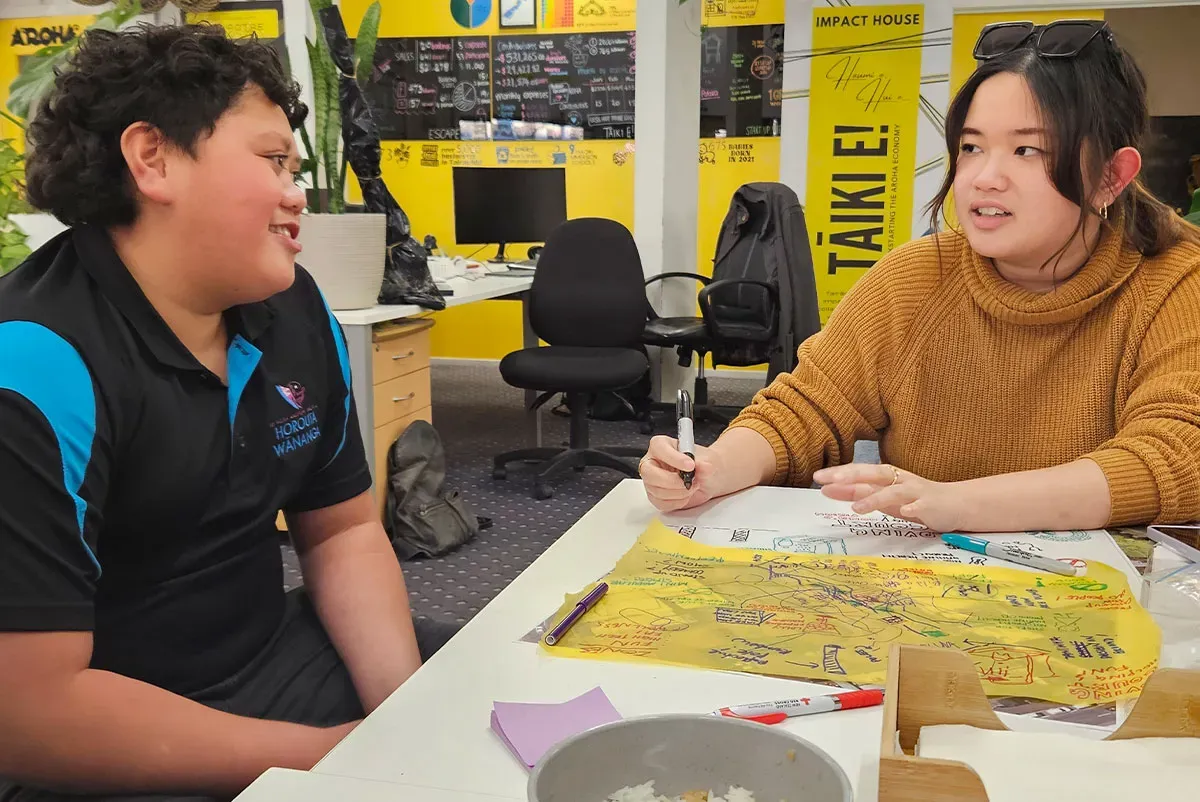
The Arup team co-designing with the local taiohi (teenagers)
15
Contributors from the local community
3
Ideas implemented and tested as a result of the co-design process
2040
vision
Part of a wider 2040 vision to establish a globally recognised hub uniting space, creativity and cultural identity
Projects
Explore more arts and culture projects

Creating a new paradigm in live entertainment
Sphere, USA

Delivering El Paso’s first purpose-built children’s museum
La Nube STEAM Discovery Center, USA

Enhancing an iconic New York City institution on the Museum Mile
The Frick Collection, USA
Supporting the enduring legacy and regeneration of a valued art center
Storm King Art Center Capital Project, USA
Get in touch with us
Last year we worked with 200+ organisations ranging from international NGOs and local governments to community interest companies and local community organisations. If you would like to find out more or get involved, please get in touch.
