
Empowering cost-effective decarbonisation for a landmark university
University of Cambridge Decarbonisation Implementation
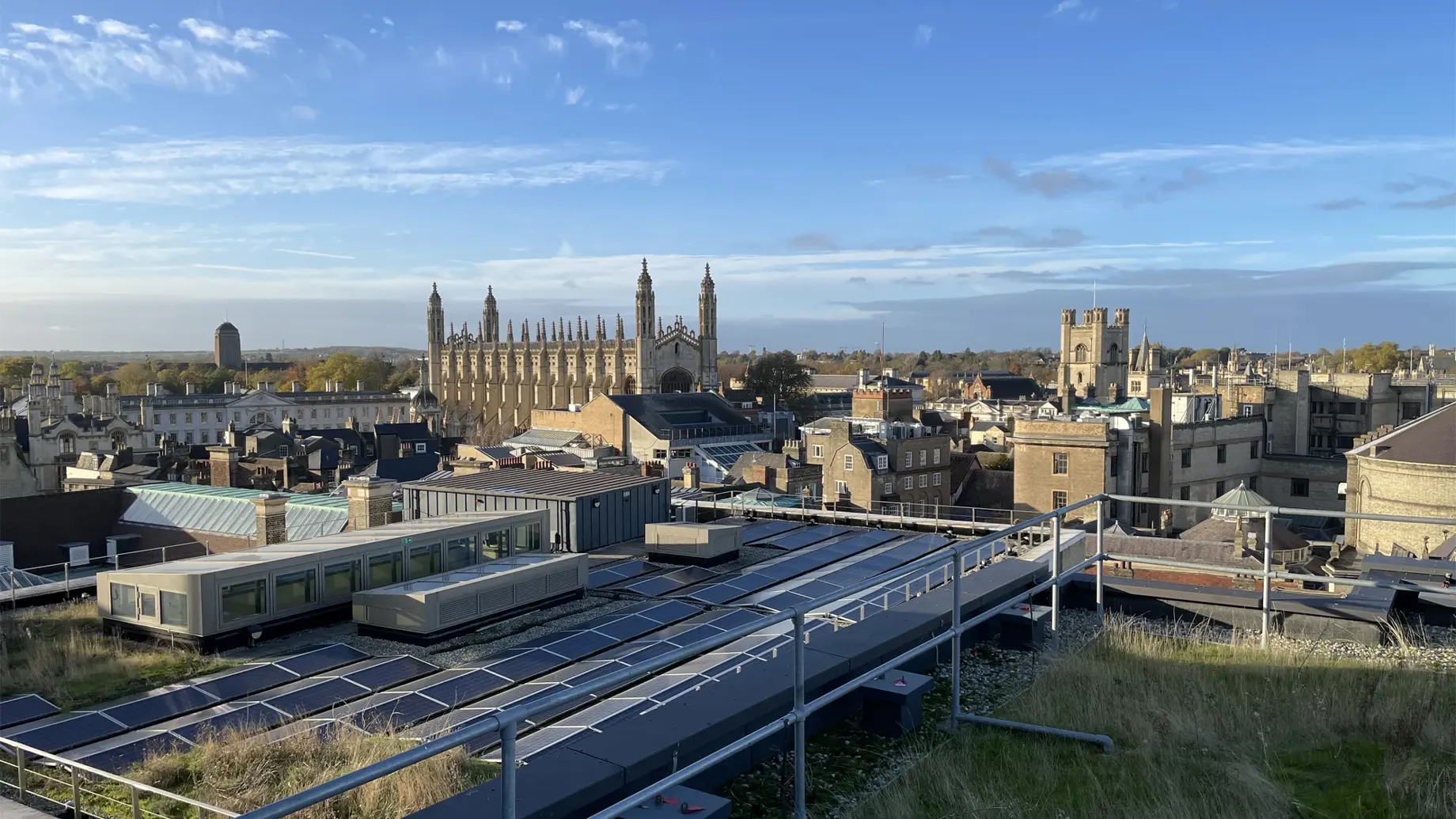
The University of Cambridge set ambitious decarbonisation targets for its complex estate and needed a clear understanding of how to reduce carbon emissions in the most cost-effective way. This required bringing multiple technical disciplines together to support informed decision making through standardised projections of energy, carbon, cost and electrical power.
Arup comprehensively assessed building decarbonisation through surveys, occupant engagement and 3D energy modelling, determining levelised costs of decarbonisation and mapping several scenarios across building services and façade systems.
We produced building specific cost forecasts in comparison to business as usual. These modelled time-based cash flows, including Net Present Value (NPV), and accounted for infrastructure upgrades and programme constraints. To support interpretation, we collaborated with the University to produce clear, building-level decarbonisation booklets, giving a single reference for each building’s options.
This project raises the bar for estate decarbonisation, showing that robust cost and engineering assessments can be done at scale. The approach provides the clarity and confidence organisations need to make informed, long‑term investment decisions. By creating consistent, comparable outputs across the entire estate, the University is now able to organise, prioritise and commit to decarbonisation interventions in a manner which is grounded in engineering rigour.
Helping the estate team understand costs and technical trade‑offs
Understanding the cost implications of decarbonisation interventions is crucial. We worked closely with the quantity surveyors, Mortimer Isaacs LLP, to build up a picture of anticipated project costs across a wide array of intervention and building types.
Costs vary by building, driven by system sizes, required infrastructure upgrades, and constraints such as complexity, logistics and heritage.
Our approach uses cost estimates to help choose the best heat electrification option. We undertook levelised cost assessments for every eligible intervention across each of the estate’s 150 buildings, comparing the cost effectiveness of local building solutions with campus heat network options.
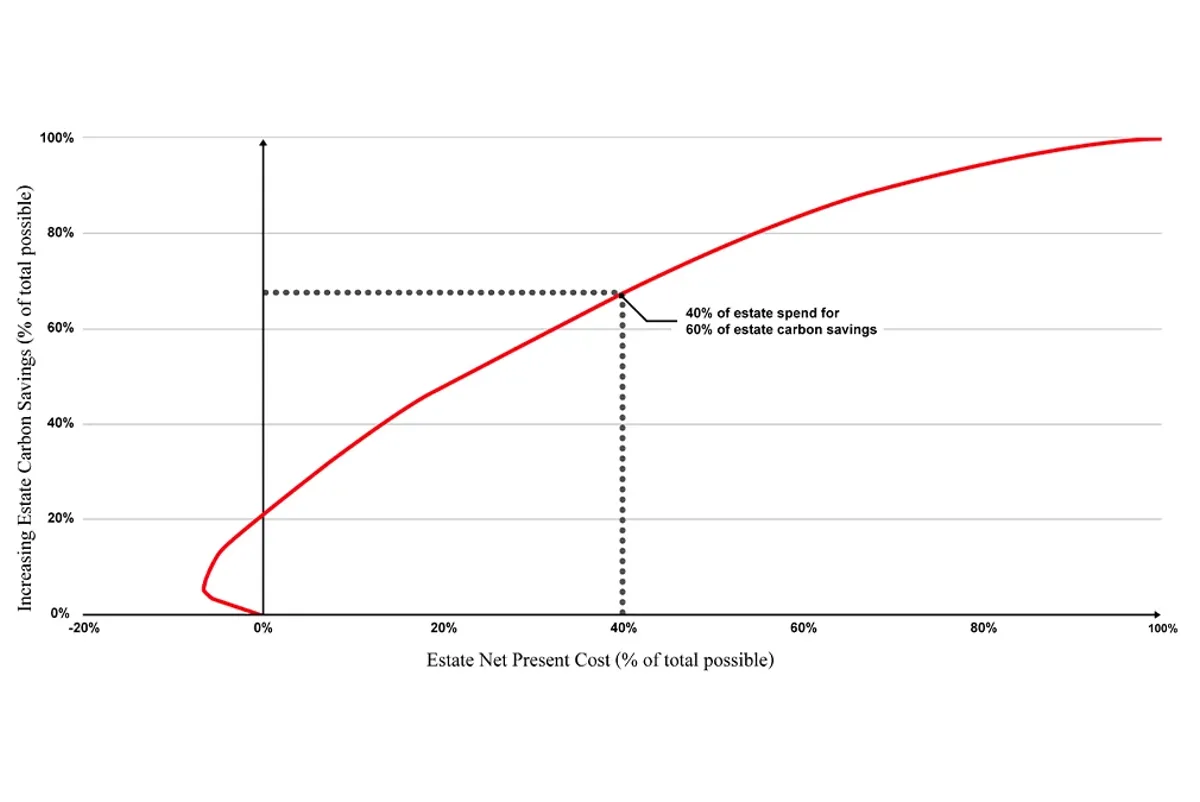
Diminishing returns of estate expenditure, showing the impact of varying levels of ambition across the estate.
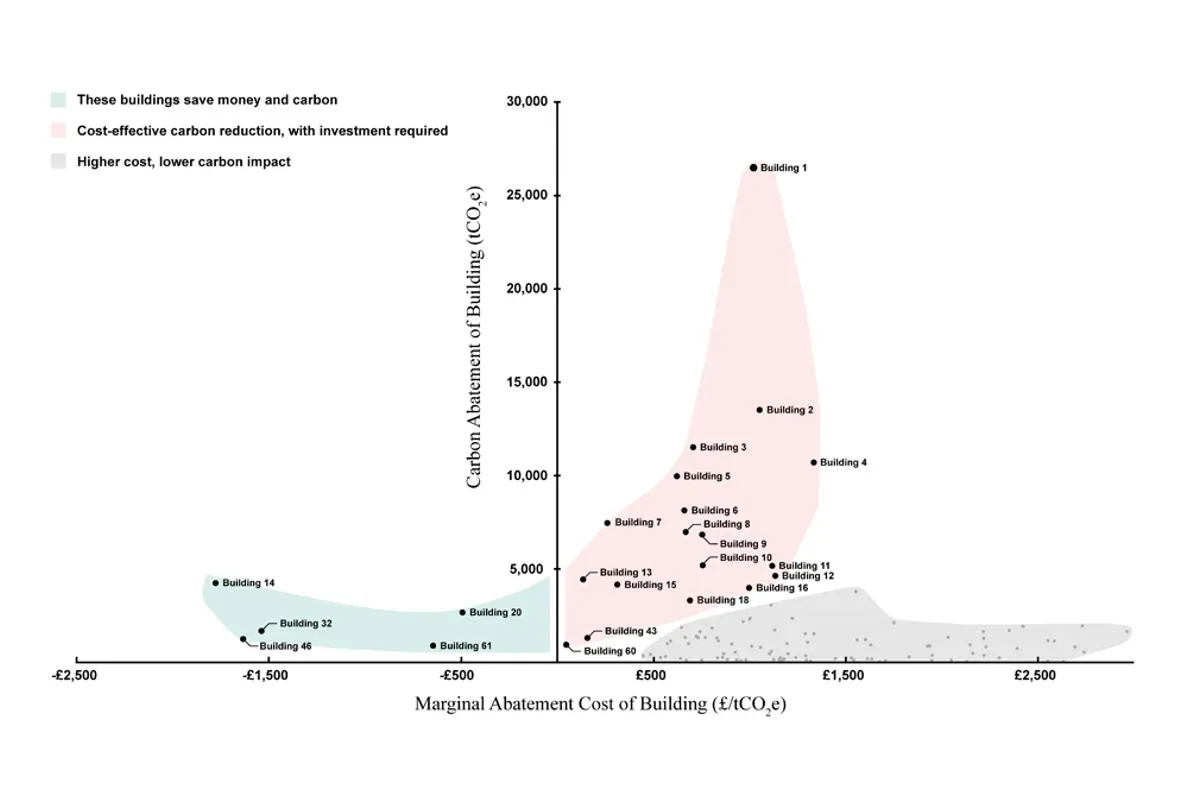
Building‑specific cost of carbon assessments identifies opportunities to maximise carbon reduction whilst controlling costs.
More than 2,000 levelised cost assessments were completed, providing a data rich view of the performance of demand reduction measures and heat electrification strategies.
This methodology identifies a cost-effective decarbonisation scenario, including demand reduction measures only where viable and ensuring the chosen heat electrification mechanism balances upfront capital investment with long-term cost savings.
By reporting in recognised metrics such as NPV and marginal abatement cost, we ensure the engineering assessments are accessible and actionable by non-engineering stakeholders.
Forecasting electrical infrastructure needs at scale
The decarbonisation of any estate will likely require significant investment in electrical power infrastructure. To forecast this, the project introduced a step change in how electrical demand is modelled across such a scale.
Our electrical engineers surveyed each building, liaised with the University’s estates teams and built a representative estate network directly within the project’s decarbonisation calculation model. The representation spanned seven different levels, with over 250 items representing everything from the buildings' main incomers to campus high voltage stations.
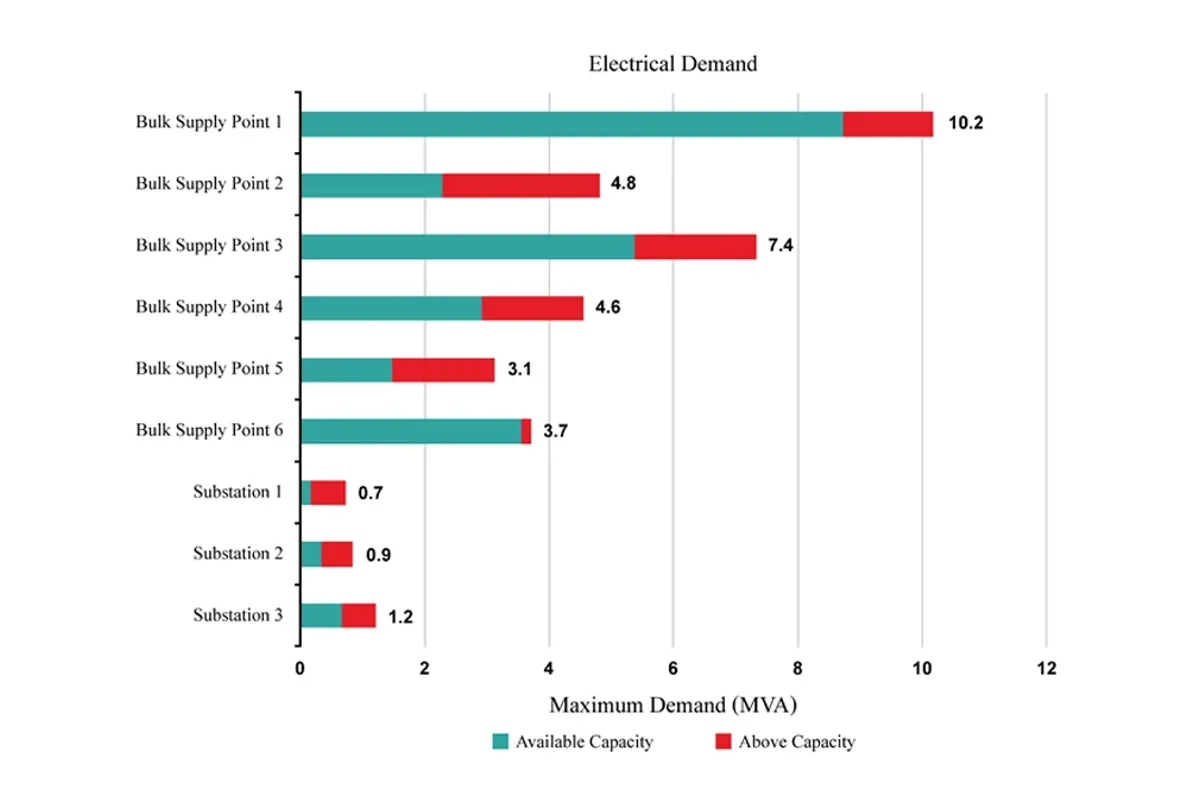
Electrical future capacity requirements are calculated at over 250 points, with current capacity and future upgrades determined and costed at all levels.
As decarbonisation interventions are forecasted and buildings electrified, the changing electrical power requirements are mapped within this structure.
This comprehensive and advanced assessment allows the University to understand and forecast which specific elements need upgrading, by how much, and when. It also supports proactive conversations with the local distribution network operator, ensuring long-term planning is aligned with future decarbonisation interventions.
Addressing heritage and complex building challenges
The University’s estate comprises buildings of historical and architectural importance. These heritage assets require specialist considerations when assessing their existing performance and identifying any limitations to potential interventions.
Our internal heritage consultants evaluated key assets, identifying common challenges, building-specific constraints, and reviewing examples of previous work on listed buildings to inform potential decarbonisation measures.
Our approach recognises that one-size does not fit all, with each building being individually reviewed. From heritage buildings to complex laboratories, the energy use profiles, intervention eligibility and cost estimates were tailored to the nuances of each building This approach ensures that complexity is not hidden within typology-based assessments, providing assurance in the end results.
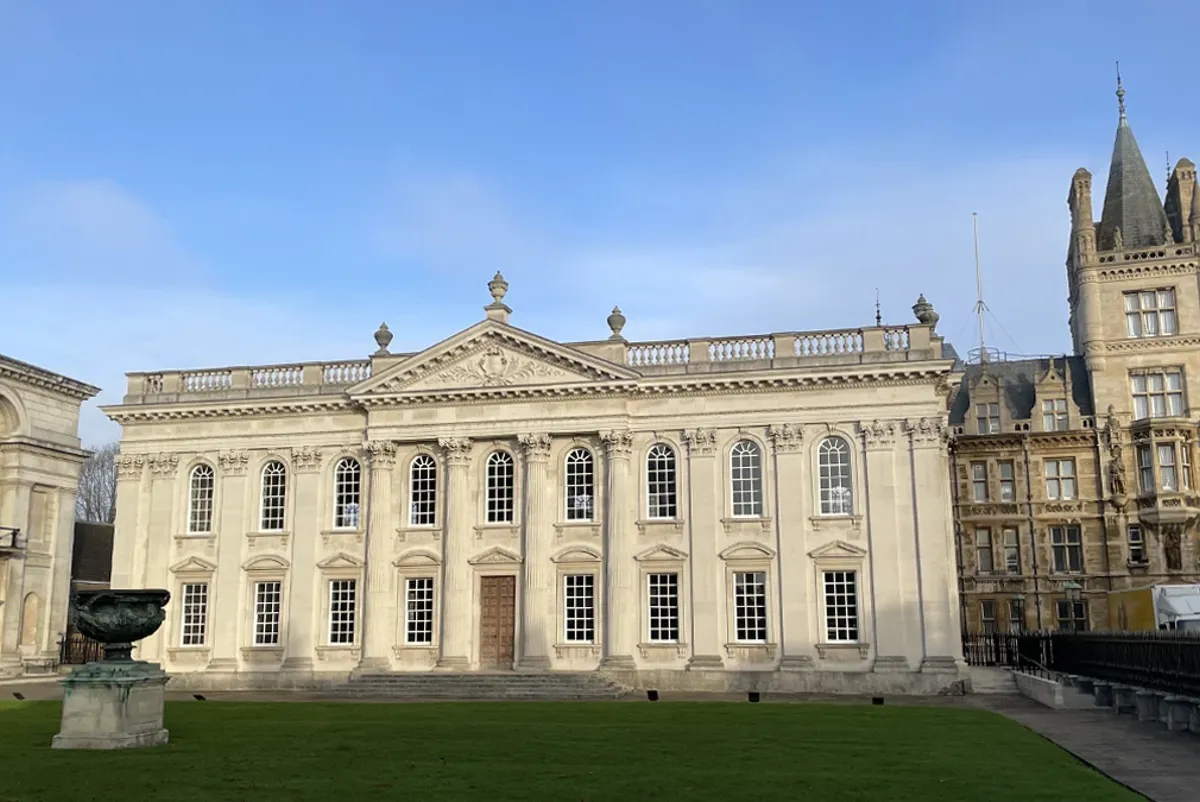
The estate comprises of many heritage assets such as The Senate House, requiring the involvement of Arup’s heritage specialists.
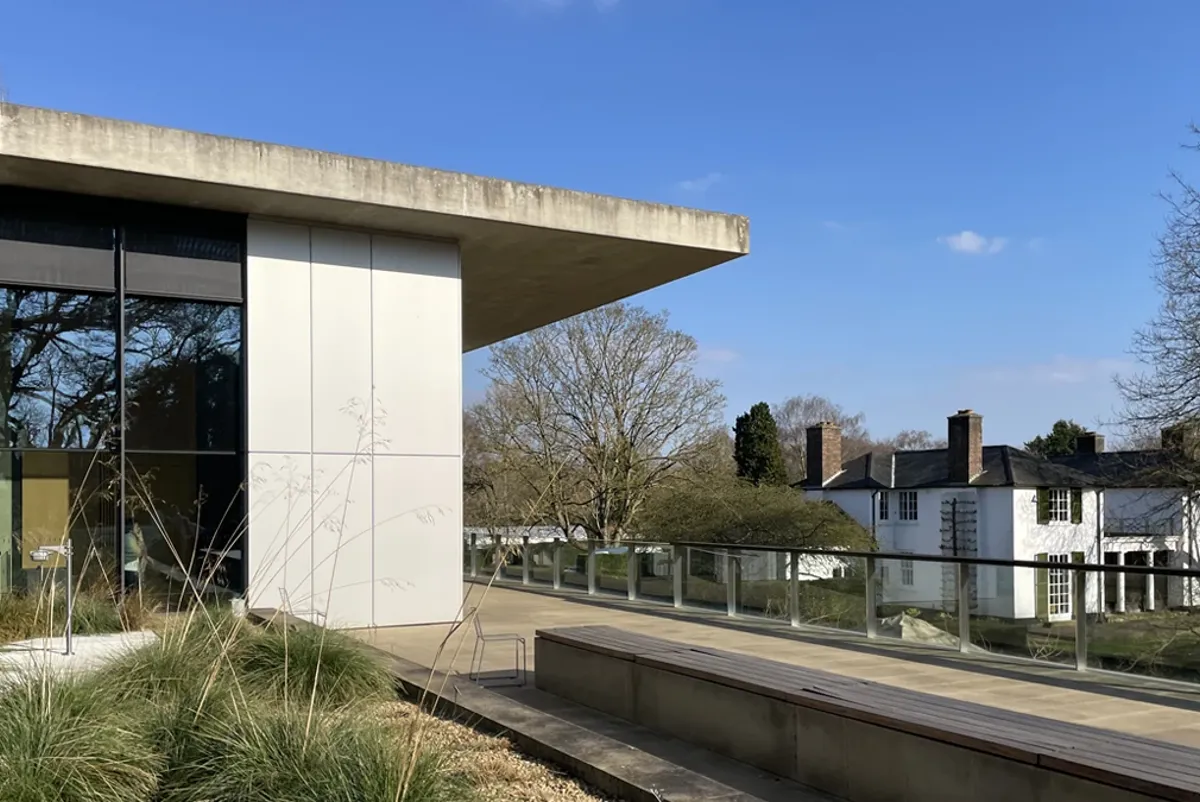
Diverse building types and eras across the estate demanded an agile approach; shown here is the Sainsbury Laboratory, where Arup was part of the original design team.
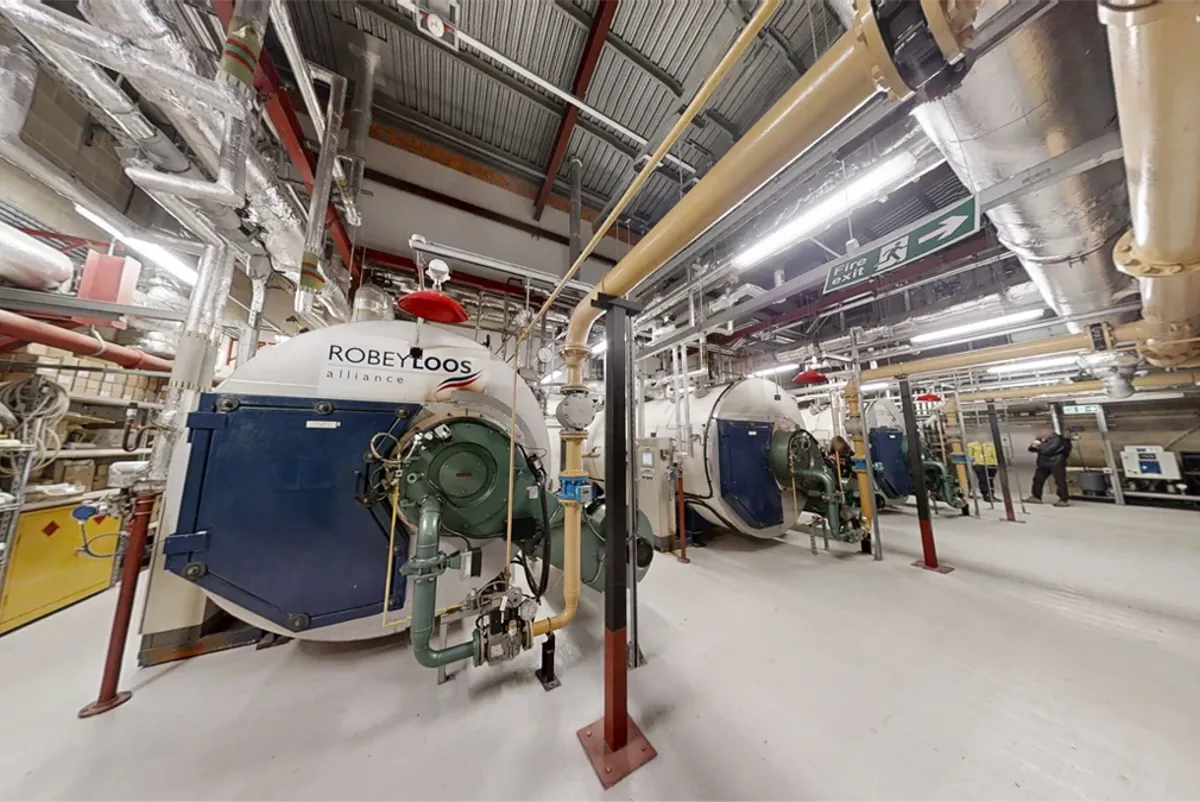
3D photographic plantroom scanning, providing a consistent reference point for future discussions at the University. Image credit: Matterport
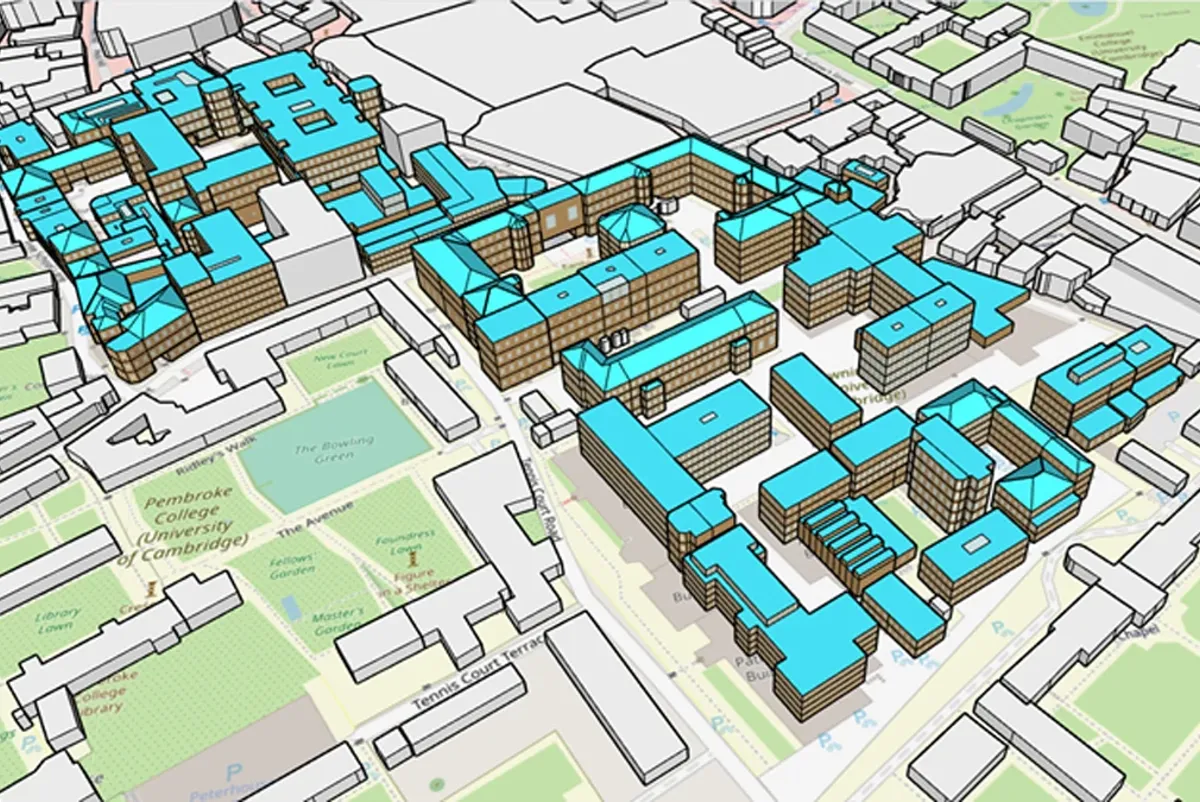
Extract of the estate wide 3D energy modelling, used to appraise building by building energy profiles and the impact of building fabric upgrades.
Arup consistently demonstrated its technical expertise and willingness to collaborate closely with University colleagues. The quality and level of detail in the outputs produced have exceeded our original expectations and will be widely used across the Estates Division in our future refurbishment and asset replacement projects. By clearly understanding the University’s outturn aspirations, Arup created a strong partnership that was a genuine pleasure to work within.
Creating structured and transparent data
To support an assessment of this scale a single in-house estate decarbonisation engine hosted all calculations for energy, carbon, cost and electrical power.
Built on years of experience, the engine allows each intervention’s impact, costs and timings to be customised for each building. This data-rich environment allowed for rapid scenario modelling and iterative improvements to ensure the methods used were robust and aligned to the University’s specific requirements.
The University received a copy of the engine, so they can re-run the model as budgets, timings, technologies and costs evolve, and to understand how changes, such as updated fuel prices, affect specific systems across its estate.
The model’s transparency ensures that decision makers can clearly see how inputs influence outcomes, supporting long‑term, evidence‑based planning.
Mortimer Issacs LLP
Projects
Explore more property projects

Delivering a seamless user experience for a vibrant mixed-use development in the heart of Detroit
Hudson's Detroit, USA

Serving the greater Houston community with an accessible, cutting-edge facility
Houston Endowment Headquarters, USA

Seattle Convention Center’s Summit building breathes new life into Seattle’s urban core
Seattle Convention Center Summit building, USA

How can timber help to decarbonise housing construction in Africa?
Gatsby Africa, Kenya
Get in touch with us
If you'd like to speak to one of our property experts about any of the issues raised on this page or a potential collaboration then please get in touch by completing the form.
