
Restoring rivers and saltmarshes across Wales to help people and nature thrive
Welsh river and coastal regeneration
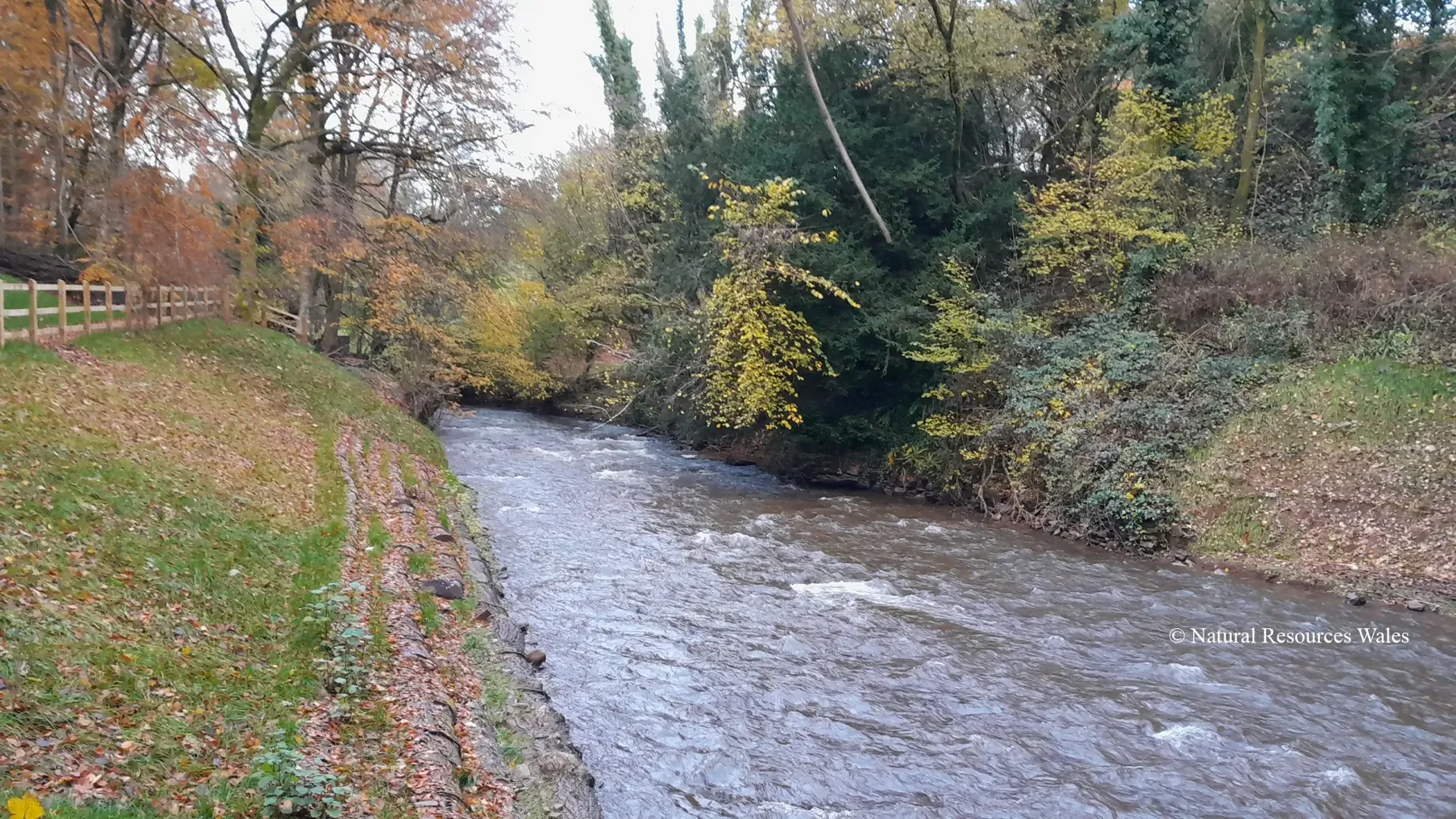
Across Wales, outdated weirs are fragmenting rivers, degrading ecosystems and contributing to the decline of salmon, eel and other species, while climate change is increasing flood risk and loss of coastal saltmarsh. In response, Natural Resources Wales (NRW) sought integrated solutions to restore rivers, enhance habitats, build climate resilience and deliver lasting benefits for people and nature.
Working in long‑term partnership with NRW, Arup is delivering, nature‑based solutions across Wales, bringing together engineering, ecological, environmental and hydrological expertise to drive sustainable, cost-effective outcomes. Together, we are restoring ecosystems, reconnecting rivers for migratory fish and enhancing community spaces, using evidence-led design and stakeholder engagement to create lasting value.
Without urgent action, salmon could disappear from some Welsh rivers by 2030. It is also estimated that up to a quarter of saltmarsh in Welsh marine protected areas could disappear by 2155. Working with NRW, we are reopening access to vital spawning grounds for endangered species, accelerating ecological recovery and strengthening natural flood defences to help protect rivers and communities for generations.
Reconnecting Welsh rivers
Barriers to fish migration are a key reason many rivers fail to achieve good ecological status. Through the Salmon for Tomorrow programme, Arup is supporting NRW to remove barriers and restore fish passage across Welsh rivers. Once complete, this will reconnect more than 100km of river for migratory species, including salmon, trout, eel and lamprey.
Originally commissioned across six sites, the programme has expanded to ten, reflecting successful delivery and strong partnership. Interventions range from removing redundant weirs to building formal and nature-like fish passes where structures cannot be removed.
Working closely with NRW and specialist designers, Fishtek, our multidisciplinary experts adapt solutions to local conditions, applying tools such as eDNA sampling, species-specific surveys and hydraulic modelling. Early results show improved habitats, measurable biodiversity gains, enhanced river landscapes and reduced maintenance costs. This is helping NRW meet national targets and secure healthier rivers for future generations.
Regenerating coastal habitats for nature conservation and climate resilience
NRW challenged Arup to restore vital saltmarsh at Rhymney Great Wharf, while strengthening flood resilience in one of the UK’s most ecologically important estuaries. Located within the Severn Estuary Special Area of Conservation (SAC), the site is critical for wildlife, migratory fish and coastal protection.
Collaborating with specialist ABPmer, our water engineering and environmental experts designed and delivered a nature-based solution by renewing and extending more than 2km of sedimentation polders along the foreshore. Constructed using chestnut posts and brushwood bundles, these polders slow the ebbing tide so sediment can settle, creating the right conditions for saltmarsh to form.
Over time, this builds habitat, supporting local wildlife and enhancing biodiversity. It also strengthens flood defences by reducing pressure from erosion and has significant potential to store and sequester carbon, helping build a more resilient coastal system for local communities.
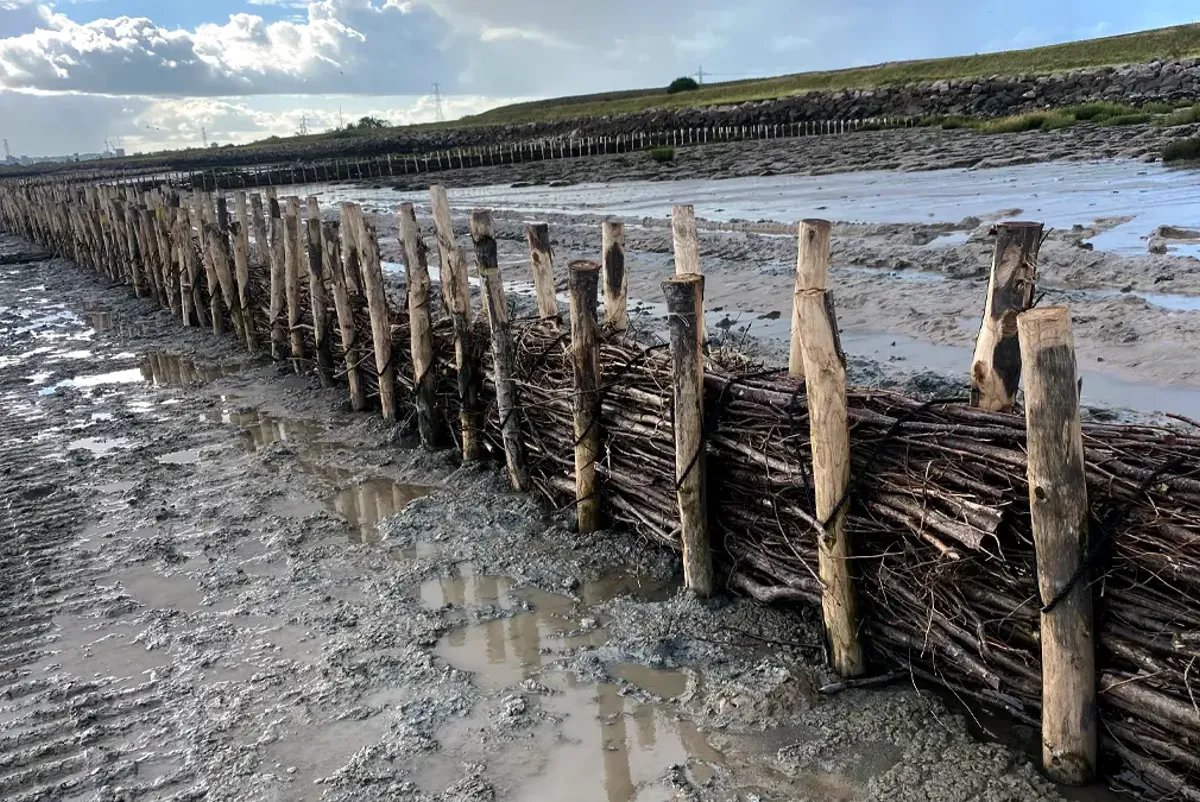
Sedimentation polders create the conditions for saltmarsh to re establish and strengthening flood resilience.
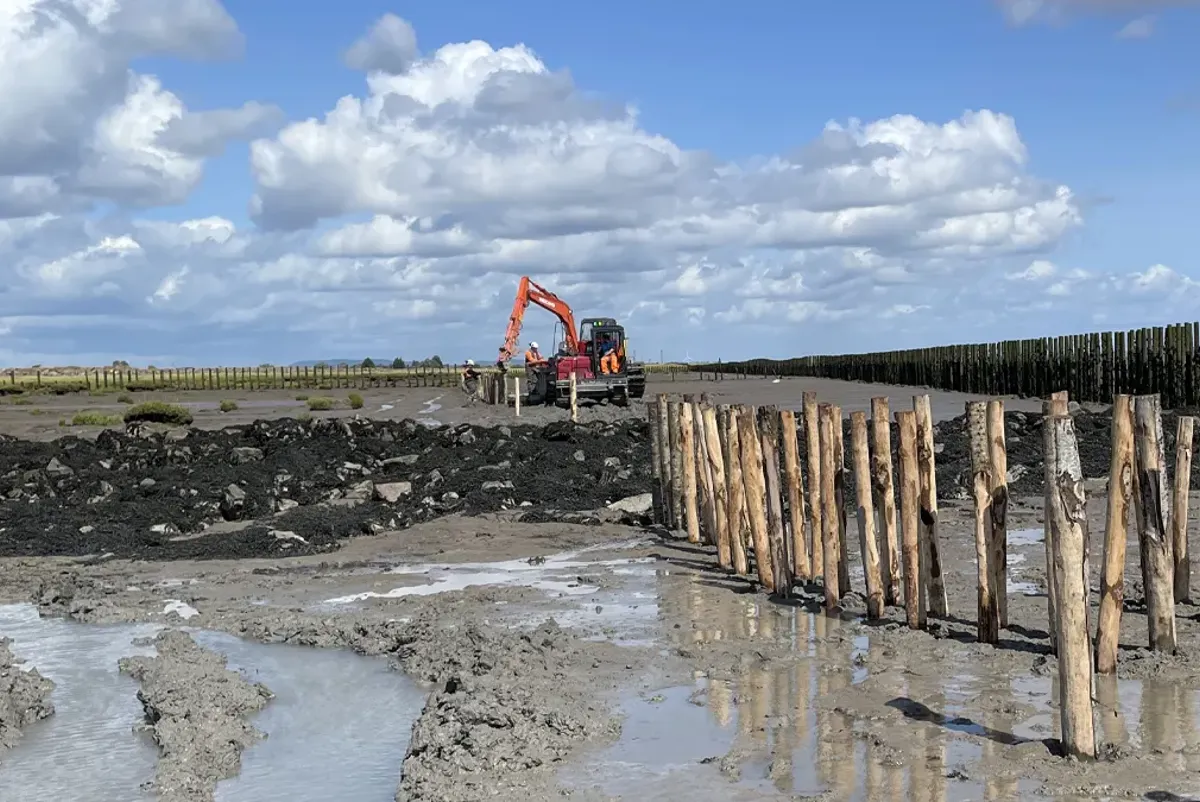
Constructed from chestnut posts and brushwood bundles, the sedimentation polders are simple, nature based structures.
Reducing flood risk and restoring river connectivity
The town of Ammanford, Carmarthenshire, has a long history of flooding, with risks set to increase due to climate change. At the same time, a weir was blocking the migration of fish, including salmon, trout, lamprey and eel.
Working with NRW and Fishtek, Arup aligned flood‑risk reduction with the previously separate fish‑passage scheme. The integrated project, constructed by Walters, now better protects 349 homes and 37 businesses, as well as critical infrastructure, avoiding an estimated £7.9m in damages over the next century. It also reconnects 20km of river for migratory fish and enhances habitats for otters, birds, bats, hedgehogs and invertebrates, alongside improvements to community spaces.
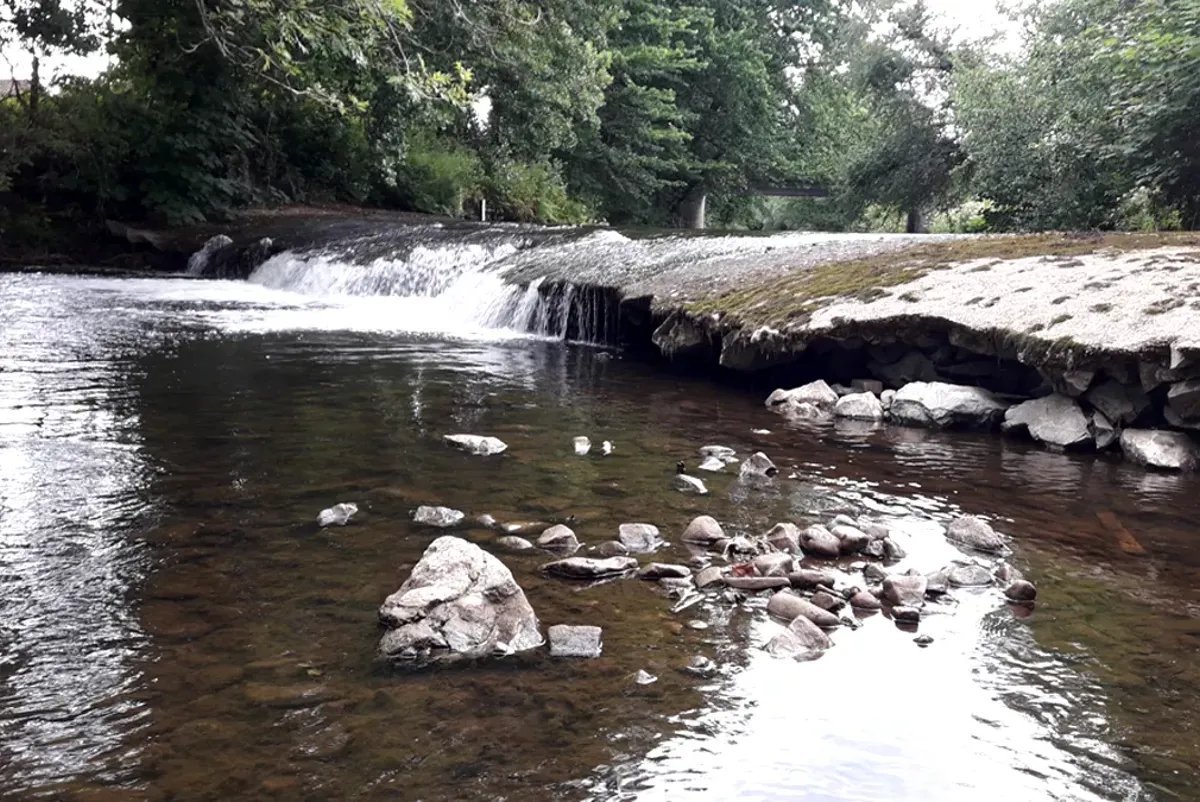
Tir y Dail weir barrier to migratory fish before the works. © Natural Resources Wales
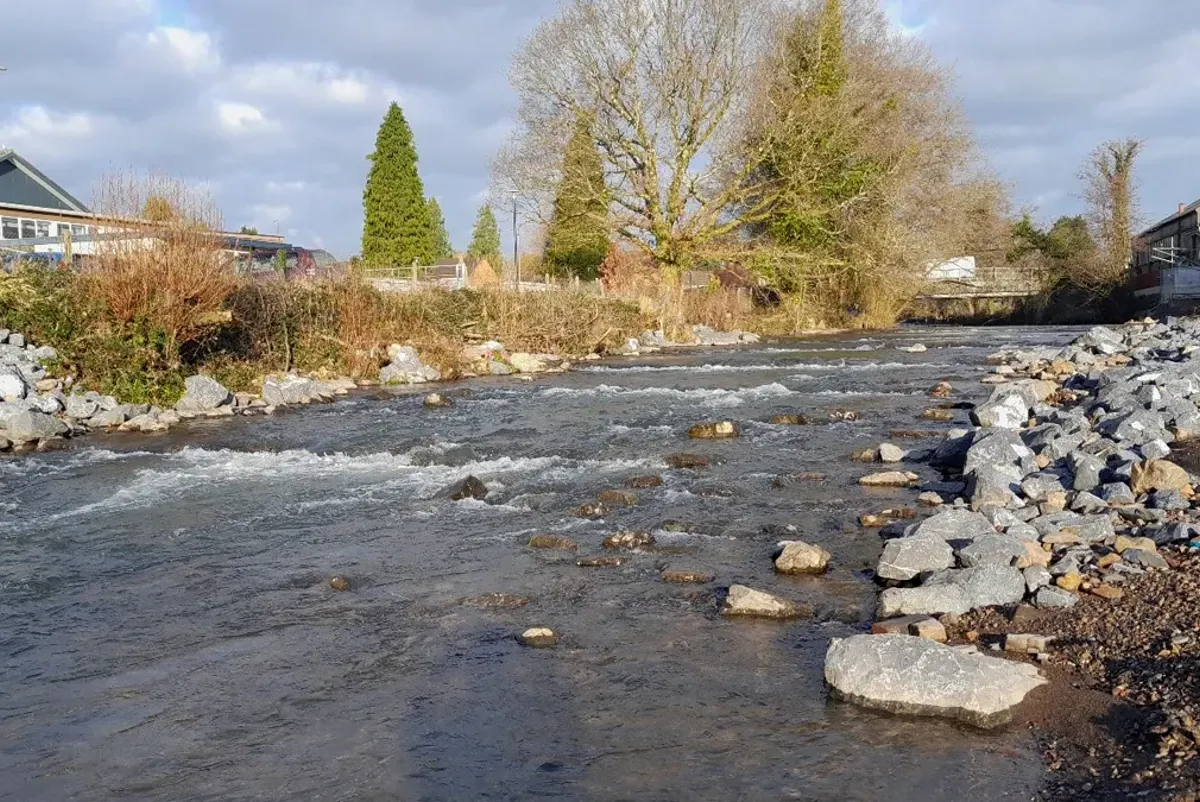
Restored river providing flood and migratory fish access on the River Loughor at Ammanford. © Natural Resources Wales
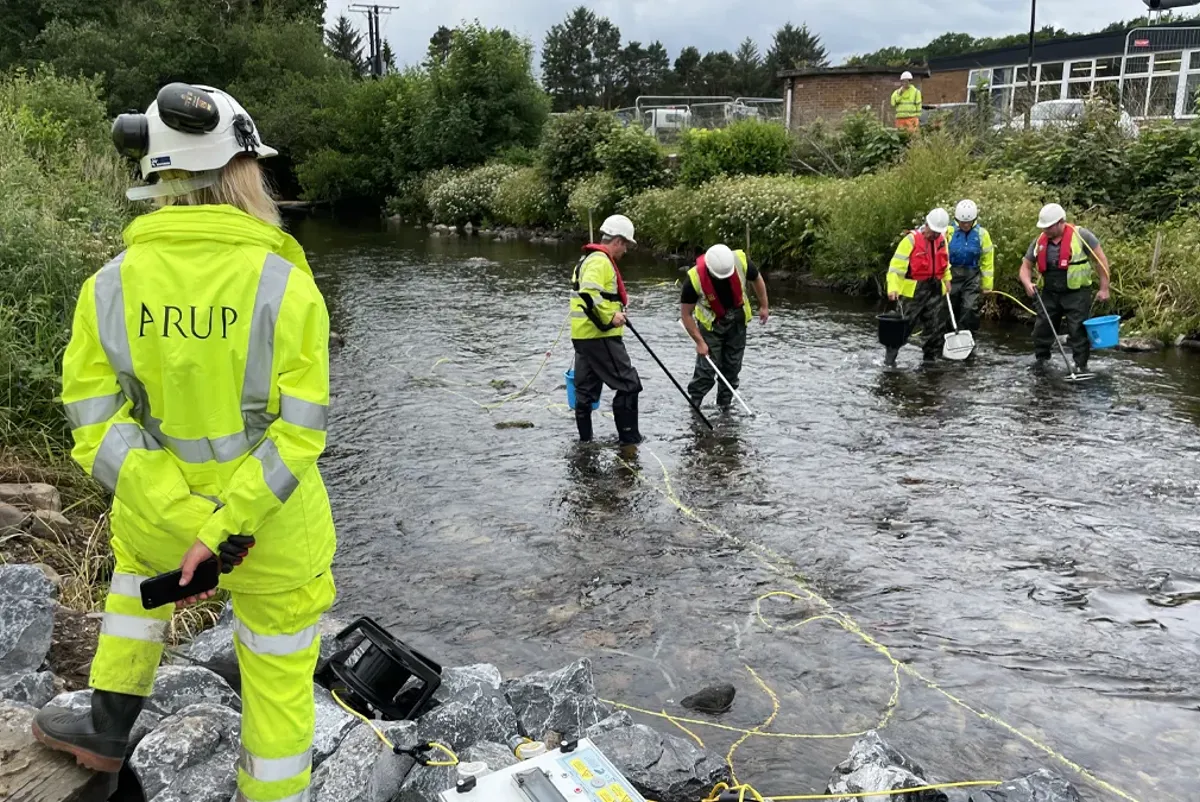
Detailed environmental assessment and consenting, including pre-works fish rescue, minimise construction environmental impacts and maximise opportunities for habitat creation.
Flood walls, earth bunds and targeted river interventions were sensitively designed into the landscape, informed by advanced modelling and community engagement. At Tir-y-Dail weir – retained to protect a critical sewer – four notched pre-barrages provide a stepped route for fish, while the riverbank was lowered to improve flow. Nearly four acres of native woodland, planted in collaboration with Carmarthenshire County Council, create new opportunities for local people to enjoy nature. Materials were also reused wherever possible to reduce costs and environmental impacts.
Completed six months ahead of programme and successfully tested during a flood event in 2023 while still under construction, the project demonstrates how integrated design can provide lasting environmental, social and economic value.
Reconnecting the River Honddu for nature and community
Removing a redundant weir on the River Honddu, near Brecon, has unlocked 20km of river, enabling salmon to access important breeding grounds, while enhancing the local environment for communities. Originally constructed in the 1960s to monitor and regulate flows for flood management, the structure was a significant barrier to fish migration. Advances in flow measurement techniques meant the weir was no longer needed.
To return the river to a more natural state, Arup designed the removal of the weir and its associated recorder house. Our multidisciplinary team carried out geotechnical assessments, ecological surveys, hydraulic modelling and civil and water engineering to maintain flood resilience and enhance ecological connectivity.
Working collaboratively with Powys County Council and Bannau Brycheiniog National Park Authority, the project also brought community benefits, including a widened riverside footpath, new seating and targeted planting. This creates a more accessible and attractive space for people to connect with the river and nature.
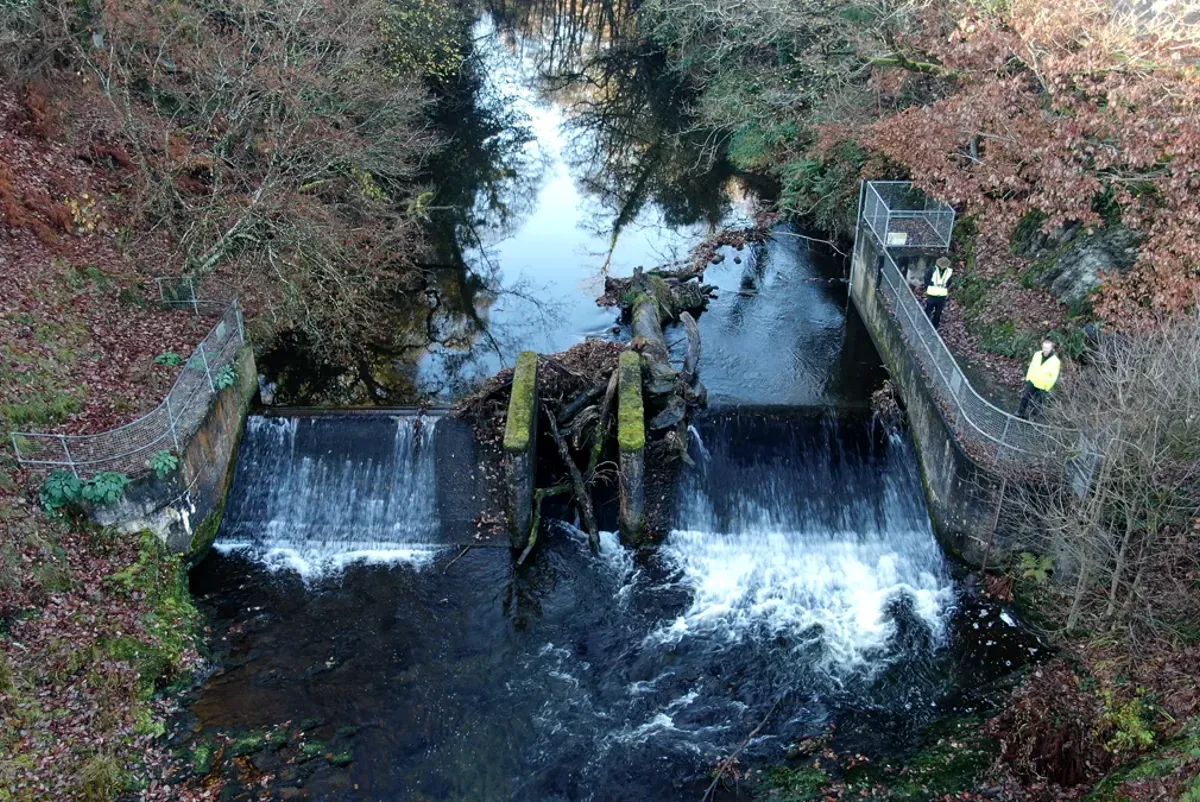
Cribynau weir on the River Clywedog before restoration. © Natural Resources Wales
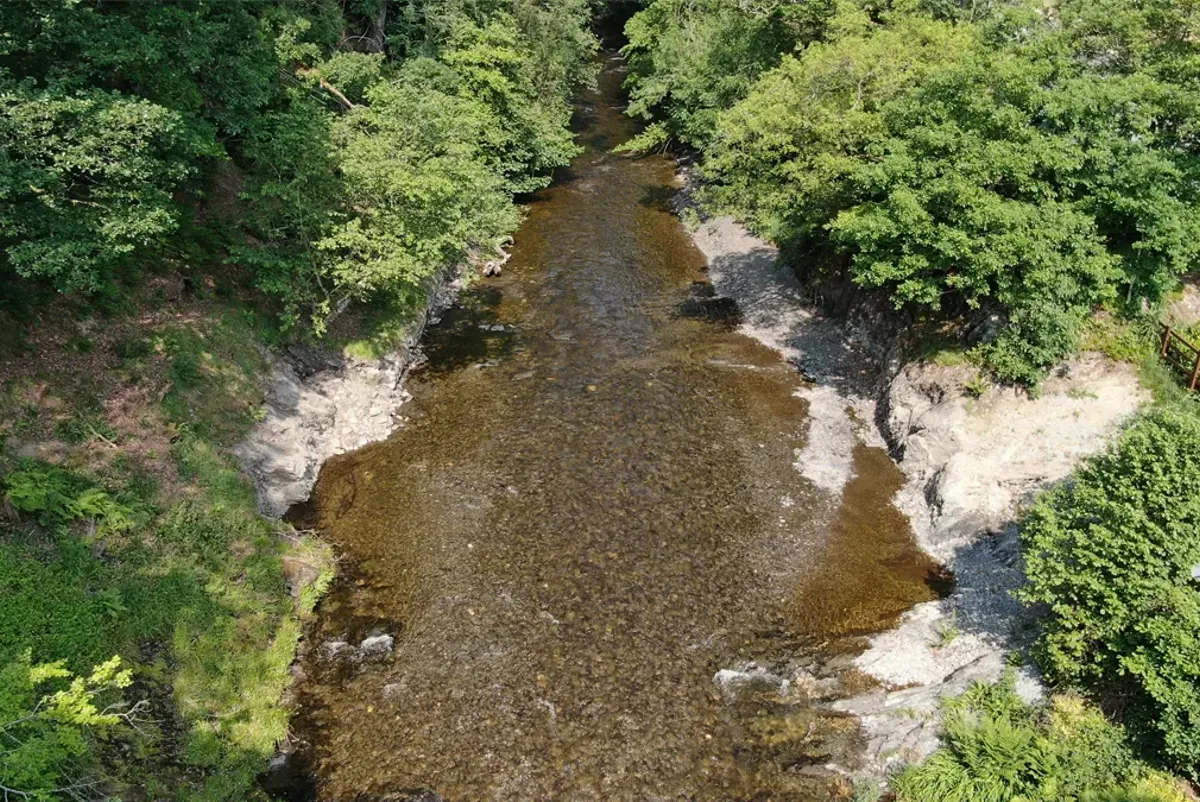
Cribynau weir on the River Clywedog after restoration. © Natural Resources Wales
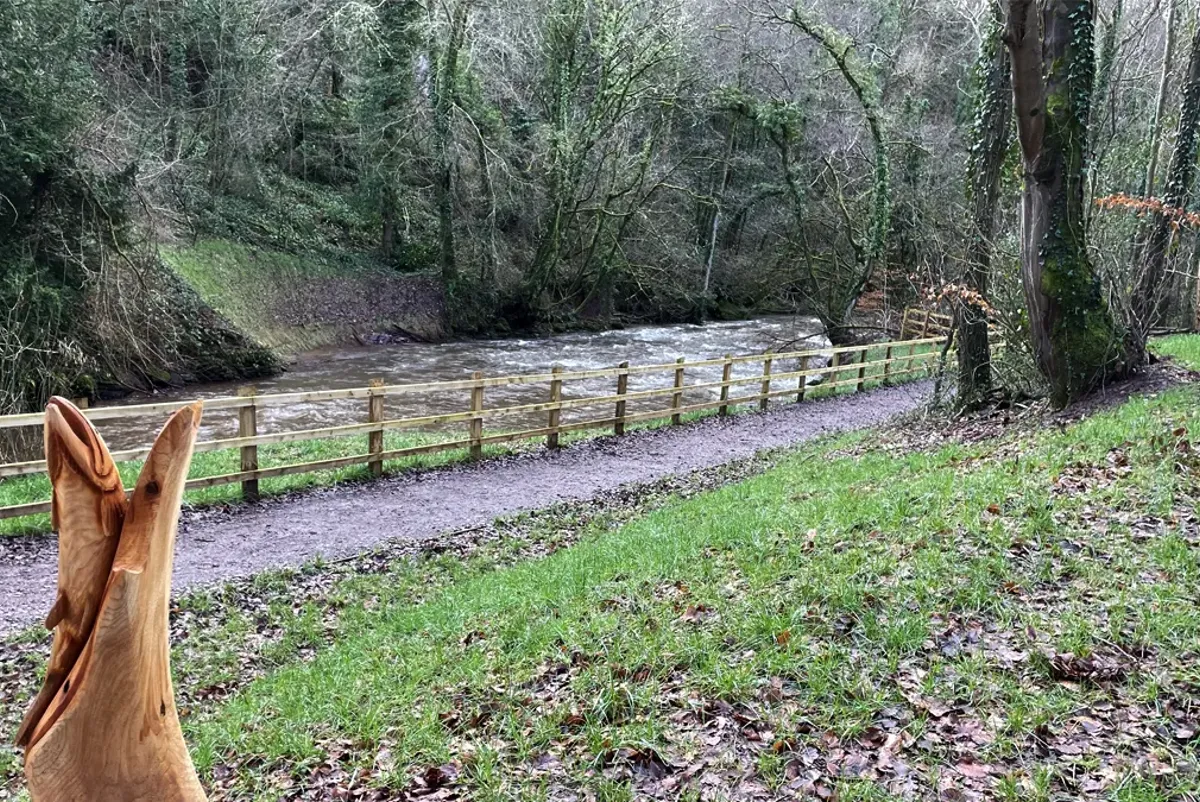
Removing the redundant Honddu weir has reconnected 20km of river habitat and restored a more natural, accessible riverside environment amenity.
Restoring the Afon Clywedog to natural conditions
A similar approach was taken on the Afon Clywedog in mid-Wales, where removing a redundant weir reconnects 4km of river, restoring natural conditions, enabling fish passage and supporting ecosystem recovery. Built in the 1950s for the Llyn Clywedog reservoir, the structure had outlived its original purpose and had become a major barrier to salmon, trout and other species, while disrupting sediment movement and degrading habitats.
Arup designed the full removal of the concrete weir, including restoring the impounded reach upstream and reprofiling the riverbed to form a low-flow channel. We also completed slope stability assessments, managed safety risks and coordinated access to this remote site.
The scheme enhances habitat diversity for native species and re-established fish migration both upstream and downstream across a range of flow conditions. Sediment now moves freely downstream, replenishing the gravel beds essential for salmon and trout spawning and juvenile development, strengthening long-term ecosystem resilience.
The team continue to work extremely well together, bringing all their technical knowledge together to solve complex problems – resulting in restoring rivers, enhancing habitats, building climate resilience and delivering lasting benefits for people and nature.
Fishtek / ABPmer
Projects
Explore more nature-based solutions projects

Promoting climate resilient flood defence and development through nature-based solutions
Lower Darent Riverside Strategy, United Kingdom

A nature-based approach to combined storm overflows
Pont-y-felin Lane, United Kingdom

Implementing nature-based solutions and green infrastructure to create a resilient and inviting space
Love Park Toronto, Canada

Measuring the benefits of urban greening in Dar es Salaam
Dar es Salaam urban greening, Tanzania
Get in touch with us
If you'd like to speak to one of our climate experts about any of the issues raised on this page or a potential collaboration then please get in touch by completing the form.
